 The IRS scandal has spawned a new round of partisan “what ifs?” from Republicans and conservative commentators, the gist of them being that President Obama’s election in the 2012 contest was the result of cheating, and the IRS’s successful efforts to stifle Tea Party organization efforts. Surely the less than 2% difference between Mitt Romney and the President might have been bridged had the kind of conservative enthusiasm that marked the 2010 Congressional election not been unethically and illegally stifled! Wall Street Journal blogger James Taranto has dubbed Obama “President Asterisk.” A research paper from the American Enterprise Institute suggests that the post 2010 targeting of conservative and Tea Party groups seeking tax exempt status may have cost Mitt Romney the Presidency. Continue reading
History
Ethics Quote of the Week: Phyllis McGinley (1905-1978)
The Angry Man
The other day I chanced to meet
An angry man upon the street —
A man of wrath, a man of war,
A man who truculently bore
Over his shoulder, like a lance,
A banner labeled “Tolerance.”
And when I asked him why he strode
Thus scowling down the human road,
Scowling, he answered, “I am he
Who champions total liberty —
Intolerance being, ma’am, a state
No tolerant man can tolerate.
“When I meet rogues,” he cried, “who choose
To cherish oppositional views,
Lady, like this, and in this manner,
I lay about me with my banner
Till they cry mercy, ma’am.” His blows
Rained proudly on prospective foes.
Fearful, I turned and left him there
Still muttering, as he thrashed the air,
“Let the Intolerant beware!”
— Poet Phyllis McGinley, quoted in the comment thread on the Volokh Conspiracy’s post about the Supreme Court decision this week in Glowicki vs. Howell Public School District. Continue reading
Here Is A Law Suit To Root For
 The continuing charging of licensing fees for commercial use of that most public of songs, “Happy Birthday,” has been an annoying anomaly for as long as I can remember. Why did TV families always sing some lame approximation or substitute when a character had a birthday? Just last week, I expressed my chagrin when Tom Selleck’s extended family on “Blue Bloods” brought out granddad Len Cariou’s birthday cake, blazing with candles, as they sang, “For He’s A Jolly Good Fellow!” Who sings that at a birthday party today? People who don’t want to be held up for the licensing rights for a song over a century old, that’s who. I believe the first time this issue imposed itself on my consciousness was when they sang some lame birthday song stand-in on “The Flintstones.”
Jennifer Nelson, a film-maker, has had enough. She was producing a documentary movie about the song, and naturally wanted it to be performed at one point in her film. Like many before her, she was told she would have to pay $1,500 via a licensing agreement with Warner/Chappell, the publishing arm of the Warner Music Group, which acquired the rights to the song in 1988. Nelson’s company paid the fee and is now seeking certification for a class action law suit arguing that “Happy Birthday” is in the public domain, and has been. Warner/Chappell collects about $2 million a year in licensing fees for it, and the suit seeks return of the fees it collected over the last four years. The lawsuit cites the research of Robert Brauneis, a professor at the George Washington University Law School and the author of a 68-page article titled “Copyright and the World’s Most Popular Song.” In the study, Professor Brauneis demonstrates, to his satisfaction at least, that the Hill sisters, Mildred and Patty, wrote a song in the late 1800s with the same melody called “Good Morning to All.” Nobody is certain who wrote the lyrics referring to a birthday, but it was in popular use as early as 1911. Continue reading
Anti-Terror Surveillance Flip-Flops, Fools, Converts and Heroes

There has been much ink and pixels spilled about the supposed hypocrisy of Republicans and Democrats in their disparate reactions to the revaluation of far more extensive phone and internet data-gathering by the government than those of us not wearing tin-foil on out heads ever suspected. For example, a recent Pew survey shows this...

Naturally, Republicans and Democrats are calling each other hypocrites, suggesting dishonesty and lack of integrity. There are surely some hypocrites in there, but for the most part, the flip-flopping is neither dishonest nor theoretically unreasonable. Even if we assume that the level of NSA intrusion under Bush and Obama administrations are the same (and to be fair, it appears that the current gathering of all domestic phone records goes well beyond what we understood to be the limited surveillance permitted under the Patriot Act), they are materially different in one key aspect, from the perspective of partisan citizens.
Think about it this way: Let’s say on successive days you discover your best friend and your business rival, both of whom visited your home for various reasons, looking through bills and financial papers on your desk. They did the same thing, but while you might be peeved at your friend, if he had a credible explanation like “I think I can save you some taxes,” you would not view his actions as sinister, and might even be grateful for it. When you found your rival looking over the same private papers, however, you would be furious, suspicious, and justly so. The difference is a matter of trust. You trust your friend, his motives and loyalty; you don’t trust your rival. Continue reading
Ethics Hero Emeritus: Bob Fletcher (1911-2013)

So many heroic citizens perform their exemplary ethical acts in near obscurity, never receiving widespread recognition or praise, never seeking it, and never missing it either. These are the best role models of all, but we learn about only a tiny percentage of them.
One such exemplar we learned about when he died this week is Bob Fletcher, a former government agriculture inspector who changed the course of his life to help his neighbors, who were in the midst of being abused and betrayed by their country. Continue reading
Ethics and “Casey At The Bat”

Today is the 125th anniversary of the publication of “Casey at the Bat,” arguably the most popular and famous of American poems, the creation of humorist Ernest L. Thayer in 1888.
The poem carries many lessons relevant to ethics and life within its tale of the hometown hero who fails spectacularly just when heroics are most needed and anticipated, such as…
- Don’t promise what you cannot be sure of delivering.
- Good faith failure isn’t unethical, a sin or a crime, but it still carries with it the need for someone to accept responsibility for it.
- The focus of disaster is always on the last individual who might have prevented it, but that is neither fair nor logical. The Mudville Nine lost the game, not Casey.
- Expecting miracles, last-minute rescues, heroic intervention and infallible rescuers is foolish and irresponsible.
- Respect your adversaries, for your own sake as well as theirs.
- “Pride goeth before a fall.”
Today, however, I am struck by how neatly the poem reminds us that in baseball there is no spin, no rock to hide under and no Fifth Amendment to claim. When a player fails, or makes a mistake, or misbehaves, it is usually all out on the field, watched in person by thousands, seen on TV by millions, and recorded forever. There is usually no way to deny or hide responsibility, and indeed part of the professionalism of baseball is accepting that, facing the media and the public, and saying, “That was on me. I failed. I’ll do better next time.”
Most of the time, that’s all the crowd asks after failure. Honesty and accountability.
As long as Casey doesn’t keep striking out, that is.
Here’s the poem, recited by the now-forgotten Bob Hope sidekick Jerry Colonna, he of the rolling eyes:
________________________________________
Spark: Craig Calcaterra
Graphic: Fine Art America
Comment of the Day: “Ethics Hero: David Blankenhorn, Former Same-Sex Marriage Opponent”

In many ways, I love this post. I love it because it is passionate and serious, and from the heart, and because I am certain that it reflects what many Americans, especially those of a certain age, feel with frustration and a little fear and anger. I also agree with much of what it concerns, the lack of respect for accumulated wisdom in many aspects of the culture, and the rush to discard old standards not because they have failed us, but just because they are old. The comment comes from a regular commentator, Eeyoure (not his real name, you’ll be relieved to learn, and yes, we both know how to spell the A.A. Milne character he honors) who is educated, decent, smart and articulate.
But regarding his lament’s applicability to the controversy at issue, gay marriage, he is absolutely, utterly, tragically wrong. The conventional wisdom is that we should just try to ignore Americans who feel similarly to Eeyoure, because demographics are relentlessly removing them from the scene. As the politically active public becomes younger, the support for equal rights for gays, trangendered and bi-sexual citizens will grow into an overwhelming majority. I think that’s a lazy and obnoxious way to win an argument, even when you are right. Smart but misguided people, like Eeyoure in this matter, should be able to evolve, learn, and realize when what they once thought was right, isn’t. Realizing that one aspect of entrenched belief was, upon knowledge and reflection, wrong does not mean the whole foundation of civilized society has to crumble—this is the classic, irrational, self-defeating fallacy of conservatism. Change in the presence of enlightenment and experience is the essence of ethics, which constantly evolves. We should be able to explain what is wrong with this post so that even the poster agrees.
Here is Eeyoure’s Comment of the Day, on the post (and comment thread t0) Ethics Hero: David Blankenhorn, Former Same-Sex Marriage Opponent: Continue reading
My Father, Memorial Day, and Reflections
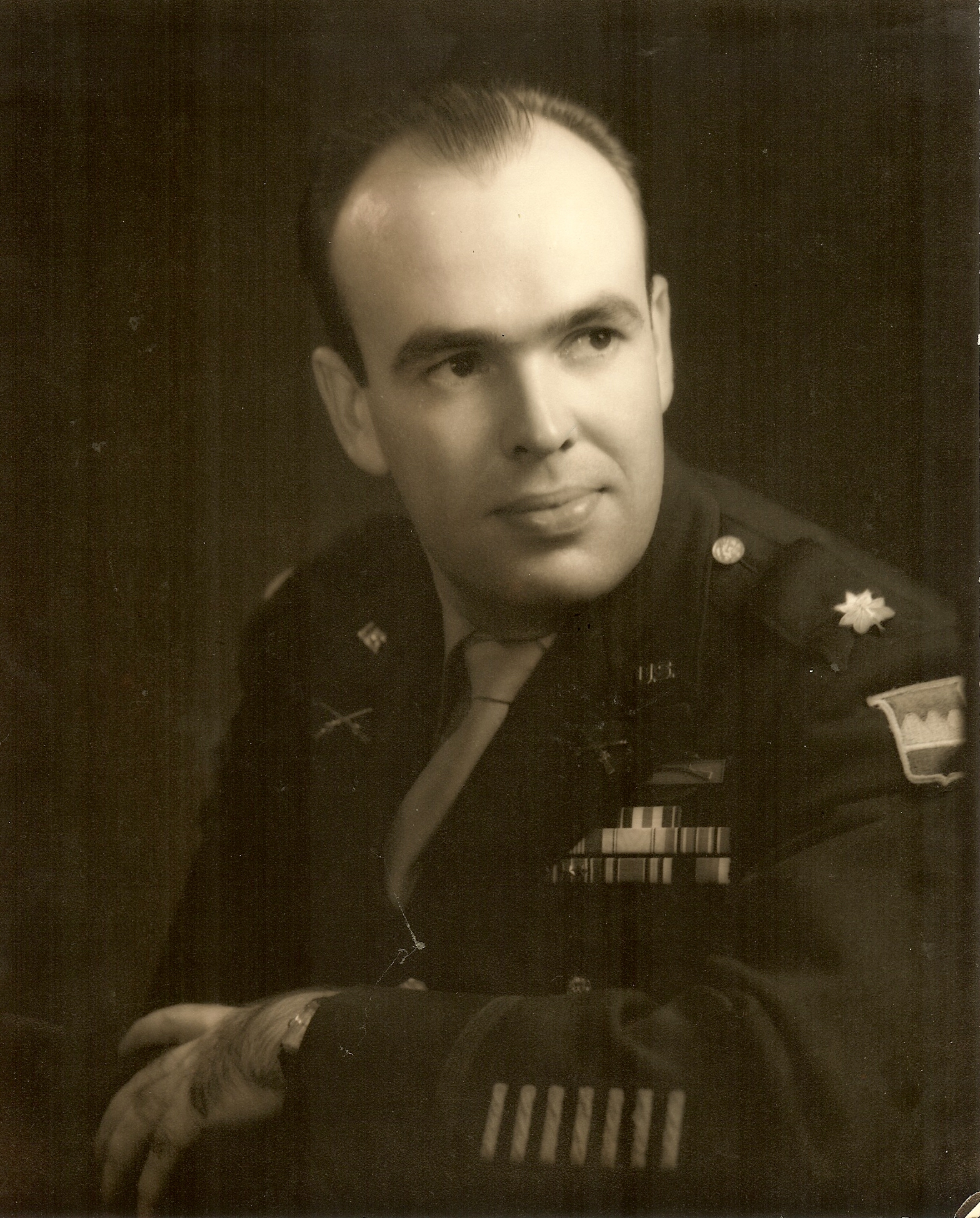
[In the last few years of his life, my father used to take my sister and me on a pilgrimage to Arlington National Cemetery on the Sunday of Memorial Day Weekend. He was always strangely jolly about it, though appropriately reverent. We always visited the oddly inadequate Battle of the Bulge memorial, where my dad would usually tell us one new story of his horrible experiences in that conflict that he had previously suppressed. We always paid our respects to the humble grave of Audie Murphy, World War II’s most decorated American soldier. We did NOT visit the grave of my dad’s own father, whose betrayal of his mother he would never forgive, though my grandfather, a veteran of the First World War, was also buried at Arlington. Mostly we just walked around the beautiful surroundings, with Dad periodically admiring some grand monument and suggesting, tongue in cheek, that he wouldn’t mind being under something like that some day. Continue reading
Forget Gosnell: This Case Highlights The Real Abortion Issues

John Andrew Weldon, and the mother of his baby, and her property.
John Andrew Welden is being held on first degree murder charges for tricking his girlfriend, pregnant with his child, into taking an abortion bill ( Cyotec, a drug used to induce labor) that she thought was an antibiotic, because he had tampered with the label. The fetus, nearly seven weeks old, miscarried as a result. You can read this ugly story here.
She wanted to have the baby, he didn’t. He arranged his own abortion, deceiving her, betraying her, mistreating her terribly. But how did he commit murder? What he tricked her into aborting wasn’t a human being. NARAL says so. Sandra Fluck says so. President Obama says so.
The ethical and logical problem with our abortion laws, as well as the rhetoric and conduct surrounding them, is that they lack integrity and embarrassingly so. A seven week fetus is not treated as a human life if a mother chooses to have an abortion, and a doctor performs it. This must mean, in any sane, fair and ethical system, that it is not a human life. If it is not a life if a doctor aborts it, it isn’t a life if a boyfriend tricks the mother into aborting it. How can it be? The fetus hasn’t changed, and the conduct hasn’t changed. All that has changed is the agent, and there are only a few ways that can alter the act. “A deceptive killing?” A killing without authority,” perhaps. But the agent can’t make eliminating something first degree murder, if it wasn’t a human being that was eliminated. Continue reading
Ethics Quote of the Week: Bob Woodward
“You’re talking about government not working, but who’s in charge of the Executive Branch? You go to the Constitution, and the President has sole responsibility for the Executive Branch. This rests on him.
You were talking earlier about kind of dismissing the Benghazi issue as one that’s just political, and the President recently said it’s ‘a sideshow.’ But if you read through all these emails, you see that everyone in the government is saying, ‘Oh, let’s not tell the public that terrorists were involved, people connected to al-Qaida. Let’s not tell the public that there were warnings…’ One of the documents with the editing [shows] that one of the people in the State Department said, ‘Oh, let’s not let these things out.’ And I have to go back 40 years to Watergate, when Nixon put out his edited transcripts of the conversations, and he personally went through them and said ‘Let’s not tell this,’ ‘Let’s not show this.’
“I would not dismiss Benghazi. It’s a very serious issue. As people keep saying, four people were killed. You look at the hydraulic pressure that was in the system to not tell the truth, and, you know, we use this term and the government uses this term ‘talking points.’ Talking points, as we know, are like legal briefs. They’re an argument on one side. What we need to do is get rid of talking point, and they need to put out statements or papers that are truth documents. ‘OK, this is all we know.’”
–—Bob Woodward, Watergate legend, on MSNBC, making the case that the altering of the Benghazi “talking points” and subsequent use of misleading statements about the origins of the attack is not, as the President has said, ” a side-show,” but rather a serious and disturbing event worthy of criticism and attention.
“Quick! Let’s hide it!”
One reason I like this quote is that I feel that in the long run the Benghazi talking points scandal—for that’s what it is, a scandal—may be the most significant, if not the most egregious, of the three scandals now rocking the Obama Administration. For the reason this is true, we only have to consult Jay Carney, who incredibly told Piers Morgan yesterday that in referring to the I.R.S. targeting of conservative groups for obstructive treatment, the Justice Department’s intrusion on AP phone records and the false “anti-Muslim video” narrative, the CNN host was “concocting scandals that don’t exist…especially with regard to the Benghazi affair that was contrived by Republicans and, I think, has fallen apart largely this week.”
Wow. Continue reading
 Ethics Alarms
