Madison Wisconsin Ann Althouse, who tries admirably hard to suppress her natural left-leaning biases and I admire her for that, wrote a statement over the weekend that perfectly encapsulates what is so seductive and destructive about the progressive mindset.
I didn’t know what to do with it. I was temped to make it an Unethical Quote of the Month, but it’s not really unethical; it’s just dumb. (Also Trump’s outrageous attack on Rob Reiner locked up that distinction. I’m pretty sure it is also the most unethical quote of 2025.) It is so dumb, however, that I am tempted to say Althouse failed her duty of influence and expertise. Smart people who are expected to provide intellectual and emotional guidance have to take care that they don’t mislead the people who trust them.
Her statement was…“It shouldn’t be possible to become famous through murder, but it very clearly is.”
What a silly, utopian, “Imagine”-esque thing to say, out loud or on a blog (the internet is forever). It is, however, a near perfect example of the how the progressive delusion gene makes people believe in, advocate, and administer terrible policies that can’t possibly do anything but backfire horribly, and can’t possibly work.
It is one thing for someone to think along those lines in a moment of panic or stress. That’s excusable, though my late wife, “E2” in the EA comments, was always annoyed when characters in movies or TV shows would scream, “This can’t be happening!” The political Left is constantly gulled into thinking the realities of life can somehow be banished by a well-meaning program, law or policy. That’ where communism and socialism ooze from: surely there’s a way for everyone in a successful society to be happy, healthy, safe and having the benefit of sufficient food, living space and employment!
[Johnny Mathisfinally announced his retirement this year—he’s only 90. His has been one of the most recognizable, enjoyable, seductive voices in American popular music for almost 70 years. My college room mate always had his records on hand to create the proper mood for his dates. An old time crooner’s chances of being remembered rests now on whether there is a Christmas standard he can be associated with. Johnny’s best shots are “It’s Beginning to Lot Like Christmas,” and “We Need a Little Christmas” from “Mame.” He sings all the others beautifully too, but they are taken.]
I was informed by a fellow Christmas movie fan that it is almost impossible to watch the original “Miracle on 34th Street” film on streaming services or the networks. They prefer to show the various remakes, all inferior in every way. What made director-writer George Seaton‘s movie (it won him an Oscar) so superb in addition to the casting, his straight-forward style and his obvious love of Christmas is that it instantly felt perfect despite its many suspension of disbelief challenges. Why do they feel this film has to be remade? Is it the lack of color? (“Miracle on 34th Street” was one of the first movies Ted Turner colorizes, and that version is unwatchable.)
As I’ve stated here before I believed in Santa Claus until I was 12. I didn’t want to give the fantasy up: I loved magic, and my parents always tried to make the season magical. My late wife Grace and I tried to do the same with Grant, now “Samantha,” but he was a non-believer by the third grade. Is there anything more joyful to see than the look on a child’s face as he or she wakes up to find what Santa has delivered? Will anything feel that wonderful again?
“Miracle on 34th Street” is an ethics movie in many ways. The movie is about the importance of believing in good things, hopeful things, even impossible things. The movie reminds us that wonderful things can happen even when they seem impossible, and that life is better when we believe that every day of our lives. I’m engaged in that right now: all of 2025 has required it. I’ve had serious injuries, successes, new projects and setbacks. My father taught me to be ready for the worst but to never to give up on the best.
One thing this film does well is to concentrate on the secular holiday without any allusions to the religious holy day, but not being obnoxious about it. “It’s a Wonderful Life” also straddles the line very cleverly: it begins in heaven, after all. All the “A Christmas Carol” films include Bob Cratchit telling his wife that Tiny Tim mused about how his disability reminded people of Jesus’s miracles at Christmastime, and that’s Dickens’ only reference to Jesus in his story.
On the offensive side is the Rankin-Bass animated “Rudolph the Red-Nosed Reindeer”—I can’t believe they still show that thing—when the “stormy Christmas Eve” causes Santa to decide to “cancel Christmas.” I’d say that’s above Santa’s pay grade, wouldn’t you agree? It also suggests that Christmas is only about gifts and children. (Do parents today explain that the singing snowman who narrates the story is based on, and looks like) the real person who also sings the most memorable songs? They should. Burl Ives had a fascinating life and a varied career, and those kids will probably be hearing him sing “Have a Holly Jolly Christmas” for the rest of theirs.
Interestingly, all of the perennial Christmas movies have been made into stage musicals of varying success—“White Christmas,” “It’s a Wonderful Life,” “A Christmas Story,” “Elf”—- but “Miracle on 34th Street” flopped so badly when Meredith Willson [“The Music Man”] adapted it as “Here’s Love” on Broadway that nobody has tried again. The show included the song, “It’s Beginning to Look a Lot Like Christmas,” which Willson wrote long before the show was assembled. But as with all the movie remakes, the show missed Edmund Gwynn, the best Kris Kringle of them all. He was a distinguished classical actor until that movie: he complained that after the film he wasn’t allowed to get rid of his bushy white beard and was type-cast as jolly old men.
I decided to post the Companion earlier this year; I also was moved by the fact that a number of EA readers had sought out the 2024 version today. When I’ve posted it on Christmas Eve, it has lacked views for the obvious reasons.
The 2025 companion reflects some additional thoughts upon my re-watching “Miracle on 34th Street” last week—I even took notes. Mostly, I though about how important the holiday, the stories, the music, the movies and what they signify taken as a whole is to our nation, our society and our culture. Thus it was that I decided that here was a good place to re-post “Christmas, the Ethical Holiday” Besides, I need to read it myself.
Christmas: the Ethical Holiday
Benjamin Franklin recognized the importance of regularly focusing one’s attention on ethical conduct rather than the usual non-ethical goals, needs, desires and impulses that usually occupy the thoughts of even the most virtuous among us. He suggested that every morning an individual should challenge himself to do good during the day. In the 21st century psychologists call this “priming,” a form of beneficial self-brain-washing that plants the seeds of future choices.
The Christmas season operates as an effective form of mass population priming, using tradition, lore, music, poetry, ritual, literature, art and entertainment to celebrate basic ethical virtues and exemplary conduct toward other human beings. Kindness, love, forgiveness, empathy, generosity, charity, sacrifice, selflessness, respect, caring, peacefulness…all of these are part of the message of Christmas, which has become more universal and influential in its societal and behavioral importance than its religious origins could have ever accomplished alone. Secular and cultural contributions have greatly strengthened the ethical lessons of Christmas. “It’s A Wonderful Life” urges us to value our ability to enrich the lives of others, and to appreciate the way they enrich ours. “A Christmas Story” reminds us to make childhood a magical time when wishes can come true. O. Henry’s story “The Gift of the Magi” proves that it is not the value of gifts, but the love that motivates them that truly matters. Most powerful of all, Charles Dickens’ “A Christmas Carol” teaches that the admirable conduct the spirit of the season can inspire need not be short-lived, and that if we use Christmas properly, as Ben Franklin used his morning exhortation to good conduct, it can make all of us better, happier, more virtuous human beings.
At this point in civilization, the religious context of Christmas almost does more harm than good. Though the day chosen to celebrate Jesus of Nazareth’s birthday has been spectacularly successful in promoting the ethical and moral ideals he taught, the idea that Christmas is indistinguishable from the religion he founded has made it the object of yearly controversy, as if celebrating Christmas is an affront to other faiths.
This is a tragedy, because every human being, regardless of religious belief, can benefit from a culture-wide exhortation to be good and to do good. “Happy Holidays!”—the bland, generic, careful greeting of those afraid to offend those who should not be offended—does nothing to spur us toward love, kindness, peace and empathy. “Merry Christmas!” does.
This is not just a religious holiday; it is the culture-wide ethical holiday, the time when everything should be aligned to remind us to take stock of our lives, think about everyone else who lives on earth with us, and to try to live for others as well as ourselves. Christians should be proud that their religion gave such a valuable gift to humanity, and non-Christians should be eager to accept that gift, with thanks.
It is foolish and self-destructive for there to be a “war on Christmas.” Charles Dickens understood. There is hardly a word about religion anywhere in his story. There doesn’t need to be. Christmas is the ethical holiday. Christians and non-Christians can celebrate it or not as they choose, but whether they do or not, the Christmas season is more important than any one religion, even the one that gives the holiday its name.
Christmas is important because it primes us to be good, be better, be more ethical, for the rest of the year. There should be nothing controversial about that.
There are quite a few versions of LeRoy Anderson’s medley “A Christmas Festival” on YouTube. The performance you usually hear had the legendary Arthur Fiedler waving the baton; Arthur was also the one who started using Anderson’s quirky, clever orchestral compositions in Pops concerts. You don’t hear Anderson’s works much any more except at Christmas, when his “Sleighride!” is unavoidable, but “Typwriter,” “The Syncopated Clock” and “Bugler’s Holiday,” among others, were all popular hits in the Fifties and Sixties.
I picked the video above because the Powerpoint reminded me of my wife, best friend, co-founder of ProEthics and indispensable partner Grace, who designed all of the presentations I used. She was proud of them and devoted so much care to making them colorful and interesting. And she asked me how the attendees of my ethics seminars liked each one of them. The sad fact was that nobody cared; the lawyers just wanted their credits. I might as well have been using a blackboard. The presentations were just a point of professionalism for us, and creative expression for her. Grace’s Powerpoints are still better than most of what you’re liable to see today. She was especially fond of the animations.
I don’t know about you, but I’m heading to the end of 2025, my third straight non-Christmas Christmas—-no tree, no wreath on the door, no music in the house, no decorations (well, I bought some red Poinsettias, but they’re all dead now) no parties, no Grace— at a near all-time low in optimism, happiness, financial security, confidence, companionship, self-esteem, trust in my profession, hope for the nation, and respect for my fellow citizens. This is unacceptable, and I am hereby inviting Cher to set me straight.
I’m rewriting a post from last Christmas that I liked, in part because the ethics news is ticking me off, in part because I am once again having a non-Christmas because I miss my late wife Grace too much to celebrate anything, and in part because the song means a lot to me. I foolishly posted the first version of this last year on Christmas day, guaranteeing that few would read it. I’ll try a bit earlier this time.
I co-wrote two Christmas revues for my late, lamented (by me, anyway) professional theater company in Arlington, Virginia, The American Century Theater. The most popular of the two (though not my personal favorite) was called “If Only In My Dreams,” a title taken from the lyrics of another wistful Christmas song, “I’ll Be Home For Christmas,” by lyricist Kim Gannon and composer Walter Kent. It was introduced by Bing Crosby in 1943—it’s amazing how many of our secular Christmas songs were first recorded by Bing. Well, maybe not so amazing: what was amazing was the range and warmth of his voice.
“If Only In My Dreams” was constructed around the letters written by GIs overseas during World War II to their families or girlfriends as Christmas loomed. They were published in an issue of American Heritage, a wonderful magazine now, sadly, in the company of Life, Look, and the Saturday Evening Post, gone and nearly forgotten. I alternated those letters with narration and the popular Christmas songs of the period. The brilliant Jacqueline Manger directed the show, which was being written as she rehearsed it.
The most famous and important of these songs was, of course, “White Christmas.” Bing Crosby’s version is still the best selling single of all time, and deserves the title. When Irving Berlin handed the song over to the musician who transcribed his melodies (Irv could not read music and composed by ear, just like another brilliant and prolific tune-smith, Paul McCartney), he famously announced that he had written, not just the best song he had ever created, but the best song that anyone had ever written. Continue reading →
I have a tough day (and night) ahead with a major deadline looming, an anxious client, and some kind of digestive disruption that has me guzzling Pepto-Bisnol like there’s no tomorrow. I’m counting on the commentariate to keep things ethical and lively around here if I’m unable to add much.
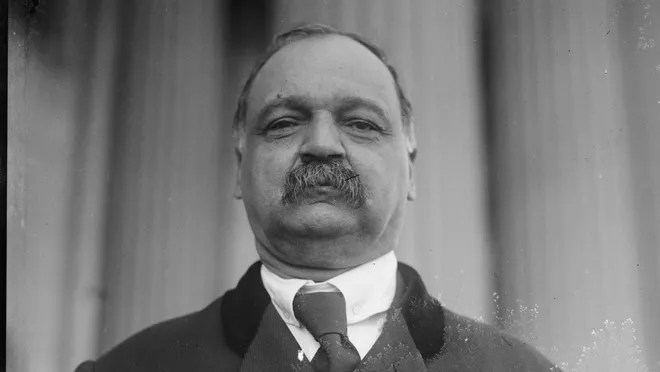
One minor note of interest: apparantly at some point or other, as she’s been boasting about her eventual bust in the Capitol, Kamala Harris slipped up and referred to herself as the first Veep “of color.” This prompted several conservative news sources to bring up a fact check from USA Today in 2021 that pointed out that while Harris was the first female U.S. VP, the first black (sort of) VP, the first VP of “South Asian ancestry,” and the first woman of color to be elected to the office, first U.S. Vice-President “of color” is not on her dance card, that distinction going to this guy…
…Charles Curtis, who was Herbert Hoover’s VP from 1929-1933. His mother was one-quarter Kaw Indian (his father was all-white) making Curtis 12.5% Native American. Blecchh. Who…Cares? By my standards, Curtis isn’t “of-color” but white, and how I long for the day when these kinds of “historic distinctions” end up in history’s metaphorical dustbin where they belong.
Fun Fact: William M. Evarts, Rutherford B. Hayes’ Secretary of State, was the highest ranking U.S. official in history with a third nipple! Okay, I made that up, but that’s about the level of distinction Curtis deserves for having one Native American great-grandparent.
[This excellent commentary by Steve-O was waiting in moderation when I woke up this morning, and I immediately decided to move it directly into a guest post–JM]
The Japanese knew themselves, or at least those with any sense knew, that after the attack they had about 6 months to win an overwhelming victory and force the United States to the peace table before the American production machine ramped up to full capacity and overwhelmed them. Their fatal mistake at Pearl Harbor was not to order the planned third strike which would have targeted repair facilities, fuel facilities, and so forth. As already pointed out by many it was only by great good luck that the carrier fleet was not present.
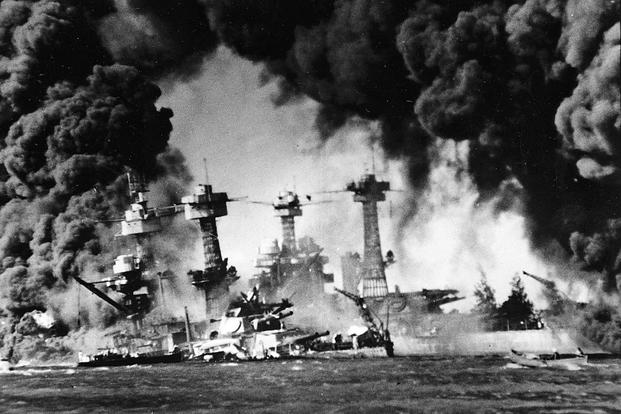
The damage to the battle fleet was extensive, but not total destruction. USS Pennsylvania was in dry dock and was hit by only a single bomb that caused moderate damage. Tennessee and Maryland occupied inside berths and so could not be hit by torpedoes; they received only moderate damage from two bomb hits each. Both were back in service before the end of 1942. USS Nevada took one torpedo hit, but was also back in service before long, although she rather quickly found herself moved to the Atlantic where she covered the Normandy landings. California and West Virginia were the real miracle repairs, both having sunk onto the mud and West Virginia having been hit by seven torpedoes. Oklahoma, which capsized, and Arizona, where a magazine exploded, were the only US battleship losses in World War II. Arizona accounts for almost half the American casualties at Pearl Harbor, including Rear Admiral Isaac Kidd, the highest ranking officer killed.
The following days were the darkest for the Allies, as the Japanese also sank two British battleships, forced the surrender of Hong Kong, and took Singapore and the Philippines. The Americans were fighting back with outdated equipment, a consequence of FDR’s understandable focus on domestic issues since his election in 1932. You don’t hear much about that, and only sometimes do you hear about how near a disaster Midway was, with almost the complete failure of torpedo bomber attacks.
I have nothing unique to add about the attack by the Japanese on Pearl Harbor on this date in 1941, except to note that the lack of mention of it in the news media today is disheartening and, I believe, inexcusable. I’m estopped from complaining too much however: to my amazement and shame, Ethics Alarms has never devoted an entire post to the event since I began writing it 16 years ago. I’ll begin my amends now.
Here is the History Channel’s article on the attack, one of the rare, epochal events of which it can be said without dispute changed everything….
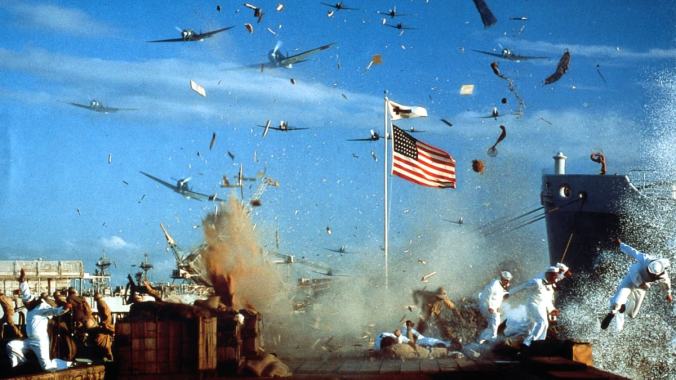
On December 7, 1941, at 7:55 a.m. Hawaii time, a Japanese dive bomber bearing the red symbol of the Rising Sun of Japan on its wings appears out of the clouds above the island of Oahu. A swarm of 360 Japanese warplanes followed, descending on the U.S. naval base at Pearl Harbor in a ferocious assault. The surprise attack struck a critical blow against the U.S. Pacific fleet and drew the United States irrevocably into World War II.
With diplomatic negotiations with Japan breaking down, President Franklin D. Roosevelt and his advisers knew that an imminent Japanese attack was probable, but nothing had been done to increase security at the important naval base at Pearl Harbor. It was Sunday morning, and many military personnel had been given passes to attend religious services off base. At 7:02 a.m., two radar operators spotted large groups of aircraft in flight toward the island from the north, but, with a flight of B-17s expected from the United States at the time, they were told to sound no alarm. Thus, the Japanese air assault came as a devastating surprise to the naval base.
Much of the Pacific fleet was rendered useless: Five of eight battleships, three destroyers, and seven other ships were sunk or severely damaged, and more than 200 aircraft were destroyed. A total of 2,400 Americans were killed and 1,200 were wounded, many while valiantly attempting to repulse the attack. Japan’s losses were some 30 planes, five midget submarines, and fewer than 100 men. Fortunately for the United States, all three Pacific fleet carriers were out at sea on training maneuvers. These giant aircraft carriers would have their revenge against Japan six months later at the Battle of Midway, reversing the tide against the previously invincible Japanese navy in a spectacular victory.
The day after Pearl Harbor was bombed, President Roosevelt appeared before a joint session of Congress and declared, “Yesterday, December 7, 1941—a date which will live in infamy—the United States of America was suddenly and deliberately attacked by naval and air forces of the Empire of Japan.” After a brief and forceful speech, he asked Congress to approve a resolution recognizing the state of war between the United States and Japan. The Senate voted for war against Japan by 82 to 0, and the House of Representatives approved the resolution by a vote of 388 to 1. The sole dissenter was Representative Jeannette Rankin of Montana, a devout pacifist who had also cast a dissenting vote against the U.S. entrance into World War I. Three days later, Germany and Italy declared war against the United States, and the U.S. government responded in kind.
The USA Today headline: “National parks cut free entry for MLK Day, add Trump’s birthday.” I almost leaped for my keyboard. Sure, trolling the “No Kings” Trump Deranged is fun for POTUS, but this crossed the line. It also seemed like a deliberately racially provocative act: substituting his own birthday for MLK’s among the days commemorated by the National Parks? This mandated an Ethics Dunce post that would write itself!
It was not until the end of the story (by USA TODAY hack Kathleen Wong, who “covers travel news with a passion for sustainable tourism and human-focused storytelling” —gag/ack/yecchh!) where the full list of days when admission to the National Parks will be free of charge to American citizens is listed, that I recognized the nasty partisan con.
The new list of 2026 free admission days to the National Parks during patriotic holidays: President’s Day (Feb. 16), Memorial Day(May 31), Flag Day (June 14) Independence Day weekend (July 3–5), the 110th Birthday of the National Park Service (Aug. 25) Constitution Day (Sept. 17) Theodore Roosevelt’s birthday (Oct. 27)—Teddy launched the National Parks— and Veterans Day (Nov. 11). I had forgotten, as I suspect many readers have, that Flag Day happens to be Trump’s birthday, but the holiday fits naturally into the category of non-interest group, non- divisive patriotic commemorations that was clearly the motivation for “patriotic fee-free days” announced by the Department of the Interior.
Well, unfortunately I started thinking that it’s beginning to look a lot like Christmas this week, so I’m depressed and miserable.
It’s my favorite time of the year because its the most ethical time of the year, but my wife, who was a Christmas fanatic, is dead; my son, who now insists that she’s my daughter, barely speaks to me though I have been nothing but supportive (because that’s my job); my sister is going to be across country for the holiday; and my mom, who was the center of every Christmas in my life as long as she was breathing, breathes no more. I have neither the time to decorate a tree properly (like I used to) nor the resources to purchase one, and half-hearted decorations will only remind me of 2702 Westminster Place glories past. But I can’t avoid Christmas, just as I can’t avoid ““It’s a Wonderful Life”” as you know. So I’ll be celebrating my favorite holiday here, on Ethics Alarms, with my five loyal readers and the other visitors who drop in, and pretty much nowhere else. That means, among other gifts, I will be bestowing various Christmas-related post from the Ethics Alarms Christmas attic. Like this one…
Other than the reality that Jesus’s mother and her husband were not in any sense of the word refugees, as they were traveling from one part of the Roman Empire to another, and the even more relevant reality that this was over 2,000 years ago in a different culture and time that make attempted comparisons with modern immigration policies, problems and legal enforcement ludicrous, it’s a great point!
Defaulting to the Bible and religion as the cheapest “appeal to authority” imaginable is persuasive evidence of a lack of genuine arguments and an IQ deficit, or perhaps a cynical desire to confuse the intellectually deprived. In either case, its an abuse of Christmas. Indeed, the defenders of illegal immigration literally have no valid justification for their beliefs at all. A church that would engage in this cynical, ahistorical deception can’t be trusted.