Unethical Quote of the Week: Thomas Jefferson

 “Brought from their infancy without necessity for thought or forecast, [blacks] are by their habits rendered as incapable as children of taking care of themselves, and are extinguished promptly wherever industry is necessary for raising young. In the mean time they are pests in society by their idleness, and the depredations to which this leads them.”

—-Thomas Jefferson, quoted in a new book, “Master of the Mountain: Thomas Jefferson and His Slaves,” by historian Henry Weincek. Jefferson wrote this in 1819, 43 years after the Declaration of Independence, in response to a request for support from a family friend who was taking his own slaves to freedom. Jefferson refused, and this was part of his response.
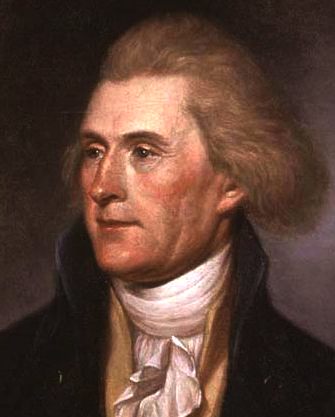
Great writer. Great philosopher. Bad man.

I have been working on a post on the topic of Presidential character, a lifetime study for me, as a rebuttal of a post on the Daily Caller titled, “Why Good Men Don’t Become President?” Good men do become President; in fact, almost all of the men who have become President were or are good men, Barack Obama included. Leaders, however, are a peculiar breed of good men, since leadership itself requires a different priority of virtues than other roles. Those who do not understand or appreciate leadership, and I believe that the author of that article does not, often conclude that leaders are necessarily bad.

Thomas Jefferson, I submit, was one of the few bad men who did become President. Continue reading

Ethics Hero Emeritus: Eric Lomax, 1919-2012

Eric Lomax was a hero of forgiveness.

Eric Lomax, his book, the Bridge on the River Kwai,, and his friend, the man who tortured him.

In 1942, Eric Lomax, was a 19 year old  member of the British Royal Corps of Signals stationed in Singapore when he joined thousands of British soldiers in surrendering to the Japanese. It was 1942. He was one of those shipped to Thailand and became one of the slaves laboring to build the Burma Railway, also known as the Death Railway. The building of the railroad and the brutal treatment of the English prisoners by their Japanese captors  formed the plot of the classic 1957 David Lean film, “The Bridge on the River Kwai,”

After Lomax was discovered to have built a radio receiver from spare parts, he was mercilessly tortured and interrogated by his captors.  After his release, fantasies about murdering his main torturer, a man named Nagase Takashi, obsessed him. Lomax spent the early years of his retirement in the 1980s looking for Takashi, and eventually learned that he had become an interpreter for the Allies after the war. In 1992, he stumbled across an article profiling Nagase and noting that he was haunted by guilt over his mistreatment of one British soldier. That soldier, Lomax realized, had been him. He arranged to meet the man who tortured him, and whom he had spent the rest of his life dreaming of murdering.

Torturer and victim met in 1993, on the infamous bridge Lomax had been forced to help construct (and which was not blown up, the film ending notwithstanding). Continue reading

Incompetent Elected Official of the Week: Georgia Rep. Paul Broun

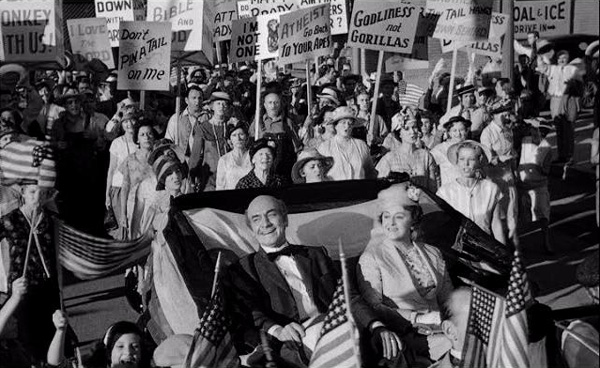
Paul! See that guy holding the sign that says, “Atheists Go Back to Your Apes”? YOU COULD BE THAT GUY, PAUL!

An ignoramus and proud of it, Rep. Paul Broun (R-GA.) is apparently serving in Congress while waiting for a juicy role as one of the fanatically religious townspeople in “Inherit the Wind,” should a local production materialize. For it was good people like Broun, with his level of education, certitude and Godly conviction, who occupied the town of Dayton, Tennessee during the Scopes “Monkey Trial,” the famous legal battle over the teaching of evolution that inspired the fictional stage adaptation of the event authored by Jerome Lawrence and Robert E. Lee, perhaps the best high school drama club play that ever graced Broadway.

Those science-hating, God-loving people of Dayton’s  imaginary stand-in, “happy Hillsboro,” get to do a lot of revival meeting singing, and scream “Praise God” and “Read your Bible!,” and join in choral renditions of “We’ll hang Bert Cates from a Sour Apple Tree,” a reference to the play’s junior high science teacher, who, like the real John Scopes, dares to defy Tennessee law and teaches his students that the world isn’t only 9,000 years old, that Adam didn’t ride around on a triceratops and that mankind evolved from more primitive primates. Broun would be terrific at the singing and screaming, I’m sure. Continue reading

The Times Square Kiss, and Feminist Blogs’ Fanatic Crime Against Joy

The blog posts at issue make me angry. Usually it is silly to be angry about mere opinions, I know. However, the opinion registered by “Lori” on the blog Feministing, taking her cue from another feminist blogger, is a symptom, a symptom of the scourge of pernicious, political-correctness zealots, who refuse to recognize the important distinctions between malice and human beings being human, and seek to wipe out that distinction by distortion, sophistry, historical revisionism and bullying.

The bloggers’ target is an iconic photograph from the heart of American history: LIFE photographer Alfred Eisenstaedt’s shot of an American sailor kissing a nurse on August 14, 1945, in a moment of jubilation on Victory over Japan Day in the heart of New York City. Ah, but all is not as innocent and blissful as it would appear. Some historians think they have finally confirmed the identities of the mysterious couple (the photographer never identified his subjects) as Greta Zimmer Friedman, a dental nurse at the time, and George Mendonsa, a sailor. [Despite the assertions of the bloggers and the historians, we can never know for sure. There were apparently many similar pairings that day, and several couples have credibly claimed to be those kissing through the decades.] Greta was recently interviewed, and noted that that she was just grabbed by a sailor she didn’t know and kissed. “That man was very strong. I wasn’t kissing him. He was kissing me,” Greta told interviewers.

Ah HA! declare the feminist bloggers. Don’t you see, you addled, male-culture dominated, female-subjugating fools? This wasn’t a pure expression of joy in the long-awaited  end of a world conflict that had killed millions and laid waste to much of the planet! Oh, no! The famous photo was something dark and sinister: Continue reading

“Print the Legend” Ethics: The Unjust Obscurity of Mary Quantrell

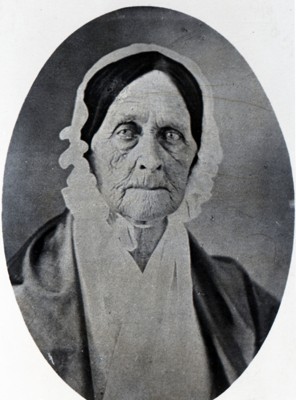
Barbara Fritchie, as in the poem. But the Barbara in the poem was really Mary.

Today is the anniversary of the Battle of Antietam, the single most bloody day in the Civil War, with nearly 21,000 casualties on September 17, 1862.  Most of us, at least those of my generation, were introduced to the battle with a poem, “The Ballad of Barbara Fritchie,” by John Greenleaf Whittier, telling the tale of a brave old woman, ninety years old, who confronted Confederate General Stonewall Jackson’s troops as they marched through Frederick, Maryland to the battlefield, by waving Old Glory after the troops had fired at it, and saying,

Shoot, if you must, this old gray head,
But spare your country’s flag,’ she said.

Barbara Fritchie is now an icon, and has been portrayed in novels and films. Her house is a historic landmark, and the town uses her name and the poem to market everything from candy to T-shirts. And, I learned this Sunday, it is all a lie, though not old Barbara’s fault. The poet got his facts wrong, or used excessive “poetic license” because “Barbara Fritchie” pleased his ear better than “Mary Quantrell”, the name of the real flag-waver, and a 90-year old patriot made for a more colorful plot than a mere 30-something with chutzpah. Whittier also made Jackson the antagonist of the tale, when in fact the general was the less flamboyant and famous A.P. Hill. In 1876 Quantrell wrote to Whittier pleading with him to correct the record, signing her letter, in quotes, as “Barbara.” He did nothing. Continue reading

Emmett Burns Emulates Rahn Emanuel, or, What Does It Tell Us That Yvette Clarke Is NOT This Month’s Most Incompetent Elected Official?

Brooklyn, NY, circa. 1898. If you look closely, you can see the slaves working in the windmills…

In case you missed it, Rep. Clarke, the Congresswoman from Brooklyn, NY, had thousands of American banging their heads against the wall (and, tragically, many more, like those who voted this dolt into office nodding their empty heads and saying, “She speaks the truth!”) when she told Comedy Central’s wag Stephen Colbert that Brooklyn still had slavery in 1898, a full 33 years after the Civil War and the passage of the 13th Amendment. When Colbert, in mock surprise, said, “It sounds like a horrible part of the United States kept slavery going until 1898! Who would be enslaving you in 1898 in New York?”, Rep. Clarke, eager to fill the gaps in Colbert’s knowledge of New York history,  informed him that it was “the Dutch”…who lost control of New York when “New Netherland” was conquered by the British in 1664, 200 years before the end of the Civil War. Continue reading

Ethics Quote of the Day: Calvin Coolidge

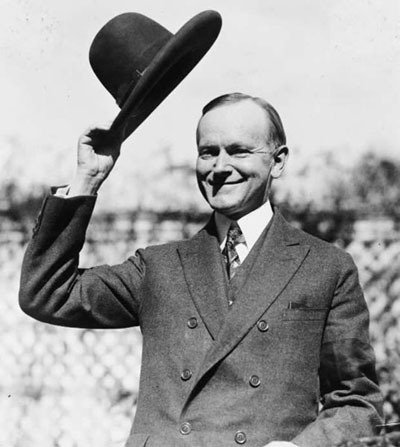
“There is no right to strike against the public safety by anybody, anywhere, any time.”

—-Calvin Coolidge, then Governor of Massachusetts, soon to be Vice-President and later President upon the death of Warren G. Harding, in a September 14, 1919 telegram to labor leader Samuel Gompers on the occasion of the Boston police department strike.

Cal made his words count.

The Boston police were fired for extorting the city, and Coolidge’s words were in the air when President Ronald Reagan responded to an illegal strike by air traffic controllers by firing the strikers and banning the union.

Now Chicago’s teachers are striking, not against the city management that is denying their demands, but against the children of the city and their families.

What would silent Cal say? I think I can guess. Harming children and families for higher wages is as much extortion as leaving a city unprotected against crime, and cannot be defended ethically. The defense will be, inevitably, “Well, management is unfair, and their offer is unjust. What are we supposed to do?”

The answer is: something else.

__________________________________

Facts: Chicago Tribune

Source: Wikipedia

Graphic: Washington, Jefferson and Madison Institute

Ethics Alarms attempts to give proper attribution and credit to all sources of facts, analysis and other assistance that go into its blog posts. If you are aware of one I missed, or believe your own work was used in any way without proper attribution, please contact me, Jack Marshall, at  jamproethics@verizon.net.

And While We’re On The Topic Of Outrageous Lies, Who At The DNC Dreamed Up THIS One?

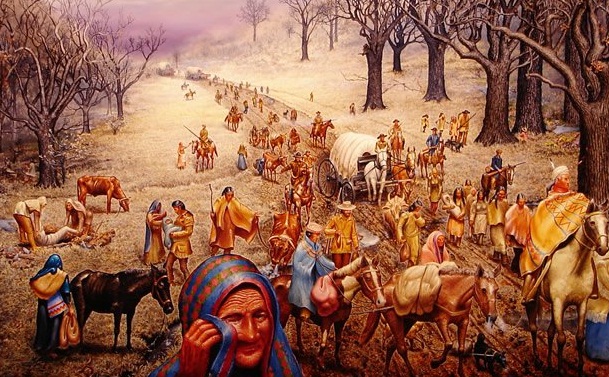
The Trail of Tears, just one of those pace-setting civil rights initiatives by President Andrew Jackson, father of the modern Democratic Party.

With my head swathed in ice and restraints, trying to stem the explosion (I have vacated the house of all other living things), I note this, which I happily was unaware of until a few hours ago, from a history of the Democratic Party, on a new Democratic National Committee web site .

 “For more than 200 years, our party has led the fight for civil rights, health care, Social Security, workers’ rights, and women’s rights.”

Health care? Okay.  Social Security? Obviously. Workers’ rights? A closer call, but sure. Women’s rights? Sold, though literally none of these can be traced back to 1812. Nobody was thinking about health care until the 20th Century. Worker’s rights became an issue in the late 19th. Social Security wasn’t a twinkle in any Democrat’s eye until the 1930’s, and the Democratic Party wasn’t very concerned about women’s rights until the 20th century either.

But can the Democrats claim 200 years’ support of civil rights? Absolutely not. To claim this is beyond mere lying, and reaches Orwellian proportions as an effort to re-write history. It is also blatant misinformation, clearly designed for the uneducated, the historically ignorant, the gullible or the stupid—you know, most people—or it was written and approved by members of this group who built the DNC site. Let’s be unequivocal: The Democratic Party did NOT lead the fight for civil rights for “more than 200 years.” No historian believes this or has written this. It is a complete, nonsensical, made-up, silly piece of dishonest puffery: Continue reading

The Forgotten Meaning of Labor Day

Do you know who this is? You should! It’s Labor Day, dammit!

Labor Day commemorates one of the great ethical victories of American society, and not one in a hundred Americans know it. Labor Day marks the end of summer, and a time for retail store sales, and the last chance to get away to Disney World, but few of us think about the real meaning of the word “labor” in the name, and how it is meant to honor brave, dedicated men and women who fought, sometimes literally, the forces of greed, political influence, wealth and privilege in this country to ensure a measure of safety, consideration, fairness and justice for the hardest working among us.

Today labor unions are controversial, and with good reason. Many of them have been run as criminal enterprises, with deep connections to organized crime; many operate in a blatantly coercive and undemocratic fashion. Union demands and strong-arm tactics, while providing security and good wages to members, have crippled some American industries, and limited jobs as well. Today the unions  get publicity when one of them tries to protect a member who should be punished, as when the baseball players’ union fights suspensions for player insubordination or even drug use, or when school districts are afraid to fire incompetent teachers because of union power, or when the members of public unions protest cutbacks in benefits that their private sector counterparts would be grateful for. It is true that today’s unions often embody longshoreman philosopher Eric Hoffer’s observation that  “Every great cause begins as a movement, degenerates into a business and ends up as a racket.” *

That not what Labor Day honors, however. It is celebrating the original labor movement that began at the end of the 19th century, and that eventually rescued the United States from an industrial and manufacturing system that was cruel, exploitive, deadly and feudal. Why the elementary schools teach nothing about this inspiring and important movement, I do not know. I suspect that the story of the American labor movement was deemed politically dangerous to teach during the various Red Scares, and fell out of the curriculum, never to return. Whatever the reason, it is disgraceful, for the achievements of the labor movement are every bit as important and inspiring as those of the civil rights movement and the achievements of our armed forces in the protection of liberty abroad. Continue reading

Neil Armstrong’s Disputed Words: “The Ethics of Changing History”

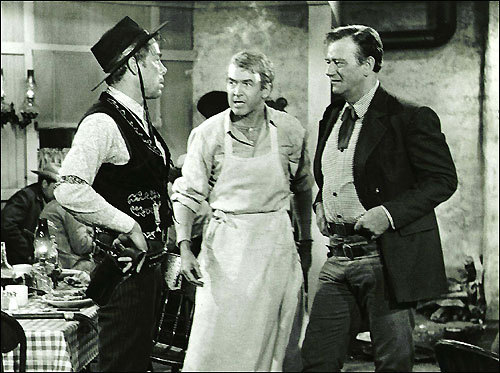
Pop Quiz: What does Neil Armstrong and this classic Western have in common?

[The death of mo0n-walking astronaut Neil Armstrong  ate the age of 82 reminded me of a 2006 essay about Armstrong’s famous quote that I wrote in 2006 on The Ethics Scoreboard. The AP just revisited the issue, and you can read the full text of my 2006 piece, The Ethics of Changing History: Of Crockett, the Titanic and “One Small Step” on the Scoreboard archive site. Here is the relevant portion of that article:] Continue reading