The Strange, Conflicted, Unethical Holiday We Call Columbus Day

"Yes, it seems like a catastrophe now, but some day creatures called human beings will celebrate this day..."

“Yes, it seems like a catastrophe now, but some day creatures called human beings will celebrate this moment…”

What are we celebrating on Columbus Day, and is it ethical to celebrate it?

When I was a child, I was taught that we were celebrating the life of Cristoforo Columbo, popularly known as Columbus, who was convinced, against the prevailing skeptics of the time, that the Earth was round rather than flat, and in the process of proving his thesis, made the United States of America possible by discovering the New World in 1492. Virtually none of what we were taught about Columbus was true,  so what we thought we were celebrating wasn’t really what we were celebrating. Columbus wasn’t alone in believing the world was round: by 1492, most educated people knew the flat Earth theory was dumb. He blundered into discovering the New World, and by introducing Spain into this rich, virgin and vulnerable territory, he subjected millions of people and generations of them to Spain’s destructive and venal approach to exploration, which was, in simple terms, loot without mercy. The Spanish were like locusts to the Americas; South and Central America are still paying the priced today. Surely we aren’t celebrating Columbus’s complicity in that. Continue reading →

“Print the Legend” Ethics (Again): Does It Matter If Matthew Shepard’s Death Was Really A Hate Crime?

Powerful story; moving story; useful story. Does it matter if it isn't a true story?

Powerful story; moving story; useful story. Does it matter if it isn’t a true story?

It apparently matters to a lot of people for the wrong reasons—unethical reasons, in fact. As a result, legitimate efforts to determine what really happened to the gay rights icon, then a 21-year-old University of Wyoming student, who was beaten,  tortured and murdered  in Laramie, Wyoming  in 1998, have been exploited for ideological goals by adversaries of gay rights, and attacked by the media, gay rights advocates and good progressives everywhere. Just as it is important to the civil rights establishment, the black grievance community and anti-gun advocates that Trayvon Martin be seen as the innocent victim of a racist vigilante with murder in his heart—a characterization of Martin’s murder at war with all known facts and rejected by a jury after a fair trial—thus is it crucial to gay advocacy groups and others that Shepard be remembered as the victim of a hate crime, brutally killed because he was gay.

And facts be damned. Continue reading →

Scott Carpenter And Being Unfair To #2

scott-carpenter

Scott Carpenter died last week, at the age of 88. Did you notice? Did you even remember who Scott Carpenter was?

I remember who he was and what he did, but I didn’t know that he had died. The world stops when the actor who played Tony Soprano dies, but an aged American hero and explorer? The news media says “Meh.” If Carpenter was still famous or a celebrity at all, it was only in the vague, foggy sense that obscure rock artists from the 60’s and expired pop icons are famous. I think Tony Dow, Barbara Feldon and Mama Cass are about as familiar to today’s public as Scott Carpenter, if not more. I just asked my son, who is 18 and better schooled in history and culture than most of his contemporaries. He knew Mama Cass was a member of the Mamas and the Pappas. The rest? Crickets.

Yet Scott Carpenter was, unlike those people, important. He was  one of the original Mercury astronauts, and in 1961, he orbited the Earth. After he left NASA he became a different kind of explorer, challenging “inner space,” the ocean’s mysterious depths. He launched an undersea habitation called Sealab II, where he and three other men conducted experiments on how well humans  function in a high-pressure undersea conditions for extended periods. Carpenter was a deep-water pioneer, mining on the sea bottom and harvesting exotic fish and other sea creatures. He salvaged and refloated a sunken jet fighter; he built an undersea petroleum-exploration platform.

Scott Carpenter, however, wasn’t famous by the time he died, because one of his fellow astronauts and good friends, John Glenn, orbited the Earth before him. Glenn went on to become a U.S. Senator based on his fame and heroic reputation (it helped that he was a combat pilot and decorated military hero as well). Carpenter did something important, dangerous, selfless, difficult and heroic, but he did it second, after John Glenn. We don’t remember second, and the distance between the accolades and honors heaped on #1 and the shrugs that follow #2 is disproportionate and unfair. Continue reading →

The Right Thing In Spite Of Themselves: CNN And NBC Abandon Their Hillary Projects

Hillary Clinton, in her dreams...and Bill's...

Hillary Clinton, in her dreams…and Bill’s…

If CNN and NBC had any sense of responsibility, fairness and respect for the American political system, neither would have planned Hillary Clinton projects—CNN, a documentary, NBC, a “docudrama” mini-series—for the coming year, in which the controversial Ms. Clinton is expected to begin running for President of the United States. Neither deserves any credit for cancelling them now, after pundits and especially the Republican Party screamed foul, and foul it was.

There is no way either product could avoid making difficult content choices that would be inevitably influenced by such non-ethical considerations as entertainment value, ratings, political pressure, and artist bias. The documentary and the mini-series would necessarily distort fact and history, because so much of any contemporary figure’s life and career has yet to be objectively examined, and no more so than Hillary Clinton, as polarizing and mysterious figure as U.S. politics has ever produced, rivaling Richard Nixon and Aaron Burr. Continue reading →

Grassy Knoll Ethics: How Deception Breeds Distrust

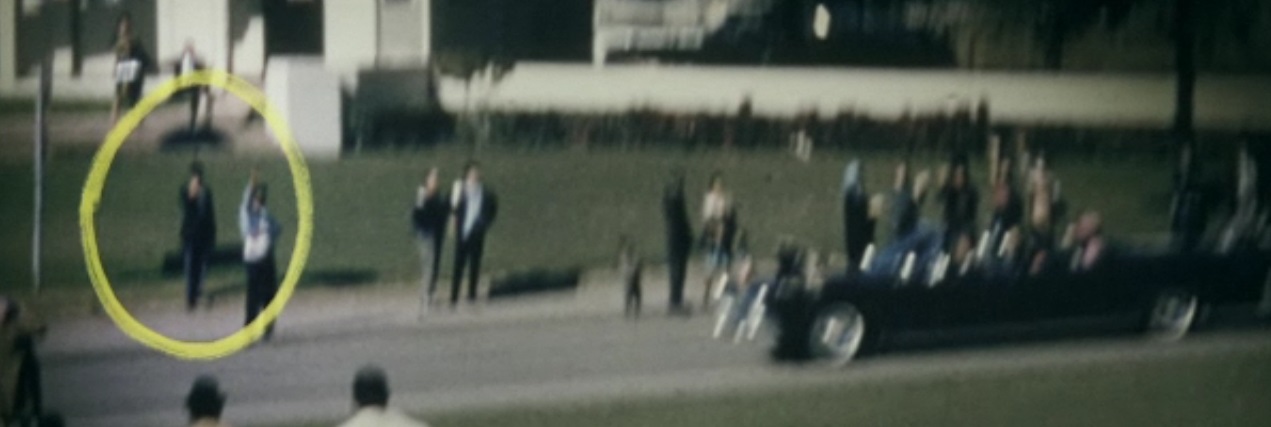
UmbrellaMan2

We once again must squarely face the hoary  quote from Walter Scott’s epic poem Marmion: “Oh what a tangled web we weave when first we practice to deceive.” It is hoary because it is true, and this month’s Smithsonian Magazine reminds us of how true it is, recounting how well-intentioned deceptions by the news media regarding evidence in the assassination of President Kennedy helped create a conspiracy theory that will not die, and that may have begun the slow, relentless deterioration of America’s trust in its own government that has reached dangerous proportions today.

Frame 313 of Abraham Zapruder’s accidental record of one of the pivotal moments in U.S. history gave him nightmares, and when he sold the rights to his amateur movie to Life Magazine, he insisted that frame be withheld from the public, and not published. “We like to feel that the world is safe,” documentary maker Errol Morris explains in the article.“Safe at least in the sense that we can know about it. The Kennedy assassination is very much an essay on the unsafety of the world. If a man that powerful, that young, that rich, that successful, can just be wiped off the face of the earth in an instant, what does it say about the rest of us?” I understand, but withholding the truth is not the way to make the world seem safer. As the story of the conspiracy shows, it is how we end up trusting no one. Continue reading →

Your National Hispanic Heritage Month Assignment: Remember The Amazing Elfago Baca (February 10, 1865 – August 27, 1945)

Baca statue

As frequent readers of Ethics Alarms know, I fervently believe that history is important, and that we all have a duty to remember and honor the remarkable Americans who have gone before us, their exploits, triumphs, struggles and achievements, both for our sakes—for we can learn much from them—and theirs. I am constantly discouraged by the inspirational stories and fascinating historical figures who have nearly been forgotten. The schools don’t teach our children about them, and popular culture ignores them. This weakens the flavor and the power of our shared culture: it is wrong, that’s all.

Today, as I realized we were in the midst of National Hispanic Heritage Month ( September 15-October 15), I want to do my part to help keep alive the name and the story of a Mexican-American who may have faded from memory because the events of his life seem more fictional than real. Indeed, for most of my life, until a couple of years ago, I thought Elfago Baca was a creation of Walt Disney’s creative staff, who wrote a ten episode mini-series about him called “The Nine Lives of Elfago Baca” for the “Disneyland” show (“Now…from Frontierland!”) in 1958. I loved that series, but it never occurred to me that the series’ tales of a gunslinging, lawyer-sheriff in Old New Mexico could possibly have any connection to reality.

But they did. The real Elfago was, if anything, even more improbable than his fictionalized counterpart, portrayed by a very young and athletic Robert Loggia, who is best known as the toy magnate who plays “Chopsticks” on the giant keyboard with Tom Hanks in “Big.” Continue reading →

Secretary Of State John Kerry, Pants On Fire

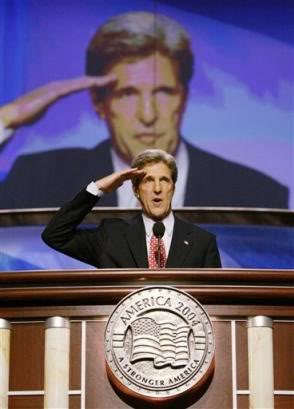
Kerry SaluteWashington Post Fact-checker Glenn Kessler finally couldn’t stand it anymore regarding Secretary of State John Kerry’s favorite lie, only trailing me by about nine years.  As he was participating as a stooge in President Obama’s improvised vaudeville act regarding his “red line” and Syrian chemical weapons (but then, as Americans, so are we all), Kerry said this in an interview on MSNBC, where he knows any transparent and self-serving lie by a Democrat will be accepted as revealed truth:

“You know, Senator Chuck Hagel, when he was senator, Senator Chuck Hagel, now secretary of defense, and when I was a senator, we opposed the president’s decision to go into Iraq, but we know full well how that evidence was used to persuade all of us that authority ought to be given.”

Now I, for one, am thankful when Kerry, who is not Irish (his heritage is  primarily Jewish) * and was elected Senator in Massachusetts using campaign posters with green shamrocks on them, reminds us all why he never became President. This was yet another re-phrasing of the deception he kept hammering during his 2004 campaign—you remember, the one with John Edwards as his running mate, because Kerry is also a magnificent judge of character?—he didn’t support President Bush’s invasion of Iraq.

Of course, he did, and emphatically too. Kessler, who is inclined to go easy on Democrats for the same kinds of deceptions he slams Republicans for (I measure the discrepancy at just short of two “Pinocchios”) decided to give Kerry a full blast with both barrels: Continue reading →

Ethics Quote of the Week: Eliot Cohen

captain-america

“Above all, a president has no business confessing to war-weariness. Sending soldiers to war is a hard business. But President Obama knew he was going to be a war president; if that duty was too trying for him, he should not have run for reelection, because, as he has discovered, he might have to fight new wars and not merely end old ones.

“For a president to confess to war-weariness is to confess weakness.

“It is the business of the commander in chief to inspire, either with tempered optimism or grim determination. He fails in his duty if he tells his subordinates, his people and the world that he is weary of the burden that he assiduously sought. In their dark moments, Abraham Lincoln and Franklin Delano Roosevelt, who presided over infinitely more consequential and bloodier wars than Barack Obama, were undoubtedly war-weary. Can anyone imagine them proclaiming it to the world? “

—–Eliot Cohen, a teacher at the Johns Hopkins School of Advanced International Studies, concluding a Washington Post op-ed titled (in the paper’s print version), “We have not earned war-weariness.”

If there is a silver lining to the President’s Syrian Ethics Train Wreck, other than convincing those still capable of independent thought that we who saw the weakness of President Obama’s leadership skills were the ones whose eyes were open all along, it is that it has provoked some perceptive writing and debate on the topics of leadership, character, and America’s role in the world. Continue reading →

“Mild Pedophilia” and Richard Dawkins’ Ethical Blind Spot

"Bobby, do you thinkthere's anything wrong with mild pedophilia?"

“Bobby, do you think there’s anything wrong with mild pedophilia?”

When you are a public intellectual and your primary mission is using reason and scholarship to enlighten the public, you have an obligation to guard scrupulously against making careless,  irresponsible or easily misunderstood statements that will be accepted as inspired wisdom by the less analytically able. Or to be more direct, if you are Richard Dawkins and because of some serious neural malfunction you really think that there is such a thing as “mild pedophilia,” you want to ever to be taken seriously again, shut up about it.

Dawkins, for reasons only known to himself, used a wide-ranging  interview to airily wax on about what he regards as his contact with a harmless child-molester.  Reminiscing about his  days at a boarding school,  he recounted how one of his schoolmasters “pulled me on his knee and put his hand inside my shorts.” Noting that other children in his school peer group had been molested by the same teacher, he concluded: “I don’t think he did any of us lasting harm.”
The world’s most famous atheist explained, “I am very conscious that you can’t condemn people of an earlier era by the standards of ours. Just as we don’t look back at the 18th and 19th centuries and condemn people for racism in the same way as we would condemn a modern person for racism, I look back a few decades to my childhood and see things like caning, like mild pedophilia, and can’t find it in me to condemn it by the same standards as I or anyone would today.”

What (in the name of Holy Hell) is “mild pedophilia”? Dawkins went on to say that the most notorious cases of pedophilia involve rape and even murder and should not be bracketed with what he called “just mild touching up.”

“Mild pedophilia”? “Just mild touching up’? This from one of the most respected minds in the cosmos? Continue reading →

Presenting the Ethics Alarms Heroes’ Hall Of Honor

remember

Today, the anniversary of September 11. 2001, American minds should be occupied with thoughts of gratitude for heroes, the often anonymous and unknown people we may pass in the street every day, as well as the justly famous and celebrated, who make our lives and many others better by living their own selflessly and well. They are our salvation, role models and neighbors, and they teach us the lesson that all is never lost, and hope is always thriving, as long as there are good and courageous people who will do the right thing, no matter what the cost, when fate turns to them.

This seems like a propitious time to dedicate the Ethics Alarms Heroes Hall of Honor, the list of the Ethics Heroes Emeritus whose stories have been told here (and on this site’s predecessor, The Ethics Scoreboard.) Every current member of the Hall is now deceased, like the brave men and women who died this day, 12 years ago. Each of them, in a unique way, teaches how human beings can rise above the vicissitudes of mere survival, self-interest, personal benefits and the base desires of the species  to live  meaningful and virtuous lives. Some accomplished this over decades, some with one brilliant and transforming act of distinction.

There are currently 32 members enshrined in this virtual Hall. Obviously, it is far from complete. They are just symbolic representatives, worthy ones, of millions more who once breathed the same air we do today, and like those who perished twelve years ago, face the prospect of being forgotten over time, as we all go about the consuming task of getting from one day to another. Each one of us, I believe, is capable of emulating their example.

Here are the thirty-two members and their stories, as of this date,

September 11, 2013... Continue reading →