National Anthem Ethics

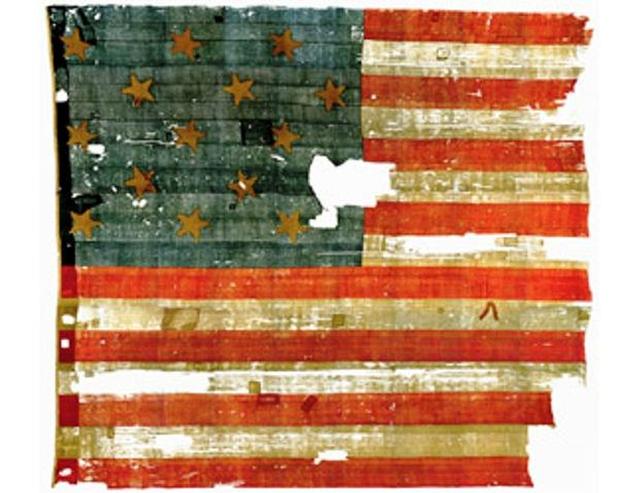
Pop songbird Christina Aguilera has been ridiculed and condemned in every forum imaginable for botching the lyrics of “The Star Spangled Banner” at the Super Bowl. The last time a performer got this kind of abuse for a National Anthem performance (not counting Roseanne Barr’s infamous crotch-grabbing,  off-key screeching of the anthem to begin a San Diego Padres game, which was not so much a performance as a clinical demonstration of what boorishness looks and sounds like) was when the late Robert Goulet massacred the lyrics before a national radio audience to introduce the Cassius Clay-Sonny Liston Heavyweight Championship fight. The incident haunted Goulet the rest of his life, although he was a good sport about it.

As with Goulet (he was Canadian, for heaven’s sake!), the condemnation of Aguilera is not merely unfair, but ignorant. Continue reading

Ethics Dunce: Lexington (Mass.) High School Principal Natalie Cohen

“Columbinus” is a tough play by Stephen Karam and PJ Paparelli that combines interviews and news footage about the Columbine shootings with dramatic and cinematic techniques to explore the human and cultural issues raised by the tragedy. It is not “Grease,” by any means, and though many high schools have produced it successfully, I would not quarrel with the decision by any school official who decided that the show was inappropriate for high school drama and that it would better to do, say, “The Mikado.”

But Lexington High School principal Natalie Cohen managed to make this decision in the worst way imaginable, for the worst reasons imaginable, showing rank ignorance of the purpose of theater while being irresponsibly dismissive of the efforts and creative energies of her students. Continue reading

Ethics Scoreboard Flashback: “Death on Everest”, a Real Life “What Would You Do?”

[ The discussion in the earlier post today regarding ABC’s revolting “What Would You Do?” convinced me that I should re-post this essay about a real-life “What Would You Do?”tragedy, which originally appeared on The Ethics Scoreboard in 2006.  Entitled “Death on Everest,” It has been lightly edited to bring it up to date.]

As 34-year-old mountaineer David Sharp lay near death on Mount Everest, over 40 other climbers trudged past him on their march to the peak. All had oxygen with them, and a few even stopped briefly to give Sharp a few breaths. But still they climbed on, and Sharp perished. His demise on May 15, 2006 has gone into ethics lore alongside the infamous death of Kitty Genovese on March 13, 1964. Genovese was murdered outside her apartment building in Queens while thirty-eight neighbors watched and did nothing.
The two incidents stem from very different causes, however. While Genovese’s death was fueled by urban fear and apathy, a mass failure of courage and the willingness to assume responsibility in a crisis, Sharp was the victim of that universal ethics-suppressant, the powerful non-ethical consideration. Continue reading

Egypt Ethics: Integrity Deficit on the Right

It has been fascinating and troubling listening to conservative radio talk-show host Mark Levin lambast fellow conservatives who have been siding with the revolutionaries trying to end the 30 year rule of Hosni Mubarak in Egypt. Levin argues that such support is foolish and ignorant, because there is no way for the United States to be sure that the resulting new government, even if it is more democratic than the current one (hardly a difficult bar to clear), wouldn’t be worse for the interests of the United States. Continue reading

Ethics Train Wreck Report: Lessons, Ethical and Otherwise, of the Missoula “Mikado” Mess

Much of my weekend was occupied by reading, writing, thinking, and talking about the bizarre controversy over a community theater production of Gilbert and Sullivan’s “The Mikado,” which, by a series of misunderstandings, misdeeds, hypocrisies and journalistic malpractice, has created much anger and unhappiness for no legitimate reason at all. If you are late to the story and want to catch up, you can do so here, here, here, and here.

For the first and perhaps only time I can honestly say that Ethics Alarms is the most reliable source on a story. There may be plenty of ethicists who are more knowledgeable, scholarly, prudent and experienced than I am regarding ethics theory, but none of them knows this topic—Gilbert and Sullivan and “The Mikado”, like I do. I have 50 years experience performing, directing, studying, parodying and laughing at the works of these Victorian geniuses. The second I read the astoundingly wrong-headed interpretation being attached to the Missoula Community Theatre’s inclusion of Sarah Palin in Ko-Ko’s famous song “I’ve Got a Little List,” I surmised exactly what was going on, and my assessment has been confirmed by everything that has come to light since.

I will summarize what we now know in brief (well, briefer than reading all the posts) form:

Continue reading

The Strange Case of the Opportunistic Fugitive

The ethics call on this story is easy, though it is tempting to say otherwise.

Anthony S. Darwin was on the lam for six years in Wisconsin, eluding law enforcement authorities who were seeking to arrest him on pending charges of aggravated battery, bail jumping, battery, robbery with use of force, substantial battery and identity theft. Then he suddenly surrendered… because he realized he needed treatment for a life-threatening cancer. Continue reading

Comment of the Day: “Next: A Version of “The Mikado” Without Execution References”

I promise I won’t do this often, but this Comment of the Day is by me, a reply to a comment by Ichneumon, which you will find at the end. I have been involved in this debate elsewhere, and a common “gotcha!” being employed against me is the argument that I jumped the gun defending the production of “The Mikado,” because I didn’t (and don’t yet) know what the exact lyrics were. I think this is worth expanding on, since Ichneumon and others have accused me of being “unethical” for calling the critics of the Palin lyric, whatever it was, ignorant.  Saturday is usually quiet, and this seems to be all that is going on other than the Middle East blowing up; by tomorrow I’m hoping to be able to move on to issues having nothing to do with Sarah Palin, Missoula, or “The Mikado.” So here is my reply to Ichneumon, with sample verses, on the original post, “Next: A Version of “The Mikado” Without Execution References”:

“The fact is, everyone from the Wall Street Journal to local websites to conservative commentators have been slapping around the production without an exact quote from the production. I am in touch with someone in the cast, and am hoping, waiting, to learn exactly what the lyric was. So what, exactly, would you have me do, when the vast majority is citing this, and only this, as the basis for its condemnation: the production put Sarah Palin, by name on Ko-Ko’s list, and this constituted a declaration that she should be killed? Continue reading

Further Ethical Musings on Ko-Ko’s Little List’s “Eliminationist Rhetoric”: the Duty to Fight the Insanity

The more I think about the controversy over the Montana production of “The Mikado,” which I discussed in the previous post, the more it bothers me.

The fact that some conservative Missoulans were disturbed by Sarah Palin’s inclusion on the iconic “little list” carried by the fictional Ko-Ko, the Lord High Executioner in Gilbert and Sullivan’s classic musical comedy “The Mikado” is disturbing. The fact that the Missoula Community Theater actually caved-in to ignorance and hypersensitivity and removed the lyric is more so.  but the fact that some sensible commentators, like the Wall Street Journal’s usually perceptive and witty James Taranto, have had their brains addled by the current attempt at language, metaphor and humor purging by politically correct hysterics is genuinely terrifying. Continue reading

Next: A Version of “The Mikado” Without Execution References

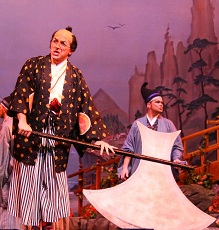
For a text-book example of how political correctness, ideology, ignorance and a humor deficit can undermine speech, culture and entertainment, we need look no further than Montana, and its public critics of the Missoula Community Theater’s production of “The Mikado,” perhaps the best of all Gilbert and Sullivan operettas and one of the very best musical comedies ever written. Continue reading

Unethical Quote of the Week: The White House

“Any suggestion that this was an insult to the United States is just flat wrong.  As Lang Lang has stated before, he plays this song regularly because it is one of his favorite Chinese melodies, which is very widely known and popular in China for its melody.  Lang Lang played the song without lyrics or reference to any political themes during the entertainment portion of the State Dinner. He simply stated the song’s title and noted it was well known in China.”

White House Spokesman Tommy Vietor, arguing that Chinese pianist Lang Lang’s  playing of a Chinese  song that referred to Americans a “jackals” at a White House dinner was as innocent as the day is long.

The song was well-known in China all right—well-known as an anti-American song. Continue reading