Correction: S.C. Law Still Ridiculous, But Not Brilliant

It appears that South Carolina’s mandated registration of “subversive agents” is far from new, as erroneously reported here. The law dates from 1951—when Joe McCarthy was in full flower—so it is clearly not aimed at terrorists, but at “Commies,” being a relic of the Red Scare at the dawn of the Cold War. Apparently the legislature has attempted to repeal it in recent years and failed, but that doesn’t make the law any less archaic.

<Sigh!>

Blogs like this one rely on secondary sources, and when one of them jumps the gun or gets its facts wrong, the result is that we end up aiding and abetting negligent misinformation. True: Ethics Alarms is in the business of adding ethics perspective to news stories and current events as it understands them, so the analysis can sometimes still be useful even if the facts are wrong. That is insufficient justification for contributing to misinformation, however. The key, as usual, is trust. I will do the best I can to get the facts right, hope that my readers correct me when they are wrong, and be ready to correct the record.

As for South Carolina’s silly law, perhaps the revived publicity of its 1951 paranoia will embarrass it into finally getting this dinosaur off the books. That will constitute a good result from a botched story, I suppose.

Many thanks to Sherrif Ray Nash, who tracked down the truth for Ethics Alarms.


The Not-So-Baffling Mystery of the Missing Ethics Rule

ABA  Model Rule 7.6: Political Contributions To Obtain Legal Engagements Or Appointments By Judges
A lawyer or law firm shall not accept a government legal engagement or an appointment by a judge if the lawyer or law firm makes a political contribution or solicits political contributions for the purpose of obtaining or being considered for that type of legal engagement or appointment.

That’s pretty clear, is it not? The American Bar Association, in its Model Rules of Professional Conduct, now followed (in various, eccentric forms, to be sure) by 49 states, the District of Columbia and Puerto Rico, emphatically declares that “pay-to-play” arrangements are unethical for lawyers even in states where the sleazy practice might be legal. “Pay-to play” is, after all, classic corruption, older than Mayor Curley, Richard Daley, Boss Tweed and Mister Potter. Lawyers contribute big bucks to the campaign funds of state and local powerbrokers, including Attorneys General and judges, and get big state contracts in return. It is indefensible ethically, although you can find plenty of people who will defend it, their tongues crossed tightly behind their backs all the while. Continue reading →

“Professor”= Racist?

The academic world has its robes in a bunch because critics of President Obama are increasingly calling him “Professor,” and not as a compliment. Various blogs and academic websites are attributing this to the anti-intellectualism of the Right, the populist dislike of academic elites, contempt for higher education, and other motives that confirm the author’s own biases.

Silly me: I naively assumed that they called Obama “Professor” because he was one, and also because his demeanor, speaking style and fondness for lecturing are professorial. Continue reading →

Comedy Ethics, Censorship, and Culture

(The current uproar over the use of  various versions of the word “retarded” by Rahm Emanuel and Rush Limbaugh seems to warrant a reprint, slightly revised, of the following essay on ethics and comedy, a January 2008 post on The Ethics Scoreboard. The word “retard” also came in for criticism in a comic context last year, with its use in the Ben Stiller comedy “Tropic Thunder.” Of course, comedy is one thing, and gratuitous cruelty is another. In either case, the issue is the use of a word, not the word itself. As discussed in the previous post, it is appropriate for any group to promote sensitivity and to encourage civility. It is unethical to try to bully others into censoring their speech by trying to “ban” words, phrases or ideas. )

Here is the essay:

Comedy Ethics

“Saturday Night Live” has, not for the first time in its three decade run, ignited an ethics controversy with politically incorrect humor. Was SNL ensemble member Fred Armison’s impression of  New York Governor David Paterson, who is blind, including as it did a wandering eye and featuring slapstick disorientation, legitimate satire or, as Paterson and advocates for the blind have claimed, a cruel catalyst for discrimination against the sight-challenged?
It is not an easy call, though the opposing sides of the argument probably think it should be. And it raises long-standing questions about the balance between ethics and humor. Continue reading →

What Rudyard Kipling Taught My Father

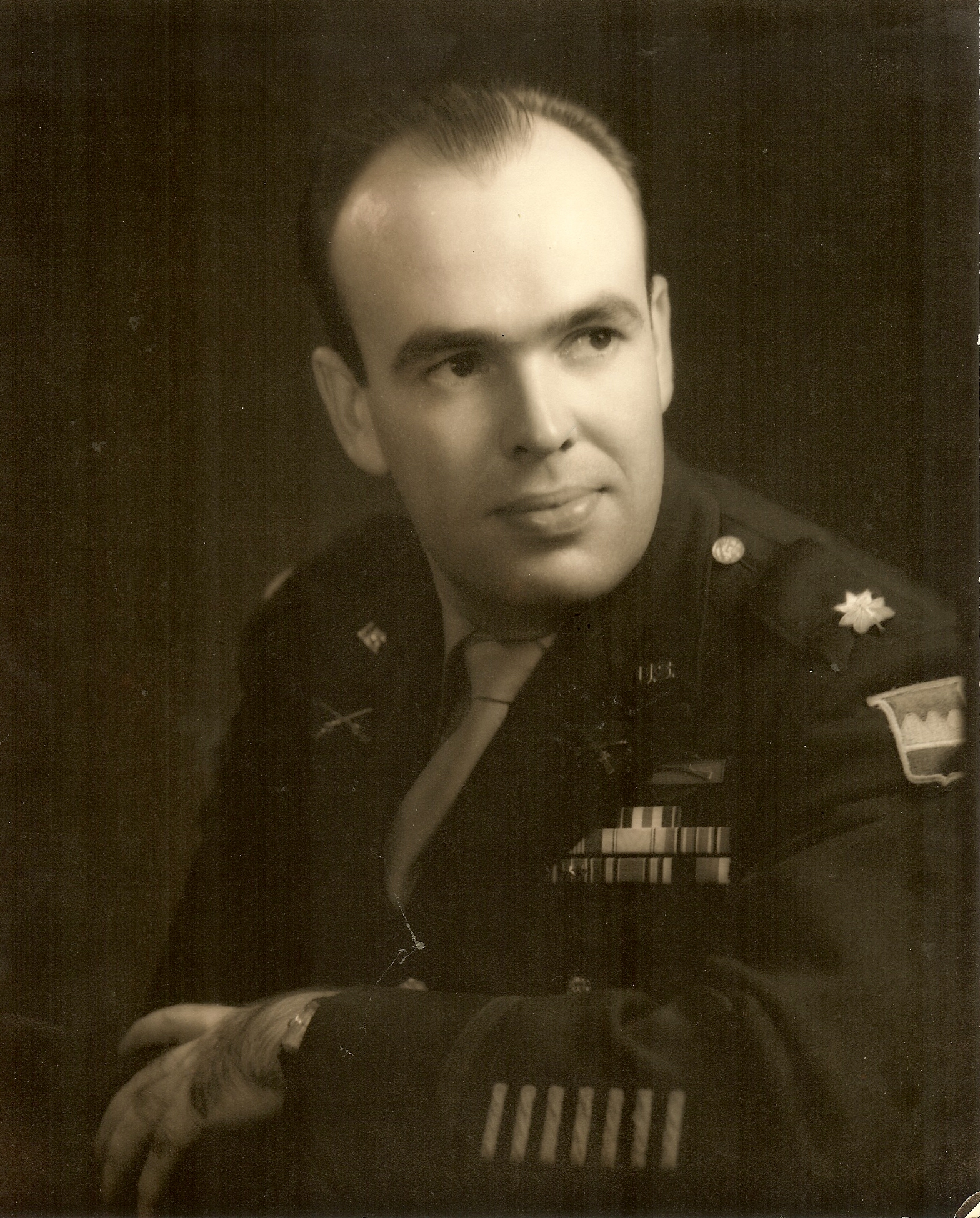
Jack Marshall Sr Army portrait

Today the Army buried my father, Major Jack Marshall, Sr., with full military honors. He had earned them, for he was a hero in World War II. Let me correct that: every soldier who serves in battle is a hero, but my Dad had a few special distinctions, like a Silver Star and a Bronze Star to go with his Purple Heart.  He  sustained a crippling wound to his foot from a hand-grenade, healed enough to jam what was left of it into a boot, and went on to fight in the Battle of the Bulge.

Under the clearest of blue skies, with the cemetery covered in snow, a caisson drawn by black horses, one without a rider, carried my father to a gravesite ceremony where the American flag draping his casket was carefully folded by six soldiers and given to my mother, following a 21-gun salute. My father was a hero off the battlefield as well, a profoundly ethical and courageous man throughout his life, and how he got that way is worth examining. Continue reading →

Dr. Tiller’s Executioner: Martyr, Monster or Ethical Murderer?

Scott Roeder was guilty of first degree murder by any legal definition. He decided that Dr. George R. Tiller had to die. He bought a gun and practiced shooting it. He studied his target, learned his habits, knew where he lived and where he went to church. It was inside that church where he finally killed Dr. Tiller after a full year of planning, shooting him in the forehead last May 31. He admitted all of this to the jury, and said he was not sorry. Short of jury nullification, a “not guilty” verdict was impossible, and there was no nullification. Roeder broke the law and was found guilty. He will probably be sentenced to life imprisonment.

I have no objections to this result. Society cannot have citizens performing executions or carrying out their own brand of vigilante justice. Scott Roeder, however, while not denying that he performed an illegal act, maintains that his act was an ethical one.

He has a point. Continue reading →

Obama’s Preference: Ethically Correct, Historically Impossible

“I’d rather be a really good one-term president than a mediocre two-term president,” President Obama told Diane Sawyer. That is the right attitude, unquestionably. It correctly places responsibility over popularity, accountability over expediency, courage and conviction over cowardice, and generally endorses ethics and duty over unethical considerations.

The statement is admirable, but interestingly, almost completely unrealistic. For historically it has proven virtually impossible for a one-term President to be good, or even successful. Continue reading →

“American Idol” Ethics: Kara vs. Katy

The blogs are still buzzing over the bickering between “American Idol” judge Kara DioGuardi and guest judge Katy Perry during the show’s under-whelming auditions in L.A. The key exchange was over so-so singer Chris Golightly, whose troubled upbringing in foster care touched Kara’s soft nougat center, and inspired her to suggest that this made him a viable contestant. Katy Price, a so-so singer herself, sharply objected, saying,“This is not a Lifetime movie, sweetheart,” and reminded Kara, in essence, that “Idol” is a talent competition and not “Queen for a Day.” Continue reading →

Ethics Trumps Morality: Ending “Don’t Ask, Don’t Tell”

Almost lost in the din of President Obama’s defiant State of the Union address was his promise to finally end “Don’t ask, don’t tell” as military policy. There is no ethical argument against this long overdue move. It has always been a policy based on the political expediency of politicians afraid to do the right thing.

“Don’t ask, don’t tell” is unethical. The law treats gay Americans in a biased and discriminatory manner, reinforcing negative stereotypes and the irrational fears. It also hurts the military and the nation by robbing it of able soldiers and military personnel. Continue reading →

State of the Union Ethics Alarms

President Obama’s State of the Union message didn’t quite set off accusations of mendacity on the scale of President Bush’s yellow cake uranium comment in 2003, and Rep. Joe Wilson didn’t yell out “You lie!” (thanks for that, Joe), but the President did make some assertions that, if not intentionally inaccurate, were recklessly misleading. The most striking one was contained in the President’s attack on the recent Supreme Court decision in Citizens United v. Federal Election Commission He said:

“With all due deference to separation of powers, last week the Supreme Court reversed a century of law that, I believe, will open the floodgates for special interests, including foreign corporations, to spend without limit in our elections.”

This prompted Justice Joseph Alito, sitting with his colleagues, to say quietly, to himself or to Justice Sotomayor who was next to him, “Not true, not true.” And he was right: much of the statement wasn’t accurate. (Was Alito’s mouthed protest any sort of civility breach? No. Obama couldn’t see it; it is possible nobody heard it at all. Justice Alito was not mouthing the words for lip-readers in the television audience. No ethics foul. However, Alito may want to practice his poker face in the future.  Next time, he won’t be so surprised: for a President to directly criticize the Supreme Court in his address is almost as rare as a Congressman shouting “You lie!”) Continue reading →