Ethics Quiz: Axis Sally

Mediocre movies can still raise important ethics questions, and so it is with a 2021 bomb called “American Traitor: The Trial of Axis Sally.” The film dramatizes the bizarre tale of Mildred Gillars, a Maine-born American woman of modest looks and talents who rode her aspirations for a Hollywood career into an infamous gig as an infamous Nazi German radio propagandist during World War II. My father told me about her broadcasts from Berlin, and how she used sexy tones to tell American servicemen that they were doomed, that the Jews, not Germany, were their real enemy, and that their wives and girlfriends were cheating on them while they were in Europe fighting Hitler’s “invincible army.”

Her last broadcast was just a few days before Germany surrendered; Gillars was arrested and charged with being a traitor. In 1948, “Axis Sally” faced a very real threat of being hanged as she went on trial for eight counts of treason. Thanks in great part to a vigorous (if reluctant) defense by famed criminal defense attorney James Laughlin, played by Al Pacino in the film, the jury found her guilty of only one, and what could have been a 30 year jail term turned into ten.

Dad said that American GIs thought “she”Axis Sally” was hilarious, that no soldiers took her seriously, and that her singing was terrible. Her broadcasts were popular in the U.S., as she often relayed news of American prisoners of war to show how well they were being treated by their German captors.

Although I suspect that Pacino’s ringing closing argument in her defense was punched up considerably from the original by Laughlin and maybe even contained some arguments Laughlin did not make, the points he raises in the movie are fascinating:

Continue reading

Observations On A Telling Exchange In A New York Times Opinion Column…

The column is a weekly feature on the Times opinion pages. Snarky progressive shill Gail Collins supposedly debates pseudo-conservative pundit Bret Stephens (who has called for the repeal of the Second Amendment) on various issues of the day. It is written as a spontaneous conversation, which it obviously is not: I detest the format, which is inherently deceptive. Ted Kennedy and Orin Hatch used to have a radio spot where they would debate an issue “from the right and left.” The two were obviously reading from an agreed-upon script, and not very convincingly. It insulted listeners’ intelligence, as this column insults Times readers. Here’s how today’s installment begins:

Continue reading

Ethics Conundrum: Is Teaching That Communism Is Evil History or Indoctrination?

All of the turmoil over public school indoctrination of students regarding such matters as climate change, systemic racism and LGBTQ normalization naturally raises the question of whether there are legitimate topics for indoctrination in the United States. Should students be taught, for example, that democracy is good? That the Bill of Rights are crucial to the united States’ culture? That capitalism works/

What about teaching students that Communism, at least in its execution, is a dangerous and deadly ideology? Is that a fact?

I was prompted to consider this issue after reading NBC’s “Meet the Press” host Chuck Todd’s characteristically inarticulate objections to Gov. DeSantis signing a bill last May designating November 10 to be set aside for teaching Florida students at all grade levels “about the evils of communist regimes throughout history.”

“I don’t know if DeSantis is going to be talking to swing voters, here’s like one of the things he said in Vegas yesterday; take a listen to this,” Todd like said prior to playing like a clip of the Republican touting his program. “You know, …it’s sort of like, look, being a Floridian, I sort of know what he’s trying to play there and all of that. I went to Florida public schools we were taught this: It was called history. It just seems like a weird politicizing—you know he’s going out of his way to politicize something.”

Isn’t it amazing that NBC has employed an individual presiding over an iconic news show who speaks that way on live TV?

Continue reading

Time-Warp Ethics: Observations On “The Cher Show” (1975)

Observations:

  • The song “I’m a Woman,” by famed songwriting duo Jerry Leiber and Mike Stoller, was written in 1962 and was once considered a standard. Is it politically incorrect today, since the entire definition of “woman” has been thrown into ambiguity and disrepute? I would say that it can’t be performed today. Is that reversible? Should it be?
  • The opening “girl-talk” between Welch and Cher is truly cringey. It’s hard to imagine U.S.culture returning to a point where that would be considered cute, except as satire. Both Raquel (who died this year) and Cher were famously capable and tough pros–maybe they were engaging in satire at the time…satire that reinforced sexist stereotypes while mocking them.
  • Brava to Cher for being willing to appear in that costume next to Welch. That’s generous performing and the mark of an ethical (and confident) host. She was willing to highlight her guest’s assets even they overshadowed her own. Many divas then and now would never tolerate such an unflattering comparison.
  • The Citizen Free Press, which dug up this clip today, fatuously introduced it by asking “Does Raquel have a better voice than Cher?” Morons. Talk about no good deed going unpunished: This is what Cher gets for picking a number for the two to perform that has a tiny range right in Welch’s vocal wheelhouse. Again, Cher was letting her guest shine at her own expense. No, Raquel Welch did not have a better voice than Cher, or one that was nearly as good. However, the video shows that she was capable of filling more than the sex symbol pigeon-hole she was stuck into by Hollywood for most of her career.
  • She could dance, too. (Cher could not.) This clip of Raquel giving her all to entertain the troops in Vietnam is a reminder that she too could be generous:

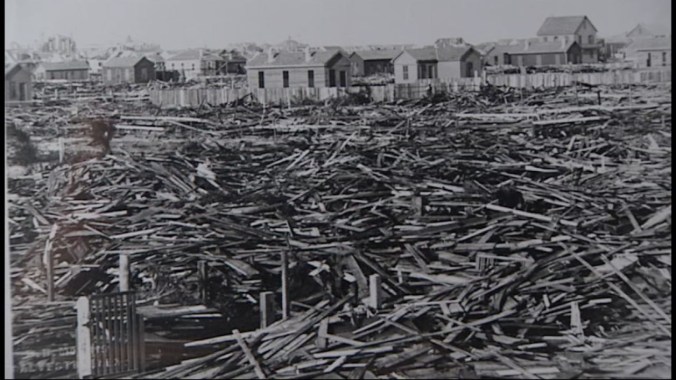
Remember The Alamo Today, March 6, When The Fort Fell, And Entered American Lore And Legend Forever.

I regard the siege of the Alamo one of the signature ethics events in U.S. history, both for what it was and what it came to represent. There have been many posts on the subject as well as many references to the Alamo in other posts, all of which are accessible here.

Today, March 6, marks the fall of the converted mission. Ethics Alarms has two pieces from its archives to present:

I. Last year, Texan and Ethics Alarms stalwart Michael West’s provided Ethics Alarms readers with a day by day account of the Alamo’s the final days, March 5 and March 6.  Here it is:

March 5, 1836

After the previous day’s war council (on March 4), Santa Anna was content that his glorious assault would occur. But evidently, according to several reliable Mexican sources, a civilian woman from the town, who had retreated to the Alamo with the Texans, made it out of the Alamo during the night and gave dire information to the Mexicans. Evidently the Texan garrison was increasingly despondent. According to the lady who escaped, Travis and the garrison had discussed their options and one of the more forceful arguments made was that they should consider surrender.

Santa Anna wanted none of this, and accelerated his assault time-table (which he hadn’t necessarily meant for the 6th of March but for the 7th or even the 8th).

The Mexican soldiers would have received their orders in the morning and spent the rest of the day making preparations. There was little physically they had to do other than check the locks of their muskets, ensure they had the requisite number of extra flints (which would occasionally break in battle – testing the coolness of even the most experienced soldier), or assist in the production of several ladders Santa Anna had commanded each battalion to have prepared.

No, most of the preparation would have been mental. A deeply Catholic people, the Mexican soldiers would have spent their energies on prayer and confession. New soldiers would have been nervous about how they would perform under fire, simultaneously trying to hide their nerves from the experienced soldiers, who would have recognized the unique challenge before them. Almost none had been asked to climb tall walls after traversing several hundred yards under fire against an enemy who had, in the previous 12 days, proven that their rifled muskets out-ranged the standard Mexican issue musket by nearly 300%Some of Santa Anna’s soldiers were eager to get into the fight – to uphold the honor of the Mexican nation against, not only rebels, but rebels seemingly motivated by pro-American attitudes. Some of Santa Anna’s soldiers had been farmers pressed into service only months before, who would have had a partially begrudging attitude and were mostly  leaning towards “let’s get this over with so I can get home.” Some of the dictator’s soldiers were convicts for whom the upcoming bloodshed was just one more act of brutality to endure in an already brutal and brutalized life. For a large number of the soldiers, for whom soldiering was life, this would be a terror that they  knew would be expected of them. Regardless of their motivations, there would be no getting out of the upcoming ordeal and every single one of them would be in the same peril  when a Texan cannon roared out at their formation.

Set to wake up at midnight to begin movements to their attack positions, the  few soldiers could fall asleep would have tried to do so by twilight.

Inside the Alamo, evening would draw a miserable day to a close. Earlier that day, according to Enrique Esparza, aged 8 (who’s father, Gregorio, was fighting with the Texans), the faeful courier entered the Alamo with news that despite  all the hopeful reports, no immediate help was on its way. Travis would have discussed with the men their options – a break-out attempt in case of a successful assault would be their best recourse. A break out during the day would be impossible and one at night would be extremely risky. Whatever was said, it appears all but perhaps one of the men decided to stay

For the Texans, sleep would come quickly that evening. For the first time in 12 days, Santa Anna’s cannons didn’t create chaos inside the compound. It was silent. There could be no doubt that the defenders knew what this meant, but they were exhausted. They would have kept watch and pure anxiety might have boosted their necessary alertness. Nonetheless, they began succumbing to sleep deprivation and may have been deep in dreams of life after the war – or perhaps of life before the war.

Before collapsing in whatever position suited rest, most would have reviewed their plans in their minds of how to get out once they’d done what they could to slow or halt the Mexican advance. No shame in that: when a battle is clearly lost and standing your position doesn’t buy anyone else on the battlefield any opportunity to turn the tide, there’s no principle of warfare that requires that a soldier  die on principle.

Most would have recognized that with San Antonio immediately to the west, and several Mexican artillery batteries to the north and south, the east would be the best direction to break out for should the situation so demand. That was also where the gathering Texan army could be found, eventually.

Right after dusk, Travis dispatched the final courier on yet another appeal for assistance. Then, as in each night during the siege , Travis assigned several men outpost duty beyond the walls of the Alamo to provide an early warning before turning the watch over to another officer.

He hoped to get a little bit of sleep himself.

March 6, 1836: The End

Continue reading

Ethics Quiz: The USS Chancellorsville

In a final flurry of Black History Month pandering by the Biden administration, the missile cruiser USS Chancellorsville was renamed USS Robert Smalls. A US government Naming Commission reviewed military bases and vessels that appeared to honor the Confederacy and made recommendations regarding which should to be renamed. Secretary of Defense Lloyd Austin approved the commission’s recommendations in October 2022, and this was one of the results. Secretary of the Navy Carlos Del Toro announced that the Ticonderoga-class guided missile cruiser would lose its previous name and henceforth would bear the name of Smalls, a former slave who took over a Confederate ship and delivered it to the Union navy.

Esteemed reader Steve-O-in NJ brought this story to ethics Alarms’ attention, and makes this argument:

It used to be we would name carriers after battles, but, for whatever reason, when these cruisers, once the most expensive and most sophisticated non-carrier vessels afloat in the US Navy, were built, they decided to name them after battles instead (with one exception, the USS Thomas S. Gates, which left active service long ago because it was not built with the vertical launch system).  I questioned this choice of names from the get-go, since as far as I know all US ships named after battles were named for US victories or at least battles where our forces gave a good account of themselves (one of the other ships in the class is the USS Chosin, another the USS Anzio).  Why did they decide to name this one after a disastrous US defeat?  Well, presumably the same reason the names USS Semmes, USS Buchanan, USS Waddell, and USS Barney found their way into the Charles F. Adams and Spruance classes of destroyers, but are unlikely to be used again.
 
I can think of a long list of names that would not break the class tradition, nor stick out like a sore thumb, and speak to the entire US.  Notably the names USS Saratoga and USS Lexington are not presently in use, nor the names USS Coral Sea or USS Midway.  Give me a few minutes and I’ll come up with a dozen more.  But of course this couldn’t be just a switch of names to something more universally admired, it HAD to be the name of a former slave, as a rebuke to those evil racists who dared name a ship after a legendary victory led by Robert E. Lee, and now everyone who sees it or hears the name will know of the rebuke.  
 

A two-part Ethics Quiz of the Day arises from this discussion:

Continue reading

Presidents Day Hangover, Jimmy Carter Edition: A Popeye, A KABOOM! And An Epic Comment Of The Day. Part II, Comment Of The Day On The Carter Presidency

Here is Steve-O-in NJ’s Comment of the Day:

***

Well, I have plenty to say about Carter, and this I will post the moment they announce his death.

I have only very vague recollections of the Carter administration, since I was a kid in single digits at the time. Two things stick out in my memory, though.

One was myself and my brother, also a young kid at the time, bickering in the beltless back seat of a 70s-vintage chartreuse VW beetle while mom sat in line on Paterson Plank Road thirty cars back from the gas station, waiting for gas so scarce it had to be de facto rationed. This car, purchased as a cheap second vehicle (and frequently made fun of by my classmates) had no air conditioning and that line did not move more than five miles an hour, so it was not possible to use the wind to cool off. There was nothing for us kids to do but swelter and nothing for the adults to do but seethe at the fact that Jimmy Carter’s policies regarding the Middle East and the Persian Gulf had landed us in this pickle, and no relief was in sight. The flip side of that was a bitterly cold winter where we set the heat to 65 degrees because that was all we could afford. His answer? Put on a sweater and turn those extra lights off. It’s one thing to try to do more with less in wartime when you face a designated and (hopefully) beatable threat. It’s another to have a diminished lifestyle because the man elected to lead this country was not doing his job anywhere near as well as he could have and should have been.

The other thing that sticks out in my memory was the daily number. No, not the lottery number, we were never fortunate enough to guess that, and not the Sesame Street number of the day either, although for a while that decade that still reached this house on the fat, bunny-eared television in the living room opposite the period covered sofas (featuring a weird pattern of circles in squares in black, off-white, and ginger orange), on which you had to change the seven or so channels manually.

I’m talking about the number that appeared daily behind the anchors on whatever network you got your news on, as they solemnly intoned that today was whatever day it was that the 52 diplomats and other hostages continued to be held in Iran. It ultimately reached 444 days, a full year plus 79 days, counted out day by excruciating day, each of which there was more and more of a feeling that our country, and by extension, we ourselves, could do nothing but wring our hands in anguish and powerlessness. Oh, there was one attempt to rescue them, Operation Eagle Claw, which never even left the staging area due to mechanical issues. Even the withdrawal was a disaster, leaving 5 US airmen and 3 marines dead. It was one of the lowest points in American military history, equaled perhaps only by the failed mission into Bolshevik Russia to kill the Communist serpent in the cradle, of which then-president Wilson said, “the tragedy was that it cost lives even to fail as badly as they did.” It was also the nail that closed the coffin on this utter failure of a presidency. Ironically, Carter has now become the president to escape the actual coffin the longest of any, although the last three presidents to die all made it well into their 90s.

Frankly, he is someone who, under normal circumstances, wouldn’t even have been considered as a candidate, leave alone been elected. He is someone who SHOULDN’T have been considered or elected under ANY circumstances. He was a once-failed, once-elected governor who was supposedly a civil rights idealist, but who tried to please both the civil rights Democrats and the still-powerful old-school southern Democrats. He engaged in symbolic measures like putting up pictures of prominent black Georgians in the state capitol, but opposed race-integration busing and did not hesitate to sign a revised death penalty statute that addressed the then-liberal SCOTUS’ issues with the existing statute in Gregg v. Georgia, which came damn close to throwing the penalty out nationwide. Of course, he later said that he regretted doing that and his position had “evolved,” which is Democrat-speak for flip-flopping. He was not well-known outside of Georgia.

What most folks don’t know is that he made a presidential bid in 1972, trying to use the same triangulation tactics between the civil rights left and more conservative right, that he had used as governor. That bid did not get very far, and the Democratic ticket that year was George McGovern and Thomas Eagleton, which went down in the second biggest defeat the Democratic party suffered in a presidential election, surpassed only by Ronald Reagan’s 49-1 near-clean sweep of the entire country in 1984. Just as John Kasich later planned to do after the catastrophic defeat of the GOP that failed to materialize in 2016, Carter swiftly made a move to “pick up the pieces” and move into the frontrunner slot for 1976. Although he did not succeed in an attempt to become chairman of the Democratic Governors’ Association, he did become chairman of both the Democratic National Committee’s congressional and gubernatorial campaigns. Ironically, he warned AGAINST politicizing the Watergate hearings, but a bit more on that later.

His recognition when he announced his candidacy for president a second time was 2%. The better-known Democrats scoffed and said, “Jimmy who?” Conventional wisdom was that he was a regional candidate who would have limited appeal outside the south. However, Carter had two factors working in his favor in the political perfect storm that was the United States political scene in 1976. One was the aforementioned regionalism. Normally, that would have worked against him, as it would have against any candidate in a country where the Northeast, the South, the Great Plains, the Southwest, and the West Coast were all VERY different in many ways. However, he happened to arrive as a Washington outsider just as the country’s trust of Washington and established politicians, as well as of the GOP, was at arguably the lowest point it ever reached due to Richard Nixon’s unnecessary overreach that led to all that followed. In the wake of Watergate and Gerald Ford’s pardon of Nixon to “close the book” on that episode and move forward, an outsider who promised never to lie to the American people looked like an attractive option. He looked especially so when matched against a man who had never been elected as president or vice-president, whose main act was pardoning Nixon, and whom the media played up as an oafish klutz (when in reality he was a college football all-star AND Phi Beta Kappa) by emphasizing a slip, a golf stroke gone awry, and a tennis serve gone wrong, any of which could have happened to anyone.

Continue reading

Presidents Day Hangover, Jimmy Carter Edition: A Popeye, A KABOOM! And An Epic Comment Of The Day. Part I, The Popeye And The KABOOM!

I was going to post Steve-O-in NJ’s record-setting ( over 4700 words!) essay on the presidency of Jimmy Carter yesterday, and should have, but trips back and forth to the hospital (my Dad had his fatal heart attack in the midst of doing that, and now I know why) interfered with my best laid plans.

Then, last night, I read a head-exploding column by progressive Democratic historian, Kai Bird. His piece is an “it isn’t what it is” classic, as he tries to argue that Carter wasn’t the crummy President he unquestionably was. Bird can’t really do it, since the facts are so damning, the best he can muster being, “His presidency is remembered, simplistically, as a failure, yet it was more consequential than most recall.”

That evokes another terrible rationalization (“It isn’t what it is,” Yoo’s Rationalization, is #64 on the list), #22, The Comparative Virtue Excuse, or “There are worse things,” of which “It could have been worse” and “It’s not as bad as you think” are sub-categories. This statement, however, demanded a “Popeye” (“It’s all I can stands, ‘cuz I can’t stands no more!”):

“Jimmy Carter was probably the most intelligent, hard-working and decent man to have occupied the Oval Office in the 20th century.”

Well, KABOOM!

Continue reading

The NFL’s Offensive And Divisive “Black National Anthem” Pander [Revised and Corrected]

Just because I wasn’t watching the showcase for the nation’s most unethical professional sports league doesn’t mean I wasn’t paying attention. The NFL truly is a blot on American culture, and its nauseating use of the so-called “black national anthem,” “Lift Every Voice and Sing,” is one more piece of evidence.

The NFL started its practice of using the song as a counterpoint to THE National Anthem, the Star Spangled Banner in 2021, in craven grovelling to the George Floyd riots and Black Lives Matter, as well as sop to the NFL’s National Anthem protesters like Colin Kaepernick. It was a disgraceful suck-up to the large majority of black players in the league, and if 2021  were the only instance of it, the stunt could be forgiven. But now the song has been presented before three straight Super Bowls, and that means we are stuck with it forever, just like baseball is stuck with “God Bless America,” the redundant Irving Berlin song that stadiums started sticking into the Seventh Inning Stretch as a show of unity after the attacks of 9/11. But “Lift Every Voice and Sing” is even more beyond ending, and you know why as well as I do. Continue reading

‘OK, But What Has He Done Lately?’

Conservative black scholar Thomas Sowell, now 92 but still as courageous and perceptive as ever, has, to engage in understatement, been critical of the fake history “1619 Project,” now being inflicted on school children across the country. That centerpiece of current CRT indoctrination is the brain-child of Nicole Hannah-Jones, an African-American reporter with an agenda, and for her divisive misinformation, declared hooey by a large number of historians who can smell rot when they encounter it, she was awarded a Pulitzer Prize, and later a tenured chair in “Race and Journalism,” as if that was a legitimate study rather than propaganda, at Howard.

Flushed with the perceived authority such a contrived position confers, and lacking the sense God gave a lemming, Professor Hannah-Jones took to Twitter yesterday to sneer, “Other than being Black, what exactly is Sowell’s expertise in slavery or history?” Proving that she asked this employing the same diligence and research skills that marked her “1619 Project” (which claimed that the American Revolution was fought to protect slavery, and is low-grade baloney), one of the many Twitterphiles who weighed in to mock her listed Sowell’s relevant publications by year: Continue reading