The NFL’s Offensive And Divisive “Black National Anthem” Pander [Revised and Corrected]

Just because I wasn’t watching the showcase for the nation’s most unethical professional sports league doesn’t mean I wasn’t paying attention. The NFL truly is a blot on American culture, and its nauseating use of the so-called “black national anthem,” “Lift Every Voice and Sing,” is one more piece of evidence.

The NFL started its practice of using the song as a counterpoint to THE National Anthem, the Star Spangled Banner in 2021, in craven grovelling to the George Floyd riots and Black Lives Matter, as well as sop to the NFL’s National Anthem protesters like Colin Kaepernick. It was a disgraceful suck-up to the large majority of black players in the league, and if 2021  were the only instance of it, the stunt could be forgiven. But now the song has been presented before three straight Super Bowls, and that means we are stuck with it forever, just like baseball is stuck with “God Bless America,” the redundant Irving Berlin song that stadiums started sticking into the Seventh Inning Stretch as a show of unity after the attacks of 9/11. But “Lift Every Voice and Sing” is even more beyond ending, and you know why as well as I do. Continue reading

‘OK, But What Has He Done Lately?’

Conservative black scholar Thomas Sowell, now 92 but still as courageous and perceptive as ever, has, to engage in understatement, been critical of the fake history “1619 Project,” now being inflicted on school children across the country. That centerpiece of current CRT indoctrination is the brain-child of Nicole Hannah-Jones, an African-American reporter with an agenda, and for her divisive misinformation, declared hooey by a large number of historians who can smell rot when they encounter it, she was awarded a Pulitzer Prize, and later a tenured chair in “Race and Journalism,” as if that was a legitimate study rather than propaganda, at Howard.

Flushed with the perceived authority such a contrived position confers, and lacking the sense God gave a lemming, Professor Hannah-Jones took to Twitter yesterday to sneer, “Other than being Black, what exactly is Sowell’s expertise in slavery or history?” Proving that she asked this employing the same diligence and research skills that marked her “1619 Project” (which claimed that the American Revolution was fought to protect slavery, and is low-grade baloney), one of the many Twitterphiles who weighed in to mock her listed Sowell’s relevant publications by year: Continue reading

Comment Of The Day: “‘What’s Going On Here?’ Why Does Disney Think It Is Appropriate To Produce And Circulate Abrasive, Divisive, Confrontational Interest Group Propaganda And Indoctrination Like This?”

I have a confession to make. I know that the ethical and moral deterioration of the Disney corporation is a major ethics catastrophe with dire consequences for our society and culture, and Ethics Alarms should have been covering it more thoroughly. It hasn’t, and that’s because this topic is particularly painful for me.

I owe so much to Disney’s creations and philosophy. I learned a lot of ethics from the shows and movies growing up, and many of my most enduring and important interests and hobbies were inspired by Walt’s vision. My fascination with dinosaurs began with the terrifying T-Rex sequence in “The Rite of Spring” segment of “Fantasia,” for example. My reverence for the Alamo was inspired by Disney’s “Davy Crockett” series. The first dramatic production of any kind that genuinely move me was “Bambi.” I never got to visit a Disney theme park until college, but finally going to Disneyland after dreaming about it as a kid was one of the epiphanal experiences of my entire life: it was perhaps the only time something I had looked forward to was even better than I expected it to be. Disney’s perfectionism—at the parks, which were immaculate and overlooked no detail to immerse visitors in the fantasy, and in the TV shows and movies—influenced my own view of professionalism and my approach to directing for the stage. His courage and certitude in pursuing risky creative projects that everyone was telling him were doomed to fail—a full length animated film?—bolstered my own resolve when I have had project ideas that seemed nuts to everyone but me.

(And some were nuts, as it turned out. But the times I was right more than made up for those.)

I could go on, but I won’t. The point is that attacking Disney for me is like savaging a childhood hero, or even a parent. But the country, its culture and mental health is being harmed by the current distortion of Walt’s creation’s destructive alliance with the radical Left. It deserves to be attacked, and it’s time I got down to it.

This Comment of the Day (actually two comments, in sequence) by jmv0405 on the depressing post yesterday on a Disney Critical Race Theory video, makes up for some of that lost time by getting the discussion jump-started. It is also a perceptive and illuminating perspective that I wouldn’t have seen without the comment’s guidance. Continue reading

Ethics Survey: Ann Althouse’s “Big Question” [Corrected]

Reflecting on one of the mini-essays (by essayist/novelist Natasha Staggin) today’s obnoxious Times feature, “Future Cringe/One day we’ll look back on this moment and wonder: What were we thinking?,”  my favorite quirky blogger, Ann Althouse writes,

I love the big question, what are we doing now that we are going to be embarrassed/ashamed of in the future? I noticed this question when I was a child and heard things said about people in the past, as if those people were benighted and ridiculous. We are those people to people somewhere out there in the future. How can I avoid being looked at by them the way people today are looking at the people of the past?

One answer is to be more charitable to the people of the past. Realize that some day you’ll be in their position, and don’t you want those future people to be charitable toward you? Embarrassment is over-worried about. Maybe those people in the future are looking back at us and laughing about how prudish and uptight we were to think of them feeling embarrassed about us. That is, one day we’ll look back and be embarrassed that we were embarrassed.

Typical Ann: raising what she calls a “big question,” and almost immediately suggesting it isn’t so big after all, writing, “Embarrassment is over-worried about,” which is also an interesting sentence coming from a writer who is so often a language pedant.

As an ethicist who believes that human understanding of what is right and wrong constantly evolves and usually improves, my initial reaction to Ann’s question is, “What do you mean we?” I’ve been around a while, and I can honestly say that I’m not “embarrassed” by anything I once believed in, or any major reaction to the data life gave me. Individual deeds, words and moments, sure. I have plenty of past moments I wince to think about.

Stagg was talking about the Wuhan virus freak-out, so don’t look my way. I didn’t freak out, and I did my best to try to keep others from doing so, failing miserably. However, the pandemic is the kind of event one’s response should only be embarrassed about if one knew, or should have known, that one’s response was dishonest, cowardly, or destructive, or if one had a genuine choice and foolishly took the wrong one. The pandemic was a unique challenge, and we were, as Marty Baron ( Liev Schreiber) says in “Spotlight” when a Boston Globe staffer is admitting that he could have blown the whistle on the Catholic Diocese predator priest scandal sooner, just “stumbling around in the dark.”

Yes, I think Dr. Fauci should be embarrassed. Andrew Cuomo should be embarrassed. The New York Times should be embarrassed, and the health “experts” who endorsed the mass George Floyd demonstrations as an exception to their warnings about large gatherings should hide their heads under bags. But for the most part, I think the pandemic is a poor example for Ann’s question. Continue reading

Cartoon Ethics, Part II: There…

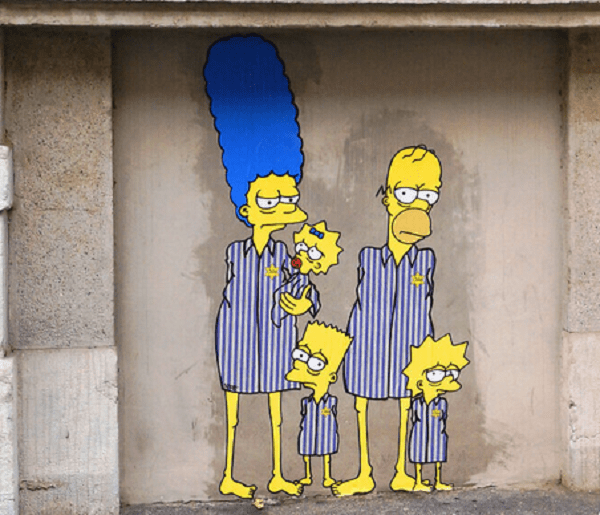
AleXsandro Palombo, an edgy Italian artist who often uses pop culture images to make serious points, was hired to paint appropriate murals around Milan’s Holocaust memorial, which is located at Platform 21 inside the city’s main train station from which approximately  1,200 Jews were sent to Nazi death camps in 1943. Shortly before International Holocaust Remembrance Day, the Shoah Memorial Foundation discovered what the artist felt was appropriate art: characters from “The Simpsons” dressed as Jews at various stages of the Final Solution.

Doh! Continue reading

Lies, Delusions And Hypocrisy

Rep. George Santos (R-Atlantis) is fortunate that he is surrounded by so many liars, hypocrites and fabulists that it is difficult to give him the attention and contempt that he deserves. The Clintons have been mercifully quiet lately, but George has still been fortunate in the culture that surrounds him.

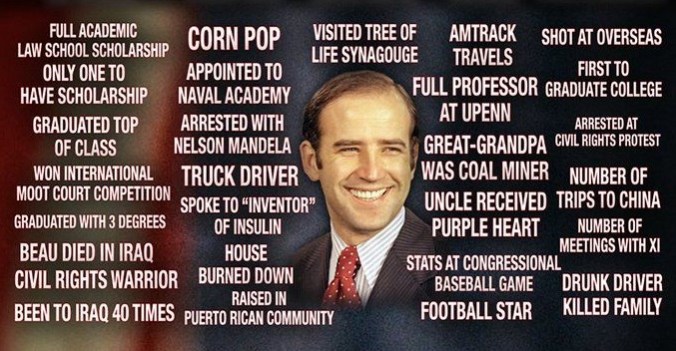
For example, today President Biden (well, whoever he has authorized to tweet for him) once again invoked the oath “my word as a Biden,” declaring on Twitter, “My word as a Biden: I’ve never been more optimistic about America’s future than I am today.” Maybe Joe is really optimistic: he is, after all, a dolt. However, as that meme above by Newsmax’s Greg Kelly illustrates, the word of the Biden swearing that mighty oath has the credibility of Jon Lovitz’s Tommy Flanagan. (I have many more recent Biden lies archived at Ethics Alarms, notably his claim that he has never discussed Hunter’s business dealings with his son.) The biggest lie in that tweet is that there is any reason to trust this President.

Then there is the hypocrisy of retired tycoon Bill Gates, who now flies around the world telling ordinary people to lower their carbon footprints. Here’s a clip from a recent “60 Minutes””:” highlighted on “The Rubin Report,” whatever that is:

I don’t see Gates as particularly angry, just ridiculous. Not is he the worst climate change hypocrite: as one wag noted, if the elite who just met in Switzerland to discuss saving the world were serious, they would have held their conclave via Zoom and, I’d add, not have hired a biased, disgraced fool like Brian Stelter as a panel moderator. Gates is still a fine representative of this arrogant, obnoxious and unethical club.

Back to Lyingland from a short side trip to Hypocrisy Heights: Rep. Ilhan Omar visited CNN Sunday morning to claim that the anti-Semitic comments she has made, cited by House Speaker McCarthy as the main reason she has been booted from the House Foreign Affairs committee, were innocent and accidental. Continue reading

How Far Have Our Universities Traveled Into Thought Control Territory? This Far: Stanford Wants To Punish A Student For Reading A Politically Incorrect Historical Document

A while back, one of this blog’s self-exiled commenters told me that he left because I had become more hostile to the Left in recent years, in contrast to my position when Ethics Alarms started in 2010. He’s right, of course. In 2010, this story would have been unimaginable. My standards haven’t changed. But one whole side of the political spectrum has been abandoning ethics and core American principles with increasing arrogance, aggressiveness and ruthlessness.

I am in shock over this latest episode.

After a photo of a Stanford student reading Adolf Hitler’s autobiography “Mein Kampf” circulated on campus, The Stanford Daily revealed that administrators were working with the students involved to “address” the incident. Two campus rabbis emailed Jewish students saying administrators “are in ongoing conversation with the individuals involved, who are committed to and actively engaged in a process of reckoning and sincere repair.”

Reckoning—for reading something? “Repair”? Is that the strong stench of re-education I feel in my nostrils? Continue reading

Kamala Harris, Signature Significance, And “The Right Side Of History”

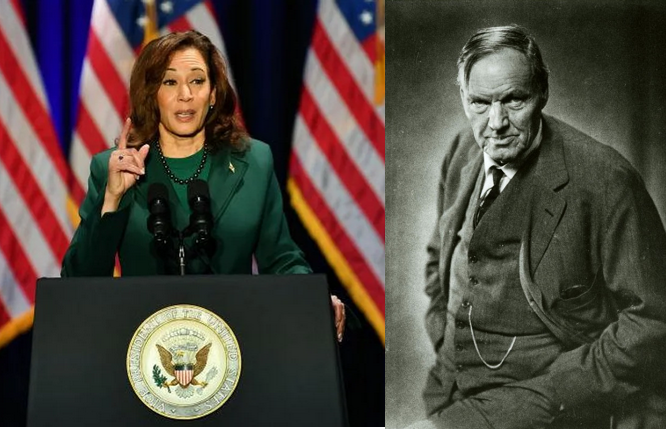
Vice President Kamala Harris, in her speech delivered on the 50th anniversary of Roe v.Wade, didn’t babble incoherently as usual. She just invoked one logical fallacy, rationalization and intellectually dishonest statement after another. The highlight, however, was her claim to the abortion fans in her audience that “we are on the right side of history.”

That’s signature significance. Nobody makes that argument unless they are a con-artist, a demagogue, or an idiot. In Kamala’s case, all three are likely true. Saying one is on the right side of history is just an extraordinarily obnoxious way of saying, “We’re right and everyone else is wrong” without actually making a substantive argument. To quote myself in the description of the phrase (it’s Rationalization #1B. The Psychic Historian on the list):

Every movement, every dictator, Nazis, Communists, ISIS, the Klan, activists for every conceivable policy across the ideological spectrum, think their position will be vindicated eventually. In truth, they have no idea whether it will or not, or if it is, for how long. If history teaches anything, it is that we have no idea what will happen and what ideas and movements will prevail. “I’m on the right side of history is nothing but the secular version of “God is on our side,” and exactly as unprovable.

Abortion supporters have been working hard lately to argue that the Bible supports abortion because it doesn’t expressly condemn it. A text thousands of years old that predates all scientific knowledge about the unborn and the predates modern medicine is irrelevant to the abortion debate. More…

It is a device to sanctify one’s own beliefs while mocking opposing views, evoking an imaginary future that can neither be proven or relied upon. Nor is there any support for the assertion that where history goes is intrinsically and unequivocally good or desirable… Those who resort to “I’m on the right side of history” (or “You’re on the wrong side”) are telling us that they have run out of honest arguments.

Which nicely describes Kamala, if not all abortion advocates. Here is dishonesty exemplified: Harris, in her speech, said, “We are here together because we collectively believe and know America is a promise. America is a promise. It is a promise of freedom and liberty — not for some, but for all. A promise we made in the Declaration of Independence that we are each endowed with the right to liberty and the pursuit of happiness.” Continue reading

Why Our Culture Needs Old Movies

Typical of the free-association manner in which my brain works, a fatuous essay by a New York Times pundit about a subject he doesn’t understand (but I do)–performing—excavated an ethics memory from my childhood that hadn’t sparked a neuron in decades.

Frank Bruni, for some reason, felt it was necessary to re-hash the ancient debate over whether a movie star is really a skilled “actor,” and can be deserving of an Oscar over “real” actors. Naturally, his target was Tom Cruise and his performance in “Top Gun: Maverick,” the most popular and successful movie of the year. I don’t feel like arguing with Bruni over this; I’ve had the debate too many times. (No, Cruise isn’t going to get an Oscar for this sequel, but he has given Oscar-worthy performances before, because nobody can play Tom Cruise as well as he can). I’ll just give the short version: if an actor plays a part better than any other actor could, it is irrelevant that he can’t play any other part. As a director, I’ll cast a charismatic one-trick pony who is perfect for a particular role over a brilliant, versatile artist who could play Hamlet to cheers every time.

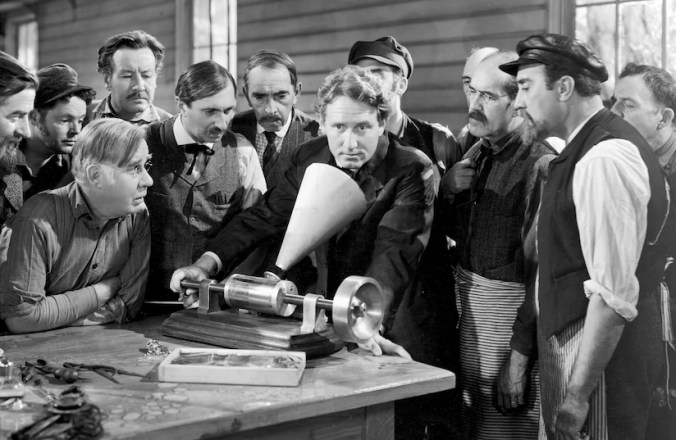
But that is neither here nor there. Here is there: Bruni’s discourse made me think of Spencer Tracy, a movie star and superb actor who had a wonderfully dismissive view of his own field, and then “Edison the Man,” the 1940 biopic, starring Tracy, about Thomas Edison. It was a black and white film that my father made a point of having me see. That film sparked my early interest in Edison, American inventors, technology and extraordinary people through history.

One scene in the movie, however, made a special impression. Edison and his research lab have been laboring on the creation of a practical incandescent light bulb day and night for months. Finally they think they have the right design, and the tungsten filament bulb to be tested is carefully assembled. The new bulb is handed to Jimmy, a teen who does odd jobs at the laboratory, and he dashes across the facility to give it to Edison. In his excitement, Jimmy trips and falls, smashing the precious bulb. Edison’s crew is furious; Edison reproaches the lad. Jimmy is devastated and inconsolable. When Edison’s men finally craft a replacement bulb, Edison calls for Jimmy and give him custody of the bulb, and asks him again to carry it to its destination on the other side of the building. Jimmy, striding carefully and slowly this time, completes his historic task.

Continue reading

Comment Of The Day: “In The Dispute Over The Fate Of The Elgin Marbles, It Is Time For The Brits To Choose Ethics Over Law”

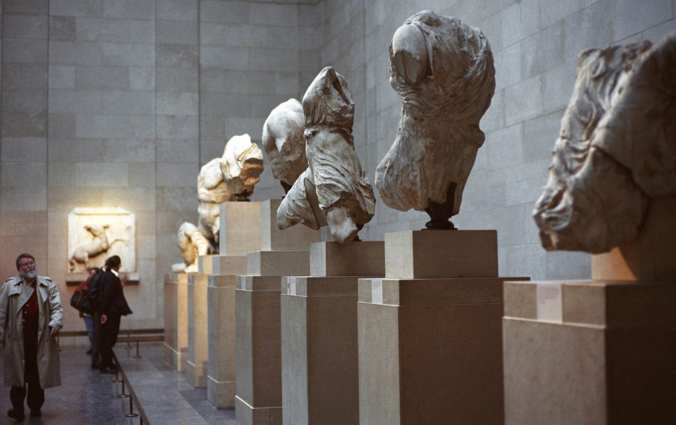
Last week, Ethics Alarms confidently presented the ethics verdict that it was high time—more than high time, in fact—for the British Museum to finally return the so-called “Elgin Marbles” to Greece. As the priceless art was literally ripped off the Parthenon, I didn’t think the question justified an ethics quiz. I still am unconvinced by the arguments that the Brits should hold on to their ill-gotten gains, but I am the grandson of a Spartan, after all. There were several excellent comments asserting ethical grounds for the British position; this one was outstanding.

Here is P.M.Lawrence’s epic tutorial, rebuttal, and Comment of the Day on the post, “In The Dispute Over The Fate Of The Elgin Marbles, It Is Time For The Brits To Choose Ethics Over Law”:

***

“In the early 1800s, Lord Elgin, a British aristocrat, shipped to England treasures of Greek antiquity that he had strip-mined from Greece, including the carved frieze panels that had decorated the Parthenon. Supposedly this was done with the permission of Turkey, which was then ruling Greece, which is like your home invaders giving neighbors permission to take the art off your walls…”

There is a little more to it than that:-

– On the legal maxim of “nemo dat quod non habet”, of course the Turks couldn’t convey title. But they didn’t, they offered a quitclaim, as it were; they removed themselves from obstructing.

– As regards any original owners, there simply weren’t any left. The last remaining ones were ended by rounds of persecution of pagans, centuries earlier.

– As far as any generic claims of common heritage of western civilisation go, and those claims only go for want of better (there being no direct heirs), what better place to put the items than in a museum furthering that common heritage? Are the British somehow less heirs of that than are the Graeculi? Particularly considering how much safer the items were in that museum(those not taken have suffered horribly from war, corrosion, and what not). And, of course, the very word “museum” proclaims that furthering that common heritage.

Now, none of that conveys title to the British Museum, but adverse possession in the years since does – adverse, in that no better claimant came forward. Just as today’s Greeks feel an understandable connection to these items, as they do to the Lions of St. Mark’s, so too do today’s British – and as today’s Venetians do to the Lions of St. Mark’s. They are as intertwined with the histories of each place as of the other.

The Solomonic solution would be to sand blast the items to the condition of those not taken if any effort to transfer them were ever made. But I expect the Sir Humphreys will loudly assert ownership while underhandedly arranging a loan in name only with no means of foreclosing, just as they have with foundational documents that ought to have remained in British archives. That would satisfy none but the Sir Humphreys.

Continue reading