Comment of The Day: “Saturday Night Ethics Fever, 8/27/2022: Davy Crockett, and Other Ethics Stories…”

This is an epic Comment of the Day by Steve-O-in NJ, really about three in one, and since it is so long and worthy of pondering, I’m not going to be my usual verbose self in an introduction.

Here is Steve’s Comment of The Day on the post, “Saturday Night Ethics Fever, 8/27/2022: Davy Crockett, and Other Ethics Stories…”

***

Just a few late thoughts from a long time student of history who doesn’t like the way its pages are turning now….

I wouldn’t worry so much about the rhetoric that the President and his underlings are flinging around at this point. What I would worry about is the actions that will follow.

I thought that a lot of the rhetoric about putting supporters and members of the previous administration in jail or removing them from public life was just that, rhetoric delivered by overheated partisan journalists who ultimately don’t get to make decisions or try to make their overheated rhetoric a reality. I sneered at Jennifer Rubin, who is nothing more than a partisan hack who let Trump derangement syndrome melt her brain. I lashed back out at Leonard Pitts, who might bark viciously, but is ultimately no more than a barking partisan dog. I thought that ultimately these people were just loudmouth extremists who had been given undeserved megaphones, and their talk would ultimately go nowhere, as the Democratic Party settled into actually governing and trying to deal with the problems that this nation is facing, and they are myriad.

The thing is, the Democratic Party never really settled into governing, because governing in the nation’s best interest was not their primary goal. It has not been for probably three decades. Their primary goal has been ultimate power. A majority of the Democratic Party now really believes that this nation would be better off as a one-party state, with them as that one party. However, their failure to govern is producing some less than stellar results, and I don’t need to tell you what they are because you’ve seen them. If they continued on the path they were headed down at the beginning of this year, they would have been doomed.

However, instead of tacking to the center and trying to come up with some solutions to the real problems we face, which I won’t list because we’ve already listed them several times, they’ve decided this is the time to move to eliminate the opposition. You can say that’s silly. You can say that could never happen here. You could say this is a special case because Trump is just such a threat to make this country slip off the path it was intended to follow. However, if you said those things, you would just be fooling yourself and trying to fool those around you. The fact is that this attempt to put one’s political opponent in jail is unprecedented. Continue reading

Saturday Night Ethics Fever, 8/27/2022: Davy Crockett, and Other Ethics Stories…

For once, here is a germane Davy Crockett historical ethics note that has nothing to do with the Alamo. The episode is relevant to the recent vote-buying Hail Mary by President Biden, using tax-payer funds to deliver a large monetary gift to those who took on a financial obligation, derived its benefits, and were complaining that requiring them to pay their debts was “unjust.” It comes from an essay published in Harper’s Magazine in 1867, first flagged by the Foundation for Economic Education in 2008, and today by Instapundit.

A bill was taken up in the House of Representatives appropriating money for the benefit of a widow of a distinguished naval officer, and several impassioned speeches had been made on the bill’s behalf. The Speaker was just about to put the question when Rep. Davy Crockett (D-Tenn) rose to speak. He said,

“Mr. Speaker–I have as much respect for the memory of the deceased, and as much sympathy for the sufferings of the living, if suffering there be, as any man in this House, but we must not permit our respect for the dead or our sympathy for a part of the living to lead us into an act of injustice to the balance of the living. I will not go into an argument to prove that Congress has no power to appropriate this money as an act of charity. Every member upon this floor knows it. We have the right, as individuals, to give away as much of our own money as we please in charity; but as members of Congress we have no right so to appropriate a dollar of the public money. Some eloquent appeals have been made to us upon the ground that it is a debt due the deceased. Mr. Speaker, the deceased lived long after the close of the war; he was in office to the day of his death, and I have never heard that the government was in arrears to him.

Every man in this House knows it is not a debt. We cannot, without the grossest corruption, appropriate this money as the payment of a debt. We have not the semblance of authority to appropriate it as a charity. Mr. Speaker, I have said we have the right to give as much money of our own as we please. I am the poorest man on this floor. I cannot vote for this bill, but I will give one week’s pay to the object, and if every member of Congress will do the same, it will amount to more than the bill asks.”

The bill, which up until that point had been considered a cinch to pass overwhelmingly, was voted down. Later, the Harper’s piece claims, Crockett was asked by a friend why he had opposed the appropriation, and replied by telling the story of a man who told him he would not vote for him again because he had voted for a Treasury pay-out of $20,000 to relieve its suffering women and children as a result of a recent fire in Georgetown. The man, as Davy told it, explained in part,

“‘It is not the amount, Colonel, that I complain of; it is the principle. …The power of collecting and disbursing money at pleasure is the most dangerous power that can be entrusted to man…while you are contributing to relieve one, you are drawing it from thousands who are even worse off than he. If you had the right to give anything, the amount was simply a matter of discretion with you, and you had as much right to give $20,000,000 as $20,000. If you have the right to give to one, you have the right to give to all; and, as the Constitution neither defines charity nor stipulates the amount, you are at liberty to give to any and everything which you may believe, or profess to believe, is a charity, and to any amount you may think proper. You will very easily perceive what a wide door this would open for fraud and corruption and favoritism, on the one hand, and for robbing the people on the other…So you see, Colonel, you have violated the Constitution in what I consider a vital point. It is a precedent fraught with danger to the country, for when Congress once begins to stretch its power beyond the limits of the Constitution, there is no limit to it, and no security for the people. I have no doubt you acted honestly, but that does not make it any better…

Crockett claimed that he replied,

“‘Well, my friend, you hit the nail upon the head when you said I had not sense enough to understand the Constitution. I intended to be guided by it, and thought I had studied it fully. I have heard many speeches in Congress about the powers of Congress, but what you have said here at your plow has got more hard, sound sense in it than all the fine speeches I ever heard. If I had ever taken the view of it that you have, I would have put my head into the fire before I would have given that vote; and if you will forgive me and vote for me again, if I ever vote for another unconstitutional law I wish I may be shot.”

Continue reading

An Abject Grovel That Explains So Much

Ethics Alarms has frequently discussed the ethical and professional deterioration of the historian profession, as it, like so many other professions and institutions, has given up integrity for ideology and political agendas. History itself is under attack as a result, with historical censorship and airbrushing increasingly being favored over objective and balanced examination that does not distort past figures and events by the viewing them through the lens of “presentism.”

In an essay on the website of the American Historical Association, the organization’s president, James Sweet, offered constructive criticism of the trend, writing in part,

Continue reading

Ethics Quiz: The Return Of Sacheen Littlefeather

Apparently the Oscars are looking hard for virtue-signaling opportunities.

In this instance, they had to travel back in time 50 years and decide to make amends for one of the more ludicrous examples of celebrity grandstanding in pop culture lore. Marlon Brando, a cinch to win the Best Actor statuette for “The Godfather” in 1973, decided to snub the Academy of Motion Picture Sciences, his Hollywood colleagues and the Oscars’ TV audience by sending an obscure, Native American actress named Sacheen Littlefeather to go to the podium when Marlon’s name was read and make a statement about the abuse of Indians at Hollywood’s hands while announcing that Brando was rejecting his honor in protest. You know, because “The Godfather” was all about Native American mobs, or something.

It was a complete non sequitur, and many suspected that the whole stunt had little to do with Native American portrayals in film (about which Brando had previously said nothing) and more to do with the famously weird actor’s desire to stick his thumb in the eye of the industry that had made him rich and famous. He might have just as well had his statuette rejected by Bozo the Clown; maybe it came down to a coin flip: heads, Sasheen (it was an Indian Head nickel), tails, Bozo.

The young woman’s appearance did not go over well. “Mr. Brando very regretfully cannot accept this very generous award,” Littlefeather said. “And the reasons for this being are the treatment of American Indians today by the film industry and on television in movie reruns, and also with recent happenings at Wounded Knee.”  That was a reference to a protest a month earlier,when the American Indian Movement had occupied the South Dakota town of Wounded Knee, site of the infamous massacre, to protest Hollywood’s killing and..no wait, it was the U.S. government’s treatment of Native Americans that protest was about. What did it have to do with movies, Brando, and the Oscars?

Oh, nothing. Continue reading

The Worst President Ever? Part 3.

In May, Ethics Alarms began a review of the U.S. Presidents to separate the chaff from the wheat, keeping the chaff, and assembling the finalists for the Worst U.S. President Ever competition. The issue has gained more significance of late: President Biden’s polls are now the worst of any President at a similar stage in his first term, and his own party and its propaganda minions—you know, the mainstream media and its pundits—appear to be sharpening the metaphorical long knives.  No potential finalists were found in the first ten Presidents, examined in Part 1. Among POTUSes 11-20, which EA covered in Part 2,  there were three finalists, strong candidates all: depressed and drunken Franklin Pierce, lonely and inert James Buchanan, and poor Andrew Johnson.

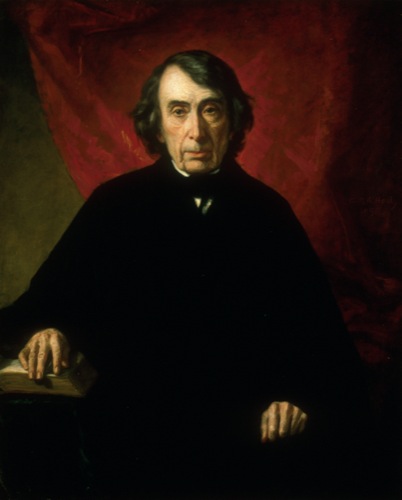
Let’s assess Presidents #21-28, technically eight, but really only seven, because one of them really needs a lot of exposition. The photo above is a clue…

President Chester A. Arthur, 1881-1885, who inherited the office after President Garfield’s doctors killed him, can’t be one of the worst Presidents, because he’s among the most over-achieving ones, as I’ve written about here and elsewhere.  He rose to the challenge and surprised even himself. He also, unlike some Presidents I could name, refused to be a puppet of his party’s power-brokers, and did what he thought was in the best interests of the people. This ended with him being respected by the public and shunned by his party: he wasn’t allowed to run for a second term. If Biden is blocked from the nomination, it will be the first time since Arthur that a President who hadn’t removed himself from consideration after a single term was rejected by his party.

Arthur, however, was much more popular than Joe Biden.

Disqualified. Continue reading

From Acceptance To Celebration: An Ethics Conflict (Don’t Bother Trying To Explain This To Bill Maher)

With his uncanny instinct for taking bows for making an obvious observation while missing the point, pseudo-comic Bill Maher once again engaged in his favorite topic of fat-shaming last week, this time with a “Eureka!” to share. The U.S. has inexplicably gone from fat acceptance to “fat celebration,” which the HBO wit <gag!choke!> calls a “disturbing trend.”

This isn’t a “trend,” nor is it disturbing, and it isn’t a phenomenon confined to obesity. Bill could have educated his audience—which, as usual, arfed and clapped like the human seals they are—but instead ignored the real problem, which is partially fueled by people like him.

And it’s an ethical one. Society’s goal is to make the human beings within it safe and happy. This requires setting standards, much of which it accomplishes with law and law enforcement, and the rest it pursues by making values, virtues and positive, societally beneficial conduct clear. Society then encourages and rewards those who meet those standards, and shames, disapproves and rejects those who defy them.

Continue reading

Ethics Alarms Reflections: “The Ethics of Commemorating Hiroshima,” And Other Thoughts

There probably isn’t a more explosive ethics event, literally or figuratively, than the dropping of the first atom bomb on Hiroshima on this date in 1945.

My father attributed this date to the fact of my existence. Dad had received word that he was to be part of the first wave invasion force to take the Japan mainland, and estimated casualties were as high as 1 million. He said that he had fully expected to be killed. But on August 6, in 1945, the Enola Gay changed all of that. I suppose you could say that I have a strong bias in favor of President Truman’s decision.

Hiroshima was one of the first historical topics I wrote about on this blog. Ethics Alarms had been around for less than a year in 2010, when I wrote this post, “The Ethics of Commemorating Hiroshima”:

Continue reading

Comment Of The Day: “More On Nichelle Nichols: Regarding Althouse’s Misguided Snark”

This Comment of the Day by Tom P (who has been on a roll of late) is one of those “in case you missed it…” COTDs. Here he is on the ever-green topic of attacks on past conduct of others by those residing in the present, as raised in by the post, “More On Nichelle Nichols: Regarding Althouse’s Misguided Snark”…in case you missed it:

***

The thing about the past is that it is past. The past serves only two purposes. One role is to bring pleasure in the present as you remember past enjoyable episodes of your life. The second is as a guide toward future action. No matter how hard you try, the past cannot be changed or undone. Althouse’s  protestations serve no purpose. Slavery has been abolished for a few years now and all slaves and slaveholders are dead. The original producers of Star Trek are dead or no longer in business. There are no living aggrieved parties nor remedies available to them if they were alive.

More On Nichelle Nichols: Regarding Althouse’s Misguided Snark

In the introduction to this post, Ethics Alarms mentioned the passing of “Star Trek” icon Nichelle Nichols, whose obituaries prominently noted her participation in TV’s first inter-racial kiss. I wrote in part,

“She was more model than actress, and as her role developed, much to her disappointment, the part of “Uhura” became little more than set dressing. But she played one of the first  black female characters on TV to have a non-subservient role, indeed Uhura was fourth in the “Enterprise” chain of command…. In her autobiography, Nichols wrote that Martin Luther King told her that she was advancing civil rights objectives, and convinced her not to quit when William Shatner was getting too obnoxious” …

But Ann Althouse complained on her blog yesterday,

They got away with putting a beautiful woman in a minidress in the background of as many shots as possible, but what did she do other than provide eye candy for the little boys and little men who watched? She was the secretary, seated at the switchboard, receiving calls.

Come on. The sexual politics was ridiculous, and blackness was the device to make it seem progressive, or at least to shut up the critics.

And I mean no disrespect to Ms. Nichols or to any other black actor who accepted a role constrained by stereotypes. There should have been more offers. There should have been more roles.

Continue reading

Comment Of The Day: “Ethics Quiz: Hitler’s Watch”

Once again, I have proven to be a lousy prognosticator when it comes to which posts will generate the liveliest discussions. The Ethics Quiz about the propriety of buying Adolf Hitler’s watch provoked many excellent comments and trenchant observations, and Steve-O-In NJ’s Comment of the Day is certainly among them.

Here it is…

***

Something as unique and personal as Hitler’s watch probably belongs in a museum, but if a private person owns it, he has the right to sell it. My question is why would anyone want something like that and what would he do with it once he had it? Doesn’t that say something about the buyer? People collect all kinds of odd things, but collecting something like this is odder than most.

As a Roman Catholic, I was brought up on the idea that certain amounts of power remained within certain objects, especially physical remains. That’s why Church altars often hold holy relics, the more important the church, the more important the relics it holds. There was some serious fear when the cathedral of Notre Dame in Paris had that fire a few years back that the crown of thorns, supposedly worn by Christ Himself, and the tunic of St Louis, worn by that saintly King on crusade, would be destroyed and with them the physical link to those personages. I don’t think the belief in relics and similar items is unique to Catholicism, I think it was around long before that. Supposedly the tree that Siddhartha achieved enlightenment under, the burning bush where Moses received his mission from God, and the three items that the sun goddess Amaterasu gave to the first emperor of Japan all exist still. You can see the first two if you are willing to travel, the three items are kept at the Great Ise Shrine in Japan and none but the appointed guardian clerics are allowed to see them.

I think that the human belief that after revered or reviled figures are no longer in this world that something of them remains and can be accessed via whatever physical links there are transcends modern religion and goes back to very early beliefs. The belief that certain symbols have certain power is also a very ancient belief, and why, to this day, we all seem to believe that the display of the cross will repulse a vampire or similar creature. Does any of this make logical sense? Not really, but we are humans, not Vulcans, and therefore the feelings associated with these beliefs remain part of us.

Those feelings can be played upon and amplified, of course, and a lot of individuals do just that, to harness them and hopefully lead others into doing as they say or making the leap from feeling to action. Symbols can serve as points to rally around or against and focusing points for causes. That’s why in the various crusades and jihads it was common for the victor to throw down symbols of the defeated.

Supposedly, in this modern era, we are supposed to have moved past giving these symbols inordinate amounts of power. However, certain political figures have found that rallying against certain symbols is a shortcut to power and mob rule. There is a certain level of dopamine rush that goes with feeling like you’re a righteous member of a righteous cause, and  another kind of  thrill that goes with destroying a symbol that someone says is bad. The problem is that, like any other kind of addiction, it becomes harder and harder to get the same amount of high with the same actions. Eventually you graduate to hurting and even killing others that you associate with whatever is opposed to your righteous cause.

There is nothing per se unethical about dealing in historical artifacts, whether they be associated with those were thought of as very good or those who are thought of as very evil. Any unethical actions lie within the use of those artifacts. Would I personally want to own some item that was personally possessed by a genocidal dictator? Not really. Do I have a problem with someone else owning such an item? No. Do I have a problem with such an item being displayed in a museum? No. Destroying the physical reminders of History is ultimately unhelpful.

Do I wonder what the owner or buyer of such an item is thinking? Yes. However, unless I actually discuss it with him, I don’t get to assume he’s a bad guy. Am I going to empower someone who claims victimhood to insist on the concealment or destruction of anything? No. I think the sanctification of victimhood ultimately leads to the pussification of society.