I have been remiss in getting up “Comments of the Day,” another consequence of my frustration adapting to the new WordPress “block” system, damn it. I usually hand le COTD posts from my laptop, and posts requiring my concentration and composition rather than the imported wisdom of others from the Fortress of Ethics Solitude, my office.
I’m posting this follow-up comment from Here’s Johnny regarding the baseball writers’ gratuitous smear on the original commissioner of baseball based on nothing but rumor, a desire to practice “anti-racism,” without actually doing anything, and the smug assumption that History Doesn’t Matter, Gratitude Doesn’t Matter, and Honors Don’t Matter.
And the dog is licking my toes…
UPDATE: Well, that was a failed experiment. When I tried to move the text from Word to WordPress, I couldn’t make the format work from the laptop, so I’m back at my PC. That was 20 more minutes of my increasingly scarce time on Earth robbed by WordPress. I’m thinking of sending them an invoice...
Yesterday, the Baseball Writers’ Association of America (BBWAA) announced that group will remove the name of Kenesaw Mountain Landis from the American League and National League Most Valuable Player plaques presented each year to the MVP winners.. Landis has been honored with having the plaques bear his name since 1944, the year of his death. He didn’t do much: he only probably saved the National Pastime at its darkest hour.
It was Landis, a famously tough and uncorruptible federal judge, whom the baseball owners turned to in 1920 in the midst of the Black Sox scandal. The scandal involving the Chicago White Sox throwing the World Series in 1919 under the influence of bribes from gamblers to some key players, including star Shoeless Joe Jackson. Even though the eight accused players were acquitted in their trial, Landis, who remained a judge for two years while serving as Commissioner, banned them all from baseball, laying down a rule that participating in efforts to corrupt the game through gambling or having knowledge of other players doing so and not acting to stop it were grounds for permanent exile. Eighteen players in all, like the infamous Hal Chase, were banned by Landis, who remained commissioner for the rest of his life.
Landis had a memorable career as a judge before coming to baseball’s rescue: in 1907, he thrilled the man who appointed him, Teddy Roosevelt when he fined Standard Oil of Indiana more than $29 million (about $800 million in 2020) for violating federal laws forbidding rebates on railroad freight tariffs.
Why, then, is Landis suddenly the victim of metaphorical statue-toppling? That was a clue: in the wake of the George Floyd Freakout and The Great Stupid, the baseball writers, which are thoroughly infested with self-righteous and semi-ignorant would-be social justice warriors like this guy, blame Landis for not “doing more” to desegregate baseball before Jackie Robinson and Branch Rickey finally did the trick, three years after Landis died. In other words, he’s being punished for not seeing clearly what everyone sees almost 80 years later, and not actively fighting for a cause that neither baseball nor American society may have been ready for.
The New Yorker cartoon above, by the magazine’s iconic cartoonist George Booth, first ran in 1975. I remember finding it strange then. I just ran across it again, and it seems ripe for an Ethics Alarms poll.
On this date, October 1, 110 years ago, a massive explosion destroyed the Los Angeles Times building in the city’s downtown area, killing 21 employees and injuring many more. This obviously unethical act—though in the over-heated labor environment of the times, union activists would secretly defend it—set off a series of events in one of the great ethics train wrecks in U.S. history.
The explosion was a message to Los Angeles Times publisher Harrison Otis, a powerful opponent of the burgeoning labor movement in general and unions in particular. Determined to exploit the tragedy to turn public opinion against organized labor, he hired the nation’s most famous private detective, William J. Burns, to crack the case while his paper supplied an avalanche of anti-labor editorials and slanted news stories. Otis, the leader of the Merchants and Manufacturing Association, a powerful group of business owners with extensive political connections, seemed less interested in justice for the dead than a decisive knock-out of the union movement itself.
Burns’ investigation led to the Bridge and Structural Iron Workers Union and their treasurer, John J. McNamara. Burns got a confession out of a sketchy character named Ortie McManigal who had allegedly been the intermediary between McNamara and two bomb experts, and personally arrested John McNamara and his brother James in Indiana. Then Burns supervised the kidnapping and transportation of the brothers to California, where they could be prosecuted.
Convinced that the the McNamara brothers were being framed—some labor supporters even suspected that Otis had bombed his own building—Samuel Gompers and Eugene V. Debs pressured Clarence Darrow, then the premier labor lawyer in the U.S., to take on the McNamaras’ defense. Darrow had been ill and seeking to retire, but a recent stock market crash had left him broke as well. He agreed to take the case for the then unprecedented sum of $50,000 (about $1,368,000 today). The unions literally had children collecting nickels and pennies to build the defense fund.
The unions were Darrow’s clients under the existing legal ethics rules, but the brothers were also his clients, and their lives were at stake. This became a serious conflict when Darrow learned, within minutes of meeting with the McNamaras, that they were guilty.
Gompers had told him that the brothers had to be acquitted or the entire labor movement might be destroyed forever. The clients paying his fee, therefore, demanded a plea of “not guilty.” Darrow, however, became convinced that only a guilty plea would save the brothers from execution. Meanwhile, he knew that there was no way the McNamaras could get a fair trial. The Times was poisoning the jury pool daily. The prosecution was engaging in outrageous tactics, like bugging Darrow’s offices in L.A. They even had Darrow followed, and got incriminating photographs of the lawyer leaving the apartment of his long-time, off-and-on mistress, a female journalist covering the trial. Then they used the photos to try to force Darrow to withdraw from the case, threatening to show them to his wife, Ruby.
“Go ahead,” he said. “She knows all about Mary.” Darrow’s hands were hardly clean either: his agents had located the supply of dynamite in Indiana that the fatal charge had been taken from, and he hired a lawyer to hide the evidence in a safe. Continue reading →
On this day in 1789, The Judiciary Act of 1789 was passed by Congress and signed into law by President George Washington, thus establishing the Supreme Court of the United States. Notably, it was then designed as a tribunal made up of only six justices—an even number! (The Horror!) President Washington quickly nominated John Jay to preside as Chief Justice, and John Rutledge, William Cushing, John Blair, Robert Harrison and James Wilson to be Associate Justices. You should know Rutledge: he sings that cool song about slavery and the Triangle Trade in “1776.” You also should recall Wilson from that show—he’s the one slandered by being portrayed as a total weenie, which he most assuredly was not. Two days later, the six appointments were confirmed by the U.S. Senate.
Nobody thought it was a big deal.
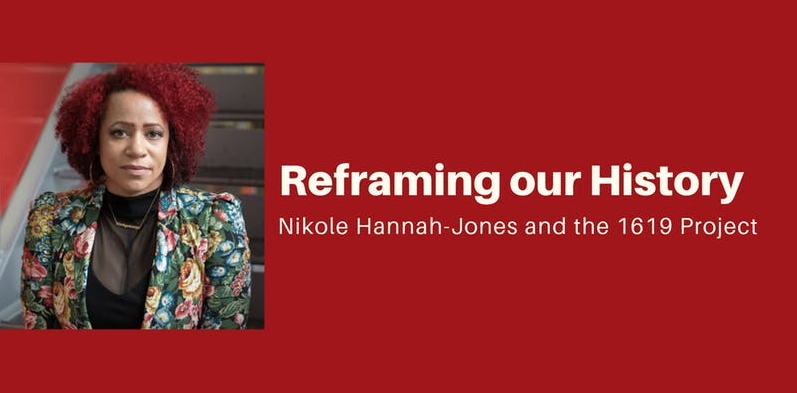
1. We knew the New York Times’ “1619 Project” was flagrant Black Lives Matter-inspired propaganda and based on lies, correct? Ethics Alarms discussed this when the Pulitzers honored the thing’s Liar in Chief, Nikole Hannah-Jones, who even admitted that it was really more about creating a useful “narrative” than accurately presenting history. Ben Crump, the serial race-hustler who gets huge damage settlements for family members of black victims of various tragedies by proclaiming the police and America as racist, cited the “1619” project’s narrative yesterday while helping to incite riots. See? It works!
But the project is used in many school systems as “history,” and the central dishonesty was a problem, so the Times, without announcement or explanation, erased the central claim of the 1619 Project, which was that the year the first slaves were brought to Colonial Virginia was the “true founding” of the United States.
The initial introduction to the Project, when it was rolled out in August 2019, stated that
The 1619 Project is a major initiative from the New York Times observing the 400th anniversary of the beginning of American slavery. It aims to reframe the country’s history, understanding 1619 as our true founding, and placing the consequences of slavery and the contributions of black Americans at the very center of the story we tell ourselves about who we are.
Sometime this year, the text became,
The 1619 Project is an ongoing initiative from The New York Times Magazine that began in August 2019, the 400th anniversary of the beginning of American slavery. It aims to reframe the country’s history by placing the consequences of slavery and the contributions of black Americans at the very center of our national narrative.
The change was discovered after Hannah-Jones denied last week that the project’s core thesis was what she and the Times had said it was. It “does not argue that 1619 is our true founding,” she said. Well, not any more. Continue reading →
I just learned that my sweet, kind cousin Kathy has died as the result of several recently discovered brain tumors. I hadn’t seen her for decades, so in my mind she’s still 35, vibrant and beautiful. I have to come to terms with the fact that we had no relationship at this point, but her loss still stings. She lived alone after her marriage with a real creep fell apart; never had children. Like all of the Coulourises (my mother’s side), family was so important to her. I could have picked up the phone.
1. I suppose today’s anniversary of Lincoln signing the Emancipation Proclamationin 1862 has to be noted, but it was a strategic act, not an especially ethical one. After all, it exempted slaves in the border states, which allowed slavery but had not joined the Confederacy. After the Union’s sort-of victory at the Battle of Antietam earlier in the month, Lincoln announced that enslaved people in areas still in rebellion within 100 days would be free. Then, on January 1, 1863, Lincoln issued the final Emancipation Proclamation, which declared “that all persons held as slaves” within the rebel states “are, and henceforward shall be free.” Note that it freed no slaves that he had the power to free, but the maneuver successfully made the Civil War about human rights. Anti-slavery nations like Great Britain and France, which the Confederacy desperately wanted as allies, couldn’t back the Confederacy after Lincoln made the war explicitly a statement against slavery.
2. Does Mitt Romney have any core principles at all? If he does, I don’t know what they are. It has always been clear—I hope— that he is a pure pragmatist, doing whatever he thinks will work at any given time. Non-ideologues often make effective leaders: FDR was one. Lincoln too. Romney would hate this, but Donald Trump is like Romney in that regard. (So are Hillary Clinton and Joe Biden.). Over in the Facebook hive, the Deranged are gnashing their teeth over Romney’s announcement that he’ll vote for a qualified nominee for SCOTUS. I guess they thought that he would be like John McCain, and be governed by spite. Sure, Romney voted for impeachment because it was meaningless except to give the President a poke in the eye. He is still a Senator from Utah, however. he’s not going to torpedo an effort to solidify a conservative majority on SCOTUS.
If he were a Senator representing Massachusetts, it would be a different tale.
3. Black Lives Matter quietly deleted the “what we believe” page on its website. You know, that was where the group said its mission is to “disrupt the Western-prescribed nuclear family structure,” to “dismantle the patriarchal practice that requires mothers to work ‘double shifts’ so that they can mother in private even as they participate in public justice work,” as well as “foster a queer-affirming network” by “freeing ourselves from the tight grip of heteronormative thinking, or rather, the belief that all in the world are heterosexual.” Maybe they were afraid all of those corporations, sports teams and politicians proclaiming their support might finally decide to read about what they were endorsing. Continue reading →
Does anyone else find it remarkable that Democratic Party leaders aren’t the least concerned with how reasonable Americans might react to them talking like mobsters and thugs? Yesterday, Nancy Pelosi seemed to say that they might impeach the President if he nominates a judge to replace Justice Ginsburg. I suppose it’s comforting that the party is finally being open about the fact that it now regards impeachment as a pure partisan weapon, but how do you you threaten impeachment if a President fulfills his constitutional duties? For that matter, how can Democrats scream that the late Justice’s “dying wish” must be respected when it would require contradicting her statement about final year SCOTUS nominations: “The President is elected for four years, not three. So the powers that he has in year three continues into year four… and that’s how it should be”?
Well, it’s a rhetorical question, of course. Democrats have abandoned any pretense of consistency and integrity in their destructive anti-Trump mania. I thought this arch tweet was on point, but incomplete:
The list is much longer.
1. Love it. Princeton, engaged in BLM suck-up grandstanding, confessed that systemic racism is embedded there, so the Department of Education asked if Princeton doesn’t discriminate on the basis of race, as must be the case to continue recieveing federal funding. The Education Department’s demand for an explanation got full huminahumina treatment in the statement Princeton issued in response. The excuse is that they aren’t at fault for the racism, since “everybody’s been doing it,” and at least Princeton acknowledges the problem.
1. Yes, these are the people who want to have power over our lives. Imagine: this woman isn’t mourning the death of a human being, she’s angry because that human being can no longer serve her interests. The human being in question continued to work for the public long after she could have retired with dignity and comfort, and this woman is furious that she wasn’t physically able to do so “until 2021.” Not only that, she posted this repulsive video with no apparent comprehension that it exposes her as a horrible human being. She just assumes that most who share her political persuasion are just as incapable of empathy and compassion as she is. Maybe she’s right.
Again I must ask, “How do people get like this?”
***
Okay, I just stumbled on some timely satire. I generally hate memes, but this is genuinely funny. Forgive me.
2. Speaking of memes and The Great Stupid, what can you say about an adult who would post this on Facebook in all seriousness, as if it was profound or true?
“Ladies and Gentlemen, the President of the United States…”
I’ve been thinking about what would be the fair and expository Ethics Alarms nickname for Joe Biden, and I’ve settled on “The Lawn Chair,” or TLC for short.
In 2016, I wrote repeatedly in posts and comments that I would vote for a lawn chair over Donald Trump, using the same standard that I had applied in the past to first term Presidents who I had found unacceptably incompetent or untrustworthy (Nixon, Carter, Bush I, and Bill Clinton). Joe Biden, in his drastically diminished 2020 model, is the closest thing a U.S. Presidential contest has had to an actual lawn chair, and it is clear that those preparing to vote for him to lead the nation at this critical time would literally vote for a lawn chair over President Trump. In this there is epic hypocrisy.
Feminists who once proclaimed that sexual harassment and sexual assault, determined on the basis of unsubstantiated accusations, were sufficient to disqualify a man for high public office are supporting Biden, who has been photographed numerous times engaging in sexual harassment as Vice-President, and has been accused “credibly” (as they said about Brett Kavanaugh’s less than credible accuser) of sexual assault. Heck, one such feminist is his running mate. Soft coup proponents who have argued that President Trump is sufficiently cognitively handicapped that the 25th Amendment should be employed to remove him are supporting Biden, who is obviously more mentally impaired now than Trump has ever been even in the fever dreams of progressives.
On this day, September 14, in 1814, Francis Scott Key was inspired to write the poem that was eventually set to music and, by act of Congress in 1931, became America’s official National Anthem, “The Star-Spangled Banner.” The poem, originally titled “The Defence of Fort M’Henry,” was written after Key witnessed the Maryland fort standing up to furious bombardment by the British during the War of 1812. A lone, tattered U.S. flag was still flying over Fort McHenry at daybreak, giving rise to the anthem’s most bracing line, “And the rocket’s red glare, the bombs bursting in air, Gave proof through the night that our flag was still there.”
I’ve listened to the Anthem being attacked more or less my whole life—it’s bellicose, it’s too hard to sing, it’s set to the music of a drinking song, it was written by a slave-holder. What matters is that the Anthem, unlike so many others nations’ anthems, has a authentic historical origin linked to an existtential crisis in our history, and that it eloquently represents the American character and its dedication to hope, perseverance, and resilience. The Star Spangled Banner may be hard to sing, but when a crowd sings it with passion, or when a singer knocks it out of the park like the late, great Whitney Houston, only France’s Marseillaise can equal it for sheer chills.
The current assault on the Anthem, and the use of it for cheap political theatrics by refusing to stand and convey proper respect for what it represents, is an attack on American history, values and culture. Nothing less.
1. It’s called “paying one’s debt to society.” I have no intense objection to allowing convicted felons to vote once they have served their sentences. I also have no intense objection to banning convicted felons from voting for life. In 2018, Florida’s voters decided to end the disenfranchisement of those convicted of felonies, except for murder and sexual offenses. Then the battle became whether convicted felons should be required to pay all the fines related to their crimes before they became eligible to vote again.
Well, of course. Isn’t that intrinsically obvious? You can vote when you have paid society’s requirements as a punishment for the felony: whether that is time in prison, or time on probation, or a cash fine, it’s all part of the “debt to society.” Pay that debt, and then you can vote.
But Democrats are expert in representing legitimate requirements and safeguards for voting as sinister voting suppression schemes, so in May a Florida court ruled that requiring convicted felons, many of whom are indigent, to pay court-ordered fines before they could regain the vote was unlawful discrimination, by imposing an unconstitutional “pay-to-vote system.”
What an astoundingly deceitful and dishonest argument! Is requiring people to pay for their groceries a vicious “pay not to starve to death” system? The fines have nothing to do with voting. The fines have to do with completing the punishment for the felonies. Calling the fines the equivalent of a poll tax is clever but deliberately misleading, yet a court bought it. Fortunately, the U.S. Court of Appeals for the 11th Circuit in Atlanta overturned that decision, and ruled that the 2019 Florida law requiring ex-felons to pay their fines before being re-enfranchised was indeed constitutional.