The Washington Post, not for the first time, just referred to Jimmy Kimmel as “America’s conscience,” a title first conferred by, of course, CNN.
Any nation that seriously regards the slimy likes of Jimmy Kimmel as its conscience should just commit mass suicide like Jonestown, because it’s a menace to civilization.
1 Programming young victims to lie. In my mailbox today is a message from the Democrats.org, which, I must note, has ignored multiple requests to stop sending me their hackery. I have unsubscribed: it apparently makes no difference. This is both illegal and unethical, and only reinforces my previous conclusions about the House of Clinton, Perez, Pelosi, Wasserman Schultz, et al.
The message is allegedly authored by Sarah Imam, who announces herself as Parkland shooting survivor and writes in part,
On February 14th, I lost 17 members of my community in a mass shooting at my school, Marjory Stoneman Douglas. But we, the survivors, refuse to let their names be forgotten. We refuse to let their deaths be in vain. We have decided to take action to ensure that an event like this will never happen again. We are calling for stricter gun laws. We are calling for change.
Now, is Sarah lying, or is someone lying to Sarah, or to us? There is no “change” that will ensure that no mass shooting, in a school or anywhere else, will ever happen again. This is a false promise. Does Sarah know that, or is she just a puppet, being used to promote a dishonest message? Then we must ask, is Sarah smart enough to know that the only “change” that could even theoretically “ensure that an event like this will never happen again” is to ban and confiscate all guns. Is that what she means? Is that what Democrats really want to do, but can only express it that desire in code, and through the willing, naive mouths of grieving teens?
2. David Brooks doesn’t get it.Again. New York Times Stockholm Syndrome-addled formerly- conservative op-ed writer David Brooks nicely encapsulates the central delusion of “the resistance” and others, arguing that the gun control battle will be the tipping point for a progressive victory in the culture wars because…
“Progressives could be on the verge of delegitimizing their foes, on guns but also much else, rendering them untouchable for anybody who wants to stay in polite society. That would produce social changes far vaster than limiting assault rifles. Two things have fundamentally changed the landscape. First, over the past two years conservatives have self-marginalized. In supporting Donald Trump they have tied themselves to a man whose racial prejudices, sexual behavior and personal morality put him beyond the pale of decent society. Second, progressives are getting better and more aggressive at silencing dissenting behavior. All sorts of formerly legitimate opinions have now been deemed beyond the pale on elite campuses. Speakers have been disinvited and careers destroyed. The boundaries are being redrawn across society.”
This is essentially a Cognitive Dissonance Scale argument by an elitist who can’t distinguish between the public’s scale and his own. Donald Trump is President of the United States because he was elected, despite what Brooks calls his racial prejudices, sexual behavior and personal morality. Can’t Brooks see that he’s essentially making Hillary’s deplorables argument? He is saying that nobody who voted for Trump is a member of “polite society’! Incredibly, he’s also saying that supporting the President of the United States is marginalizing. Wow: get out of that echo chamber, David—RUN! No, you idiot, refusing to support the institution of the Presidency and the integrity of elections marginalizes Democrats, the “resistance,” the New York Times, and YOU. Then Brooks writes that progressives will win because they are getting “better” at totalitarian methods, like suppressing speech. Nah, this isn’t self-marginalizing, not at all! Americans love to have their freedoms disrespected, and to be told that only pre-approved opinions and viewpoints will be allowed when Democrats are in power. Continue reading →
Remember in December when I had this exchange on NPR during a panel about sexual harassment and political figures in the early states of #MeToo?
ME : A hostile work environment means that the recipient of this has to feel hostility. They don’t like it. So, for example, if somebody – I have a hypothetical that I’m sure has happened, where someone is grabbed by Donald Trump back when he’s a celebrity, and she comes home. And she’s kissed, and she tells her roommate, “That was cool! Donald Trump kissed me.” And then when everybody she knows detests Donald Trump, she suddenly says …”I was harassed.”
BUTLER: COME ON!
HOST MICHEL MARTIN: OK. Yeah, I think we’re going to go to a different…All right. All right, Jack, you’ve had your say on that. And I think there are a lot of people who would want to argue with – I’m going to let Paul speak his piece on this. What do you say to that?
But the professor didn’t go beyond his interjected cheap shot, and went on to his own agenda, leaving the impression that my exposition on the strangeness of sexual harassment law was off-the-wall. It wasn’t, though. I was 100% correct, and NPR listeners, thanks to a grandstanding law professor whom I suspect wasn’t up on sexual harassment (he’s a criminal law professor who concentrates on race issues), were left less-informed than when they tuned in.
My point was and is valid: nothing stops an object of sexual attention in questionable propriety and taste from treating it as welcome at the time, then choosing, months, years or decades later, when there are non-ethical motivations to vilify or harm her one-time suitor, to withdraw her consent and “welcome,” and claim, retroactively, that she was harassed and abused.
(Wind storms all over Virginia, knocking out power and my e-mail, and blowing over a tree that narrowly missed my son’s car!)
1 Lack of Transparency? What lack of transparency? During a lecture and moderated discussion at U.C.L.A. this week in which he was a a participant and invited guest, Treasury Secretary Steven Mnuchin was heckled with hisses, jeers, shouted insults and profanity from students and protesters, some of whom were ushered and even carried out by police officers. A programmed sixth grader in the audience even questioned him about the fairness of passing permanent tax cuts for companies and expiring cuts for individuals, because as we all know, 10-year-olds are well-versed in tax policy theory.
Afterwards, Mnuchin revoked his consent for the official video of the event to be released, perhaps because he was flustered by the harassment and it showed. In response to criticism of this virtual censorship,
The Treasury Department, through a spokesperson, said that what the Secretary did wasn’t what he obviously did—a Jumbo, aka “Elephant? What elephant?”—saying,
“The event was open to the media and a transcript was published. He believes healthy debate is critical to ensuring the right policies that do the most good are advanced.”
He just doesn’t want anyone to see or hear the debate.
A related point: The protests were organized by Lara Stemple, a U.C.L.A. law professor, and students and faculty members participated. Protests are fine; disrupting the event is not. Faculty members who assisted in the heckling should be disciplined, and students who participated should be disciplines as well. It’s an educational institution, and all views sgould be openly explored and heard without interference. No guest of the university should be treated this way. Ever. No matter who it is or what their position. The treatment on Mnuchin was unethical.
2. More Supreme Court fun with ethics! Minnesota’s law banning “political” clothing and buttons from polling places is being challenged as an affront to free speech. The law prohibits people from wearing a “political badge, political button or other political insignia” at a polling place on an election day, and a member of the tea party movement sued after his “Tea Party” message got him in trouble when he came to vote.
“How about a shirt with a rainbow flag?” asked Alito. “Would that be permitted?”
“A shirt with a rainbow flag?” Rogan repeated. “No, it would — yes, it would be — it would be permitted unless there was — unless there was an issue on the ballot that — that related somehow to — to gay rights.”
Justice Alito: Okay. How about an NRA shirt?
Mr. Rogan: An NRA shirt? Today, in Minnesota, no, it would not, Your Honor. I think that that’s a clear indication—and I think what you’re getting at, Your Honor—
A T-shirt bearing the words of the Second Amendment? Alito asked.
Probably banned because of the gun-control issue, Rogan said.
The First Amendment? Alito asked. Probably not, Rogan answered.
Got it. The First Amendment isn’t a political statement, but the Second Amendment is. That led Justice Neil M. Gorsuch to observe: “Under your interpretation of ‘political,’ it would forbid people from wearing certain portions of the Bill of Rights into a polling place but not other portions of the Bill of Rights. And I guess I’m just wondering what compelling interest Minnesota has identified that requires a statute that goes so much further than the vast majority of states?”
In contrast, Justice Anthony M. Kennedy asked J. David Breemer, a lawyer for the Pacific Legal Foundation, representing the challengers, “Why should there be speech inside the election booth at all, or inside the what you call the election room? You’re there to vote.”
This is a problem requiring an “all or nothing” solution. Either all forms of political speech must be allowed, or no speech at all. In a sick time where citizens honestly argue that a MAGA cap or a picture of a gun makes them feel threatened and “unsafe,” the ethical option would seem to be Justice Kennedy’s. No speech, messages, no logos, no photos, no American flags. Last fall I voted wearing my Red Sox jacket.
Actually, that’s dishonest: it’s been a terrible day, morn to now.. A catalogue retailer took an email address my wife sent them a year ago and bombarded her account with hundreds of promotional messages yesterday, crashing her email. Then her efforts to fix the problem resulted in a Proethics system email crash that I have been trying to address for the past five hours. I finally decided to get something productive done, so I’m getting up this post while talking to my tech people. UPDATE: They just gave up.
1 Trump Tweets.Ugh. The President criticizing his own Cabinet member, in this case Jeff Sessions, in public via tweet, is horrific leadership and management practice. If I were Sessions, I would resign, It is disrespectful, disloyal, undermines morale on the President’s team, and is just plain stupid. I don’t understand how Trump had any success at all treating employees and subordinates like this. While we’re on this perpetual subject. the fact that the President would say out loud that he would have rushed the Parkland shooter without a weapon is just more evidence of a) a flat learning curve b) the lack of the usual filters from brain to mouth and c) the unethical tendency of third parties to critique the actions of others in rescue situations. No question: the resource officer who was required by policy, assignment and duty to try to intervene in the shooting deserves all the criticism he has been getting, and is accountable. But the President of the United States announcing that he is Batman is something else entirely.
My objections to the non-stop personal ridicule of our elected leader stands, but he also has a duty, as the steward of the Office, not to make himself look ridiculous.
2. An unethical boycott tactic, but I repeat myself. The anti-gun zealots have decided to attack a free and constitutionally protected Bill of Rights advocacy group as part of the news media-assisted effort to demonize the NRA as being somehow responsible for a school shooting that none of the proposed “common sense gun reforms” would have prevented. Now the Second Amendment-gutting crowd is using the boycott, a particularly odious weapon favored by progressives, which depends on the venality and spinelessness of corporate executives to constrict free speech. Delta Airlines announced it was ending a promotional discount with the National Rifle Association after threats and a social media campaign, then tried the weaselly explanation that its decision to stop offering discounted fares to the N.R.A. “reflects the airline’s neutral status in the current national debate over gun control amid recent school shootings.” Continue reading →
When I hear or read an obvious rationalization that somehow had been left off the Ethics Alarms list, now closing in on ninety ( the new addition makes 89), I think, “That must be on the list somewhere!” When I check and it is not, I marvel, “How did I miss that one?” This was especially true with Rationalization #42, which, please note, bumps “The Hillary Inoculation” to 43, and every subsequent rationalization up one. This is not just a rationalization, but one of the near-evil ones, employed by unrepentant miscreants who count on gullibility, generosity, kindness, forgiveness and fading emotions to allow them to avoid accountability, and harm the same people again later
I almost christened the new arrival “Jake’s Rationalization,” for it was CNN’s Jake Tapper, once a real journalist, now in the final throes of Sienenization, who uttered it. The topic was the recent CNN “town hall” on guns (described here and here), with an audience packed with angry Florida students and their families, yielding questioners who were rude, hostile, and frequently full of misinformation.
The The Hollywood Reporter described the reactions of CNN head Jeff Zucker and Tapper as they tried to deny that their disgraceful stunt was what it so obviously was:
…[E]ven as the town hall was receiving plaudits from the mainstream media, the Florida event was being used as an example of how CNN has morphed into a partisan player. “CNN has decided to take this path where they are kind of left-wing advocates,” says Matt Schlapp, chairman of the American Conservative Union and organizer of CPAC.
It’s a characterization that CNN president Jeff Zucker finds insulting. “That criticism is silly,” Zucker tells The Hollywood Reporter. “The fact is we were there, we presented both sides. People who want to criticize are looking to just criticize before they even think about it.” He points out that Sen. Marco Rubio could have been joined by Trump or Republican Florida Gov. Rick Scott, but both declined CNN’s invitation. “That’s not CNN’s problem,” he adds.
Yes, it was being used as an example because it was an example. The fact that the mainstream media gave this monstrosity “plaudits” confirms that it isn’t only CNN that has morphed into a partisan player. “Both sides” were represented like “both sides” were represented at the Alamo. The audience was unbalanced (in more ways than one), the questions were ridiculously unbalanced (but that’s what happens at town halls when the audience is unbalanced), anti-gun activists and pandering anti-gun Democrats were allowed to make factually misleading statements on national television without corrections from the passive moderator (Tapper, in slug-mode), and the two designated defenders of the Bill of Rights on the stage, Marco Rubio and NRA pretty face Dana Loesch were inept and defensive (or perhaps defensive and inept.) Continue reading →
1 One of my favorite Hollywood ethics scenes. I watched “Mrs. Miniver” again last night, the 1942 WWII drama starring the magnificent Greer Garson. It has a wonderful ethics moment late in the film, when Lady Beldon, the wealthy town battleaxe (and the grandmother Mrs. Miniver’s recently minted daughter-in-law, soon to die tragically) presides over the English village’s annual flower show, in which she has won the coveted “Best Rose” prize every year. But beloved old stationmaster Mr. Ballard has developed a magnificent new rose (named after Garson’s character) and desperately wants to win as well. The Minivers tease their elderly relative about the near certainty that she will win as always regardless of the relative merits of her entry and “The Miniver” entered by Mr. Ballard, since the judges are terrified of her, and Lady Beldon has made it clear to all that she regards the annual prize as a virtual entitlement. After all, the prize is even called “The Beldon Challenge Cup.” Sure enough, the judges, who seemed to be having a harder time than usual concluding that Lady Beldon’s rose deserved the award, hand her a slip that places her rose in first place, and Mr. Ballard’s in second.
Lady Beldon shows the slip to Mrs. Miniver with an air of triumph.
MINIVER: This is really important to you, isn’t it?
LADY BELDON: Yes. It’s stupid of me, but there it is. I’ve won that cup for as long as I can remember.
MINIVER: Mr. Ballard’s terribly keen too.
BELDON: Well, he’s had his chance. Hasn’t he? You have such a way of looking at people. What do you expect me to do? Reverse the judges’ decision?
MINIVER: I wouldn’t put it past you. If you happened to disagree with it.
“But I don’t!” she harrumphs. She keeps looking at the two competing roses, though, and also at old Mr. Ballard (played by Henry Traverse, later to portray Clarence the Wingless Angel”in “It’s a Wonderful Life.” His look of anticipation and hope approximately mirrors the expression of a six-year-old on Christmas morning. And when it comes time to announce the winner, Lady Ballard pauses, looks at the two roses again, ponders, crumples up the judges’ slip, and announces that “The Miniver” wins the prize.
Dame May Witty, one of the best character actors England ever produced, shows us with her face that she realizes she did the right thing as soon as she sees Ballard’s reaction to winning. And the assembled crowd gives her an even louder ovation than they give the winner. They didn’t even have to see the slip like the Minivers: they know what she did. And she knows they know.
I had a Lady Beldon moment many years ago, before I had even seen the movie. Continue reading →
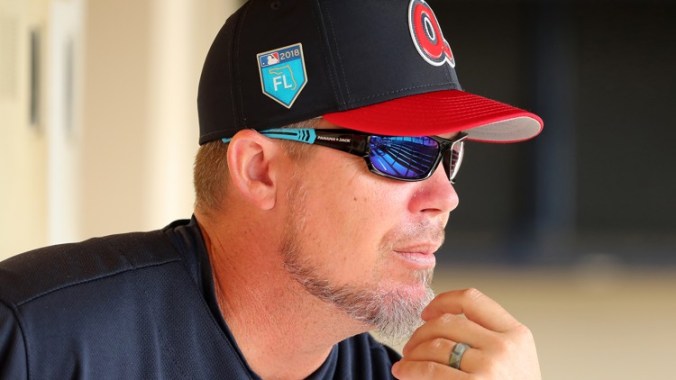
Second Amendment authority Chipper Jones. He’s an expert because he had a .303 lifetime batting average, and shoots deer….
It was gratifying that the weekend post about the “weapons of war” anti-gun rhetoric attracted a great deal of thoughtful commentary here. I was thinking about the post again today when, as is increasingly the case, a sportswriter gratuitously injected politics into sports commentary. Baseball season is fast-approaching, and while one of the many reasons I follow the game so passionately is its ethics content, I look forward to the game to get away from politics, and incorrigible social justice warrior agitators like NBC’s Craig Calcaterra, lapsed lawyer, can’t resist misusing their sports platforms as a political soap box.
“I believe in our Constitutional right to bear arms and protect ourselves,” Jones said. “But I do not believe there is any need for civilians to own assault rifles. I just don’t.
“I would like to see something (new legislation) happen. I liken it to drugs – you’re not going to get rid of all the guns. But AR-15s and AK-47s and all this kind of stuff – they belong in the hands of soldiers. Those belong in the hands of people who know how to operate them, and whose lives depend on them operating them. Not with civilians. I have no problem with hunting rifles and shotguns and pistols and what-not. But I’m totally against civilians having those kinds of automatic and semi-automatic weapons.”
Calcaterra makes sure that we knew that the ex-Braves player is an avid hunter and owns a rife, because he apparently wants us to think that owning a gun makes an athlete an expert on the Bill of Rights. (It doesn’t, and I’m pretty sure Calcaterra knows that.)
“While debate, often acrimonious, will no doubt continue about these matters indefinitely, it’s striking to see someone like Chipper Jones come out so strongly on the matter in the particular way that he has. It has to make people at the NRA and those who support it wonder if, when you’ve lost Chipper Jones, you’ve gone too far.”
Thus we have a lawyer appealing to the authority of a man who played baseball all through highs school, and signed a contract to be a pro baseball player at te age of 18. Call me skeptical, but I question whether he has devoted much research to the history and philosophy underlying the Second Amendment, or has read any of the judicial opinion and scholarship analyzing it. I especially question Jones’ flippant “denouncement” given the tell-tale signs that he doesn’t understand the right to bear arms at all, beginning with the misnomer “assault rifles” and the assumption that the most popular civilian rifle in the U.S. is a “weapon of war.” He also makes the offensive assumption that he is qualified to decide what kind of fire arms other citizens “need,” a commonly expressed attitude sharply discredited in this essay by playwright and screenwriter David Mamet.
I find myself increasingly impatient with uninformed opinions on important matters relating to our personal liberty, expressed by celebrities with no more understanding or special expertise than the typical semi-informed citizen, and often less. I am even less tolerant when I am told by journalists that attention must be paid.
1. Let us begin with this. The National Rifle Association is an advocacy organization. Advocacy organizations operate exactly like lawyer representing clients, and their ethical obligations are similar. They must be loyal to the interests of the object of the representation. They must be zealous, honest, and they must avoid conflicts of interest. In this regard all advocacy organizations, regardless of where they land on the ideological or partisan spectrum, are the same. They have a mission, and a job, and a duty to do it well. The ACLU exists to be an advocate for absolute integrity of the Bill of Rights, particularly the First, Fourth, Fifth, Sixth, Eighth and Ninth. The NRA has a similar mission regarding the Second Amendment, because the ACLU has never been zealous about that one. FIRE advocates for free speech on college campuses, which is often not a First Amendment issue.
NARAL is a zealous advocate for abortion rights, in absolute terms. Most advocacy groups adopt absolute positions which often seem unreasonable to moderates. The U.S. Chamber of Commerce is an advocacy group for business—I once worked for them—and opposed government regulations. The Association for Justice—I worked for them too–is an advocacy group for plaintiff’s trial lawyers, and fights any efforts at reforming the tort system, such as capping damages or punishing frivolous lawsuits. All of these and more take the extreme position on one side of a controversy to balance other advocacy groups that take extreme positions in opposition. In this they are very much like opposing lawyers in a trial, except the public is the jury. This is how democracy works, and it is the only way democracy can work.
Condemning and demonizing an advocacy organization because one does not agree with or dislikes the position it advocates is, in my view, exactly like condemning a lawyer for effectively representing an unpopular client—and a lot of ignorant Americans do that, too. Citizens have a right to have an effective organization promote their views and opinions in the court of public opinion, just as citizens have a right to have a competent attorney to represent their interests in a court of law. Attacks on this principle are unsustainable, unethical, and undermine democracy.
2. CNN, and other segments of the news media but especially CNN, has been aggressively attacking this principle since February 14, when Nicholas Cruz opened fire. CNN is NOT an advocacy organization, or is not supposed to be. It is a news organization, and its job and duty is to present facts to the “jury” without trying to influence it one way or the other. On the gun issue, CNN has completely abandoned objectify and its duty to inform, in an unethical effort to advocate for anti-gun interests antithetical to journalism standards.
3. Here is a stunning admission by the New York Times, which has been almost as shrill in its call for gun bans as CNN, in a front page story (Bolding mine):
To many of its opponents, that decades-long string of victories is proof that the N.R.A. has bought its political support. But the numbers tell a more complicated story: The organization’s political action committee over the last decade has not made a single direct contribution to any current member of the Florida House or Senate, according to campaign finance records.
In Florida and other states across the country, as well as on Capitol Hill, the N.R.A. derives its political influence instead from a muscular electioneering machine, fueled by tens of millions of dollars’ worth of campaign ads and voter-guide mailings, that scrutinizes candidates for their views on guns and propels members to the polls.
“It’s really not the contributions,” said Cleta Mitchell, a former N.R.A. board member. “It’s the ability of the N.R.A. to tell its members: Here’s who’s good on the Second Amendment.”
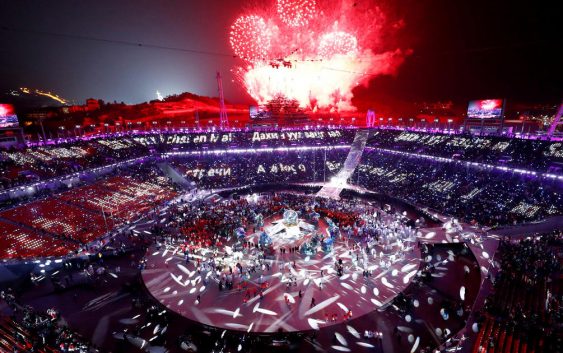
Of course it’s a good morning…the 2018 Winter Olympics ended last night!
1 The Schiff Memo. The Democrat’s alleged rebuttal to the Devon Nunes memo regarding how Carter Page came to be the object of secret surveillance that extended into the Trump campaign should have been the big story of the weekend, along with the fact that government systems repeatedly failed to protect the students in Parkland from an unbalanced young man who had been repeatedly identified as a risk for exactly the kind of mad act he ultimately engaged in. But the left-biased news media downplayed it after trying to spin it, because the hyped memo did not rebut the key allegations in the previous Republican House document. The FISA court was not informed that the Russian dossier was created and funded by the Democratic National Committee and the Clinton campaign. The dubious dossier was a key component of the evidence that led a secret court to remove the Constitutional rights of a citizen, while interfering with a Presidential campaign.
Amusingly, the Schiff memo spins that the Obama Justice Department application was “transparent,” and then describes transparency as a FISA warrant application that said that Christopher Steele, referred to as “Source #1,” was “approached by” Fusion GPS founder Glenn Simpson, referred to as “an identified U.S. person,” who
indicated to Source #1 that a U.S.-based law firm had hired the identified U.S. Person to conduct research regarding Candidate #1’s [i.e., Trump’s] ties to Russia. (The identified U.S. Person and Source #1 have a longstanding business relationship.) The identified U.S. Person hired Source #1 to conduct this research. The identified U.S. Person never advised Source #1 as to the motivation behind the research into Candidate #1’s ties to Russia. The FBI speculates that the identified U.S. Person was likely looking for information that could be used to discredit Candidate #1’s campaign.
Andrew McCarthy, in the National Review, concludes that the Schiff memo does the Democratic narrative more harm than good. I agree: it looks like a desperate spin attempt to me, so desperate that the news media abandoned the story as quickly as it could.