I live less than 15 minutes from Reagan National Airport, so last night’s deadly collision between an American Airlines commuter jet and an Army helicopter from Fort Belvoir was just about the only news available on satellite or network after 9 pm. yesterday. Why, after all this time, is this still the practice in news reporting? All four local networks, plus the PBS outlet, and CNN, Fox News and MSNBC, reported exactly the same lack of developments for the rest of the evening. This used to puzzle me when there was a major news story when I was a kid. The practice makes no sense, wastes money, and leads to not-so-bright people, which is to say most talking heads and reporters on the scene, to resort to saying silly things to fill dead air. What is this, virtue-signaling? To show they care? Why don’t all of broadcast news sources have an advance, rotating agreement for one of them to cover these things after the others put up a screen that states, “We at [station or network] care about X, and you will find complete coverage at [the designated pool broadcast location]. We will let you know about any substantive developments”?
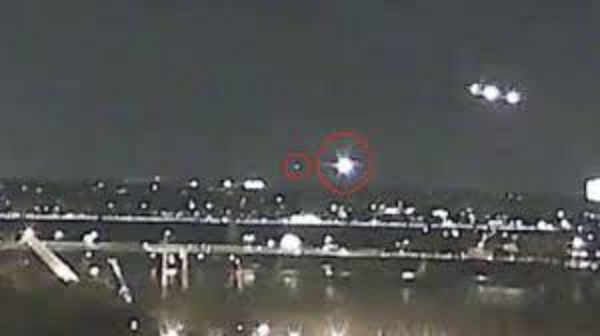
Literally nothing happened last night after the crash itself and the rescue teams arrived. Reagan quickly announced that it was suspending flights at least until morning. Meanwhile, we were hearing dumb statements. A couple of far away videos of the accident showed a tiny light, the aircraft, being met by another tiny light, the copter, followed by brief flash and a hint of something falling into the Potomac. These videos would have had to be explained if one saw them out of context, yet one of the newscasters introducing one felt required to issue a trigger warning: “We must warn you, these images are extremely disturbing.” No, they weren’t. Anyone who is extremely disturbed by little flashes of light needs to be in a home for the bewildered.
At around 11 pm, someone on CNN felt the need to ask some guest in the airline industry who had nothing substantive to say, “What would you tell anyone watching who fears for her life and those of her loved ones in future flights as a result of this tragedy?” The guest blathered something innocuous, but should have said, “I would recommend that anyone who reacts like that brush up on their understanding of statistics and critical thinking. This event has literally no significance as far as calculating the safety of air travel.” The exchange reminded me of the argument I had just had with my occasionally woke-addled sister, who said that she was fearful of going to a movie theater because of the risks posed by legal semi-automatic rifles being legal. (She isn’t really, but was desperate for an anti-Second Amendment argument.) Even asking a question like that makes the vulnerable, the hysterical and the stupid (Hey, wasn’t that the title of a Clint Eastwood spaghetti Western?) dumber still. It’s irresponsible and incompetent.






 Ethics Alarms