George Washington’s Birthday Ethics Warm-Up, 2/22/21: Happy Birthday, George! We’re Sorry Your Country Has Become Populated With So Many Ignorant, Ungrateful Fools…

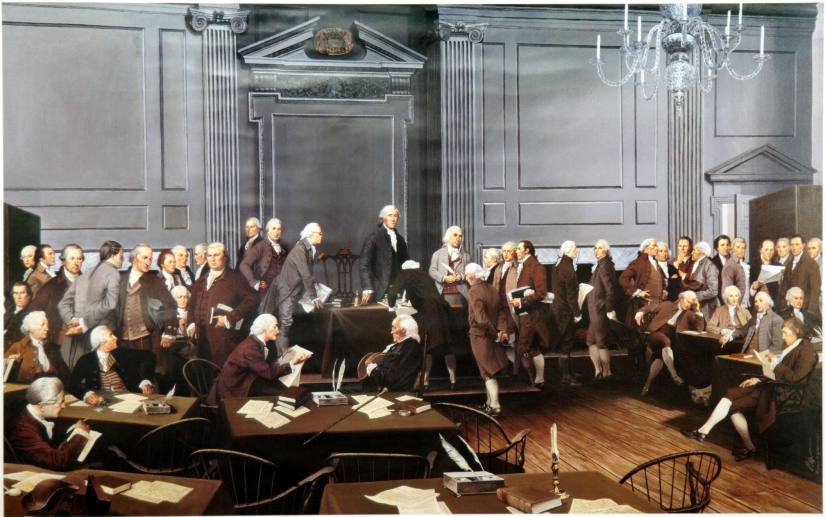
portrait_of_george_washington

If there is any American whose birthday should be a national holiday, it is George Washington, born this day in 1732 in Westmoreland County, Virginia, the first of six children of Augustine and Mary Ball Washington. If I have to tell you the reasons he was “the essential man” in American history, well, I guess you’re the product of our current public school system, a recent college graduate, a Democrat, a Black Lives Matter enthusiast, or something. There is no rational excuse for every American, yes, even African-Americans, to not be grateful for this day. Martin Luther King is now the only individual to have a national holiday dedicated to his honor, while Washington’s memory was dumped into a hodge-podge of lesser figures including Franklin Pierce, William Henry Harrison and now, Donald Trump. King is worthy of his day, but to honor King over Washington is as good an example of “putting the cart before the horse” as one could find. Shame on us. True, George is not lacking honors, with the capital city named for him, a towering monument, cities and towns in many states, Mt. Rushmore, and his image on both the most-used bill and coin. Nonetheless he earned all of it, and this date should be a holiday.

On The Ethics Alarms home page, you will see to your right a link to the list of ethical habits some historians believe made Washington the remarkably trustworthy and ethical man he was, ultimately leading his fellow Founders to choose him, and not one the many more brilliant, learned and accomplished among them, to take on the crucial challenge of creating the American Presidency. Directed to do so by his father, young Washington copied out by hand and committed to memory a list called “110 Rules of Civility & Decent Behavior in Company and Conversation.”  It was  based on a document compiled by French Jesuits in 1595; neither the authors nor the English translator and adapter are known today. The elder Washington was following the teachings of Aristotle—another Dead White Man whom most Americans alive today couldn’t tell you Jack S-word about— who held that principles and values began as being externally imposed by authority (morals) and eventually became internalized as character. As I wrote when I first posted them here,

The theory certainly worked with George Washington. Those ethics alarms installed by his father stayed in working order throughout his life. It was said that Washington was known to quote the rules when appropriate, and never forgot them. They did not teach him to be a gifted leader he became, but they helped to make him a trustworthy one.

Would that readers would access that list more often. And politicians. And lawyers. And educators…

1. How ignorant and ungrateful? THIS ignorant and ungrateful

Continue reading

“Denial”: An Ethics Movie (Part 1)

“Denial,” a 2016 British film that I missed (along with most moviegoers in the U.S.), tells, reasonably accurately, the story of a 1996 libel suit brought by David Irving, an anti-Semite, Holocaust-denying British historian, against Deborah E. Lipstadt, author of the 1993 book “Denying the Holocaust: The Growing Assault on Truth and Memory.” After the suit, her account of the ordeal, “History on Trial: My Day in Court with a Holocaust Denier,” formed the source of the screenplay.

Irving brought a lawsuit in Britain against Lipstadt (played by Rachel Weisz), and her publisher, Penguin Books, for calling him a Holocaust denier, a liar, and an anti-Jewish bigot. Irving is a long-time Hitler defender, and claimed there were no gas chambers at Auschwitz. British libel laws, unlike those in the United States, place the burden of proof on the defendant to prove that what was written was justified. Thus Lipstadt’s legal team must focus on proving Irving’s evidence is false, and that he knows it is false. The stakes were suddenly high, for if a court ruled that Irving’s theories had legitimacy, the results would have been catastrophic. For this reason, at least according to the film, a group of Jewish leaders urged Lipstadt to settle the suit before trial.

The movie is now on Amazon Prime. It is not a flamboyant legal drama but an intelligent and clear one (I would love to put it on stage). It also raises important ethics and legal issues, among them:

Continue reading

Midnight Ethics Terrors, 2/17/21: Trump Attacks! Fake Law! Fake News! Fake Science!

nightterrors-orig-crop

Okay, I started this at midnight, then got the night terrors, and waited until (almost) daylight to finish…

1. Who didn’t see this coming? Yesterday, Donald Trump unloaded with both metaphorical barrels on Mich McConnell as no President, former or otherwise, has ever attacked his party’s Senate leader before. McConnell asked for it, got it, and deserved it. His post impeachment trial acquittal was a foolish attempt to turn the President’s vindication into a defeat, and a pretty transparent example of the “now that the guy who was never one of us is out of power, we can strike at him with impunity” syndrome. Is McConnell really that deluded and incompetent? He must be. He apparently doesn’t understand the cognitive dissonance scale. Amazing. See, Mitch, nobody really likes you. You have the charisma of a scrub brush. As controversial as Trump is, he’s so much higher than you on the scale…

Cognitive Dissonance

… that attacking him just drags you lower still. Don’t you get that? Now Trump has double the effect. Some prime excerpts:

Continue reading

Comment Of The Day: “Ethics Quote Of The Month (Yes, It’s More Impeachment Analysis, And I’m Sick Of It Too, But This Is Important): Professor Jonathan Turley”

Sentence first

Here is Aaron Paschall’s Comment of the Day (he gets extra credit for the “Alice in Wonderland” quote) on the post, “Ethics Quote Of The Month (Yes, It’s More Impeachment Analysis, And I’m Sick Of It Too, But This Is Important): Professor Jonathan Turley”:

“Sentence first, verdict afterward!”

The nitpicking of “’Legally, due process only applies to life, liberty, and property,” she lectured. “A job is none of those.’” honestly terrifies me. This is the consequent of thought processes like the argument against Justice Kavanaugh: “It isn’t a ‘trial,’ it’s a job interview. Due process doesn’t apply outside a court of law.” Or the one which we see now extolled in defense of Facebook/Twitter bans: “Private companies can ban whoever they like – the government isn’t doing a thing. Freedom of speech has no bearing outside of the government.” In attacking Trump and more than Trump, they’ve whittled away virtually all defenses or niceties like fairness, decency, moderation, humility, justice, the benefit of the doubt and a million more. How they can bear to stand on such a barren plain of life and declare it rich and good is beyond me.

In C.S. Lewis’ “The Silver Chair,” Puddleglum the Marshwiggle was a gloomy sort. Near the end of their adventure, he and his comrades found themselves deep underground, with a fire emitting thick, bewildering fumes. The villain of the piece encouraged them to give up, that the surface world they were trying to escape to didn’t even exist – it was a figment of their imaginations. The sun, the sky, the wind – illusions, and one she was trying to save them from expending their lives in fruitless search of. At the last moment, when nearly everyone was convinced, Puddleglum stamps his foot into the center of the fire, putting it out – and filling the room with the scent of burnt Marshwiggle, which was not nearly so nice. And he addressed the witch with what is one of my favorite quotes ever:

Continue reading

Ethics Quote Of The Month (Yes, It’s More Impeachment Analysis, And I’m Sick Of It Too, But This Is Important): Professor Jonathan Turley

Shredding-the-Constitution

..Even with acquittal all but ensured, there was no room for constitutional niceties like free speech or due process. There was only one issue — the same one that has driven our media and politics for four years: Trump. Through that time, some of us have objected that extreme legal interpretations and biased coverage destroy our legal and journalistic values.

—-George Washington University Law School professor Jonathan Turley, constitutional law expert, on the conduct of the Democrats before and during the just-completed second Trump impeachment trial.

This statement, as well as the rest of his article for The Hill yesterday, was not only astute (though Turley’s observations should have been obvious) but personally welcome, in part because it tracked exactly with what I have been writing here for four years, but  in no small part because I was almost finished with a post making the same points. For Turley to make them is, of course, better, since a lot more people, though not nearly enough, pay attention to what he says. It was especially welcome because not one but two friends (among others) had made fatuous and indefensible assertions about the impeachment in the past two days, inspiring me to start that now redundant post.

My theme was going to be about how their now completely unhinged, Ahab-like mania to destroy the former President had led them to deny the importance of what once were accepted by liberals and conservatives alike—but especially liberals before their rebranding as “progressives”—as crucial, indispensable, core American values relating to personal liberty and government interference with it. The rationalizations employed in this scary process are stunning.

Prime among them as been 2020’s rationalization of the year: “It isn’t what it is,” #64. As I noted in the previous post, a Facebook friend (whom I strongly suspect was one of the self-exiled progressive Ethics Alarms commenters) wrote on the platform to the usual acclaim of  “likes” and “loves” that the 57 Senators who voted for this corrupt impeachment were voting “for democracy.” They were in fact doing the opposite, and in many ways, as Turley’s article explains (though again, it should be obvious.) Then, in a discussion with a more rational friend, another lawyer, about how the House impeachment had deliberately bypassed due process, I was told that there is no right of due process in an impeachment proceeding, nor should the prohibition of ex post facto laws and bills of attainder apply. Here was a lawyer making technical arguments against ethics. “Legally, due process only applies to life, liberty, and property,” she lectured. “A job is none of those.”

I could rebut that, but the point is that both the Declaration and the Constitution mark out basic values of our society, not just laws, but ethical values. “Due process” means fairness, and this lawyer, an alleged progressive, was arguing that the government doesn’t have to be fair while depriving the public of an elected official and that elected official of his job, and that individual of his ability to seek that job or another one. This is what hate and arrogance have done to the Left.

Continue reading

Journalism Ethics/Legal Ethics/Government Ethics Rot: The Democrats And Journalists Tried To Convict Donald Trump With Fake News

U.S. Capitol Police officer Brian D. Sicknick lies in honor, in Washington

Gee, does this bother anyone out there who hates Donald Trump or who voted for Joe Biden?

If your answer is no, I’m disgusted with you. You’re beyond help, hope, or rehabilitation.

The farce of a Senate trial the nation just endured was predicated on emotion rather than law, logic, fact, language or evidence. Prime among the emotions weaponized was hatred of former President Trump (in the trial: hatred of then-President Trump was all the Democratic House needed for its evidence-free, investigation-free “snap impeachment” (credit: Prof Turley.) At the trial, House managers alluded to Capitol Police officer Brian Sicknick being “killed’ in the riot, the intended implication being that President Trump was responsible for his death. Nancy Pelosi made certain that Sicknick’s body lay in the Capitol Rotunda, one of only five civilians so honored. All the better to show the nation that the President had blood on his hands. right, Nancy? The AP wrote on February 2,

Slain U.S. Capitol Police Officer Brian Sicknick lay in honor in the building he died defending, allowing colleagues and the lawmakers he protected to pay their respects and to remember the violent attack on Congress that took his life.

That’s false on its face, but it is the mythology the public and the Senators were fed in the weeks and days following the House impeachment. Here’s CBS: “‘Hero’: Lawmakers honor officer killed in US Capitol riot.”

Continue reading

One Acquittal, Three Quotes, Four Reactions

Trump acquitted

Former President Trump was acquitted in the second impeachment trial stemming from the Democrats’ relentless effort to remove him from office after his shocking election in 2016. In both efforts, the two-thirds super-majority necessary to convict was always impossible, because unlike previous impeachment efforts, these involved no crimes, and were not bi-partisan . They were exercises in pure partisan warfare, despite the contrary intent of the Founders and the flood of exaggerated rhetoric from Trump’s enemies who had presumed he needed to be impeached from the moment he was elected.

The sudden vote yesterday came as a surprise, as the Senate had just voted to allow witnesses in the “trial,” and that would have extended the fiasco considerably. I assume, without knowing, that the Democratic leadership finally figured out that its plot wasn’t working, and that it was time for the party to cut its losses. They might still be considerable. I hope they are considerable. This has wounded the nation badly, and the party that has blathered on about accountability needs some, and hard.

Republican Senators Richard Burr of North Carolina, Bill Cassidy of Louisiana, Susan Collins of Maine, Lisa Murkowski of Alaska, Mitt Romney of Utah, Ben Sasse of Nebraska and Patrick Toomey of Pennsylvania voted guilty along with every Democrat. Interestingly, only two of the seven have a law degree, which may partially explain why they think a guilty verdict is defensible (it’s not.) The two lawyers, Romney and Murkowski, are barely Republicans and have been consistently anti-Trump. The fact that not a single Democrat had the integrity to buck the party’s mandate and oppose such a damaging precedent and such a dubious impeachment tells us all we need to know about the state of the current Democratic Party.

Now, three quotes following the vote:

Quote #1: From law professor and blogger Glenn Reynolds:

Continue reading

Comment Of The Day: “Ethical Quote Of The Month: Bret Stephens’ Critical Column About New York Times Cowardice And Hypocrisy That The Times Tried To Censor”

what-is-strict-liability

Comment of the Day auteur Glenn Logan (one of many at EA) has helpful thoughts about the intertwined issue of speech control/ racial epithets/ intent and political correctness. I’m behind on COTDs again, but jumped Glenn’s ahead in line because the blog has been active on related topics today.

Here is Glenn Logan’s Comment of the Day on Bret Stephens’ discarded op-ed and the post, “Ethical Quote Of The Month: Bret Stephens’ Critical Column About New York Times Cowardice And Hypocrisy That The Times Tried To Censor’:

This is an excellent inquiry into the current state of political culture. The left has discovered one of the things it has historically eschewed — the concept of strict liability, and the power it brings them to redefine the English language in America, and by extension, the political environment. For years, liberals have found crimes which didn’t consider intent offensive, and for good reason. Alas, it seems that is no longer the case.

At the risk of being pedantic, strict liability — for those who may not be aware — is a type of crime or regulatory violation where intent does not matter. The quintessential strict liability crime example is statutory rape, where violation of the statute requires no general or specific intent. Regardless of whether the violator knew, had reason to know, or intended to have sexual relations with a minor person, the fact he/she/xe/them did is all that matters.The word “nigger” has now become, in the world of the Left, a strict liability offense when uttered in any form and for any reason. More and more, this is also becoming true of descriptive constructions like “n-word, ” “n*****,” “n—–,” or “n_____.”

The recent incident with the Times shows just how successful this effort has become, and is sure to become a model for other words considered to be offensive at some fundamental level. There is no reason to believe the proponents of this new morality will be circumspect in this expansion, either.Using the power of the mob, the Left has found that they can circumvent the First Amendment by ginning up social outrage and placing pressure on companies to do what the law cannot — punish speech.

Continue reading

Enforced Ideological Conformity: The Unethical Firing Of Gina Carano

Gina

Gina Carano, the actress who plays Cara Dune on Disney+’s “The Mandalorian,” was fired by Lucasfilm. I saw the note yesterday, and the company’s explanation which was that Carano’s

“…social media posts denigrating people based on their cultural and religious identities are abhorrent and unacceptable.”

From this I presumed that the actress had posted something that was racist or otherwise bigoted and hateful—constitutional speech, but not a public opinion that an organization dependent on widespread public favor is obligated to tolerate from its employees. Then today, I saw what she wrote, which was,

“Because history is edited, most people today don’t realize that to get to the point where Nazi soldiers could easily round up thousands of Jews, the government first made their own neighbors hate them simply for being Jews. How is that any different than hating someone for their political views?”

She did not denigrate anyone based on their cultural and religious identities. LucasFilm’s statement is a lie, and indeed is very close to defamation. Carano should sue. Meanwhile, Pedro Pascal, who plays the Mandalorian in the same series, tweeted out this idiocy in 2018:

Continue reading

A Line That Will Echo Through The Annals Of Legal Ethics And Technological Incompetence: “I’m Not A Cat”

Lawyer cat

I apologize for missing this wonderful story from last week.

In a civil forfeiture case hearing held via Zoom in Texas’ 394th Judicial District Court, Rod Ponton, a county attorney in Presidio County, Texas, couldn’t figure out how to turn off a filter he had somehow turned on. That filter made him appear to be a talking kitten.

“Mr. Ponton, I believe you have a filter turned on in the video settings,” Judge Roy Ferguson, presiding over the case, says with admirable restraint. “Augggh,” says. Ponton. “Can you hear me, Judge? I don’t know how to remove it. I’ve got my assistant here and she’s trying to.”

Then he adds, “I’m prepared to go forward with it. I’m here live” and “I’m not a cat.” “I can see that, ”Judge Ferguson replies.

Here’s the video:

Continue reading