I got my prep done faster than expected, so I have time for a shorter than usual warm-up…
1. “When will they ever learn? When will they ever learn?” It’s going to take a while for me to go through last night’s debate, which the Red Sox saved me from having to watch live. I can say this right now, however: responsible parties should not permit completely unqualified, publicity-seeking wackos like Marianne Williamson (and, as I argued in 2015 and 2016, Donald Trump) to enter primaries and participate in debates. This is how you get “A Face in the Crowd”; this is how you set up democracy to fail. There will always be a critical number of idiots in the electorate, and parties have a duty to fulfill a critical gate-keeper function to prevent the grifters, con artists, cult leaders and amateurs from using them to warp elections and the government.
Williamson was babbling about “dark psychic forces” and “emotional imbalance” last night. Democrats should ding her right now, and tell her she is welcome to run under the banner of the Crystal Party, or something similar. Continue reading →
Attorney Larry Klayman was familiar presence during the Clinton administration. The founder of Freedom Watch and Judicial Watch and conservative gadfly helped bring dozens of cases against Bill Clinton, the White House, and various staff members and agencies, uncovered some damning documents in FOIA requests, filed government ethics complaints, and continued to champion conservative causes after he left Judicial Watch in other hands. He represented former Arizona Sheriff Joe Arpaio and state’s rights activist rancher Cliven Bundy, among other clients. Now the District of Columbia Court of Appeals Board on Professional Responsibility Ad Hoc Hearing Committee has handed down a 183-page report finding that Klayman breached the D.C. professional ethics rules, recommending that he be suspended from the practice of law for 33 months, and have he prove his rehabilitation and fitness to gain reinstatement.
According to the report, Klayman represented Elham Sataki, whom he helped file a 2010 sexual harassment suit against her employer, Voice of America. Klayman persuaded Sataki to move to Los Angeles and offered to pay her housing and living expenses, telling Sataki she could later reimburse him. She took him up on the offer, but when Sataki rejected Klayman’s overtures for a romantic relationship, the findings state, the lawyer raised his fee demands to continue representing her sexual harassment claim. As a result, the report concludes, Sataki did not pursue her case. Continue reading →
More anti-gun posturing, more diversity deceit, more sympathy for parents who kill their kids in hot cars….more.
1. Leadership Ethics: California Gov. Gavin Newsom shows how not to respond to a tragedy. It has been apparent for some time that Newsom’s objective is to make Jerry Brown look like a thorough and moderate professional by contrast. His reaction to the fatal shooting in Gilroy, California, over the weekend, which took the lives of three people (including two children) was a) to immediately politicize the tragedy; b) blame Trump, which is pandering gold; c) engage in outrageous hyperbole; d) recycle the silliest of anti-gun tropes, and e) do so while lacing his comments with profanity, because cursing makes bad arguments more persuasive, or something.
Most of his statement before the cameras was inarticulate, stuttering and emotional. Forget about the competent leader’s duty to show calm and professional demeanor so the public knows a capable adult is in control. This is how you signal virtue, and that you care. Once the honorable Governor of California began talking in complete sentences, this was his approach:
“It’s just an outrage. I can’t put borders up — speaking of borders — in a neighboring state where you can buy this damn stuff legally. How the hell is that possible? [ Comment: How is it possible that states make their own laws, and California doesn’t get to dictate to Nevada? Let’s have a show of state hands to see how many states appreciate Gavin’s state creating a magnet for illegal immigrants, who then can proceed to travel where they wish.] I have no problem with the Second Amendment. [Note: That’s an obvious lie, but we can assume Newsom would say that he supports “sensible gun control,” which in eventually means “no guns.”] You have a right to bear arms but not weapons of goddamned mass destruction. [Note: No rifle, much less single shot rifle, is a weapon of mass destruction, and certainly not a goddamned weapon of mass destruction. This is disinformation, but hey, the governor is hysterical, so give him a break.] You need these damn things for hunting? Give me a break. [Note:The argument that the Second Amendment exists for the benefit of hunters is false, and dishonest, but anti-gun demagogues, especially Democratic governors—New York’s Governor Cuomo has made similar statements—keep recycling it. It convinces ignorant people, you see.] It’s just sickening… the leadership today that just turns a blind eye and won’t do a damn thing to address these issues. [ Translation:“Do something!”] What’s goddamned absent in this country right now is moral authority. [Comment:Whatever that means coming from an official of a party that ridicules and marginalizes religious faith.] California’s doing its part, but Jesus, these guys, the folks in the White House have been supporting the kinds of policies that roll back the work that we’re doing,. [Note: the “policies” Newsom refers to are known as the Bill of Rights.] It keeps happening, over and over and over again, on their damned watch. [Clarification:The shootings happened on Newsom’s watch as well, and before 2017, President Obama’s watch. Newsom didn’t make the “watch” argument then, for some reason]
This was pure, irresponsible demagoguery. As usual, the news media didn’t help by refusing to clarify that the “assault-type weapon” used in the shooting was not the automatic, military version of the AK-47 which is illegal, but the legal, single shot version. (“Assault-type” and “assualt-style” mean that the gun looks like an automatic, but isn’t. It is pure deceit. )That would require, however, exposing how ridiculous and dishonest the “weapons of mass destruction” line was. Continue reading →
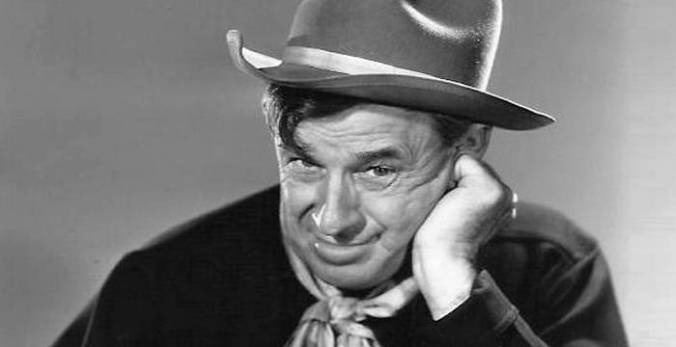
“Life is just one damn thing after another.”—Will Rodgers.
1. “Dear White People.” Yes, that’s the name of what “Entertainment” calls an eagerly awaited Netflix series. The title is racist. Whites, however, are supposed to ignore constant efforts to stereotype them by skin shade, “otherize” them by designating people of non-color as “you people” (the term the NAACP erupted in outrage over when Ross Perot used it to describe their members), and generally employ the same demeaning rhetoric that if used in the other direction would be attacked as racist.
The proposed rule appears to be that males and whites, and especially white males, should capitulate to this demeaning double standard, concur that they are twin blights on civilization, and if they do not, and find themselves driven into the arms of the national elected leader and the political party that does not accept the rigged “principles” that constitute consent to be bullied, persecuted and insulted, that means they are “white supremacists” and misogynists.
The gamble, I suppose, is that whites and men are really, really stupid and cowardly, and this divisive hypocrisy will prevail.
I could be wrong, but I think it’s a bad bet.
Post script:From the Babylon Bee:“Ilhan Omar Introduces Resolution Condemning Racism, White Men, And The Jews.”
At points yesterday I was beginning to have doubts…
1. A win’s a win, and right is right, but the ACLU outs itself again. In the wake of the SCOTUS 5-4 decision to let stand the executive order reallocating funds for a wall to address the national emergency at the border and allow construction to commence, the ACLU flagged its own bias (though it is supposed to be non-partisan) by referring to the wall in a statement as “xenophobic.”
Its lawsuit was based on alleged environmental harm risked by the wall’s construction, but the use of that word, a deliberately dishonest characterization that can only mean an endorsement of open borders , proves that the lawsuit is a sham, using environmental concerns to mask a pro-illegal immigration agenda, which most of the public opposes….as they should.
Merits of the wall aside, the game Democrats are playing with this issue, calling for undefined “comprehensive immigration reform” while opposing enforcement and refusing to recognize a genuine emergency to keep the President from a political victory, is electoral suicide. (Yet most of the field of Democratic challengers have endorsed decriminalization of border breaching, which is like an invitation to invade. Madness. Even Hispanic-Americans oppose this.)
A blind pig can find a truffle or two, and on this existential issue, the President has law, history, sovereignty, the national interest and common sense on his side.
2. A clueless harasser gets a second chance. Neil deGrasse Tyson, the pop-culture astrophysicist who leads the Hayden Planetarium at the American Museum of Natural History, has been cleared to continue in his job after the museum competed an investigation into three sexual misconduct accusations against him. Continue reading →
Cellphone videos of New York City police officers being doused with water while trying to do their jobs became an internet sensation this week, and an unsettling (but inevitable) controversy for New York City. The officers were trying to disperse rowdy groups at fire hydrants during a three-day heat wave, and allowed themselves to be assaulted and humiliated while crowds cheered the attackers on.
The police arrested three men who were caught on video hurling water at police in two incidents. This also caused controversy. “Why is a man facing more severe punishment for dousing a police officer than Officer Daniel Pantaleo is for choking Eric Garner?” asked a Times article. That shouldn’t be a difficult question, but you know—the Times. Eric Garner was a petty criminal resisting arrest. The officers were doing their jobs, and Garner died as the result of an accident, in great part because of his own actions in defying the police. The police were also trying to do their jobs when they were doused with water, in an act that threatens the peace and order of the community.
The Police Department’s highest-ranking uniformed officer, Terence Monahan, the police chief, lit the fuse on a larger controversy, saying,
“Any cop who thinks that’s all right, that they can walk away from something like that, maybe should reconsider whether or not this is the profession for them.We don’t take that.”
But they did take that, and the Mayor of New York wants them to take that, because the whole idea of law enforcement is now, and has often been, anathema to progressive ideology. Continue reading →
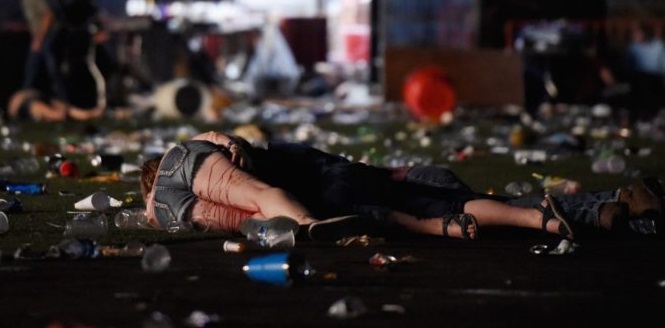
The Las Vegas Metropolitan Police Department this week fired Officer Cordell Hendrex for “freezing” (it’s all on video) as a deranged sniper fired hundreds of rounds into a crowd of county music fans below the Mandalay Bay hotel in Las Vegas in 2017. “I’m inside the Mandalay Bay on the 31st floor,” Hendrex said into his radio as he hid behind a wall. “I can hear the automatic fire coming from one floor ahead, one floor above us.”
As Hendrex stayed there in terror (by his own testimony), the gunman continued to fire, eventually killing 58 people and wounding more than 800 in the deadliest mass shooting in modern American history. His lawyers are appealing the decision. His defense? He was scared, that’s all. It’s unreasonable for the public to expect police officers to rise to heroic standards and place their lives in jeopardy in a public safety crisis. The Las Vegas department’s training didn’t prepare Hendrex for storming the hotel room. He’s been a terrific cop, as long as he didn’t have to put his life on the line.
The nurse said that I was to handle the rest of the day as if I were “impaired,” so I guess this is “drunk-blogging,” an allegedly humorous practice that is a trademark political Stephen Green, aka. Vodkapundit when he covers a long and annoying event, like candidates debate or the Mueller testimony. In this case, I don’t have any choice, but I will say this: the first commenter who rags on me for a typo will be srroy! [CORRECTION NOTE: Prodded by JutGory’s comment below, I fixed the several typos in the post, except the one that was intentional. I’m better now.]
1. Welcome to my world, Ann. Althouse just banned “Inga,” a relentlessly snotty and intractable commenter on her blog who is one of the few knee-jerk progressives hanging out there. Ann mentions that she wishes there were a lot more liberal commenters at Althouse, which makes me feel a little better. Her blog has also suffered an ideological exodus in recent years, and Ann thinks of herself—correctly— as a non-partisan contrarian, though she has guest-hosted at Instapundit.. She certainly strives for objectivity (as well as unpredictability), but she has also been very critical of the “resistance” and the media’s treatment of President Trump, as every fair commentator should.
Then again, she refuses to link to Ethics Alarms, so to hell with her…
2. When the U.S. becomes Greece, think of these days, these unethical leaders, and the incompetent public that supported them. The recent budget deal between the President and Congress to explode the budget, ignore the deficit and bring the national debt even closer to a suicidal level is bipartisan betrayal. Although it is especially galling for a President with a “bottom line” orientation to capitulate, Trump is no worse in this respect than Obama, or any of his predecessors going back to Lyndon Johnson. At some point, the American public can only look in the mirror and admit that it has had the power to demand responsible fiscal government, and refuses. We will regret this.
I voted for the late Ross Perot in 1992 for many reasons, but the main one was that I felt he deserved credit for making the debt his signature issue, and for his courageous and clear explanations of the crisis. Since his candidacy, there have been no serious political leaders who have tried to muster consensus that spending has to be cut, that so-called entitlements are out of control, and that our debt is unsustainable. Rand Paul was recently savaged for simply insisting that a new expenditure–expanded assistance for 9-11 first responders–be paid for. Our economy is suffering because of a ridiculously antiquated infrastructure, but it will take trillions to repair. Politicians are waiting for a crisis, like when city sewer systems break down all across the East Coast, or bridges start collapsing with cars on them–and this is coming. Social security is nearing the point where someone’s going to have to give up something. California could have retrofit its buildings in anticipation of the Big One, but would rather play Russian Roulette. I’m just picking these out of the air randomly—I’m impaired, after all—but I could go on and on.
While the President rammed through tax cuts without cutting expenditures, his likely opposition tries to buy the votes of the fiscally idiotic with promises of expensive goodies, like “Medicare for All” (more trillions), guaranteed income and free college. The absurd Sen. Kirsten Gillibrand, (who has no chance, but really how much worse is she than Warren, Sanders, Harris and the rest?) has proposed a thoroughly irresponsible “climate change” plan with about a 10 trillion dollar price tag, and it is mostly made up of Authentic Frontier Gibberish, virtue-signaling and unsupportable assumptions. Before a public even slightly aware of the dangers of the exploding debt (or a public that has anything but the vaguest notion about what real science is and the uncertainty of climate change projections, such a proposal would be political hara-kiri. Gillibrand considers it a last ditch effort to rescue her campaign.
Random Observations on the Mueller testimony and aftermath:
Observing the desperate spin offered by frustrated “resistance” members, desperate Democrats and social media Trump-Haters has been almost as revealing as Mueller’s performance. The most positive takeaway they could muster is that Mueller clearly said that his investigation didn’t exonerate the President. That’s meaningless. It is not a prosecutor’s job to exonerate anybody, ever. An investigation’s goal is to determine whether there is probable cause to determine that a crime or crimes have been committed, not to prove anyone’s innocence. The hearts of the impeachment mob leaped for joy briefly during the morning hearing of the Judiciary Committee when Mueller answered “yes” to Rep. Ted Lieu’s (D–Calif.) question whether he had declined to indict Trump because of an existing Department of Justice Office of Legal Counsel (OLC) opinion stating that a sitting president couldn’t be charged with a crime. Ah-HA! Mueller had found evidence of illegal activity committed by the President and was only prevented from indicting him by Justice Department policy! Start those impeachment hearings!
Never mind. In the afternoon hearing before the House Intelligence Committee, reversed himself, saying that that OLC opinion prevented him from making any determination, period, of Trump’s culpability in obstructing justice. “As we say in the report, and as I said in the opening, we did not reach a determination as to whether the president committed a crime,” Mueller told the Committee after specifically referencing the Lieu exchange.
“I want to go back to one thing that was said this morning by Mr. Lieu, who said, and I quote, ‘you didn’t charge the president because of the OLC opinion.’ That is not the correct way to say it,” Mueller said.
This did not prevent journalists, pundits and my Facebook friends from ignoring the second statement so they could falsely promote the first. “They got him to confirm that he didn’t make a charge because of the Justice Department memo,” said “Meet the Press’s” Chuck Todd in an NBC panel. No, they didn’t. That’s a direct lie, as well as fake news.
The contention that Mueller was only a convenient figurehead for what was designed as a partisan hit job was made more credible by Mueller’s confusion. Mueller’s chief deputy, the infamously over-zealous, partisan and controversial prosecutor Andrew Weissmann, headed a group of mostly left-leaning investigators. Complaints about the apparent rigged nature of the investigation were met by reminders of Mueller’s party affiliation and reputation for fairness and rectitude. That defense was left in the dust.
Now the anti-Trump tenor of the report no longer suggests the objective conclusions of a political neutral, but the partisan bias of prosecutors with an agenda.
Mueller’s weakness also suggests an answer to the persistent question of why the investigation appeared to be so incompetently managed, as with, for example, the involvement of Peter Strzok.
It didn’t appear that Mueller was capable of competent oversight, or even paying attention.
The most damaging and disturbing Mueller answer by far was when he was asked about Fusion GPS, which hired Christopher Steele to compile the infamous Russian-sourced ‘dossier’ against Trump. Mueller said that he was ‘not familiar‘ with it. KABOOM! How is this even possible, unless Weissman and the other anti-Trump Jauberts on his team kept the old man locked in a closet somewhere? The involvement of the Steele dossier undercut the legitimacy of his investigation, and the investigation’s leader was that uninformed about its origins? Was this wilful ignorance? Blatant incompetence?
Finally, how could the investigators and Mueller justify following bread crumbs that led to indictments of various Trump administration and campaign figures for crimes unrelated to the subject of the investigation, but be oblivious to the strong indications of wrongdoing—the FBI’s FISA fraud, the conflicts of interest, the surveillance of Carter Page—related to the investigation itself?
In another ridiculous addition to the Ethics Alarms, “Nah, there’s no mainstream media bias!” files—at this point, I cannot maintain any respect for the intelligence and/or integrity of anyone who denies the obvious partisan bias of CNN, MSNBC, and the major networks—I watched CNN for over 30 minutes this morning to see how they would cover the hearings. Over at Fox News, of course, Mueller’s disturbing demeanor was being dissected in detail. The “Fox and Friends” blonde of the day said, sympathetically, that she would be “praying for him and his family,” since something is definitely seriously wrong.
At CNN, however, there was just a crawl representing Mueller’s testimony as straightforward, sticking to the report, and, of course, emphasizing the “no exoneration” statement and his answer to Lieu, retracted though it was. CNN showed no video of Mueller from either hearing, and its panels all focused exclusively on “where the Democrats go from here.”
Incredible. (Can something be simultaneously incredible and unsurprising?)The big news from the hearings, what those who didn’t have the time or stamina to watch them needed to know, was unquestionably Mueller’s frightening lack of preparation, clarity, or knowledge of the report he had signed and the investigation he had supposedly overseen, and how this undermined the report’s legitimacy, especially as an anti-Trump document. Not only did he fail to give Democrats more ammunition for their coup as they clearly hoped it would, he undermined the credibility of the entire report.
Spin is one thing; intentionally hiding what occurred to make spin easier is something very different, and a major breach of journalism honesty and integrity.
Mueller’s repeated concern during his testimony regarding Russian interference in our elections, past and future, is being largely ignored by CNN and the rest because it directly points the finger of accountability to Barack Obama. The Mueller report states that Russia began interfering in American democracy in 2014, with the operation becoming full-blown during the 2016 presidential election. The Obama administration knew this was going on, and took no discernible action. In 2016, Obama’s National Security Adviser Susan Rice told her staff to “stand down” and “knock it off” as they drew up plans to “strike back” against the Russians, according to Michael Isikoff and David Corn in their book “Russian Roulette: The Inside Story of Putin’s War on America and the Election of Donald Trump.”
Yet I continue to read attacks on Trump because he didn’t take adequate steps to foil the Russians,
Where is the accountability? House Judiciary Chairman Jerry Nadler had said over the weekend that Mueller’s report showed “very substantial evidence” that President Donald Trump is “guilty of high crimes and misdemeanors” — an impeachable offense. “We have to … let Mueller present those facts to the American people, and then see where we go from there, because the administration must be held accountable,” Nadler, said on “Fox News Sunday.” Yet Mueller’s testimony, orchestrated by Nadler, confirmed none of this. Nadler was intentionally misleading the American public.
The amazing thing is that the Democrats held the hearings at all. Mueller, as a matter of legal ethics and client confidentiality, was severely limited regarding what he could say beyond what was already in his investigation’s report. Desperate to gain some public relations traction in their endless, nation-rending determination to end a legal and duly elected Presidency without the inconvenience of an election, one can only surmise that Mueller’s ethically problematical press conference led them astray, and not only astray, but into a disaster of their own making.
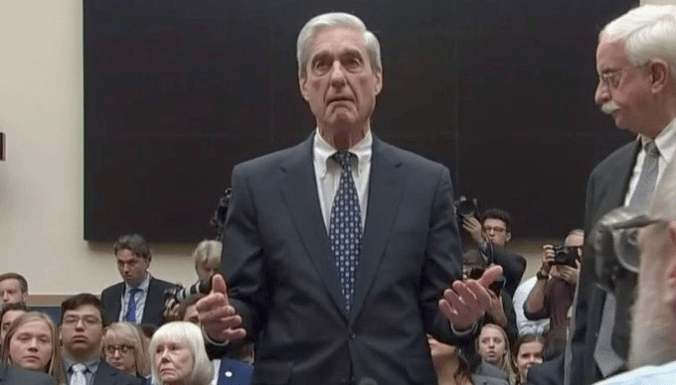
The first hint that something was amiss was Mueller’s request that an aide sit by him and assist in his testimony. That was not only unusual but ominous, and the Republicans on the committee quickly rejected it. Once Mueller started answering questions, it was painfully clear why this request had been made. He looked disoriented and confused. The 75-year-old Justice Department veteran had to ask committee members to repeat their questions repeatedly, as if he was having difficulty focusing. He often did not know whether the representatives were asking him questions or if they were reading from his own report. In the first 90 minutes of the hearing, Mueller asked for clarification of questions more than 10 times. Under questioning from Rep. James Sensenbrenner (R-Wisc.), Mueller asked: “And where are you reading from on that?” “I’m reading from my own question” was the answer. “Then can you repeat it?” Mueller asked. The audience laughed. By the end, the audience had stopped laughing. As Obama strategist David Axelrod tweeted, the performance was “painful” to watch. Mueller asked Rep. Sheila Jackson Lee to restate her question three times. Rep. Matt Gaetz (R-Fla.) asked the 14 word question, “Attorney #2 in the Inspector General’s report and Strzok both worked on your team, didn’t they?” and Mueller appeared to be confused by it.“Pardon me?” Mueller replied. After Gaetz restated his question, Mueller replied: “And the question was?” Asked by Head Trump-hunter Judiciary Chairman Jerry Nadler (D-N.Y.) to explain what his investigation found “in plain terms,” Mueller answered: “Well, the finding indicates that the president, uh, was not, uh, the president was not exculping, uh, exculpated, uh, for the acts that he allegedly committed.”
Ah! Well thank you, sir, that explains everything! Nadler looked as if he wanted to start banging his head on the table.