You Want Smoking Gun Proof That The Mainstream News Media Is Promoting Illegal Immigration And Intentionally Deceiving The Public To do It? Here It Is!

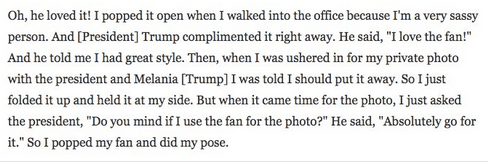
Observe. The headline above was the one first published by the Washington Post. Note the absence of the word “Illegal” before “immigrants.” The fact is that immigrants have nothing to fear about using food stamps. The headline is fake news–it’s false. It is literally untrue. (The story does suggest that some legal immigrants may be avoiding food stamps out of ignorance, but no evidence is presented to show it.)

That’s not the only thing wrong with the headline, and the story beneath it. This is more “poor, abused illegal immigrant” propaganda. How terrible it is that people living in this country illegally after breaching our borders and immigration laws have to fear being held accountable for living in this country illegally after breaching our borders and immigration laws! The outrage!

A nation of laws enforces its laws.  Not enforcing them so as to encourage law breaking is the real outrage.

The Washington Post wasn’t troubled by any of that, though. What caused the paper to change the headline was that highlighting the use of taxpayer funds to pay for food stamps to benefit people who have no right to be in the U.S. might, you know, sort of undermine the intended message of the article, which is to create sympathy for illegal immigrants while seeding opposition to the Trump administration.  Can’t have that. So the headline was changed to this… Continue reading

Ethics Observation On The Trump 2005 Tax Return

Yesterday, MSNBC host Rachel Maddow endlessly hyped the fact that  veteran investigative reporter David Cay Johnston had obtained President Trump’s 2005 federal tax return. When it was revealed, the scoop didn’t justify the hype. Trump  paid 38 million in taxes that year,  24% of his income—not the top rate, but not “nothing,” which was the rumor Democrats were selling during the campaign.

Ethics points:

1. Whoever leaked the return broke the law, and doing so was unethical.  No, it’s not illegal for the news media to take material stolen by others and sanctify it via their First Amendment protections.  It should be though. When they do this, they aide and abet a crime, and Freedom of the Press wasn’t supposed to allow THAT. At very least, journalists should be required to reveal the names of the criminals who steal and release our proprietary documents. The publication of these makes such thefts worse, not better.

2. I don’t see why the President’s tax returns from 12 years ago has any genuine relevance to anything now. The returns were relevant to the decision of whether or not people wanted to vote for him. Now, the tax documents have no purpose, except for the insatiable Trump-bashers to have something new to bash him with. Anything will do.

3. David Cay Johnston was dishing about his “scoop” with GMA’s George Stephanopoulos, and decided to start a new rumor. He speculated that Trump leaked the return himself.  No evidence, not a drop, and yet that’s what this veteran reporter felt was justifiable to say on national TV. Gee, can we call THAT fake news?

4. Then, as he did with Maddow, the reporter went on about all the conflicts of interest that Trump’s financial dealings have created. Again, this is re-litigating the election. At this point, there is no practical way to eliminate Trump’s conflicts and the appearance of impropriety that they create, and he’s not going to bother trying. Johnston, and others, including me, never made a clear case to the public why the President’s unprecedented financial entanglements should have been disqualifying; nor did Hillary, in part because her own financial entanglements were disqualifying. Well, the train left the station, y’all. You had your chance, and botched it. Johnston, like so many of the other bitter-enders who want to turn back time, ultimately get back to, “But…but…but…we never should have elected this guy! Surely there is something we can do to undo it!”

No, there isn’t. Cut it out. Continue reading

Ethics Dunce: Ex-US Attorney Preet Bharara

And a good thing, too…

Preet Bharara, until recently the United States Attorney’ for the Southern District of New York, was known as an aggressive, fearless, skilled prosecutor. He was also  increasingly a partisan one, as his  felony prosecution of Dinesh D’Souza, a vocal conservative critic of President Obama, showed. Despite the ridiculous and dishonest criticism of President Trump for firing Baharara, if there has ever been a President with good cause not to trust holdovers from the previous administration, it is Donald Trump.

The last Holder/Lynch Justice Department employee he trusted was Sally Yates, and she breached her ethical and professional duties by going rogue, and not just rogue, but partisan rogue. Baharara,who referred to himself as a “completely independent” prosecutor, was such a good bet to go rogue that it would have been negligent for Trump not to fire him. Democrats in and out of government are suddenly dedicated to defying and bringing down our governmental institutions, notable the Presidency. They can’t be trusted. Even if it wasn’t  the usual course to sack the previous administration’s US Attorneys—though it is—  there was every reason for this President to sack these prosecutors.

And, nicely enough, Bharara proved that Trump was right by grandstanding on his way out the door.

Asked to resign along with his colleagues, Bharara refused, and Trump fired him  Glenn Reynolds calls the refusal to resign childish, but it was more that. It was a breach of professional ethics, and akin to Yates’ stunt.  Bharara is a government lawyer, meaning that he represents the government’s interests as his supervisors define them. If he doesn’t like their priorities, his option is to resign—not defy them until he is fired, but resign.  United States Attorneys “serve at the pleasure of the President” and that’s a term of art.  The prosecution of crimes, including the decision regarding which crimes to prosecute and which crimes not to prosecute, is made at the discretion of the Executive Branch, which is headed by the President. If, for example, Bharara felt that Obama’s executive order declaring  that illegal immigrants who hadn’t committed serious crimes were henceforth to be treated as if they were legal immigrants rather than illegal ones was unconstitutional, which it is, his option would have been to resign, not give a press conference, a la Yates, declaring his opposition to the new policy. Continue reading

The New York Times “Explains” The Terms Of Immigration Reporting, Exposes Its Bias, And Then Ignores What It Concluded

My eight hours transit cross country yesterday to give a one-hour talk on bias wasn’t a total waste.. I did get to catch up on my New York Times back-up. However, the near head explosion my reading triggered was a threat to aircraft and passengers.

On March 10, page two, the Times published an ombudsman-like explanation of what terms it believes the paper should use when discussing illegal immigration. It begins,

“Illegal immigrant.” “Unauthorized immigrant.” “Undocumented immigrant.” “Illegal alien.” “Migrant.” “Noncitizen.” All of these terms, and some others, have been used in The New York Times to describe a person who has entered, lived in or worked in the United States without proper authorization — and each has been met with criticism.

The fact that terms meet with criticism doesn’t prove there is anything wrong with all the terms. Some of these terms, when used to describe illegal immigrants—and that is the correct term—are simply misleading, or so incomplete as to be useless. “Noncitizen”? A non-citizen is not necessarily illegal, nor is a non-citizen necessarily an immigrant. Ding. “Unauthorized” and “undocumented” immigrant are both euphemisms to duck the problem and the issue: the immigrant is illegal, and its not good to be illegal. The fact that the immigrant is illegal is the immigrant’s fault, not some passive bureaucratic snafu that robbed him of authorization or the documents he needs.

There is no controversy or problem here, but the Times  spends over a thousand words pretending that there is.

“In a debate as contentious as the one surrounding immigration policy in the United States, where even the most basic terminology is fraught with political implications, how do journalists decide, in a given instance, what term to apply?” Steven Hiltner whines. Uh, Steve? It’s in the Times ethics code. Just tell the truth, clearly and objectively. That means use “illegal immigrant,” period. The issue is people coming into our nation, immigrants, who do so in violation of our laws—illegally. What’s the problem?

The Times style guide, Hiltner explains, says that the term “illegal immigrant” may be considered “loaded or offensive” by “some readers.” The guide suggests “not taking sides” and using “alternatives” that describe the specific circumstances of the person in question. HOLD IT. “Illegal immigrant” isn’t loaded, or political, or partisan. It is clear English and undeniable fact. That one side of the political spectrum, for the most cynical of reasons, wants to disguise the nature of the act in question does not make telling the truth that this side of the spectrum wants to unethically obscure “loaded” or “taking sides.”  There is the pro-illegal immigration “side,” the dishonest, anti-law side, and the truth, which is the side the Times is obligated to embrace. Why should the Times care if “some people” want news sources to obscure the truth to aid and abet their agenda? Because a political party has embraced obfuscation and denial as a strategy, the Times is obligated not to allow fact to get in the way? Nonsense.

That the Times even feels like it has to engage in this navel gazing shows that it is hostage to the Left. The individuals in question are illegal immigrants, and that is what a responsible, neutral, objective and ethical newspaper should call them, so there is no confusion….even though Democrats, progressives and activists want there to be confusion. Continue reading

In A Photo Finish Race For Incompetent Elected Official Of The Month, Ohio State Wes Retherford (R) Edges Texas State Rep. Jessica Farrar (D)

Both are embarrassments to their parties, their states, and the voters who elected them, however.

First the winner: Ohio State Representative Wes Retherford, R-Hamilton, who was discovered over the weekend passed out drunk in his car with a loaded firearm at a McDonald’s drive-thru . Wes was arrested by Butler County sheriff’s deputies, and faces charges of operating a vehicle under the influence and improper handling of a firearm in a motor vehicle, because there is no current criminal law covering unbelievably stupid conduct by an elected official.

Retherford was easily re-elected in November in the heavily Republican district, even though voters had to know he was a drunk. He had to defeat a challenger in the GOP primary after another candidate gained the party’s endorsement because Retherford had been criticized for “partying.” “Partying” is a euphemism, in this case, for “has a serious drinking problem and is likely to end up  passed out drunk in his car at a McDonald’s drive-thru with a loaded firearm. The Ohio House Speaker even had to order a drinks cart removed from Retherford’s office because it violated House rules. People voted for him anyway. They must be so proud.

Our runner-up is a different brand of fool, but a fool nonetheless: Texas State Rep. Jessica Farrar, a Democrat, offered what she termed a “satirical bill”  that would fine men for masturbating, allow doctors to refuse to prescribe Viagra and require men to undergo a medically unnecessary rectal exam before any elective vasectomy. Farrar says that she knows her bill will never pass, but says she hopes it will start a conversation about abortion restrictions. Continue reading

Comment Of The Day: “Catching Up On “Instersectionality,” And Finally Paying Attention”

These do not exist.

My heart sank when the I saw that the extremely lively debate following yesterday’s post about “intersectionality” had sparked a posting of “White Privilege: Unpacking the Invisible Knapsack” by Paula McIntosh, who either was time traveling  from 1947 or who was awakened from a coma in 1988 and set it to paper.  The list was out of date then, and it is 29 years old now: one of my favorite aspects of perpetual victim-mongers is that they always pretend that no progress has been made in ethics and human relations, because progress puts them out of business. 

I had to debunk this thing, but there were other priorities hanging over me. Fortunately, reader Isaac took up the challenge. This is often the case in Ethics Alarms, where the remarkable reader base either assists me in doing my job, or, as in this case, does it for me, often better than I could. Isaac chose humor to do the job here, and looking over the material, that might have been the kindest course.

Here is Isaac’s epic Comment of the Day on the post, “Catching Up On “Instersectionality And Finally Paying Attention.” (I’ll have a few comments at the end.)

I wish to thank Deery for sharing about the “Invisible Knapsack” of 26 White Privileges invented by someone named McIntosh. I had never heard of it and am eager to unpack all of unseen ways that the White-spiracy has gifted me with an implicit advantage over my colored people friends. By knowing what my white privilege affords me, I can now exploit it and achieve my highest potential! Let’s dive in.

—-“1. I can if I wish arrange to be in the company of people of my race most of the time.”—-

That can’t be right, and I don’t just mean the sentence structure. My neighborhood in Riverside County, California is about 65% Latino and 15% Black. And I can’t afford to move. I like it here. But if I did want to move to Orange County or Malibu or whatever and hang around fellow Whites all day, I can’t afford it. Maybe McIntosh can connect me to the secret White Privilege Office that will hook me up with a McMansion in Irvine.

—-“2. If I should need to move, I can be pretty sure of renting or purchasing housing in an area, which I can afford and in which I would want to live.”—–

Seriously, McIntosh? I just went over this. If it costs more than a one-bedroom apartment in Perris, I CAN’T afford it. Who is McIntosh and why does she believe that being White gets you real-estate discounts?

—-“3. I can be pretty sure that my neighbors in such a location will be neutral or pleasant to me.”—-

My neighbors have been pretty cool except for the three or four people who have robbed me or smashed some of my property. Is this the realization of my White privilege or do I still have untapped benefits?

—-“4. I can go shopping alone most of the time, pretty well assured that I will not be followed or harassed.”—-

I got kicked out of a gift store once as a teenager, but to be fair, I WAS shoplifting at the time.

I’ve only been unfairly followed or harassed while shopping a few times. But I checked with some of my Brown and Black friends, and they ALSO had only been followed or harassed while shopping a few times. That number should be WAY higher for them than for me. What kind of white privilege is this? Why are my benefits not notable?

—-5. “I can turn on the television or open to the front page of the paper and see people of my race widely represented.”—-

To check my privilege in this area I turned on the television and looked at a newspaper, and was surprised to find that yes, there were quite a few white people there. Sweet, privilege! But it gets better! I checked Wikipedia and found out that White people make up almost two thirds of the population of America! Wow! How can a group of people that make up 63% of a country’s population also be seen on the television and newspapers constantly? It’s gotta be a conspiracy, baby! A sweet, sweet, white conspiracy.

—-“6. When I am told about our national heritage or about “civilization,” I am shown that people of my color made it what it is.”—- Continue reading

Chicago Justice, Rights, And Pop Culture Malpractice

Dick Wolf, the “Law and Order” creator, is in the process of taking over NBC prime time. He now has four linked dramas dominating the schedule—“Chicago Med,” “Chicago P.D.,” “Chicago Fire,” and the latest, “Chicago Justice.” (Soon to come, at this rate: “Chicago Sanitation,” “Chicago Pizza,” and “Chicago Cubs.”)

Yesterday was Episode #2 of “Chicago Justice.” The story in involved a “ripped from the headlines” riff on the Brock Turner case, where a woman was raped while unconscious and the rapist received a ridiculously lenient sentence. In Wolf’s alternate universe, however, the judge was murdered, and the rape victim and her ex-husband were suspects. There was another wrinkle too: one of the prosecutors had a close relationship with the dead judge, and was with him right before he was killed. She was going to have to be a witness, and her colleague and supervisor, prosecuting the case, asked her if she had been sleeping with the victim. Such a relationship would have been an ethical violation for the judge, and at least a pre-unethical condition for the prosecutor, requiring her to relocate to a Steven Bochco drama, where lawyers have sex with judges all the time.

The female prosecutor indignantly refused to answer the question. After the case was resolved—I won’t spoil it, but the name “Perry Mason” comes to mind—the two prosecutors made up over a drink. She said that she would have never slept  with “Ray” (the dead judge–when he was alive, that is), but that she remembered reading “in some old document” that we all had “unalienable rights,” she believed one of them was “the right to be respected by your fellow man.”

There is no “right to be respected.” The Declaration of Independence, the “old document” she referenced, lists three rights only, though they are broad ones: life, liberty and the pursuit of happiness. None of those encompass a right to be respected. The speaker, Anna Valdez (played by Monica Barbaro, a Latina dead ringer for Jill Hennessey, who played the equivalent “Law and Order” role for many years), is a lawyer, and should understand what a right is. It is a legally enforceable guarantee of an entitlement to have something, seek or obtain it,  or to act in a certain ways. As a lawyer, she must understand that this is different from what is right, just or honorable. Her statement, coming from the mouth of a character with presumed expertise and authority, misleads much of the public, which is constantly getting confused over  the difference between Jefferson’s use of “rights” and what is right. So do journalists and, sadly, too many elected officials. Continue reading

20 Ethics Observations On The President’s Charge That Obama Tapped His Phones

In the first week of March, in the midst of the over-blown flap regarding Attorney General Jeff Sessions’ two meetings with the Russian ambassador, President Trump issued arguably his most explosive  tweet yet:

“How low has President Obama gone to tapp my phones during the very sacred election process. This is Nixon/Watergate. Bad (or sick) guy!.

Later, he  tweeted,

“I’d bet a good lawyer could make a great case out of the fact that President Obama was tapping my phones in October, just prior to Election!”

It has been more than a week, and we know only a little more about what prompted this extraordinary accusation than we did then. However, there are some relevant ethics point to be made. Here we go…

1.  It is irresponsible and unpresidential to issue tweets like this. It is also unfair. If the Trump administration wants to make a formal complaint, charge or indictment, or announce an investigation, it should be made through proper channels, not social media. That stipulated, he will not stop doing this, and at some point we will have to accept it. Is this how Presidents communicate? It is now.

2. Thus the tweet is unethical even if it is true. However, the fact that it is unethical, or that Trump the Liar sent it, doesn’t mean it is untrue. An astounding number of pundits and journalists have made exactly that assumption, proving their bias against the President and their knee-jerk defensiveness regarding former President Obama.

3. The tweet cannot be called a “lie,” and anyone who does call it a lie based on what is known is revealing their confirmation bias.

4. One more point about the tweet itself: the fact that it has a typo and the level of articulation of the average 9th grader is itself an ethics breach. The President should not sanctify carelessness, or seem to embrace it. He is a role model.  Nor should a significant charge be written in haste, as this obviously was.

5. There seems to be a significant possibility that the President was trolling. Having had enough of the months long, absolutely evidence-free news media and Democrat innuendos that his campaign was coordinating election tampering with the Russians, he may have decided to make a sensational, unsubstantiated charge of his own to get the Russian hacking speculation off the front pages. If it was trolling, it was excellent trolling. The McCarthyism purveyors  deserved it; the accusation was a deft tit-for-tat,  one of the President’s favorite rationalizations.

6. As an example of what Trump has been and is being subjected to, we have Rep. Keith Ellison, vice-chair of the DNC.  He told Alisyn Camerota on CNN’s “New Day last week,”

“This is stunning when you think about it. Far worse than Watergate, when you believe a hostile foreign power engaged in an attempt, and with the collusion of the sitting administration to manipulate an election.”

By sheerest moral luck, Camerota that day was feeling ethical, so she actually corrected a Trump-basher from her own party, said, “Well you don’t know that,” and pointed out that there is no evidence of collusion.

“I’m not saying there was collusion, I’m saying those meetings indicate that there could be, and I think that needs to be investigated,” Ellison then said, immediately after saying there was collusion.

These are awful, vicious, conscience- free people who subcribe to total political war and the ends justify the means. They are trying to bring down an elected government without winning an election. Even that does not justify treating them unethically, BUT… Continue reading

Now THIS Is As Close To Genuinely Frivolous Lawsuit As You Are Likely To See…And Naturally, It Is An Attack On The President

Publicity stunt? Whatever would make you think this lawsuit is a publicity stunt???

As we have discussed here before, though we often complain of frivolous lawsuits,  even the worst law suits seldom meet the technical standard of what is “frivolous.”

The D.C. bar’s ethics rules state that…

A lawyer shall not bring or defend a proceeding, or assert or controvert an issue therein, unless there is a basis in law and fact for doing so that is not frivolous, which includes a good-faith argument for an extension, modification, or reversal of existing law.

This provides what I sometimes call “stupid lawyer” protection, on the theory that a stupid lawyer may have a sincere belief that an absurd action has a chance of prevailing, thus avoiding the rule’s rock bottom standard for “frivolous.” The recently filed lawsuit in Washington, D.C. against President Trump and the local Trump hotel, however, may be that rarest of legal birds, the truly frivolous lawsuit.

The married couple that owns  the Cork Wine Bar in Washington claim that the Trump International Hotel and the  restaurants similarly located in the Old Post Office building have an illegal advantage over other nearby establishments, like theirs, because of the association with the President.  Essentially the law suit claims that it’s all so unfair.

In addition to the res ipsa loquitur factor, which is to say that the lawsuit screams abuse of process to harass the President, we also have these suspicious factors: Continue reading

A Very Bad Month For Price Waterhouse Coopers

Earlier this month, Big Four accounting firm Price Waterhouse Coopers sustained a high-profile hit to its reputation when  the senior accountants the firm sent to ensure the integrity of the Oscars broadcast, a job the firm has had for more than half a century,  couldn’t manage to hand out the correct envelope at the televised ceremony’s surrounding.  Now it looks like the chaos that this botch created was a prelude to far, far worse.  For years, federal investigators have been scrutinizing Catapillar’s overseas tax affairs, examining the complex maneuvers involving billions of dollars and one of the company’s Swiss subsidiaries.

Now, a report commissioned by the government accuses the equipment manufacturing giant of carrying out a massive tax and accounting fraud involving billions of dollars. And the accounting firm Caterpillar employed to perform its audits?

The envelope please?

You guessed it.

The report, part of a wide investigation being undertaken by the United States attorney’s office for the Central District of Illinois, the IRS and the Inspector General of the F.D.I.C., thus far is neither public nor made available to Caterpillar for review.  It  describes an illegal company strategy to bring in billions of dollars from offshore affiliates while avoiding federal income taxes.  Leslie A. Robinson, an accounting professor at the Tuck School of Business at Dartmouth College and the author of the report, concluded that…

“Caterpillar did not comply with either U.S. tax law or U.S. financial reporting rules. I believe that the company’s noncompliance with these rules was deliberate and primarily with the intention of maintaining a higher share price. These actions were fraudulent rather than negligent.”

Dr. Robinson’s 85-page analysis, based on publicly available and internal financial data from Caterpillar as well as bank data tracking wire transfers from Switzerland into the United States, found that Caterpillar brought back $7.9 billion into the U.S. structured as loans, over and beyond the income that had already been taxed overseas. The company failed to report those loans for tax or accounting purposes, though under U.S. law those profits would be subject to federal taxes.

For example, the professor  found  correspondence between the company and the Securities and Exchange Commission in which Caterpillar said it had $2.5 billion  in income eligible to be brought to the United States tax-free. The company, she wrote, did not have “anywhere near” that much money still available to be brought in tax-free.

No charges have been filed yet. Last week, federal agents raided three Caterpillar buildings near its headquarters in Peoria, Ill., as part of the investigation. Caterpillar said it was cooperating with law enforcement, but denied wrongdoing. The Internal Revenue Service is currently seeking more than $2 billion in income taxes and penalties on profits earned by the Swiss unit.

Continue reading