Ethics Observations On FBI Director Comey’s Statement Regarding The Clinton Investigation

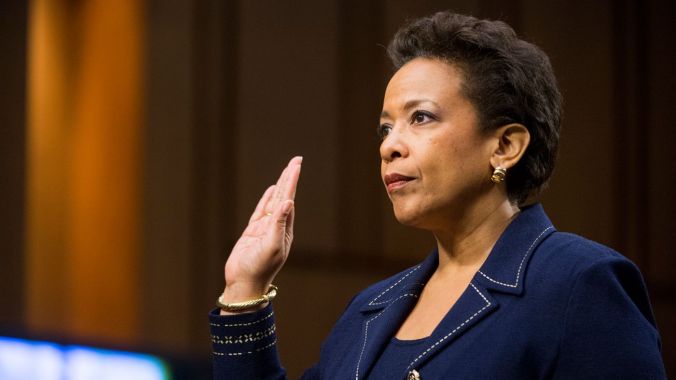
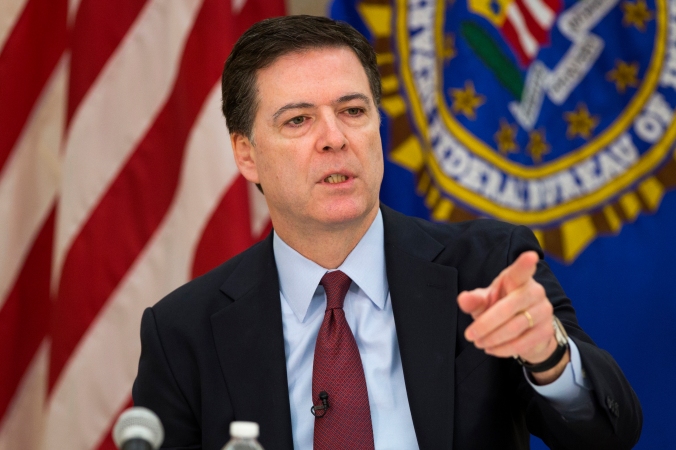
James Comey

The transcript of FBI Director James Comey’s full remarks on the Clinton e-mail probe follow. I will highlight important sections in bold, and in some cases, bold and red. My  observations will follow.

Good morning. I’m here to give you an update on the FBI’s investigation of Secretary Clinton’s use of a personal e-mail system during her time as Secretary of State.

After a tremendous amount of work over the last year, the FBI is completing its investigation and referring the case to the Department of Justice for a prosecutive decision. What I would like to do today is tell you three things: what we did; what we found; and what we are recommending to the Department of Justice.

This will be an unusual statement in at least a couple ways. First, I am going to include more detail about our process than I ordinarily would, because I think the American people deserve those details in a case of intense public interest. Second, I have not coordinated or reviewed this statement in any way with the Department of Justice or any other part of the government. They do not know what I am about to say.

I want to start by thanking the FBI employees who did remarkable work in this case. Once you have a better sense of how much we have done, you will understand why I am so grateful and proud of their efforts.

So, first, what we have done:

The investigation began as a referral from the Intelligence Community Inspector General in connection with Secretary Clinton’s use of a personal e-mail server during her time as Secretary of State. The referral focused on whether classified information was transmitted on that personal system.

Our investigation looked at whether there is evidence classified information was improperly stored or transmitted on that personal system, in violation of a federal statute making it a felony to mishandle classified information either intentionally or in a grossly negligent way, or a second statute making it a misdemeanor to knowingly remove classified information from appropriate systems or storage facilities.

Consistent with our counterintelligence responsibilities, we have also investigated to determine whether there is evidence of computer intrusion in connection with the personal e-mail server by any foreign power, or other hostile actors.

I have so far used the singular term, “e-mail server,” in describing the referral that began our investigation. It turns out to have been more complicated than that. Secretary Clinton used several different servers and administrators of those servers during her four years at the State Department, and used numerous mobile devices to view and send e-mail on that personal domain. As new servers and equipment were employed, older servers were taken out of service, stored, and decommissioned in various ways. Piecing all of that back together — to gain as full an understanding as possible of the ways in which personal e-mail was used for government work — has been a painstaking undertaking, requiring thousands of hours of effort.

For example, when one of Secretary Clinton’s original personal servers was decommissioned in 2013, the e-mail software was removed. Doing that didn’t remove the e-mail content, but it was like removing the frame from a huge finished jigsaw puzzle and dumping the pieces on the floor. The effect was that millions of e-mail fragments end up unsorted in the server’s unused — or “slack”— space. We searched through all of it to see what was there, and what parts of the puzzle could be put back together.

FBI investigators have also read all of the approximately 30,000 e-mails provided by Secretary Clinton to the State Department in December 2014. Where an e-mail was assessed as possibly containing classified information, the FBI referred the e-mail to any U.S. government agency that was a likely “owner” of information in the e-mail, so that agency could make a determination as to whether the e-mail contained classified information at the time it was sent or received, or whether there was reason to classify the e-mail now, even if its content was not classified at the time it was sent (that is the process sometimes referred to as “up-classifying”).

From the group of 30,000 e-mails returned to the State Department, 110 e-mails in 52 e-mail chains have been determined by the owning agency to contain classified information at the time they were sent or received. Eight of those chains contained information that was Top Secret at the time they were sent; 36 chains contained Secret information at the time; and eight contained Confidential information, which is the lowest level of classification. Separate from those, about 2,000 additional e-mails were “up-classified” to make them Confidential; the information in those had not been classified at the time the e-mails were sent.

Continue reading

Loretta Lynch-Bill Clinton Meeting Aftermath: Hillary Drops An Unethical Hint, And My Head Explodes

pulling strings

According to the New York Times, “Democrats close to Mrs. Clinton say she may decide to retain Ms. Lynch, the nation’s first black woman to be attorney general.”

Wait, what?

WHAT????

WHAT???

kaboom

The woman’s department is currently involved in a criminal investigation of Clinton. Lynch has refused to recuse herself from the investigation despite the taint of the meeting with Bill Clinton, which was apparently engineered by one or both Clintons. Though she has said that she will accept the recommendation coming out of the FBI investigation, she is not obligated to do so. Thus she is still a participant in the process and a decision-maker who has significant power and influence, as of this moment, over Hillary Clinton’s political future.

And yet Clinton allows her camp to send the message to Lynch—through the New York Times— that there may be a job waiting for her in the Clinton Administration….as long as, well, you know. This goes beyond the mere appearance of impropriety that Bill’s trick created for Lynch.

The dangling of a potential high-profile job creates an actual conflict of interest. After all, Lynch can’t continue as Attorney General is Hillary isn’t elected, and Hillary’s election prospects are likely to be significantly diminished if she’s in the Big House.

What is this? A flat learning curve? Complete arrogance and open corruption? Stupidity? Are all of Clinton’s advisors and staff as ethically obtuse as she is, just as Trump’s advisors and staff appear to be as inept as he is? How could Clinton let this happen?

If Lynch wants to guarantee that the public does not assume that this is yet more proof that the Clinton’s are rigging the investigation, she needs to declare, right now, that under no circumstances will she consider or accept any post in a Clinton administration. Failing that. she needs to resign.

Writes Ann Althouse:

Sometimes the prosecutor offers the accused a deal and, on rare occasions, the accused offers the prosecutor a deal. But offering it right out in the open like that? It’s as ballsy as a former President strutting across a tarmac in 107° heat, fueled by a raging desire to talk about his grandchildren.

I don’t know if this was really “ballsy.” Having just written at length about Hanlon’s Razor, I’m more inclined to think that Clinton and her camp are just stupid and incompetent, which, if true, calls into question one of the few clear advantages she supposedly has over Donald Trump.


Essay: On Loretta Lynch And Fighting Cynicism And Distrust Regarding The FBI Investigation Of Hillary Clinton

America_Falling_Apar

Warning:

This is long.

I think it’s important

In the wake of Attorney General Lynch’s acknowledgment of wrongdoing in meeting, however briefly and innocently, with Bill Clinton, some  reader comments here are redolent of the destructive distrust of government and leadership engendered by this administration and others, particularly Bill’s. Yet this attitude feeds on itself, and is to an extent a self-fulfilling prophecy. If leaders think that people expect corruption, they are less likely to shy away from it. Cynicism leads to acceptance. Of course, this is one explanation of why the tarmac meeting took place—pure arrogance and a belief that with the news media’s complicity, now virtually any degree of government dishonesty and corruption will be either effectively hidden from the public, or accepted by it.

This is untrue, still. Indeed, this episode is proof that it is untrue, though the news media did make (disgusting and ignorant) efforts to shrug off the clear appearance of impropriety represented by Lynch having a meeting with Clinton the Impeached under these circumstances. Why do I labor trying to write these essays explaining the legal and ethical context of such events if readers are so poisoned by bitterness and distrust that they can’t or won’t process them, and just default to “it doesn’t make any difference, all is shit, all is lost”?  If I believed that, I wouldn’t be spending time—work  time, uncompensated time—writing this stuff. I can earn peanuts directing professional theatrical productions: it makes people happy, gives actors work, and is a lot more fun, believe me.

Paranoia, suspicion, despair, and conspiratorial views of government, which are all these comments represent, are just forms of bias. Bias makes us stupid, and in this case, bias makes us dysfunctional as a people and fearful and miserable as individuals. Continue reading

Now, Whatever Else, We Know That Attorney General Loretta Lynch Is More Ethical Than Hillary Clinton

Lynch2

Attorney General Loretta Lynch’s response to the immediate criticism of her private, suspicion-generating meeting with Bill Clinton was the correct one and the only ethical response open to her now. Today she admitted that that her airport meeting with former President Bill Clinton while possible charges against Hillary Clinton were being explored by the FBI had undermined public trust in the investigation, and she also took remedial action. She did more than recuse herself from the matter. She announced that she would  accept whatever recommendations that career prosecutors and the F.B.I. director make about whether to bring charges against the presumptive Democratic nominee.

“I will be accepting their recommendations,”  Lynch said in an appearance at the Aspen Ideas Festival. She said that “the case will be resolved by the same team that has been working on it from the beginning.”

This remarkable move will not remove the stain on the meeting, which already created the “appearance of impropriety” at the worst possible time in the worst possible matter. However, Lynch acted quickly, appropriately, honestly and decisively.  Incredibly, the episode may have actually resulted in a situation that will reduce public and political cynicism if Clinton is not indicted, except for those who will insist that the fix was in from the beginning, as indeed it might have been, given the general lack of accountability and propensity for cover-ups in the Obama administration.

As one delicious scenario, it is possible that Bill Clinton’s characteristic penchant for breaking the rules at will may have created a situation that leads to his wife having to face criminal charges. It is certainly true that the chances, still slim, that Hillary will have to face the music is greater now than it was two days ago. Continue reading

Four Supreme Court Decisions: Abortion, Guns, Affirmative Action, Corruption…And Ethics. Part 2: McDonnell v. United States

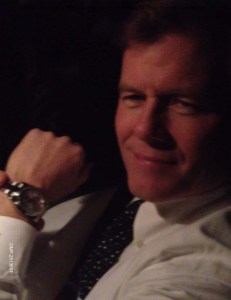
Virginia Governor McDonnell shows off the luxury watch he got as a gift from a businessman he barely knew who expected expected nothing in return...

Virginia Governor McDonnell shows off the luxury watch he got as a gift from a businessman he barely knew who expected expected nothing in return…

Governor Bob McDonnell, Virginia’s Republican governor from 2010 to 2014, was charged with using his office to assist businessman Jonnie R. Williams Sr., who, often with Mrs. McDonnell as a conduit, gave his family wedding receptions, loans, vacations and jewelry worth more than $175,000. I wrote about this scandal here, here, and here. The gifts were legal, thanks to absurdly lenient Virginia ethics laws, just as they were obviously unethical, except perhaps to the clueless McDonnells.

Governor McDonnell arranged meetings for Williams and attended events with him. My favorite part of the criminal trial was when McDonnell claimed that he never dreamed that Williams expected anything in exchange for all of his gifts, and then Williams said that of course he expected some favors in return. The jury found that McDonnell’s actions amounted to corruption and a quid pro quo exchange amounting to bribery. A federal appeals court upheld the conviction.

The Supreme Court’s 8-0 decision this week to vacate the conviction upholds the principle that even if someone has done something obviously bad, there has to be a law against what was done before the act occurred in order to convict him. It’s a rather narrow decision. The Court points out that the law McDonnell was convicted of breaking requires “official acts” to be bought and sold for the law to be breached, but that all McDonnell did was hand out political favors to his “friend”: setting up meetings, communicating his favor, greasing the wheels, essentially. (Much is made of the fact that Williams didn’t benefit very much from any of this, which is just moral luck. It doesn’t make what the governor did any less sleazy.)

Wrote Chief Justice Roberts in his opinion for the unanimous Court: Continue reading

From The Appearance of Impropriety Files: Justice Scalia’s Hunting Trip

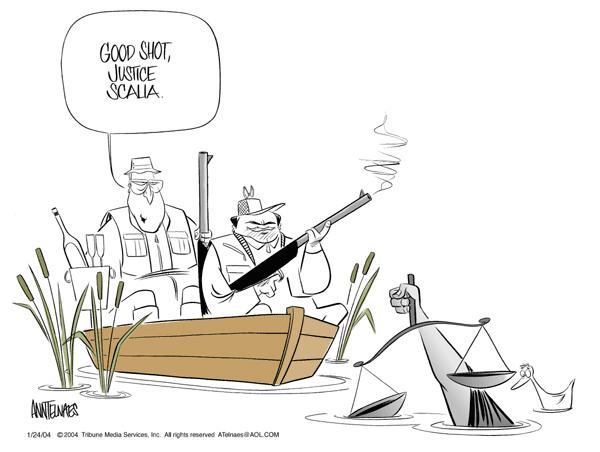
ScaliaCheney

A partyist, ignorant hack named Andrea Paysinger, who is banned from further commentary by the Ethics Alarms “too dumb and biased to contribute” rule, just wrote a comment to the Clinton-Lynch post making the typical ratioanalization-rotted argument that “all the brouhaha over this is ridiculous, childish on the part of all the RIGHT WING jerks who SAW NOTHING WRONG with JUSTICE SCALIA taking gifts and spending vacations PAID FOR by those who actually had cases coming up before SCOTUS AND NOT ONE FUCKING TIME DID HE RECUSE HIMSELF.”

I just love it when people accuse me of being a partisan hypocrite without bothering to check what I have written. As it happens, I wrote a great deal about Scalia’s infamous hunting trip, which I unequivocally condemned as creating the appearance of impropriety. (It was, however, factually less troubling than the Clinton-Lynch meeting, as Scalia and Cheney were never alone during the trip in question.) So for people like Andrea (though not Andrea herself, who won’t be able to get back on this site if she recruits an army of Myrmidons), I will hereby post the two Scalia essays, which currently reside only on the Ethics Scoreboard, now an archive of my ethics commentary prior to 2010.

Unfortunately, the site’s search function stopped working when I had to change platforms recently. If you want to check out the Scoreboard now, just use Google: type “Ethics Scoreboard” and the subject or topic. If there was commentary, you’ll find it.

To give due credit, Andrea did identify real hypocrisy on the Lynch issue. Many of the Democrats exposing themselves as corrupted by partisan bias by now trying to defend Lynch also furiously attacked Scalia’s appearance of impropriety. They—your idols, Andrea— have no integrity. I do.

Here was what I wrote about Scalia’s clear appearance of impropriety in 2004.

Good Judge Hunting: Antonin Scalia and the Cheney Case

Supreme Court Justice Antonin Scalia recently went hunting with Vice President Cheney, even as the Supreme Court prepares to rule on whether the documents pertaining to Cheney’s meetings with energy company officials regarding future US energy policies must be made public. This has led to critics calling for Scalia’s recusal from the case, on the grounds that the social contact renders his objectivity in the matter suspect. Scalia, feisty as always, denies this, and maintains that he is fully capable of ruling objectively.

And I’m sure he is, but that’s beside the point. In the case of judicial independence, it is often appearances that count, and because this is an issue particularly charged with partisan passions, the Supreme Court must avoid any hint that cronyism or personal loyalties are playing a part in the outcome of the legal showdown. Scalia should remove himself from the case.

Justice Scalia has pointed out that personal friendships between the justices and Washington leaders are commonplace, and that mere friendships among professionals should not raise the specter of favoritism or bias. Indeed, had Scalia maintained exactly the same collegial relationship with Cheney, but avoided the hunting trip, there would be no issue. But the outing conjures images of male bonding and frank talk by the campfire (lobbying, perhaps?), and if Justice Scalia were to rule Cheney’s way (and Scalia’s past opinions would suggest that this is likely), the legitimacy of the ruling would be, in the eyes of many, tainted. But there is more.

According to the L.A. Times, Scalia was flown to the hunting reserve on the small jet that serves as Air Force Two. That could be interpreted as a gift to a judge from a pending litigant. The trip has value, and judges are not supposed to accept things of value under circumstances where it calls their objectivity into question. This alone would justify a recusal. And there’s a “strike three.”

The Times reports that the reserve where the duck hunting took place is owned by Wallace Carline, the head of Diamond Services Corp., an oil services firm that is on 41 acres of waterfront property in Amelia, La. The company provides oil dredging, pile driving, salvage work, fabrication, pipe-rolling capability and general oilfield construction. There is no indication that he has a direct stake in the case, but he is an energy executive. So we have a Supreme Court Justice ruling on whether materials should be released regarding the input of the energy industry into national energy policy in meetings held by the Vice-President, after he spends a hunting trip with the Vice-President, who has also provided charter jet transportation, at a hunting reserve where he is the guest of an energy executive.

Come on, Justice Scalia. Continue reading

Attorney General Lynch, Meet The Appearance Of Impropriety! Funny, I Assumed You Were Acquainted…

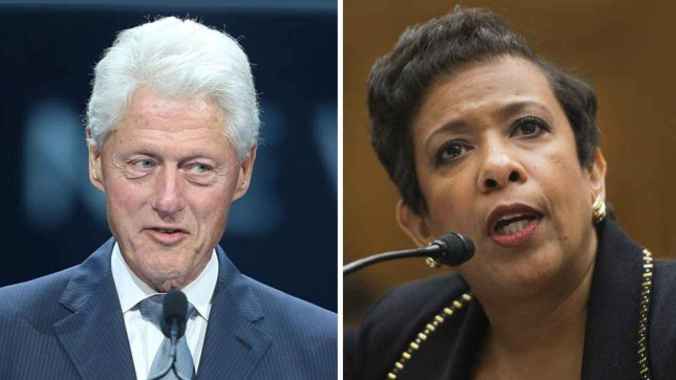
Clinton Lynch

U.S. Government officers and employees are directed to avoid engaging in conduct  “creating the appearance that they are violating the law or the ethical standards promulgated pursuant to this order. ” Some of those officers, like those who work in law enforcement and the justice system, shouldn’t require Executive Order 12674 – Principles of Ethical Conduct for Government Officers and Employees to know that the appearance of impropriety, including bias, favoritism, influence peddling and conflicts of interest, is unethical, since judges have a prohibition against creating such appearances in their codes of conduct no matter where their courts are located. They also know that as  professionals charged with making sure the rule of law works equitably and efficiently for all, rich and poor, high and low, the public trust is essential and indispensable. If the public doesn’t trust the fairness, objectivity, competence and wisdom  of those who enforce the law, then the public will not trust the law itself, and the rule of law, and democracy itself, will be threatened.

This is ingrained into every government lawyer’s hide, and so core to the principles of justice professionalism that the news that Attorney General Loretta Lynch met privately with  former President Bill Clinton this week just defies explanation. Supposedly President Clinton walked uninvited from his plane to her government plane, which were both parked on a tarmac at Phoenix Sky Harbor International Airport to chat.

Her only proper and ethical response to Clinton is undebatable:

“I’m sorry, Mr. President, but my Department is in the midst of investigating your wife, and it is crucial that the public does not detect any evidence of collusion or influence occurring, and observes no evidence that would cause it to question in any way the ultimate determination by Justice regarding any possible legal action. You certainly must understand my position…and by the way, since you do understand, what the hell are you doing here? Go! Now!”

She did not say this, however.

She met with him.

Game over.

Appearance of impropriety. Continue reading

Freddie Gray Prosecution Update: A Law Professor Formally Accuses The Unethical Prosecutor Of Being Unethical

finger-pointing

George Washington Law School Professor John F. Banzhaf III has filed an ethics  complaint against State’s Attorney Marilyn Mosby with Maryland’s Attorney Grievance Commission. Banzhaf accuses Mosby in his 10-page complaint of breaching Maryland’s rules of professional conduct for lawyers, which requires that a prosecutor refrain from prosecuting a charge unless it is supported by probable cause, in her conflicted and incompetent prosecution of six police officers involved in the arrest of Freddie Gray. The complaint also flags Mosby’s improper use of public statements to bias the administration of justice.

Good.

Of course he is right, as I have repeatedly explained here, here, here, here, and here. I assume there have been other complaints before this one, but he has made the issue a high profile one, and that’s excellent news.

Mosby has earned the Mike NiFong treatment: the unethical prosecutor in the Duke Lacrosse rape case was disbarred, briefly jailed, and sued. She is black, female, and a Democrat, and NiFong remains one of the very, very few prosecutors to be punished significantly for unethical conduct. I will be amazed if the commission does anything momentous or sufficient to discourage grandstanding prosecutors like Mosby in the future, even though such prosecutors are willing to ruin lives for political gain.

I hope I am wrong.

(But I’m not.)

KABOOM! The Tale Of The Third-Grader’s Racist Brownie Offense: No, I Don’t Understand This At All

brownies explosion

This story made my head explode, and thus it will be tagged “Kaboom!” Unlike most such Kaboom! posts, however, this one is likely to make my head explode every time I read it. Or think about it. Forever.

On June 16, a third grader made a comment about the brownies being served to his class during an end-of-the-year class party at the William P. Tatem Elementary School in Collingswood, New Jersey.  After another student opined that the remark was “racist,” the school called the Collingswood Police Department.

Okay, stop. I’m puzzled already, and my head exploded again just writing that:

  • How could a comment about brownies be racist? Did the child say, ” As with human beings, the blonde brownies are innately superior to the dark ones”? Somehow, I doubt it.
  • Another third grader pronounced the statement as racist. Not a teacher, now. An eight-year old. How can that trigger anything, in a sane world, but a discussion led by the teacher about what is and isn’t racist, and how people shouldn’t leap to such  inflammatory observations, because it makes human interaction difficult if not impossible?
  • The school called the police department? For what? A threatened brownie massacre? How is this conceivably a police matter? Why did the police come?

“What is the nature of your emergency?” “A third-grader in my class made an inappropriate remark about brownies!” “Calling 911 with prank calls is a crime, ma’am. Don’t do this again.” 

It is per se unethical and irresponsible for any police department to treat such trivia seriously.

All right,slogging on… Continue reading

The Unethical Courtroom Exchange Of The Century!

believe-it-or-not-1024x442

This would have been rejected by “Boston Legal” as too ridiculous.

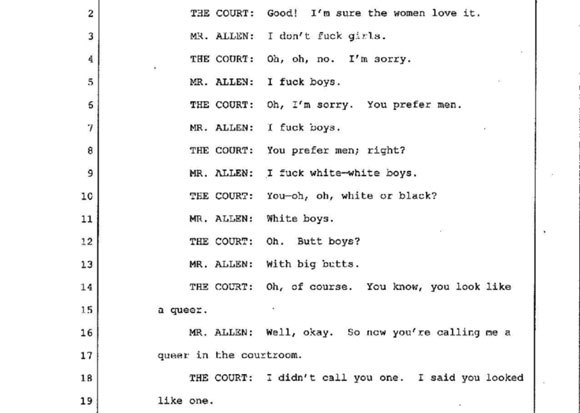
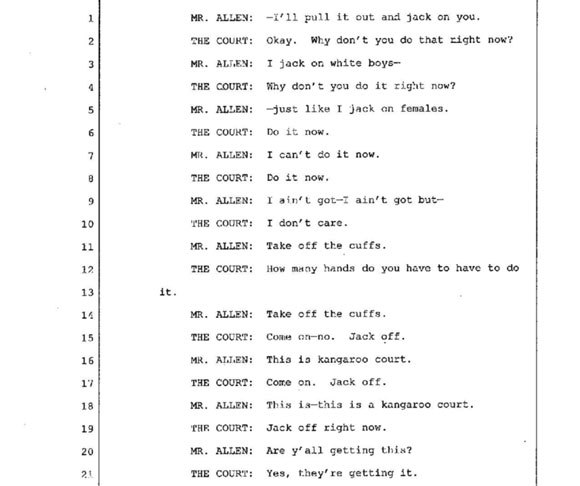
In a Rome, Georgia court room, as others looked on, Floyd County Superior Court Judge Bryant Durham allowed himself to be provoked by a defiant murder suspect named Denver Allen.

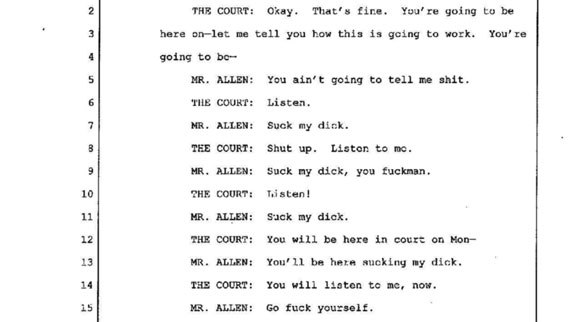
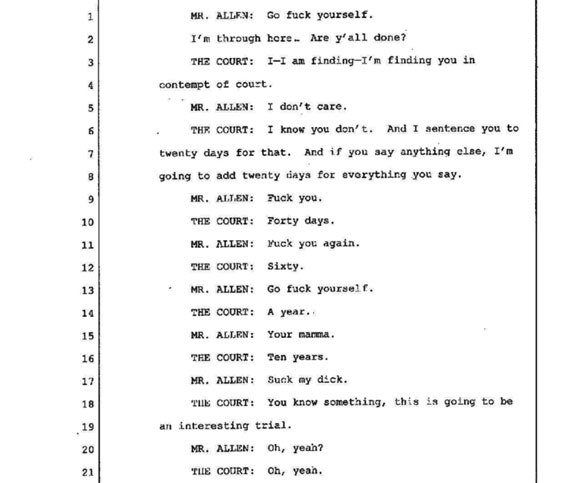
What resulted was a rare (thank goodness) example of a judge lowering himself, his position, the court and the justice system to the level of those with no respect for the law or society. Here is a portion of the transcript:


dialogue 1

dialohue 2dialogue 3dialogue 4


Stay classy, Judge Durham. Continue reading