Super Tuesday Ethics: Bill Clinton’s Ultimate Arrogance

laws_for_little_people_anti_hillary_clinton_2016_This kind of thing is what makes people cynical about democracy. Well, this and the fact that Donald Trump can win so many primaries.

In Massachusetts, Bill Clinton clearly violated the law repeatedly by lobbying primary voters on behalf of his wife at polling places. Not only is this against the law in every state, but it is obviously wrong, as in cheating. The law:

Voting and Counting Procedures for the Commonwealth of Massachusetts 

Within 150 feet of a polling place as defined in 950 CMR 53.03(18)(c), no person shall solicit votes for or against, or otherwise promote or oppose, any person or political party or position on a ballot question, to be voted on at the current election.

Never mind—when did trivia like law and ethics ever apply to the Clintons? According to a report filed from boston.com, the former President “chatted up voters, kissed an old lady on the head, posed for photos, and bought a cup of coffee.”   After Bill visited a number of polling stations throughout the eastern portion of the state. Massachusetts officials “reminded” the Clinton campaign about the statute, as if they didn’t already know about it. In New Bedford, Bill Clinton’s presence interfered with the voting, and one annoyed voter videoed the scene and placed it on YouTube. Continue reading →

The Costs Of Civic Ignorance: We Now Have A Frontrunning Candidate For President Who Wants To Gut Freedom Of The Press

SullivanYesterday, flushed with the fact that polls said he “won’ this week’s debate despite outrageous lying, posturing, and incoherence, Donald Trump said that if elected, he will muzzle journalists with fear of libel suits:

“One of the things I’m going to do if I win… I’m going to open up our libel laws so when they write purposely negative and horrible and false articles, we can sue them and win lots of money.We’re going to open up those libel laws so when The New York Times writes a hit piece, which is a total disgrace, or when the Washington Post, which is there for other reasons, writes a hit piece, we can sue them and win money instead of having no chance of winning because they’re totally protected. We’re going to open up libel laws and we’re going to have people sue you like you’ve never got sued before.”

It’s hard to say what is the dumbest or most alarming thing Trump has said this campaign season, but this is close. To begin with, journalism cannot function under the constant threat of libel suits. This device is already used to bully websites, a form of journalism, and blogs like mine, which don’t have the resources to fight censorious and frivolous suits. Second, the statement proves that Trump is ignorant about the Constitution, ignorant about the law, ignorant about American values—Can you make America great again when you don’t comprehend the culture, traditions or history in the first place? Of course not—and ignorant about the powers of the Presidency, which is fairly shocking for someone running for the office. Luckily for Trump, and unluckily for the country, a lot of Americans are even more ignorant than he is.

Third: this can’t be done unless Trump intends to declare himself Emperor, or something similar. The Supreme Court dealt very emphatically with this issue in the 1964 case of New York Times v. Sullivan, which ruled that win a defamation case against a newspaper (and now, by extension, any journalist), a plaintiff must show four things: 1) a false statement purporting to be fact; 2) publication or communication of that statement to a third person; 3) fault; and 4) some tangible harm  to the person or entity who is the subject of the statement. Public officials and public figures–celebrities, people in the news, reality stars, Bozo the Clown— must show that alleged libelous statements were made with actual malice—that is , they were maliciously intended to harm the subjects and the writer and publisher knew they were false, or were reckless is determining if the were false or not-–to recover in an action for defamation.

The standard of proof is also high for libel against the press, and this is to protect the press. A plaintiff must show actual malice by “clear and convincing” evidence rather than the lesser burden of proof in most civil cases, preponderance of the evidence.

Sullivan is a bulwark of First Amendment jurisprudence. It isn’t going anywhere. Conservative justices wouldn’t overturn it; liberal justices wouldn’t touch it. Justice Scalia, brought back from the dead, would declare it untouchable. If there is a single legal scholar who has advocated overturning the case in whole or in part, he or she is an outlier or a crackpot. It was a 9-0 decision. Justice Brennan, writing for the Court, wrote… Continue reading →

Observations On The CNN-Telemundo GOP Candidates Debate

1.  I heard that National Anthem rendition on my car radio, and thought, “That can’t possibly be as off-key as it sounds, can it?” Then my various singer friends started howling on Facebook. I don’t know why debates are now treated like ball games, but there are thousands upon thousands of singers, male, female, and juvenile, who can sing the anthem well, and a lot better than Dina Carter did last night. There’s no excuse for getting someone who can’t stay on pitch.

2. Ben Carson prompted me to throw a magazine at the TV with his fatuous “we won’t solve America’s problems by trying to destroy each other.” It’s a competition, you fool. Someone should have shown you how ridiculous your wasteful candidacy was months ago, and you wouldn’t be clogging up the process now. If Donald Trump, a viper in the nursery, wasn’t ahead, Reagan’s admonition not to attack fellow Republicans might be a wise and ethical practice. Now, it is the equivalent of pacifism during World War II.

3. That was weak, incompetent moderating by Wolf Blitzer and Dana Bash, allowing Trump to speak over Rubio and Cruz who were doing a good job pointing up his hypocrisy and corruption. As usual, Trump’s rebuttals weren’t rebuttals at all but distracting attacks, pitched to the gullible.

  • Rubio said, correctly, that Trump criticized Mitt Romney for talking about “self-deportation” in 2012, while Trump is talking about self-deportation now.  Trump said: “I criticized Mitt Romney for losing the election. . . . He ran one terrible campaign!”  No, actually Trump criticized Romney’s self-deportation policy specifically.
  • Rubio said Trump is the only person on the stage who’s hired people from other countries for “jobs that Americans could have filled.” Trump replied, “I’m the only one on the stage who’s hired people! . . . You haven’t hired one person in your life!” It’s completely irrelevant to the issue, just another deflection.
  • Cruz pointed out that Trump contributed to the three Democratic Senators and two of the  Republican Senators he now accuses of pushing “amnesty.” Trump retorted that “I get along with everybody; you get along with nobody,” an ad hominem attack that ducks a legitimate criticism.

4.  Trump had one brilliant, perfect, Presidential and appropriately tough response to ex-Mexican President Vicente Fox who swore Mexico would never pay for Trump’s “fucking wall.” (We have heard increasing vulgarity from media figures like Chris Matthews, President Obama and others, and now the breakdown in official civility has crossed our borders. Yes, I blame Donald Trump, and as he grandstanded about the “disgusting” word used, someone should have had the wit to note that he has personally lowered the standards of leadership discourse more than any figure since the Nixon tapes were released.) Trump’s response: “The wall just got 10 feet taller!”

Excellent. Continue reading →

The Failure Of Any GOP Candidate To Answer This Question Directly Should Disqualify Them All

illegals_crossing_border

[I will probably do an overview of the entire debate, but this has been straining my skull for hours now, and I have to get it down or die.]

Telmundo open-borders advocate and activist-journalist Maria Celeste Arraras asked this offensive question to tonight’s Republican contenders—well, four contenders and Ben Carson, who has the relevance of a streaker at a baseball game:

After the last presidential election the Republican party realized that in order to win the presidency it needed the support of Latinos. Guidelines as to how to accomplish that were spelled out in an autopsy  report that concluded, and I’m going to quote it, “if Hispanic Americans hear that the GOP doesn’t want them in the United States they won’t pay attention to our next sentence.”

So, do you think that your fellow Republican candidates get it?

The question is misleading, assumes an answer, is based on an unethical premise, and is the worst sort of “when did you stop beating your wife?”hackery. It required a rebuke, and a firm rebuttal. Everyone ducked it. Where was Ted Cruz’s quick and precise rhetoric to call the moderator on an outrageous assumption? Where was Donald Trump, who supposedly owns this issue? Where was Rubio, who desperately needed a chance to clarify his muddy position? Continue reading →

More Photography Ethics: A Federal Court Rules That There Is No Right To Photograph Police

photographing_police

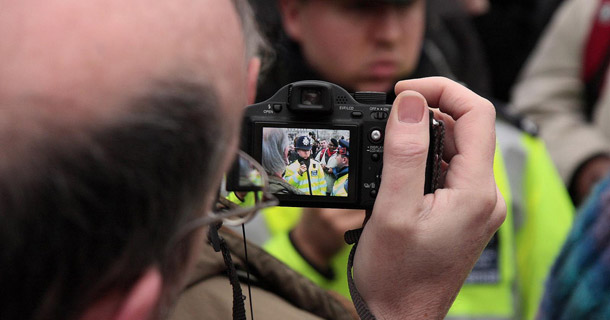
U.S. District Judge Mark Kearney has ruled that citizens don’t have a First Amendment right to take cellphone videos and photos of police unless they are challenging or criticizing the police conduct.

This opinion makes no sense, and is dead wrong.

Richard Fields, a Temple University student, took a cellphone photo of about 20 police officers standing outside a house party because, he testified, he thought it would be an interesting picture. Amanda Geraci, who says she is “a trained legal observer,” whatever that is, tried to video an arrest during a an anti-fracking  protest.

Fields had his cellphone seized and was cuffed, as an officer searched his cellphone before returning it and cited him for obstructing the highway and public passages while taking the photo.  Geraci said an officer physically restrained her to prevent her from recording the arrest. The two both sued for alleged First and Fourth Amendment violations, and their cases were consolidated before the court, as the same Constitutional issues were involved.

Judge Kearney argued that Fields and Geraci would have to show their behavior was “expressive conduct” to support a First Amendment claim. Neither plaintiff met that burden, because neither told the police why they wanted to capture the images, Kearney wrote. “The conduct must be direct and expressive; we cannot be left guessing as to the ‘expression’ intended by the conduct.”

“Applying this standard, we conclude Fields and Geraci cannot meet the burden of demonstrating their taking, or attempting to take, pictures with no further comments or conduct is ‘sufficiently imbued with elements of communication’ to be deemed expressive conduct. Neither Fields nor Geraci direct us to facts showing at the time they took or wanted to take pictures, they asserted anything to anyone. There is also no evidence any of the officers understood them as communicating any idea or message.”

What astounding nonsense! Would Kearney argue that an oil painting was similarly ambiguous as “expressive” without the painter saying, “I am painting the picture so that I have a painting that I can show others”? Continue reading →

The States’ Inexcusable Incompetence In Rape Cases

rape kits

If anyone can think of a good explanation for this outrage, please enlighten me.

Massachusetts has a 15-year statute of limitations on prosecuting sexual assault crimes, but the state only requires that untested rape kits be stored for six months.  No state currently provides the victim of an alleged sexual assault the right to require a jurisdiction to retain a rape kit until the statute of limitations expires, and only six states and Washington, D.C., provide a right for the prompt processing of a rape kit.

How can this be? Why wouldn’t it be obvious that as long as it is possible that rape charges can be brought, the relevant rape kit must be preserved? Continue reading →

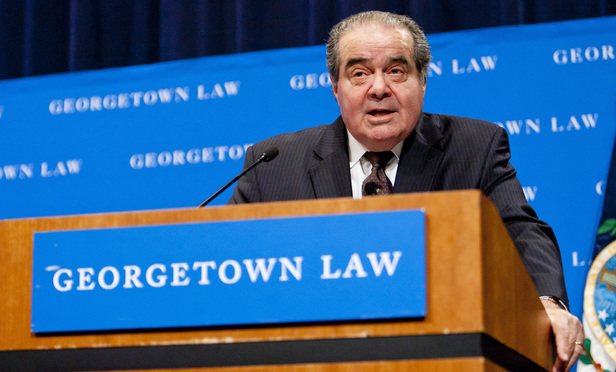
Ethics Observations On Georgetown Law Center’s Scalia Foofarah

Scalia-Georgetown

I am a Georgetown University Law Center grad, as well as a former administrator there. I also know and have personal relationships with several members of the faculty. None of this especially informs my ethical analysis of the community argument there that arose from a rather innocuous official expression of respect and mourning in the wake of Justice Scalia’s death, but if anyone wonders why I’m posting about this rather than many other ethics issues nipping at my heels, that’s part of the reason. The other reason is that this academic dust-up raises interesting ethics issues, and has received national publicity.

Observations on the tale as it has unfolded:

1.  Georgetown Law Center issued a press release mourning the death of Antonin Scalia, including a statement from Dean William M. Treanor that read:

““Scalia was a giant in the history of the law, a brilliant jurist whose opinions and scholarship profoundly transformed the law. Like countless academics, I learned a great deal from his opinions and his scholarship. In the history of the Court, few Justices have had such influence on the way in which the law is understood. On a personal level, I am deeply grateful for his remarkably generous involvement with our community, including his frequent appearances in classes and his memorable lecture to our first year students this past November. The justice offered first-year students his insights and guidance, and he stayed with the students long after the lecture was over. He cared passionately about the profession, about the law and about the future, and the students who were fortunate enough to hear him will never forget the experience. We will all miss him.”

[Note: In the original post, I missed the first line, and kept missing it. Don’t ask me why. The text has been finally, after a couple botched attempts, been revised to include it.]

Is there anything inappropriate about the dean’s statement? Not in my view. This is nothing but a traditional expression of professional respect on behalf a prominent institutional member of the legal community. There is nothing in the statement, save for the last sentence, that anyone could argue is untrue. Countless academics, as well as Scalia’s more liberal colleagues, did learn “a great deal from his opinions and his scholarship.” He was an influential and significant figure on the Court. Scalia was generous with his time and passion as a teacher, and by all accounts he was a good one.

The opening statement,  “Scalia was a giant in the history of the law, a brilliant jurist whose opinions and scholarship profoundly transformed the law,”  seems to be what rankled Scalia critics. It shouldn’t have. At worst it is standard memorial puffery. But calling Scalia a giant “ in the history of the law” seems fair whether you agree with his jurisprudence or not: he is certainly among the 20 or so most quoted, most debated, and most provocative justices. The rest shouldn’t be troubling to anyone who isn’t suffering from Scalia-phobia. A Justice can be brilliant and transformational while being wrong.

None of the reports of the controversy ignited by this standard issue sentiment mention it, but Georgetown Law Center isn’t on the Georgetown campus. It has its own campus that is a 15 minute walk from the Supreme Court. Law students regularly attend oral arguments; I did: it was one of the great advantages of studying law there. More than any law school, the Law Center has good reason to feel a special affinity to the Court and all its justices.

2.  What about the last sentence? Is it appropriate for Treaner to speak for the law school community and say that “We will all miss him”? He was reasonable and fair to assume that.  Unfortunately, in today’s vicious partisan divide where opinions and sincere positions reached after thought and research are too often treated as proof of consort with Satan, and ion which even lawyers, who are trained not to take legal arguments personally, are frequently unable to respect a colleague for a well-reasoned argument that they may still think is completely wrong, it was not a safe assumption. Pillory the dean, then, for giving all members of his community the benefit of the doubt, and assuming they are capable of grace, compassion, fairness, professional respect and civility.

It’s still not unethical to assume one’s colleagues have some class.

3. They all don’t, unfortunately. Law Center professors Gary Peller and Mike Seidman (I know Mike, never met Gary) then used the Campus Broadcast system, usually used for event announcements, invitations and policy changes, to send a message  to all members of the student body titled, “Responses to Dean Treanor’s Press Release Regarding Justice Scalia.”  Peller’s statement reads,

Like Mike Seidman, I also was put-off by the invocation of the “Georgetown Community” in the press release that Dean Treanor issued Saturday. I imagine many other faculty, students and staff, particularly people of color, women and sexual minorities, cringed at headline and at the unmitigated praise with which the press release described a jurist that many of us believe was a defender of privilege, oppression and bigotry, one whose intellectual positions were not brilliant but simplistic and formalistic….That ‘community’ would never have claimed that our entire community mourns the loss of J. Scalia, nor contributed to his mystification without regard for the harm and hurt he inflicted.”

This was partisan grandstanding of the worst kind. The professors, of course, have a right to proclaim their opinions to the student body any time they want to, but their complaint here was petty and mean-spirited. It also models behavior that is poisonous both to the legal profession and the culture as a whole. The are saying, in essence, “We don’t mourn him, we won’t miss him, and we’re glad to be rid of him, because his legal theories aren’t our legal theories, and we are on the side of the angels while he was an uncaring villain.” Such a message accomplishes nothing positive, and much that is destructive. The professors engaged in demonizing, when their profession and their duty is not to denigrate but reason. If they really think they can prove that Scalia was a defender of privilege, oppression and bigotry, they can make that case in a scholarly paper: I doubt that they can. Scalia often defended the rights to engage in conduct that he did not personally support, as well as some he did: the sloppy rhetoric of Seidman and Peller echoes the legally ignorant who accuse criminal defense attorneys of defending robbery and murder. Continue reading →

Tech And Terrorism Ethics: Apple Is Right. The Government Is Wrong.

FBI-APPLE

If, in some future nightmare scenario come true, the FBI needs to break the encryption on a private i-phone to find the secret code to defuse the Doomsday Machine  President Donald Trump set up after his mind finally snapped and he thought he was the Stay-Puft Marshmallow Man, I assume that Apple won’t stand on principle and will do what needs to be done to save the world. The current dilemma, however, is not that dire.

Although President Obama announced last year that he had decided not to pursue legislation requiring tech companies to give law enforcement access to users’ encrypted data, he proved once again that if you don’t like Obama’s promises, just wait a minute.  For last week, the FBI persuaded a judge to order Apple to create software that would help federal investigators crack into the iPhone 5C that terrorist Syed Rizwan Farook was using before he and his wife slaughtered guests at his company Christmas party in San Bernardino last December. Apple has vowed to defy the order.

Good. Continue reading →

#FreeKesha Ethics: Ignorance, Indignation And Feminist Bias Vs. The Law

Kesha

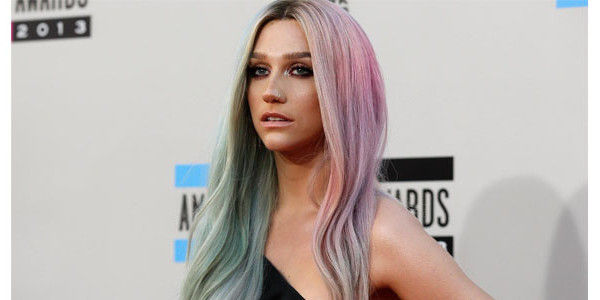
Perhaps, if you don’t follow pop music, you managed to miss the long, long ongoing drama of singer Kesha’s (formerly “Ke$ha”—I know, I know… ) legal efforts to get out of her recording contract with  Sony and producer Dr. Luke, (Lukasz Gottwald) who has produced hits by other artists like Katy Perry, Rihanna, Pitbull and Miley Cyrus. It isn’t over, but the unethical caterwauling by Kesha and her supporters both in and out of the industry is deafening.

Also off-key.

Kesha Rose Sebert was 18  and an unknown singer from Nashville  when she signed a five or six (I have read both)  album contract with one of Dr. Luke’s recording companies in 2005. It took five years, but the producer’s faith in her paid off when Tik Tok became the No. 1 song in the country. Kesha released two albums in the next two years, but none since 2012.

In October 2014, Kesha’s legal team sued Dr. Luke for alleged sexual assault and battery, sexual harassment, gender violence, emotional abuse, and violation of California business practices since the beginning of their business relationship. The lawsuit claimed that Dr. Luke had  drugged her, raped her while she was drugged,  and also tormented her to the point where Kesha developed an  eating disorder that eventually required medical attention. Kesha asked that the court let her out of her exclusive recording contract because, as she put it in a sworn affidavit, “I cannot work with this monster.”

Dr. Luke, not appreciating being branded a rapist, filed a countersuit against Kesha and her attorneys for defamation, and accused her, her mother, and her management of fabricating the abuse claims to break her contract with him and his partner, Sony. Last November, Dr. Luke asked the judge to dismiss Kesha’s allegations of sexually abusing her. Continue reading →

Ethics Dunce: Samuel French, Inc.

collage

A ridiculous and offensive example of misuse of legal process and interference with free speech was just flagged by self-exiled Ethics Alarms star, Barry “Ampersand” Deutsch on his blog.

In her one woman play Thatswhatshesaid, playwright Courtney Meaker cherry-picked lines from the female characters in the eleven most-produced plays of past theater season, according to one list, anyway. She mashed them up for effect, the effect being to show how “society forces women to conform to certain harmful and paradoxical gender stereotypes, and America’s most popular plays reflect those stereotypes. Playwrights perpetuate the patriarchy by creating roles for women that reduce them to one version or another of male fantasy or fear, and playhouses make sure those plays have a home.”

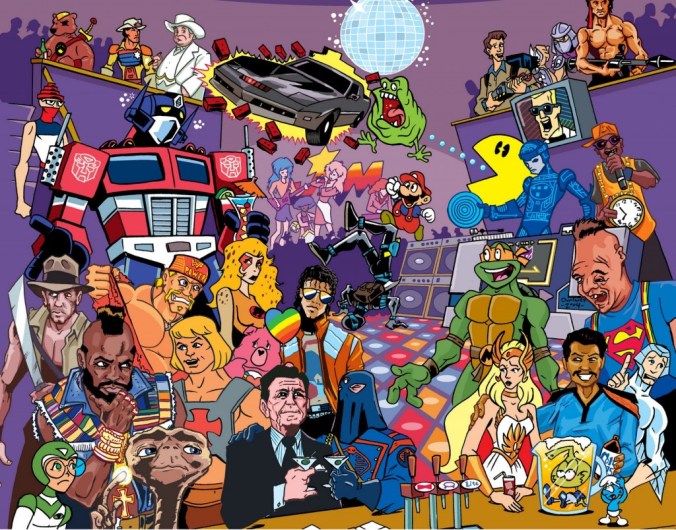
Okaaay, I think I’ll be passing on that one! Nevertheless, re-arranging bits and pieces of other copyrighted works to create a different work and message from any of the components is such a well-traveled and obvious tool of the modern arts that to say this play’s content is fair use, legal and ethical should be completely unnecessary. Collages that do this (see above) have been accepted as routine; musical works and videos too. Here’s a favorite of mine…

But law, ethics and art didn’t stop Samuel French, the theatrical publishing company which licenses some of the plays quoted in Thatswhatshesaid. The company  sent a last minute cease-and-desist notice right before a performance, demanding the play not be presented, and also left a threatening message on the voicemail of the show’s sole performer, Erin Pike, promising to “go after” her, “the presenter and the theater and all the folks connected to it.” Despite being warned by the theater not to defy the mighty French, Pike made sure her show went on anyway, like any good and courageous artist should.

What’s going on here? Continue reading →