Further Ethics Observations On The Planned Parenthood Videos

hand

1. The fourth in a series of surreptitiously obtained videos depicting Planned Parenthood officials discussing the sale of fetal body parts for research has been released. The Center for Medical Progress is the anti-abortion group that has created these videos: it defines itself as a “citizen journalist” project. Since these videos have been made using deception and without the safeguards of established journalism ethics by untrained and non-objective journalists, Ethics Alarms has consistently held that they are the result of unethical conduct, regardless of the motives behind them or what they show.

I am, reluctantly, reversing that verdict. The reason is the now undeniable refusal of the mainstream media and professional journalists to do their duty regarding the abortion issue in general and Planned Parenthood in particular. Despite the significance of these videos, the attack on Planned Parenthood and the fact that abortion is the most contentious and least resolved moral-ethical issue of our time, the news media, broadcast and print, have intentionally and unconscionably avoided covering the Center for Medical Progress videos and the issues they raise. The average American who does not monitor the news over the internet probably isn’t aware of the videos at all, and certainly has no sense of their content.

Journalism ethics codes state that deception and surreptitious means are only justified as investigative methods of reporting when more open and transparent reporting cannot obtain the facts. When professional journalists shrink from their duty to obtain the facts and report the truth, citizen journalists must take over, because democracy requires truth and transparency. Journalists should have made these videos. Because reporters abdicated their duties, those who picked up the dropped banner of probing investigative journalism regarding vital national issues should not be condemned. They should be praised, and by everyone, including journalists. If a fire fighter refuses to enter a burning building to rescue a child, and a citizen knocks down a door to do the job, I don’t want to see that citizen charged for the cost of the door, or criticized for acting. The videos are a public service, and necessary perspective on our society’s war against the unborn. Continue reading

On Preventing Web Mobs: The Prisoner’s Dilemma And “Tit For Tat” Reconsidered

prison

As I expected, it took all of ten minutes for my post about the web vigilante attack on Dr. Walter Palmer to bear fruit, as in tomatoes tossed at my metaphorical face. The reason, as I calculated in advance, was my decision to employ a Tit for Tat strategy in responding to what I believe is a deadly trend on the internet that requires a strong response to restrain it. A would-be commenter attempted to make my blog party to web mob efforts to do financial, personal and even physical harm to the hapless hunting dentist by publicizing various addresses and phone numbers. I published his e-mail address.

I’m not sorry.

The  issue raised by my conduct involves integrity. By giving out the e-mail address of a commenter (because the commenter unethically attempted to publicize personal contact information regarding Palmer and his family) when I state on the site that I will not do so, I both violated my own policies and engaged in conduct that this blog specifically declares unethical: Continue reading

What A Surprise: Donald Trump Has An Unethical Lawyer!

One of these guys is Donald Trump's lawyer. Maybe both...

One of these guys is Donald Trump’s lawyer. Maybe both…

I realize I run the risk, by publishing this opinion, of Donald Trump’s thuggish, boorish, dolt of lawyer trying to “mess [my] life up … for as long as [I’m] on this frickin’ planet,” to put it in his well-measured, restrained and professional parlance. Well, so be it. Seldom do we see any lawyer befoul the image and dignity of his profession like Michael Cohen, Esquire, one of Donald Trump’s lawyers, did yesterday responding to a Daily Beast story about the dirty linen aired during Trump’s divorce from Ivana Trump over 20 years ago.

Ivana then compared a sexual encounter with her husband to sexual assault and rape,  and The Daily Beast wrote about it, as if Trump wasn’t doing enough already to make any decent American head to the loo at the sight of him. So Trump appointed Cohen as his media spokesman on the matter—just think: he was the best and most professional of the candidates for the job!—and he said this to The Daily Beast… Continue reading

Bill Cosby’s Rationalization: #14. Self-Validating Virtue

stuart-smalleyThe smoking gun Bill Cosby deposition took place over four days in September 2005 and March 2006, during which time the comedy icon answered questions in a lawsuit alleging sexual assault filed by Andrea Constand, a former basketball operations manager at Temple University. Cosby settled the case, we now know, to avoid the testimony of several women who were prepared to back Constand with similar stories of being sexually assaulted. The deposition did not become public until it was revealed this month by the Associated Press and the New York Times.

Here is a fascinating exchange from that deposition:

Constand’s lawyer:  Do you feel that you are a good person?

Cosby:   Yes.

With this, Bill Cosby illustrates one of the more common and troubling rationalizations, #14 on the Ethics Alarms list, Self-validating Virtue:

A  corollary of the Saint’s Excuse  is “Self-validating Virtue,” in which the act is judged by the perceived goodness of the person doing it, rather than the other way around. This is applied by the doer, who reasons, “I am a good and ethical person. I have decided to do this; therefore this must be an ethical thing to do, since I would never do anything unethical.” Effective, seductive, and dangerous, this rationalization short-circuits ethical decision-making, and is among the reasons good people do bad things, and keep doing them, even when the critics point out their obvious unethical nature. Good people do bad things sometimes because they are (or were) good people, and because of complacency and self-esteem begin with a conviction, often well supported by their experience, that they are incapable of doing something terribly wrong.

All of us are capable of that, if our ethics alarms freeze due to our environment, emotions, peer pressure, and corrupting leadership, among many possible causes. At the end of the movie “Falling Down,” the rampaging vigilante played by Michael Douglas, once a submissive, law-abiding citizen, suddenly realizes what he has done. “I’m the bad guy?” he asks incredulously. Indeed he is. All of us, no matter how virtuous,are capable of becoming the bad guy…especially when we are convinced that we are not.

Very few people can admit that they are not good people. Public polls suggest that over 90% of Americans think they are the most ethical people they know. I am certain Cosby was sincere in his answer. His complete absorption by this rationalization explains the apparent astounding hypocrisy between his words, public image and private life. Cosby doesn’t believe he has done anything wrong. How could he? He’s Bill Cosby, and Bill Cosby is good.

Indeed, Cosby embodies the kind of person described by Michael (Jeff Goldblum) in “The Big Chill”:

“Nobody thinks they’re a bad person. I don’t claim people think they do the right thing.They may know they do dishonest or manipulative things……but think there’s a good reason for it. They think it’ll turn out for the best. If it turns out best for them, it is by definition what’s best.You also come up against a question of style. My style may be too direct. Perhaps given my style I seem more nakedly……opportunistic or jerky or… – Whatever. All that’s happening is I’m trying to get what I want. Which is what we all do, but their styles are so warm……you don’t realize they’re trying to get what they want. So my transparent efforts are more honest and admirable….Don’t knock rationalization. Where would we be without it? I don’t know anyone who can go a day without two or three rationalizations. They’re more important than sex.”

Well, let’s say that for Bill Cosby they are exactly as important as sex.


Incompetent Elected Official of The Month: Louisiana Governor Bobby Jindal

You're supposed to know all this BEFORE you run for President, Bobby...or Governor, for that matters.

You’re supposed to know all this BEFORE you run for President, Bobby…or Governor, for that matter.

The Westboro Baptist Church has threatened to picket the funerals of the victims of the Lafayette theater shooting.

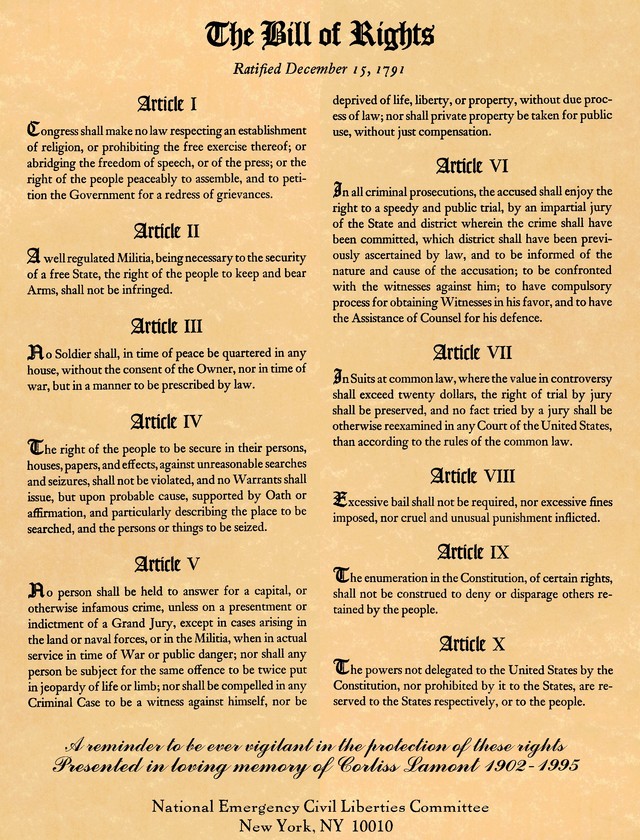
Governor Jindal, an alleged Presidential candidate, thinks that the First Amendment doesn’t apply to them, despite a well-publicized Supreme Court decision to the contrary. “If they come here to Louisiana, if they try to disrupt this funeral, we’re gonna lock them up,” Jindal said on “Face the Nation.”. “We won’t abide by that here…Let these families grieve in peace.”

Hmmmm. Appealing to ignorant voters. Grandstanding. Pandering. Abuse of power.  Talking as if the Constitution doesn’t exist. Threatening to break the law. Sounding like an idiot blowhard.

Just the guy to give Donald Trump a run for his money.


“I think abortion is evil, but it is a necessary evil.” Discuss.

Foetus-435110

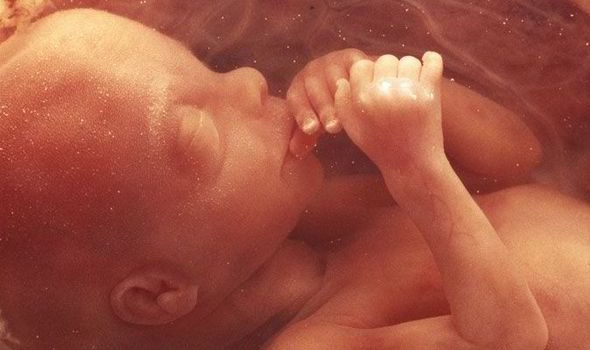
This blog doesn’t discuss evil very often because it is not a term appropriately associated with ethics. Evil is a concept related to morality. In an ethics discussion, I would take evil to mean something extremely, irredeemably unethical by any ethical analysis or system. The statement “I think abortion is evil, but it is a necessary evil” appeared parenthetically in a comment by Beth, a frequent commenter on Ethics Alarms who is a mother and a lawyer, regarding the Planned Parenthood videos. Though the news media appears to have successfully distorted that story by focusing only on whether the videos were evidence of illegal “trafficking in body parts” by Planned Parenthood, that was not the reason I posted the essays, and it is not the reason those videos are significant in the ongoing debate over abortion rights. Two high ranking individuals in the organizations casually discussed the crushing and crunching of the heads and torsos of living and helpless individuals with the sensitivity I would associate with stepping on a roach. If this doesn’t disturb you, it should. If it does disturb you, as it did Beth, what does that mean?

Abortion is one of the most important and difficult ethics issues in the culture, indeed in world culture. It involves millions of lives and millions of deaths, law, bioethics, religion, social policy, science, human rights and feminism, as well as society’s ultimate respect for life itself. I have written about the ethics of the abortion debate frequently (you can find most of the relevant posts here), but to summarize the Ethics Alarms views on the topic:

1. Abortion is an ethics conflict, meaning that there are ethical principles in opposition to each other, requiring society to set priorities.

2. The absolutist position on the anti-abortion side is that abortion involves the taking of innocent human life, which begins from conception, and is thus unethical in all cases. It is a strong position if one accepts the underlying assumption.

3. However, no absolute position is really absolute. Every ethics absolute has an exception, or several: there must be some circumstances when abortion is necessary and right. (This is not true of moral absolutes, since moral absolutes are self defining. If the power dictating a moral precept says it is absolute, it is so.)

4. The absolutist position on the abortion side of the argument holds that a woman’s right to have complete dominion over her body, reproductive activity and health justifies abortion in all cases. This is not a strong position, and in fact is one that cannot be honestly argued or sustained. It supports abortion on demand for any purpose or preference, entirely at the mother’s discretion.

5. To make that argument, extreme pro-abortion advocates have had to deny the humanity and human rights of unborn children, even to the point of arguing that they are not individuals at all, but mere “parasites,” or “tumors.” The removal of a second life from the equation that is at the core of the abortion problem makes the abortion decision easy and guilt-free; it also settles the debate by pretending the central issue doesn’t exist. That issue is that there is another life involved, not just the mother’s.

6. The debate over the ethics of abortion has been handicapped by the tactic of both sides to pretend a legitimate interest championed by the other doesn’t exist. A woman’s ability to control her own life, career and what happens to her body is an important societal issue, yet the term “pro-life” ignores it entirely. It is not the only important interest involved in the abortion decision, however, as the term “pro-choice” suggests.

7. Neither absolute position, whatever its theoretical virtues, is practical from a policy perspective. Desperate women who are pregnant will seek abortions, people will help then (or exploit them, or kill them), and public policy cannot pretend otherwise. Society will not tolerate punishing women for aborting their unborn children, whether they deserve to be punished or not. Yet allowing mothers to have unborn children killed on a whim leads to the callous, ugly, dangerous attitude toward innocent life on display in the Planned Parenthood videos. Callousness toward any human life, history has shown us, is a slippery slope with the potential of doing terrible harm to the culture.

8. Roe v. Wade was a premature Supreme Court decision and a badly reasoned one. Until and unless it is overturned, abortion is a right. That does not mean, and never meant, that abortion necessarily is right.

9. Because absolutism fails here, abortion is a problem that demands utilitarian analysis–balancing of interests and values, in the best interests of society, long and short-term, and everyone in it, according to the facts as we understand them.

10. Balancing requires an honest acknowledgement that there is something to balance. The “pro-choice” and “pro-life” dichotomy doesn’t acknowledge that in their most extreme incarnations, and since abortion is currently a right, the pro-choice lobby detects no reason to yield to logic, science and reality. Continue reading

KABOOM! TNT Promotes A Tainted Prosecutor As A Star

coldjustice

And all this time I believed that TNT reality star Kelly Siegler was a real star prosecutor who had actually convicted guilty people while observing the law and professional ethics.

Kaboom!

head_explodes

That was the sound of my brains exploding through the top of my skull, this time because they deserved to. I never learn.

Or is the state of prosecutorial ethics in the United States so wretched that Kelly Siegler is the best ex-prosecutor that TNT could find?

I’ll stick my neck out and say, “no.” I say that even though the state of prosecutorial ethics is pretty terrible. Kelly Siegler left her job as a Harris County, Texas district attorney in 2008 after successfully prosecuting 68 murder trials. In 2013, TNT signed her up to star in a reality show called“Cold Justice,” now in its third season on the cable network.

Good title! A state-court judge recommended a new trial for a Texas inmate named David Temple, prosecuted by Siegler in 2007  for allegedly killing his pregnant wife. He was convicted, but the court says the “legendary prosecutor” illegally withheld critical exculpatory evidence.  Wrote Judge Larry Gist in his opinion calling for a re-trial: “Of enormous significance was Siegler’s testimony at the habeas hearing that apparently favorable evidence did not need to be disclosed if the state did not believe it was true.”  Continue reading

More Signature Significance: The New York Times’ Deceit At Hillary’s Command

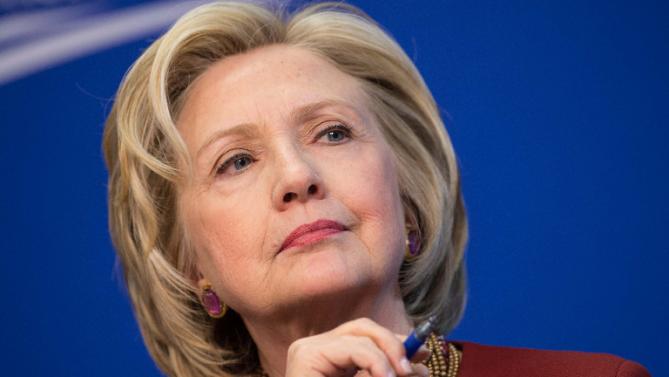
Hillary is not pleased. Get with the program, NYT!

Hillary is not pleased. Get with the program, NYT!

From Dylan Byers at Politico:

The New York Times made small but significant changes to an exclusive report about a potential criminal investigation into Hillary Clinton’s State Department email account late Thursday night, but provided no notification of or explanation for of the changes.

The paper initially reported that two inspectors general have asked the Justice Department to open a criminal investigation “into whether Hillary Rodham Clinton mishandled sensitive government information on a private email account she used as secretary of state.”

That clause, which cast Clinton as the target of the potential criminal probe, was later changed: the inspectors general now were asking for an inquiry “into whether sensitive government information was mishandled in connection with the personal email account Hillary Rodham Clinton used as secretary of state.”

The Times also changed the headline of the story, from “Criminal Inquiry Sought in Hillary Clinton’s Use of Email” to “Criminal Inquiry Is Sought in Clinton Email Account,” reflecting a similar recasting of Clinton’s possible role. The article’s URL was also changed to reflect the new headline. As of early Friday morning, the Times article contained no update, notification, clarification or correction regarding the changes made to the article.

One of the reporters of the story, Michael Schmidt, explained early Friday that the Clinton campaign had complained about the story to the Times.“It was a response to complaints we received from the Clinton camp that we thought were reasonable, and we made them,” Schmidt said…

This is, quite simply, the New York Times spinning for Hillary Clinton. The switch to the passive voice deceitfully implies that only the e-mail account, not the individual who created and used it, is being investigated for criminal misconduct. An account is inanimate: it can’t break the law. Only a human can do that. If the account is illegal or is used illegally, then the user, not the account, has broken the law. The original version of the story was fair and accurate, but because it properly called attention to Mrs. Clinton’s habitual dishonesty as well as her deceptive defense that her conduct in this matter was beyond reproach, the Clinton machine demanded that the supposed exemplar of American journalistic integrity further the campaign’s strategy of misdirection. The New York Times meekly complied, in the dead of night, like the lapdog it has become. Continue reading

Of Course Sandra Bland Shared Responsibility For What Happened To Her, And Other Observations On The Bland Tragedy

Let us stipulate that trooper Brian Encina behaved unprofessionally and atrociously by any standard in his handling of the vehicle stop of Sandra Bland in Prairie View, Texas, on July 10, setting into motion a series of events that led to Bland’s death by apparent suicide in a jail cell three days later. The police work shown by the dashcam video is unforgivable, and could be used in officer trainings on how not to handle a traffic stop.

That does not make him responsible for Bland’s death, however. He was not responsible for an incompetent bail system that had this woman in jail for three days, apparently because it was a weekend, and if she did take her own life (agreed: since her family has no reason to trust authorities at this point, nothing is likely to convince them of that no matter what the evidence, and also agreed, the suicide verdict looks mighty shaky at this point), that is, by law and logic, an intervening cause that exonerate the officer in Bland’s death. Activists will make the obvious Freddie Gray comparisons, but in this case there is no reason to believe that the officer, no matter how wrongful his conduct, either intended or contributed to her death. At worst, Encina is guilty of bad policing and using excessive force. This is not the Freddie Gray case, unless there was a dark conspiracy of frightening proportions.

Once again, however, a black citizen is dead after a confrontation with a white cop. For many pundits, civil rights advocates and black racists as well as irresponsible elected officials, that’s evidence enough that this was a racial incident. It isn’t evidence enough, however. The racial identities of the participants do not mean race was a factor, and absent some other facts that we have not learned about yet, any effort to suggest otherwise is nothing but the Zimmerman con, assuming racism unjustly to advance a political agenda. Let’s see if the Justice Department launches a civil rights investigation this time….again, assuming nothing more suspicious turns up.  That would be the smoking gun evidence of this DOJ’s bias. I wouldn’t bet against it happening. Continue reading

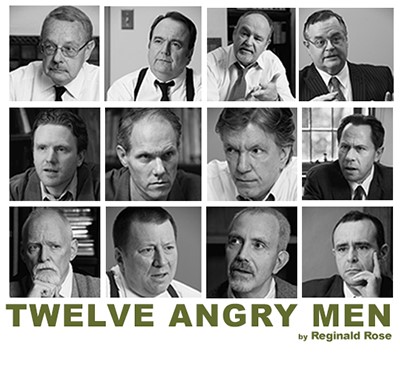
“Worlds Are Colliding!” If You’d Like To Meet The Ethicist And Blogger, Come See “Twelve Angry Men” And Meet The Director

12show_men

I’ve now received sufficient inquiries from readers to justify the risk of colliding my worlds as a professional stage director, an ethicist and a blogger.

The final production of my quixotic theater company in Arlington, Virginia, “Twelve Angry Men” by Reginald Rose, is playing through August 8. After that, the American Century Theater closes its metaphorical curtains (we perform in a black box theater, in the round for this show) forevermore after 2o rewarding, daring, frustrating years. I know a lot of Ethics Alarms readers live in the Washington D.C, area, and I would love to meet you face to face for a change, which, if you come to a performance, is easy (though you have to let me know when—I don’t see every one.)

You can get information and make reservations here; there are some representative reviews of the show here and here.  Some background on the theater’s closing is here. I’ve written about some ethics issues in the movie (which is the script I directed for the stage) here, here and here.

For many reasons, this is as good a version of the story as you are ever likely to see, and in all honesty and modesty, that includes the classic movie. The script is better live on stage than on film (it is about all the jurors and the jury as a unit, not just Henry Fonda), it cannot be done justice on a proscenium stage; the cast is superb, and the director is a lawyer, an ethicist and a successful stage director who has studied the script for 30 years and directed it three times before to work the kinks out.

If you come, I’ll seat you myself.

Hope you can make it.

Update: You can hear a podcast, hosted by me, about the production here.