Annals Of The Ethics Incompleteness Theorem: The Snuggle House And “The Dress Code Effect”

Awww! Who could object to a little snuggle?

Awww! Who could object to a little snuggle?

Almost any rule, low or ethical principle can be deconstructed using what I call border anomalies. The first time I was aware of it was as a Harvard freshman in the late Sixties, when all assumptions, good and bad, useful and not, were considered inherently suspect. The college required all students to wear jackets and ties to meals at the student union, and up until my first year, nobody objected. But that fall, my classmates set out to crack the dress code, so they showed up for meals with ties, jackets, and no pants, or wearing belts as ties, or barefoot. (Yes, there were a lot of future lawyers in that class.) Pretty soon Harvard gave up, because litigating what constitutes ties, jackets and “proper dress” became ridiculously time-consuming and made the administration look petty and stupid. Of course, there are good reasons for dress codes—they are called respect, dignity, community and civility—-but never mind: the dress code couldn’t stand against those determined to destroy them by sending them down the slippery slope.

If any rules are to survive to assist society in maintaining important behavioral standards, we have to determine how we want to handle the  effects described by  the Ethics Incompleteness Theory, which holds that even the best rules and laws will be inevitably subjected to anomalous situations on their borders, regarding which strict enforcement will result in absurd or unjust results. The conservative approach to this dilemma is to strictly apply the law, rule or principle anyway, and accept the resulting bad result as a price for having consistent standards. The liberal approach is no better: it demands amending  rules to deal with the anomalies, leading to vague rules with no integrity—and even more anomalies. The best solution, in my view, is to regard the anomalies as exceptions, and to handle them fairly, reasonably and justly using basic principles of ethics, not strictly applying  the rule or law alone while leaving it intact. Continue reading →

“Print the Legend” Ethics (Again): Does It Matter If Matthew Shepard’s Death Was Really A Hate Crime?

Powerful story; moving story; useful story. Does it matter if it isn't a true story?

Powerful story; moving story; useful story. Does it matter if it isn’t a true story?

It apparently matters to a lot of people for the wrong reasons—unethical reasons, in fact. As a result, legitimate efforts to determine what really happened to the gay rights icon, then a 21-year-old University of Wyoming student, who was beaten,  tortured and murdered  in Laramie, Wyoming  in 1998, have been exploited for ideological goals by adversaries of gay rights, and attacked by the media, gay rights advocates and good progressives everywhere. Just as it is important to the civil rights establishment, the black grievance community and anti-gun advocates that Trayvon Martin be seen as the innocent victim of a racist vigilante with murder in his heart—a characterization of Martin’s murder at war with all known facts and rejected by a jury after a fair trial—thus is it crucial to gay advocacy groups and others that Shepard be remembered as the victim of a hate crime, brutally killed because he was gay.

And facts be damned. Continue reading →

Psychic Found Guilty Of Fraud: Did She Know This Would Happen?

gypsy-fortune-teller2Now that the required joke is out of the way, I can more soberly state that the New York conviction of psychic Sylvia Mitchell for larceny and fraud opens up a welter of ethical, legal and religious issues. Law prof-blogger Ann Althouse is troubled by the result, writing,

“In my book, this is entertainment and unconventional psychological therapy. Let the buyer beware. Who’s dumb enough to actually believe this? Should the government endeavor to protect everyone who succumbs to the temptation to blow a few bucks on a fortune teller?”

Clearly not, and that’s where courts and states generally land in this matter, as in the case I wrote on three years ago, Nefredo v. Montgomery County. There the courts ruled (in Maryland) that it was an infringement of free speech for Maryland to ban what is, for most, just an exercise in supernatural entertainment. But the New York case involved a little bit more than that: Mitchell apparently bilked some clients out of significant amounts, getting $27,000 from one in an “exercise in letting go of money,”  $18,000 from another to put in a jar as a way to relieve herself of “negative energy,” and thousands from other clients to purchase “supplies” for various rituals—what does the eye of a newt go for these days?

Admittedly this seems to cross the line from harmless, if stupid, entertainment into preying on the stupid and gullible, but that doesn’t convince Althouse that the conviction, or the prosecution is a legitimate use of government power. She reminds us about the Supreme Court case of U.S. v. Ballard, in which the Court upheld the conviction of a faith healer for fraud. The SCOTUS majority, headed by William O. Douglas, held that if the faith healer didn’t believe in her claimed powers, then she was a fraud, and thus could be prosecuted under the Constitution if she used a claim of false powers to take money from her clients. In a sharp and thought-provoking dissent, Justice Robert Jackson wrote in part… Continue reading →

Cautionary Tales: When The Law Protects Unethical Creeps

Chaney_Chelsea

Two recent court rulings demonstrate how the law often cannot punish purely unethical conduct if it falls in the cracks of legal language and definitions. When that happens, however, it is incumbent upon the rest of the culture not to allow an Ethics Dunce, or worse,to escape without proper identification and condemnation.

Case A: Curtis Cearley

Director of technology services for the Fayette County (GA) school district.

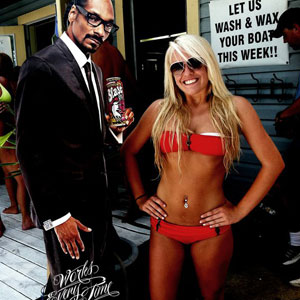
Fayette County high school student Chelsea Chaney used her Facebook page to post a photo of herself wearing a bikini and standing next to a life-size cardboard cut-out of rapper Snoop Dogg holding a can of Blast, the caffeinated alcoholic beverage he promotes. Although it was posted for the student’s friends, Cearley saw it, and used the comely photo in a  presentation at a public forum on the risks of sharing potentially embarrassing personal information on social media. He also used her name, identifying Chaney at the forum which was attended by parents, faculty and  students who attended school with her. He never alerted her, or asked her permission to use her photo as a “Don’t be like Chelsea!” example. The forum was titled “Once It’s There, It’s There to Stay.”

Horrible. This is a pure Golden Rule violation by Cearley, unfair, cruel, thoughtless, mean and intentionally  harmful to a minor, no less: Continue reading →

Ethics Quote Of The Week (“Believe It or Not!” Division): The 2nd U.S. Circuit Court of Appeals

“We fail to see any reasonable connection between this defendant, his conviction more than a decade ago, his failure to fill out paperwork, and the government-mandated measurement of his penis.”

—- The 2nd U.S. Circuit Court of Appeals, rejecting as “extraordinarily invasive”a Vermont sex offender treatment program that required David McLaurin, who was convicted of producing child pornography, to submit to “penile stimulation treatment” as a condition for supervised release. He was shown child pornography images as the blood flow to his penis was measured.

Cheer up, Alex...it could be worse, You could be in Vermont...

Cheer up, Alex…it could be worse, You could be in Vermont…

McLaurin was arrested in 2011 for violating the federal Sex Offender Registration and Notification Act, which requires offenders to register and keep current their address information. He  received a sentence of 15 months imprisonment with five years of supervised release.

“The size of the erection is, we are told, of interest to government officials because it ostensibly correlates with the extent to which the subject continues to be aroused by the pornographic images,” the opinion states, dryly. The testing was apparently developed by a Czech psychiatrist and used by the Czech government as a way to identify and “cure” homosexuals.

Uh, yes, I’d say the court got this one right.

Unbelievable.

______________________

Facts: ABA Journal


Heeeeeeeeeere’s JOHNNY’S BETRAYAL!!!!

henry_bushkin_johnny_carson

Lawyers are forbidden by the ethics rules of their profession in every state from divulging the secrets of their clients, their former clients, or even their dead former clients, except in the rare circumstances when doing so will save a life or prevent a crime, and often not even then. Client confidences include all information a lawyer learns about a client in the course of the representation whether or not it is germane to the representation or not, if the client would be embarrassed by the information or would want it to remain secret.

The duty to maintain client confidences goes to the core of the professional relationship between citizens and their lawyers, and any attorney who breaches it not only harms his or her client but undermines trust in the entire profession as well. So sacrosanct is the duty that a Massachusetts court agreed with the Fall River law firm that represented Lizzy Borden in her famous murder trial, when Lizzy’s heirs tried to force it to reveal whether she did, in fact, “give her mother forty whacks” (and her father forty-one) with an ax, that it could not reveal Borden’s secrets even in the interests of history.  The firm, said the court, was quite correct: Miss Borden hired it based on its lawyers’ assurances that her secrets were safe with the firm forever, and to allow otherwise now, even a century after the crime, would betray her trust and undermine the profession’s integrity. The Massachusetts Bar agrees.

So how can it be that Henry Bushkin, for decades the late Johnny Carson’s personal lawyer and thus charged with keeping the secrets of the famously reticent comic’s personal life, is now publishing a tell-all book filled with juicy stories about his conveniently dead client? Continue reading →

How Partisanship Makes Pundits Untrustworthy

Healthcare down

Ezra Klein is a relentlessly progressive Washington Post reporter. He’s obviously also a smart guy, and it is a shame that he has allowed his total immersion into pro-Democratic politics render him incapable of seeing current events in  anything but political combat terms. But that is what he has become, and as a result, his analysis of any issue must be considered pre-poisoned by the lack of any objectivity, and a rooting interest in “his side.”

Here is an instructive paragraph from his Post blog, in a post that was also re-written slightly as a column this weekend. He was nominally criticizing the Obama Administration’s Affordable Care Act website:

But the Obama administration did itself — and the millions of people who wanted to explore signing up — a terrible disservice by building a Web site that, four days into launch, is still unusable for most Americans. They knew that the only way to quiet the law’s critics was to implement it effectively. And building a working e-commerce Web site is not an impossible task, even with the added challenges of getting various government data services to talk to each other. Instead, the Obama administration gave critics arguing that the law isn’t ready for primetime more ammunition for their case.

Amazing, isn’t it? Continue reading →

The Ethics Of Demanding Charity

Joanna Leigh

Joanna Leigh

I can not imagine much more heartbreaking plights than that of Boston Marathon bombing victim Joanna Leigh.

By April 14, 2013, Leigh, 39, had a newly minted doctorate in international development, and a promising career as a consultant. On April 15, she was at the finish line of the marathon, waiting for a friend to cross it, when the second of two bombs exploded ten feet from her. She was shielded from the deadly flying metal by other spectators, but still knocked unconscious. When she awoke, there was chaos around her, people screaming, maimed, covered with blood. She helped some injured find help, and then, dazed, walked home. For various reasons, she did not get herself checked out at a hospital until more than a week had passed.

Gradually, however, the symptoms of her injuries began appearing. Soon, it became obvious that the closed head injuries she suffered in the explosion have caused devastating long-term damage to her brain, and it is doubtful that her life will ever be normal again. Today, she says, she has to sleep most of the day. She cannot work or drive, and is easily disoriented, even getting lost on her own block. She has blurred vision, her hearing is impaired and she cannot avoid the constant ringing in her ears. Concentration has become difficult, and the simplest everyday tasks are overwhelming.   Continue reading →

Hindsight Bias Case Study: Shooting D.C.’s Post Partum, Mad-Dog Driver

"Ok, now, let's talk about this: what other options do we have to stop this mad-dog driver, other than shooting her? Ma;'am, will you pleas take 5 in your murderous rampage while we meet? Ma'am?"

“Ok, now, let’s talk about this: what other options do we have to stop this mad-dog driver, other than shooting her? Ma;’am, will you pleas take 5 in your murderous rampage while we meet? Ma’am?”

Hindsight bias isn’t the worst or most pernicious reasoning fallacy, but it may be the most annoying, and is certainly the most common. After an event in which one or more instant decisions had to be made in seconds or minutes, critics with time a-plenty solemnly explain how they would have done things differently, and how the original decision-maker was stupid, cowardly, misguided, incompetent, unethical, or even criminal. The most striking example of a hind-sight bias victim in recent years is Penn State’s Mike McQueary, but at least in his situation there is room for argument, though I argued here that few of his critics can know how they would have responded under similar circumstances. In the case of this week’s shooting of a crazed Capitol Hill kamikaze motorist, later determined to be a troubled dental hygienist who may have been suffering from post-partum depression, I don’t think the criticism is rational, fair or justified, and shows hindsight bias at its worst.


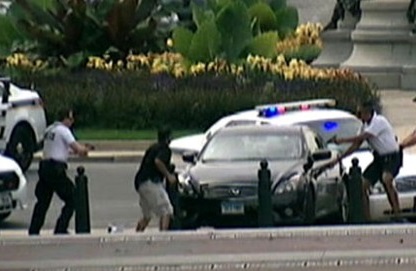
Of course the Secret Service had to shoot her. It would have been reckless and negligent had they not. She had tried to crash through the White House barricades in an automobile. She had run down one officer, for all anyone knew at the time, fatally. She was refusing to stop, and was near D.C.’s Union Station, where there are people everywhere, and a car can easily run up on the sidewalks, which are wide. She had to be stopped immediately, or innocent people, maybe many people, were likely to die.

After she expired from the shots fired at her (but not before peeling away at a high speed), it was determined that the driver, later identified as Miriam Carey, was unarmed. The shooting agents didn’t know that, so it’s irrelevant. Besides, she was armed, with a deadly vehicle, and her motives were unclear. For all the officers knew, she was trying to kill as many pedestrians as she could. This wasn’t a typical situation or traffic stop. This was occurring at the center of our government, and security officers have to take enhanced precautions. The welfare of the individual causing the threat is not, and should not be, the primary concern.

Two factors in the incident seem do drive the unethical amateur second-guessing. One was that the woman’s toddler was in the car, and might have been harmed. This was not the Secret Service’s problem. Carey put her daughter in harm’s way, and if her conduct resulted in the child’s injury or death, she would have been totally responsible, not the agents who shot into the car. (They apparently were not aware of the child’s presence, so again, this in not a fair factor to consider after the fact.) The other factor: guns were involved. Thanks to programmed paranoia and gun-phobia irresponsibly planted in the culture by anti-gun zealots, many, too many, Americans arrive at a reflex position that any gun-related death is unnecessary, because guns, after all, are evil and should be banned. Such opinions should be treated as the products of deranged minds, or excessive Piers Morgan viewing.

A Facebook friend (and regular friend too), a distinguished and intelligent former journalist who I’m sure won’t mind my quoting him, asked his social network, “WAS THERE NO OTHER WAY?” That question is the epitome of hindsight bias. Sure there were other ways. Maybe an agent could have dived in the car window and dislodged her. Maybe a well-aimed shot at her hands could have made it impossible to drive. Perhaps they could have shot out the tires, hoping that the driver didn’t realize that you can still make a car with flat tires move at a pretty good clip, at least for a while. An electro-magnetic pulse might have stopped all the engines in the vicinity, neutralizing the car. Maybe Batman was nearby, or Corey Booker. None of that matters, because the security officials involved were in a unique and unprecedented situation, and had to accomplish their prime objective, stopping a dangerous individual in a highly populated area, under pressure, while in peril themselves, as quickly as possible. The proper question is not whether they could have done better, upon calm analysis and reflection. The question should only be, “Was the response reasonable under the circumstances?”

It was.

________________________________

Sources: Washington Post 1, 2

Ethics Quiz: Peter’s Problem

40 years from now, would you book Kaitlyn Hunt for your Congressional campaign fundraiser? Should you...if she's become a famous and beloved singer?

40 years from now, would you book Kaitlyn Hunt for your Congressional campaign fundraiser? Should you…if she’s become a famous and beloved singer?

Shelly Stow, an occasional commenter here who blogs provocatively at With Justice For All about the harassment and persecution of former sex offenders, raised the topic of today’s Ethics Quiz. She  posted about the plight of Peter Yarrow, the Peter in Peter, Paul and Mary, now, thanks to cruel mortality, just Peter and Paul. I was not aware of this, but in 1970, when he was 30 and a rather significant star, he had sexual relations with a 14-year-old girl. Shelly is wrong to call this “consensual,” for 14 is statutory rape territory. The law declares that a 14-year girl is a child and not capable of meaningful consent, and fans of  Roman Polanski, Woody Allen and Kaitlyn Hunt notwithstanding, it is quite right. He pled guilty to something less than rape, and served a three-month sentence; he is also, as a result, a registered sex offender. President Jimmy Carter pardoned him in 1981.

Yarrow, as Sixties folk singers tend to be, is a social activist, and is politically active as well. Not for the first time, his child molesting past became an issue recently when he  agreed to sing at a campaign event for Martha Robertson, a Democrat running for Congress in New York against incumbent Republican Tom Reed. A spokesman for the RNC told the media,

“It is absolutely deplorable that Martha Robertson would kick off her congressional campaign by having a convicted sex offender headline her fundraiser. If Robertson’s judgment is so bad that she would even entertain the idea of raising money with a man who molested a 14-year-old girl, she has no business representing the people of the 23rd District of New York in Congress.”

He also said Robertson should cancel the fundraiser and return any money she raised with Yarrow’s support.

Shelly writes,

“What is wrong with this scenario? Our criminal justice system is comprised of one part punishment and one part rehabilitation. The purpose of the punishment is to bring about rehabilitation. Sometimes it works like it is supposed to. Mr. Yarrow committed a crime in 1969. That is over 40 years ago. He served his court ordered punishment, and in light of the fact that there has been no re-offense in over 40 years, I think we are safe in declaring him rehabilitated. Everything worked just like it is supposed to. What then is the problem? Is rehabilitation not good enough for some? Is there some other standard of measure needed?”

This launches the Ethics Alarms Ethics Quiz for this weekend, which I will phrase this way:

Is it unfair for Peter Yarrow to still face criticism, suspicion and condemnation based on his crime of 40 years ago, for which he has been both punished and pardoned?

For this one, I am not at all certain of the answer, and will be very interested in your responses, not that I am not always.

Here are some of the considerations that have me, to paraphrase the title of one of the hit pop songs Mr. Yarrow helped to write, “Torn Between Two Answers.” Continue reading →