Ethics Observations On The Left’s Unethical Three Freakout Day

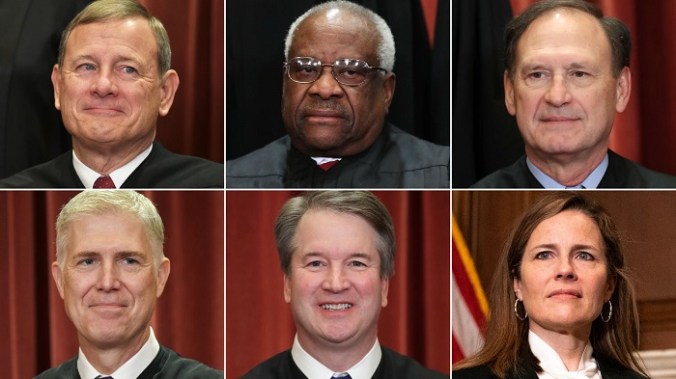
Yesterday’s clean and persuasive Supreme Court decision finally striking down racial discrimination in university admissions after decades of pretending it wasn’t the Consitutional offense it was was followed by two more sound Constitution-based decisions that were as important as they were necessary. All three were quickly attacked as “partisan” and “extreme” when they were neither, except to those who find the boundaries imposed by our nation’s traditional democratic principles overly obstructive to their schemes.

Finally ruling on a lawsuit brought by six state governments, the Supreme Court rejected President Biden’s insane $430 billion student loan forgiveness plan as illegal because it was never authorized by Congress. In a cynical, Harry Reid-ish strategem to buy the 2022 mid-term elections, Biden had announced a $430 billion gift to mostly middle-class and wealthy citizens who were unable or unwilling to do what millions of Americans in their exact situation had done: paying back money they owed for a benefit they had received. In many ways it was progressive irresponsible government at its worst. The Constitution gives Congress, not the the White House,the power to determine how federal funds are spent. As Illya Somin wrote yesterday, “If the administration had won, Biden and future presidents would have been empowered to use vague statutes to usurp Congress’ constitutional control over the federal budget. Moreover, because of the context for this case, it also would have allowed the president to abuse emergency powers for partisan ends.”

The “partisan” accusation was especially dishonest (Vox: “The Supreme Court’s lawless, completely partisan student loans decision, explained”) since that famous right-wing partisan Nancy Pelosi had endorsed the position of the SCOTUS majority just two years ago, saying, “People think that the President of the United States has the power for debt forgiveness. He does not. He can postpone. He can delay. But he does not have that power. That has to be an act of Congress.” Chief Justice Roberts included her statement in his opinion for the majority, but facts don’t matter. The increasingly unhinged progressive mob, aided and abetted by the mainstream media, pronounced the decision the product of an “extreme” conservative majority running amuck.

Continue reading

This Is How The Dean Of Berkeley Law School Teaches Ethics To His Students…

Nice. Violate the law, ignore basic fairness, and honesty, but as long as you don’t tell anyone and can’t be caught, it’s okay.

Chemerinsky is a well-established partisan hack whose legal commentary is almost always polluted by his leftist agenda, but this was low even for him. Do you ever wonder where unethical lawyers come from?

Classes like his.

And professors like him. Yale Law School’s Dean, Georgetown Law Center’s Dean, and others supposedly overseeing the training of tomorrow’s legal professionals have similarly made it clear with their actions and words that ethics are secondary to their political and social agendas. None have done so quite as flagrantly and smugly as Chemerinsky, however.

SCOTUS Strikes Down Harvard’s Affirmative Action Admissions Policy

Good.

Much about this was predicted and predictable: the split, 6-3, in which the diversity trio (A wise Latina, the historic black woman, and a lesbian) took their required stand, and the decision’s spokesjustice, Roberts, who had signaled this result by famously saying, last time around this controversy, “The way to stop discrimination on the basis of race is to stop discriminating on the basis of race.” However, many thought the opinion would ultimately provide wiggle room for colleges, and it does not. From the opinion, here, by Chief Justice Roberts, who reflected on Justice Sandra Day O’Connor’s observation in a previous affirmative action case that “25 years from now, the use of racial preferences will no longer be necessary to further the interest approved today” (which signaled that the Court was allowing an exception to Constitutional requirements continue for a limited period):

Twenty years later, no end is in sight. “Harvard’s view about when [race-based admissions will end] doesn’t have a date on it.” Tr. of Oral Arg. in No. 20–1199, p. 85; Brief for Respondent in No. 20–1199, p. 52. Neither does UNC’s. 567 F. Supp. 3d, at 612. Yet both insist that the use of race in their admissions programs must continue.

But we have permitted race-based admissions only within the confines of narrow restrictions. University programs must comply with strict scrutiny, they may never use race as a stereotype or negative, and—at some point—they must end. Respondents’ admissions systems—however well intentioned and implemented in good faith—fail each of these criteria. They must therefore be invalidated under the Equal Protection Clause of the Fourteenth Amendment….

It is true that our cases have recognized a “tradition of giving a degree of deference to a university’s academic decisions.” Grutter, 539 U. S., at 328. But we have been unmistakably clear that any deference must exist “within constitutionally prescribed limits,” ibid., and that “deference does not imply abandonment or abdication of judicial review,” Miller–El v. Cockrell, 537 U. S. 322, 340 (2003). Universities may define their missions as they see fit. The Constitution defines ours. Courts may not license separating students on the basis of race without an exceedingly persuasive justification that is measurable and concrete enough to permit judicial review.

I particularly want to applaud Roberts’ clear statement that the use of “diversity” by colleges to justify discrimination is undefined, pie-in-the-sky hooey, if not outright flim-flammery:

Unlike discerning whether a prisoner will be injured or whether an employee should receive backpay, the question whether a particular mix of minority students produces “engaged and productive citizens,” sufficiently “enhance[s] appreciation, respect, and empathy,” or effectively “train[s] future leaders” is standardless. 567 F. Supp. 3d, at 656; 980 F. 3d, at 173–174. The interests that respondents seek, though plainly worthy, are inescapably imponderable.

Later, the Chief chides Harvard et al. for the obvious phoniness and arbitrary nature of their categories:

Continue reading

A Student Wrongly Accused Of Rape Can Seek Damages From His Accuser, And Rightly So

Maybe this case helped convince Donald Trump that he should sue E. Jean Carroll, the victorious plaintiff in the sexual assault case against him, for defamation.

The Connecticut Supreme Court ruled 7-0 that a former Yale student is not immune from being sued for defamation by the male student she accused of raping her. Saifullah Khan was found not guilty in a criminal trial of raping “Jane Doe” in her dorm room in October 2015 in what Khan insisted, and a jury agreed, was an incident of consensual sex. Yale had expelled Khan using the “preponderance of the evidence” standard forced on educational institutions by the Obama Department of Education.

The court determined that because Khan had fewer rights to defend himself in university proceedings, which, again prompted by the Obama administration, provided limited due process protections, his accuser should not benefit from the civil immunity granted to witnesses in criminal proceedings. “Statements made in sexual misconduct disciplinary proceedings that are offered and accepted without adequate procedural safeguards carry too great a risk of unfair or unreliable outcomes,” the unanimous opinion held.

Continue reading

Unethical Quote Of The Month (And Incompetent Elected Official): Vice-President Kamala Harris, Part 2: Harris Has Directly Violated California’s Legal Ethics Rules

There is another aspect of Kamala Harris’s attack on the Supreme Court majority on Dobbs that bears noting.

In most jurisdictions, a lawyer may not publicly impugn the integrity of a sitting judge, and certainly not a Supreme Court Justice.

Here is the relevant rule in California, one of the jurisdictions with the duty to oversee her conduct. California’s position is that a member of its bar is subject to California rules no matter when the lawyer violates them.

Rule 8.2 Judicial Officials – State Bar of California:

(a) A lawyer shall not make a statement of fact that the lawyer knows* to be false or with reckless disregard as to its truth or falsity concerning the qualifications or integrity of a judge or judicial officer, or of a candidate for election or appointment to judicial office.

Comment “To maintain the fair and independent administration of justice, lawyers should defend judges and courts unjustly criticized. Lawyers also are obligated to maintain the respect due to the courts of justice and judicial officers.”

If there is a California lawyer reading who wants to take a stand for the integrity of the ethics rules, a formal complaint to the would be apt and appropriate.

[The graphic above represents my assessment of the likelihood that the California Bar would ever enforce its rules against a good, abortion-loving Democrat for attacking the U.S. Supreme Court.]

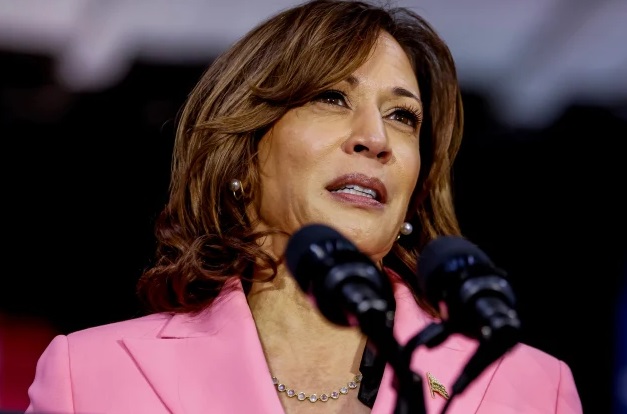
Unethical Quote Of The Month (And Incompetent Elected Official): Vice-President Kamala Harris

“How dare they?”

Vice-President Kamala Harris on June 24 referring to the U.S. Supreme Court on the anniversary of the Dobbs v. Jackson Women’s Health Org. ruling that finally overturned Roe v. Wade.

This wasn’t the usual infantile babbling that characterizes most of Harris’s public appearances: Ethics Alarms has pledged to skip most of those in fealty to the Julie Principle. That quote is far worse, more significant and sinister. It’s so unethical and outrageous that I initially didn’t believe she could have been referring to the Supreme Court: most of the mainstream media accounts and even the edited videos left out the context of that outburst, so, giving the Vice-President of the United States the benefit of the doubt and assuming that surely, surely, she could not be framing a duly rendered majority ruling on the U.S. Constitution by the independent branch of the government charged with that duty by the Founders in such an ignorant, misleading and inflammatory manner.

She was, however. In fact, she had made the same fatuous, irresponsible and obnoxious statement before, a year ago, and is apparently so proud of her demagoguery that she deemed it worthy of an encore. I thought, and hoped, that her “How dare they?” was at least in the context she placed it in this past January, but no. (That is also an unethical and despicable bit of demogoguery, notable for Harris’s characterization of the famous statement in Thomas Jefferson’s masterpiece as “A promise we made in the Declaration of Independence that we are each endowed with the right to liberty and the pursuit of happiness.” Huh. Sounds funny. Isn’t there something missing there? Something that unborn Americans might think is important? I’m sure I’ll think of it in a minute…

But no. I could find no news report that placed this “How dare they?” in the context Harris placed it last week, but a video I can’t embed, available here on the Washington Post website, makes it clear.

In order to make such a dangerous statement, Harris has to also mislead the public into believing that, as she falsely said in January and periodically since, the United States Supreme Court “took away… a fundamental right, a basic freedom from the people of America.” Whatever one thinks should be the law or laws regarding abortion, it was never “a fundamental right, a basic freedom.” It was a Court-made right, and the Supreme Court isn’t empowered to make rights. “Fundamental rights” are the enumerated rights in the Bill of Rights and the subsequent amendments, passed by Congress and the states, in the Constitution. Roe was a bad, political, incompetent decision that most legal scholars, even those who favor abortion, admitted was wrongly decided. (If she ever had chosen to be candid about the issue, it is likely that even the sainted Ruth Bader Ginsburg recognized this.) Roe survived for so long because a parade of Justices lacked the votes and guts to overturn it.

Continue reading

About This Exchange Between A Reporter Last Week And The White House’s Non-Historic, Non-Incompetent Paid Liar And The Later Response By The White House’s Historic, Incompetent Paid Liar…

1. How can the White House not have a response prepared for this question?

2. How long can the mainstream media refuse to give this slowly exploding story the attention and coverage it obviously deserves?

3. It is true that everybody—I think literally everybody—knew that Joe Biden was lying when he said his son had “done nothing wrong” and when he said that he never discussed Hunter’s dealing with foreign governments with him. But is it possible that the President, his advisors and his party really think that they can duck the scandal with the Clinton “Deny, deny, deny!” formula?

Continue reading

A Barn Door Fallacy Classic From California

California was the only U.S. jurisdiction that had no version of American Bar Association Rule 8.3, which reads in part, “A lawyer who knows that another lawyer has committed a violation of the Rules of Professional Conduct that raises a substantial question as to that lawyer’s honesty, trustworthiness or fitness as a lawyer in other respects, shall inform the appropriate professional authority.”

“Shall” means must, and thus, theoretically, a lawyer who does not report a lawyer for misconduct that amounts to a serious legal ethics violation is himself or herself committing such a violation as well. That’s the theory.

The California legal community has just gone through a spectacular scandal. Tom Girardi, a famous and much-acclaimed plaintiffs trial lawyer, was disbarred after it was discovered that he had defrauded many clients and illegally obtained millions of dollars in the process. The California bar’s investigation report was horrific: his corrupt activities were successful for so long in part because he recruited—and bribed—members of the State Bar leadership and the organization’s employees. Over a hundred lawsuits had been filed against Girardi by clients for misappropriation of funds, but his record with the Bar remained pristine.

Shortly after the ugly story broke, California began to take steps to add some form of 8.3 to its Rules of Professional Conduct governing the ethics of its members, a cynical and useless move designed to appear responsible. It was also an example of what Ethics Alarms calls “The Barn Door Fallacy,” a phenomenon most common today in the area of post-tragedy gun legislation. After a high-profile disaster, the response is to “do something” that supposedly would have prevented the disaster if it had been in place earlier. Usually, as in this case, the reality is that it would not.

Rule 8.3 is something of an illusion anyway. Bar associations are reluctant to second guess a member and punish him or her for their personal assessments of what kind of conduct constitutes “raising a substantial question as to that lawyer’s honesty, trustworthiness or fitness as a lawyer in other respects.” Stealing money from a client is definitely in that category, but proving that another lawyer “knows” about such conduct as opposed to “suspecting” it is not easy. Most bar counsel have no stomach for it, and prosecutions are absurdly rare.

The fact that 8.3 is called the “Snitch Rule” in the profession tells you how most lawyers feel about it. In general, lawyers tend to make ethics complaints to their bars about adversaries. Blowing the whistle on one’s own firm member, a powerful partner, a close colleague or a friend is rarer than—well, pick your metaphor, I’m not feeling clever today.

To see how the news out of California is even less than meets the eye, note how the state’s version of 8.3 is narrower than any other state. It reads,

Continue reading

Where Reporting Ends And Propaganda Takes Over: The NYT On Affirmative Action

Dominating today’s New York Times front page (above) is a report headlined “How It Feels to Have Your Life Changed By Affirmative Action” online and “Inside the Lives Changed by Affirmative Action” in the print version of the Times. The piece is naked and blatant advocacy for the Constitution- and U.S. law-violating policy that has been given temporary pass by a conflicted Supreme Court multiple times despite an unavoidable fact: it’s discrimination, and the Constitution doesn’t distinguish between good discrimination and bad discrimination. By the principles and values this nation was founded upon, all discrimination on the basis of qualities like religion, race, gender and ethnicity is wrong.

The Times approach to the subject is similar to its coverage of the illegal immigration controversy. In that matter, as periodically pointed out by Ethics Alarms, the Times has given readers frequent heart-warming tales of “the good illegal immigrant,” a hard-working immigration law violator who is the salt of the earth, a wonderful parent, and yet cruelly held accountable for his or her law-breaking anyway. The motive of such articles seems clear: use emotions to overcome and blot out law, ethics, fairness and common sense. As the Supreme Court seems poised to finally call college and university affirmative action programs what they are: illegal, the Times is trying to build support for its favorite party’s inevitable accusations of racism and illegitimacy against the five or six justices who will have simply done their jobs.

The headlines tell it all. Affirmative action changed the lives of its beneficiaries for the better, so obviously, affirmative action is good, and ending it would be unethical. What is striking about the article is that none of the affirmative action beneficiaries—all black—interviewed appear to have given a second’s thought to the individual whose opportunity they seized because of their “better” color. Some express regrets because they faced, or felt like they faced, skepticism about their degrees or career accomplishments because they were presumed to be “undeserving” affirmative action beneficiaries. None hint at any regret that someone who deserved to be accepted to an elite school or program was not so they could be.

Continue reading

The Weenie Mandate

Elsewhere on Ethics Alarms are a few posts defending the decision by employers to fire employees who have physically intervened in attempted robberies, sometimes to the extent of capturing the thieves. Such individuals are usually hailed as heroes by the media and the public, and the stores that discipline them are assailed as heartless ingrates. The companies are on solid ground, ethically, legally and practically. Typically, there are policies in the employees handbook specifically laying out how robberies are to be handled. Physical intervention not only risks the would-be hero’s well-being, but the welfare of other employees as well. When a staffer’s amateur law-enforcement act goes well, it is still just moral luck.

Unfortunately, this sensible policy has had illicit relations with the “shoplifting should be a crime” mutants, and the result is one frightening deformed offspring. Thanks to woke brain rot seeping through San Francisco and other urban areas, viral videos show staff just standing by politely as people forage through store shelves, sometimes returning several times.

The woman above, Mary Ann Moreno, had worked at Circle K for 18 years. Moreno was behind the counter when Tyler Wimmer walked into the convenience store with a knife, and asked Mary if she would give him a pack of cigarettes for free. Moreno declined. When he grabbed a pack anyway, she instinctively reached out and touched him, then pulled away. Based on the surveillance tapes, the company fired her for violating the company’s “Don’t Chase or Confront Policy” regarding shoplifters and robbers. Moreno is now suing Circle K Stores Inc. Her attorney, Iris Halpern, said the footage clearly shows that Moreno acted in self-defense and made no real effort to stop or chase Wimmer. “Companies have not sufficiently thought through the nuance in these situations,” she says.

Continue reading