“But let’s be clear about this as well. There should be no place on any campus, no place in America for antisemitism or threats of violence against Jewish students. There is no place for hate speech or violence of any kind, whether it’s antisemitism, Islamophobia, or discrimination against Arab Americans or Palestinian Americans. It’s simply wrong. There is no place for racism in America. It’s all wrong. It’s un-American.”
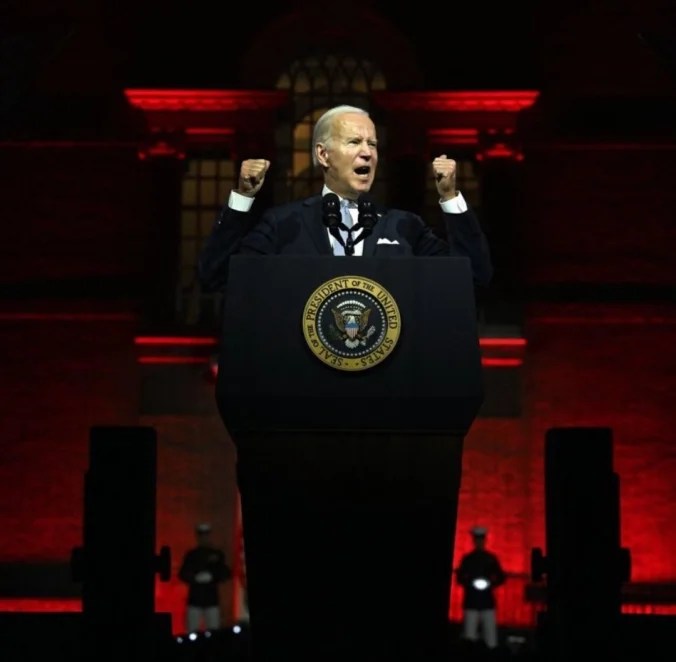
That’s President Biden in his long delayed statement regarding the pro-Hamas, anti-Israel, anti-Semitic demonstrations breaking out in college campuses and in cities across the country. As usual, he isn’t clear at all. There have been no demonstrations against Muslims or Arab Americans. What does Islamophobia have to do with the price of bacon, as my father used to say?
The problem at hand is mobs calling for the eradication of Israel, the sole bastion of democracy in the Middle East, and the death of Jews. Those involved are actively declaring their support for Hamas and Palestinian terrorism, meaning, again, advocating the eradication of Israel and the death of Jews.
Throwing this unique and particularly horrible outbreak of ethic and religious hate, discrimination and persecution under the huge progressive abused-minority tent with Arabs and Muslims deliberately dilutes accountability. Americans are justly wary of Islam, with its declared determination to wipe out infidels, and nobody ever set out to exterminate six million Arabs. Nobody murdered an Arab or Palestinian Olympic team, either. Anti-Semitism is different in kind, in great part because it is centuries old lingers in cultures and societies like the shingles virus, ready to break out without warning.
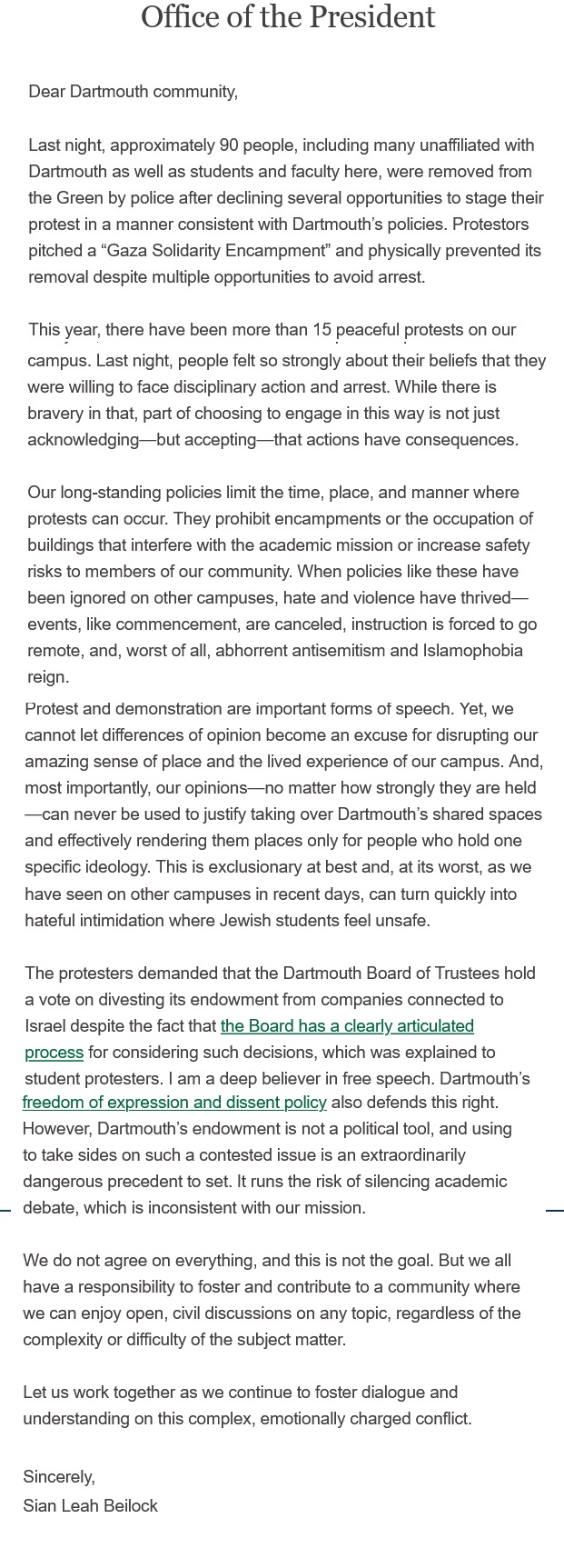
Dartmouth alumnus Curmie—Can’t you just picture him leading that horse into the Dean’s office?—shared this letter he received as a member of the “Dartmouth community” from the school’s first female president, Dr. Sian Leah Beilock. It stands in stark contrast to the nauseating Columbia letter dissected here, and Emerson College’s president’s equally revolting letter I posted on here.
Yes, it’s more diplomatic than my letter would be, but that’s why I’m not a college president. And yes, Beilock’s use of the breathless “amazing”—apparently now taking over from “awesome”—is a bit disturbing coming from an adult in high places, but never mind. She has rescued some of the tarnished honor of the university presidents’ club.
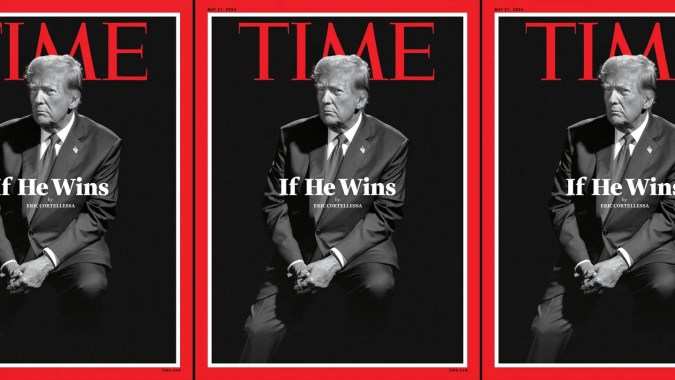
To get to the main point right up front: I believe that the gag order Judge Juan Merchan has imposed on Donald Trump during the contrived “hush money” trial is election interference to the core, and unconstitutional when applied to a Presidential candidate in an election year. The ACLU l declared another judge’s gag order on Trump as unconstitutional last fall, and you know what it takes to make the ACLU side with the “bad guys” in the 21st Century. Nonetheless, I believe any and all gag orders that could be enforced on Trump would benefit the nation, Trump supporters and Donald Trump himself.
If he could just keep his big trap shut and stop the ALL CAPS Truth Social posts he would breeze to victory. The man has no filters, wretched judgment, and the mastery of the English language of a Brooklyn street urchin on the autism spectrum. Who knows what he’ll say between now and November that will be either misreported as an admission of evil intent, or will in fact be so awful that it loses him millions of votes overnight? Continue reading →
Several things led me to re-posting this Ethics Alarms entry from 2017.
First of all, the MLB network showed a documentary on the career of George Brett today, and scene above, with Brett erupting in fury at the umpire’s call voiding his clutch, 9th inning home run, is one of the classic recorded moments in baseball history. There was also a recent baseball ethics event that had reminded me of Brett’s meltdown: Yankees manager Aaron Boone was thrown out of a game because a fan behind the Yankees dugout yelled an insult at the home plate umpire, and the umpire ejected Boone thinking the comments came from him.. When Boone vigorously protested that he hadn’t said anything and that it was the fan,Umpire Hunter Wendelstedt said, “I don’t care who said it. You’re gone!”
Wait, what? How can he not care if he’s punishing the wrong guy?
“What do you mean you don’t care?” Boone screamed rushing onto the field a la Brett. “I did not say a word. It was up above our dugout. Bullshit! Bullshit! I didn’t say anything. I did not say anything, Hunter. I did not say a fucking thing!” This erudite exchange was picked up by the field mics.
There was another baseball ethics development this week as well, one involving baseball lore and another controversial home run. On June 9, 1946, Ted Williams hit a ball that traveled a reported 502 feet, the longest he ever hit, and one of the longest anyone has hit. The seat was was painted red in 1984 (I’ve sat in it!), and many players have opined over the years that the story and the seat are hogwash, a lie. This report, assembling new data about the controversy, arrives at an amazing conclusion: the home run probably traveled farther than 502 feet.
But I digress. Here, lightly edited and updated, is the ethics analysis of the famous pine tar game and its aftermath:
***
I have come to believe that the lesson learned from the pine tar incident is increasingly the wrong one, and the consequences of this extend well beyond baseball.
On July 24, 1983, the Kansas City Royals were battling the New York Yankees at Yankee Stadium. With two outs and a runner on first in the top of the ninth inning, Royals third baseman George Brett hit a two-run home run off Yankee closer Goose Gossage to give his team a 5-4 lead. Yankee manager Billy Martin, however, had been waiting like a spider for this moment.
Long ago, he had noticed that perennial batting champ Brett used a bat that had pine tar (used to allow a batter to grip the bat better) on the handle beyond what the rules allowed. MLB Rule 1.10(c) states: “The bat handle, for not more than 18 inches from the end, may be covered or treated with any material or substance to improve the grip. Any such material or substance, which extends past the 18-inch limitation, shall cause the bat to be removed from the game.” At the time, such a hit was defined in the rules as an illegally batted ball, and the penalty for hitting “an illegally batted ball” was that the batter was to be declared out, under the explicit terms of the then-existing provisions of Rule 6.06.
That made Brett’s bat illegal, and any hit made using the bat an out. But Billy Martin, being diabolical as well as a ruthless competitor, didn’t want the bat to cause just any out. He had waited for a hit that would make the difference between victory or defeat for his team, and finally, at long last, this was it. Martin came out of the dugout carrying a rule book, and arguing that the home run shouldn’t count. After examining the rules and the bat, home-plate umpire Tim McLelland ruled that Brett used indeed used excessive pine tar and called him out, overturning the home run and ending the game.
Brett’s resulting charge from the dugout (above) is video for the ages. Continue reading →
Thinking about that last post and the issues it raises as I was walking Spuds in the rain just now took me to an epiphany, and an embarrassingly late one.
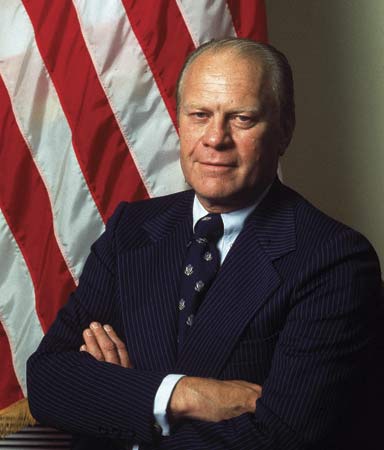
Gerald Ford’s pardon of Richard Nixon was more important and crucial than I realized then. It was only one gutsy and maybe prescient act in an otherwise short and undistinguished Presidency, but it delayed the current crisis for half a century.
The conventional wisdom is that Nixon would have been prosecuted for his Watergate involvement, and that the event would have been a divisive and traumatic spectacle that a nation just getting past the Vietnam debacle could ill afford. That wasn’t what was going to happen, though, I now realize. (And I have never read or heard anyone acknowledge this.)
Had he been charged with any crime, Nixon would have immediately claimed immunity just as Trump is now. For the rest of his life, Nixon routinely said that “if the President does it, it’s not illegal.” What would the Supreme Court have ruled in 1975? Here is the Court then:
Chief Justice Warren Burger William J. Brennan Potter Stewart Byron White Thurgood Marshall Harry Blackmun Lewis F. Powell William H. Rehnquist
The only two reliable liberals on the Court were Marshall and Brennan, but the conservatives were more moderate and less doctrinaire than today’s SCOTUS majority. I have no idea what that group would have done with the immunity issue, and I’m glad we didn’t have to find out.
I have long thought Joe Biden was an idiot, even before he started losing brain cells like a scalp shed dandruff, and the complete fecklessness of the 21st Century mutation of the Democratic Party has been brain-blowing for quite awhile as well. This sequence, however, is signature significance for an administration without any internal logic or ethical compass at all:
1. Hamas (a.k.a. the government of Gaza) launches a brutal sneak attack on civilians in Israel, raping women, killing babies, and taking hostages. The U.S. condemns the attack and proclaims its full support of Israel.
2. Israel, appropriately and necessarily, declares war on Hamas (and therefore Gaza), vowing that it will not permit the terrorist organization to exist literally next-door. The U.S. provides economic aid and weapons to the effort.
3. Israel’s assault kills Gazans as well as Hamas fighters, which is how Hamas intends it, because the Hamas tunnels containing war material and fighters is deliberately positioned under schools, hospitals and other structures that turn Gazans into human shields.
In a 20-0 vote, the National Association of Intercollegiate Athletics (NAIA for short), the governing body for small colleges, ruled that it was unfair to allow transgender athletes to compete against biological women in women’s sports. The NAIA now becomes the first college sports organization to have the courage and integrity to make such an obvious and necessary rule to protect women’s advances in athletic, as the other groups, like the NCAA, waffle, stall, engage in double-talk and duck the issue while female athletes are hurt.
Yesterday the National Organization for Women, which has betrayed women in this controversy in order to keep its Far Left creds burnished, quietly took down its tweet of last week claiming that “White supremacist patriarchy”was behind objections to cheaters like Lia Thomas (above) dominating female competitors in college competitions. South Carolina’s women’s basketball coach Dawn Staley, similarly bowing down to Woke World and making no sense in the process, blathered that “If you consider yourself a woman and you want to play sports, or vice versa, you should be able to play.” Wags on social media had fun musing about what “vice-versa” meant in that statement: “If you consider yourself a sport and want to play women”? (Staley’s an idiot.)
“[T]his display of the Vice President’s mental capacity and self-awareness is a warning that extends beyond basketball. It’s deeply disturbing…”
—Ann Althouse, assessing an epic Kamala Harris word salad so stunning that t set off even more ethics alarms than her inane babbling usually does
That’s what I get for giving Harris the benefit of The Julie Principle. I figured, hey, the poor woman is over her head, she’s obviously a dolt, she spews jabberwocky compulsively—what’s the point in complaining about what she can’t change? And then she goes and vomits up this Authentic Frontier Gibberish:
“Do you know — OK, a bit of a history lesson — do you know that the women’s teams were not allowed to have brackets until 2022? Think about that, and… talk about progress, you know, better late than never but progress. And what that has done, because of course — you know, I had a bracket, it’s not broken completely, but I won’t talk about my bracket. But you know what? How we love — we love March Madness, even just nowallowing the women to have brackets and what that does to encourage people to talk more about the women’s teams, to watch them, now they’re being covered. You know, this is the reality. People used to say, ‘Oh, women’s sports, who’s interested?’ Well if you can’t see it, you won’t be. But when you see it, you realize, Oh….”
Late night host Jimmy Kimmel, in my view, isn’t usually worth writing about on an ethics blog. He’s a despicable human being, and the fact that Kimmel is paid large amounts of money to be a media celebrity nicely illustrates the state of rot in our popular culture. Nevertheless, even the despicable have their uses. A recent outburst by Kimmel on his ABC show stands as throbbing evidence of just how estranged from logic and reality the Trump Deranged are. He also demonstrates just how meager the ethics decision-making skills are of many celebrities. (Very meager.)
Kimmel’s monologue three nights ago began with Jimmy expressing amazement that a poll showed Donald Trump leading Joe Biden in several crucial swing states ahead of the 2024 presidential election. “How could this be?” Kimmel asked, channeling Hillary Clinton’s absurd lament in 2016 that she should be leading in the polls by “50 points.” Kimmel’s grand proof that Trump’s lead in polls was inexplicable consisted of his observation that many ex-associates of the former president have spoken out against him, so Trump. “doesn’t even lead in a poll of people who worked for him.”
Good thinking there, Jimmy. In fact, close associates and even family members of many, perhaps most popular elected officials and other public figures, like entertainers, have vastly different views of them than the public. The list of prominent figures including successful leaders who have sterling reputations, but who had smelly feet of metaphorical clay or worse is too long to list. The public doesn’t know the candidates they support; they usually only know their carefully constructed images. Moreover, working for someone is completely different from having a stake in their decisions. Kimmel’s reasoning here is incompetent, as usual.
Yet it is still not as damning as believing that there is no reason why anyone would rather see Trump—or anyone—in the White House rather than Joe Biden. To begin with, Trump’s term, until the pandemic derailed everything with the heavy assistance of the Democratic Deep State, was undeniably more successful that Biden’s term so far. It’s not even close. When one asks a loyal, closed-minded Democrat what is so impressive about Biden’s policies and results, all they have is admiration for Joe’s fealty to the progressive agenda, and the gaslighting argument that the public doesn’t appreciate how good they have it.
Biden may have the most incompetent Cabinet in Presidential history. Foreign affairs are an expensive, feckless mess. His Justice Department has politicize law enforcement beyond anything Richard Nixon would have dreamed of. Due process, equal protection, the right to fair trials, the First and Second Amendment and the Constitution itself have been eroded under Biden’s watch. The nation is enduring a totalitarian-style alliance between the central government and the news media, which is dangerous. Major cities are becoming unlivable, border enforcement is out of control, anti-Semitism is epidemic, and the single thing that Biden promised to do, heal the division in the nation, not only hasn’t happened, but Biden set out to make it…
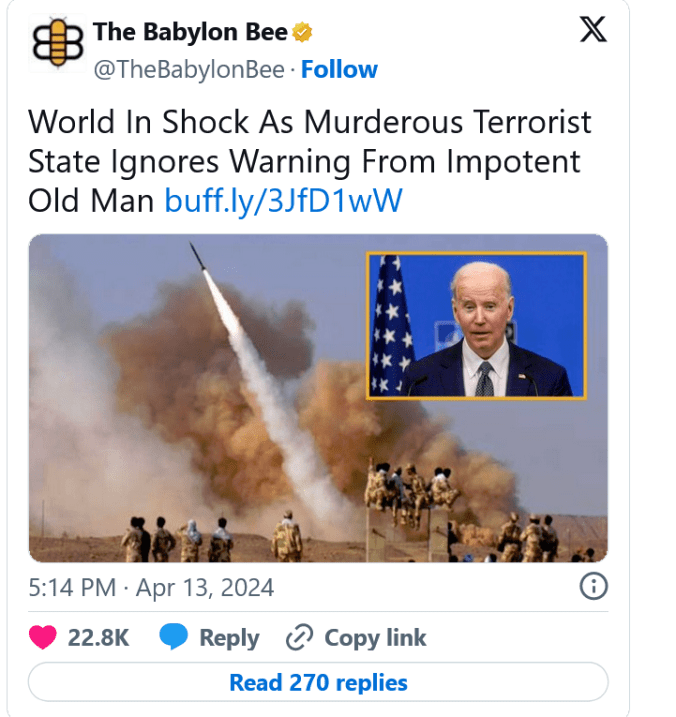
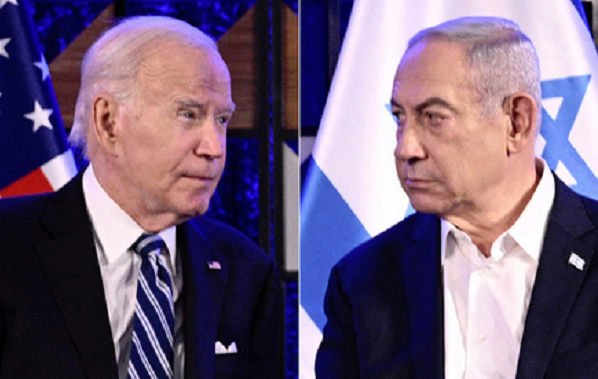
Biden called for an “immediate ceasefire” yesterday in a phone call with Israeli prime minister Benjamin Netanyahu, telling him that “strikes on humanitarian workers” and “the overall humanitarian situation” are “unacceptable.” Biden also, we are told, “U.S. policy with respect to Gaza will be determined by our assessment of Israel’s immediate action” and on steps to “address civilian harm, humanitarian suffering, and the safety of aid workers.”
By pure accident, the first thing I saw was Pentagon spokesman John Kirby (he’s the smart and competent one of the two primary White House paid liars) gaslight the press when asked how the U.S. policy toward the support of Israel in the war could be “unwavering” (as described by officials) and yet the Administration is also saying that it is considering changing that policy in light of the civilian casualties in Gaza. Kirby, with a straight face. said that the two statements were not inconsistent, prompting incredulity from his questioner. Of course they are inconsistent; in fact, they are contradictory. This is one more example of Democrats deliberately playing to the ignorant and uncritical voter.




 Ethics Alarms