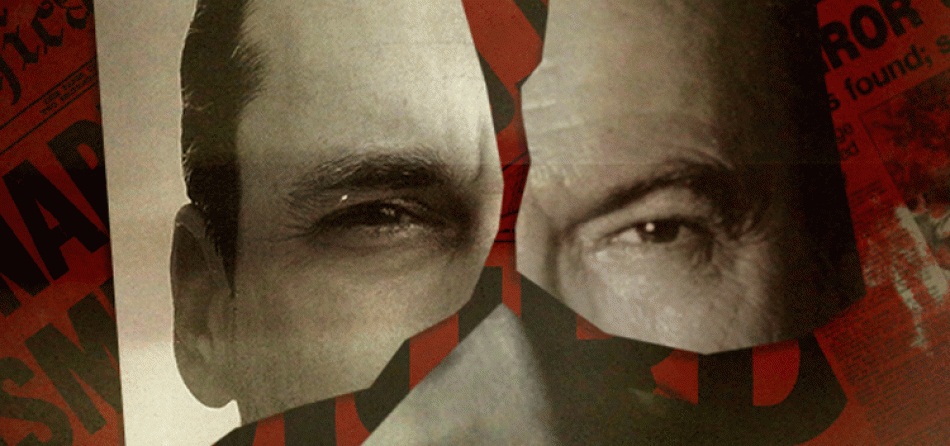
“Mitt Romney — He’s Not One Of Us”

“I’m Barack Obama, and I approved this message.”

I must admit that I could not devote my full attention to last night’s final Presidential debate. I had just seen the latest from President Obama’s attack machine, a television spot approved by Barack Obama, that concludes with the legend, “Mitt Romney—He’s Not One of Us.”  It is an unfair, shocking, miserable, indefensible, dangerous argument to be employed by any party, any candidate, in any race for any office in the United States, at any time in the nation’s history. For it to be employed with the approval of a President of the United States, and this President in particular, should be cause for mourning, but also anger.

If I thought that President Obama was actively involved in releasing this disgrace to his campaign and the ideals he claims to represent, I would have no difficulty concluding that it alone disqualifies him for a second term. I don’t believe that. Perhaps I won’t let myself believe that. One of Obamas myriad weaknesses as a leader, however, is that he tolerates unethical, incompetent and untrustworthy staff and advisors. He trusted his campaign advisors, and they betrayed his trust. Still, he is accountable. Continue reading →

Ethics Alarms Verdicts: The Second Debate

Some Ethics-related conclusions on Wednesday’s second Presidential debate:

Were the candidates uncivil?

I didn’t think so. There were a lot of Twitter comments about Gov. Romney being disrespectful to the President. The deference due to the President of the United States isn’t an issue when debates hew to the formal, detached format of the past. In those debates, the tone of the exchanges are so muted that the two candidates could be in different time zones. Once a different tone is set, with either candidate directly challenging statements while the other candidate is speaking, that tradition has fled, as it did last night. The challenger to a sitting President can hardly be told that he needs to be deferential in a debate; that is the equivalent of asking him to fight with one hand tied behind his back. I thought that both candidates were within the bounds of civility under the circumstances. It was certainly not the civility that I complimented in the second debate—it was a heated, sometimes rancorous argument, but it was the argument of two passionate, forceful, serious public servants, and it served the public well. Neither candidate displayed the contemptuous, rude attitude that Joe Biden adopted in the Vice-Presidential debate. Biden crossed the civility line, but the President and his challenger did not.

Was the moderator biased? Continue reading →

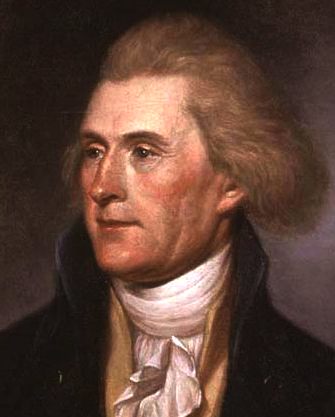
Unethical Quote of the Week: Thomas Jefferson

 “Brought from their infancy without necessity for thought or forecast, [blacks] are by their habits rendered as incapable as children of taking care of themselves, and are extinguished promptly wherever industry is necessary for raising young. In the mean time they are pests in society by their idleness, and the depredations to which this leads them.”

—-Thomas Jefferson, quoted in a new book, “Master of the Mountain: Thomas Jefferson and His Slaves,” by historian Henry Weincek. Jefferson wrote this in 1819, 43 years after the Declaration of Independence, in response to a request for support from a family friend who was taking his own slaves to freedom. Jefferson refused, and this was part of his response.

Great writer. Great philosopher. Bad man.

I have been working on a post on the topic of Presidential character, a lifetime study for me, as a rebuttal of a post on the Daily Caller titled, “Why Good Men Don’t Become President?” Good men do become President; in fact, almost all of the men who have become President were or are good men, Barack Obama included. Leaders, however, are a peculiar breed of good men, since leadership itself requires a different priority of virtues than other roles. Those who do not understand or appreciate leadership, and I believe that the author of that article does not, often conclude that leaders are necessarily bad.

Thomas Jefferson, I submit, was one of the few bad men who did become President. Continue reading →

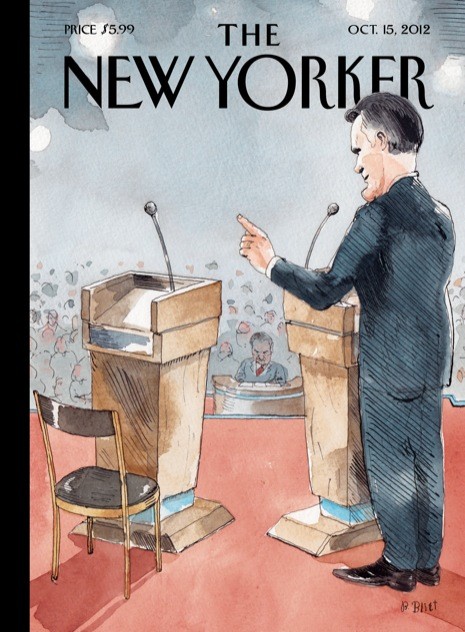
Empty Chair Vindication: Don’t Wait For An Apology, Clint, But You Deserve One

The media abuse heaped on movie icon Clint Eastwood for his unexpected performance at the Republican National Convention was one more link in the chain of blatant and unprofessional anti-Republican bias that will surely continue right up to election day.  Eastwood, you recall, memorably held a one-way dialogue with the President as the invisible occupant of an empty chair. The pundits and columnists didn’t like Eastwood taking on their hero, so they trashed his method of doing it; they were personally offended by his message (which competent, objective journalists, now as rare as Ivory-billed Woodpeckers, would be able to put aside to give fair commentary), so they insulted Clint: they called him old (naturally; if he were fat, they would call him that, too); they called him out his depth, they called him befuddled and inept. The fact was, however, that it was they who were out of their depth, and they, not Eastwood, who embarrassed themselves. Continue reading →

Unethical Quote of the Week: White House Spokesperson Stephanie Cutter

“I sometimes wondered if we even needed a moderator because we had Mitt Romney.”

White House’s spokesperson Stephanie Cutter in CNN’s “spin room” following the first Presidential debate last night, in the wake of a near unanimous media verdict that challenger Mitt Romney had bested the President in style and substance. Moderator Jim Lehrer was criticized by Cutter and others in the President’s camp for being too passive and allowing Romney to control the debate.

“Hmmmm. who can we blame?”

The comment, like most of Cutter’s statements to the media this campaign season, was both unfair and dumb:

  • It was an excellent debate. I thought it was the most lively and substantive debate since the Kennedy-Nixon debates, with both candidates addressing each other directly and having sufficient time to argue complex issues without resorting to sound bites and canned responses. I moderate discussions for a living, and one rule a good moderator follows is that when the participants are engaging in valuable discourse, don’t allow rigid adherence to your plan to interfere with it. Lehrer, to his credit, let the candidates talk. The debates should not be about moderators, and his example should be followed by future debate questioners.
  • Characteristic of this White House and this President, Cutter’s immediate reaction to a perceived failure was to blame someone else and duck accountability. It may be the most exasperating ethical flaw in this administration.
  • Knowing how to work the moderator is a debating skill (as MSNBC’s Chris Matthews pointed out in his lament over Obama’s performance.) Romney did not abuse the moderator (as Newt Gingrich did routinely in the GOP debates), nor did be ever seem petulant, as Obama did when he briefly groused to Lehrer that “I had five seconds before you interrupted me.”
  • Here is the dumb part of Cutter’s complaint: taking over and controlling dynamic situations is what effective leaders tend to do. Viewers saw that aspect of Mitt Romney’s experience and character last night, and it was one of the features of his performance, I think, that created a positive impression. Yes, he was commanding, and managed the situation, with the President of the United States on stage next to him. How dare he?

Personally, I was surprised at the overwhelmingly negative reaction to Obama’s performance. Yes, Romney was better, but the President hardly embarrassed himself. I think the negative reaction by the Democrats and the Obama-promoting media occurred because that they have deluded themselves into believing that Obama’s record is defensible, when it isn’t and has never been: he has an impossible task. The positive reaction of the public to Romney’s debate performance is similarly the result of a misconception. The picture of him they had been fed by attack ads and the media was of a cold-hearted, mean and venal monster prone to sticking his foot in his mouth. The reality was on display last night, and it exposed that cartoon for what it was: a grotesque misrepresentation..

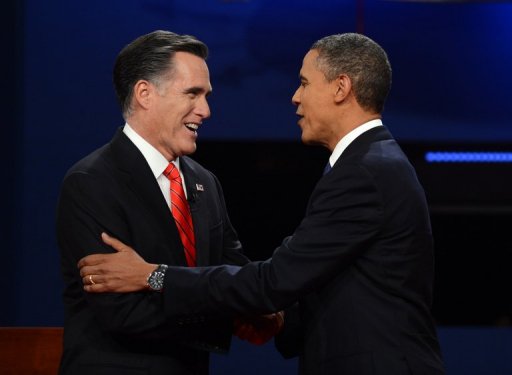
Ethics Heroes: President Obama and Mitt Romney

Congratulations to President Obama and Mitt Romney for being respectful, civil, dignified, good-natured, articulate and presidential in tonight’s debate.

I was proud of both of them.

Thanks. We needed that.

Look! Now Obama Has a Suck-Up Speech To Explain…

The Daily Caller found a previously uncirculated Barack Obama speech from 2007, and the conservative media has been giving it the “47%” treatment. No wonder. The speech is uncommonly ugly, with the future President channeling Rev. Wright and Kanye West, encouraging black anger and racial hate. Needless to say, he does not sound like a leader of “all the people” here.

I am on record as believing that such partisan audience speeches should be taken for what they are, and thus with several grains of salt, but never mind: the standard, a different one, has already been decreed by the mainstream news media, which treated Mitt Romney’s unscripted remarks about the government-dependent “47%” as more significant than the collapse of Obama’s foreign policy, the negligent death of our Ambassador, and a protracted White House cover-up of a terrorist attack. If they want to aspire to any fairness and even-handedness at all, it should devote a similar amount of attention and outrage to Obama’s remarks to black clergy, which were, in my view, far worse, because they were designed to exploit racial fears and divisiveness. They are also, like Romney’s comments, misleading and unfair.

I could argue that it is more reasonable to focus on Obama’s speech, because it was made in public, and presumably was fair game for criticism at the time. Why didn’t the reporters who witnessed it raise any alarms then? Wouldn’t such a racially divisive speech during the campaign (for the nomination) be at least as newsworthy in 2008 as the “47%” line by Romney 2012? Of course not—because the media was trying to elect Obama then, and it is trying to defeat Romney now.

Don’t be silly. Continue reading →

“And Now We Welcome You To Another Episode of “As The Media Shrugs”! Elizabeth Faces Exposure As a Dishonest and Unlicensed Lawyer…Will She Finally Reveal The Truth? Will Voters Care?”

“Nope, no way to Texas; can’t get to New Jersey…maybe I should just bite the bullet and get a Massachusetts law license? Nawww, who’s going to care?”

No major newspapers or broadcast news outlets seem to care, but what was originally dismissed as a partisan blogger’s over-reaching accusation has been bolstered by more than one smoking gun, proving Elizabeth Warren’s untrustworthiness and lack of fitness for high office.

Robert Eno of Red Mass Group, who joins Prof. William Jacobson as a blogger doing dogged and necessary research on the Massachusetts Senate candidate, has convincingly shown that Warren’s justification of her practice in Massachusetts, sans law license, doesn’t work, because what she says can’t possibly be true.

Earlier this week, Warren tried to rebut Jacobson’s allegations by explaining, “I haven’t practiced any law since 2010 since I went down to do the Consumer Financial Protection Bureau. I’ve been a member of the bar in Texas for all of my career, in the Supreme Court bar, and until a few weeks ago the bar in New Jersey.” Warren and her defenders also argued that Jacobson’s claim that she was operating a regular law office out of her Harvard faculty office, which would make her an unlicensed Massachusetts practitioner, was inaccurate. Warren periodically was involved in cases in Federal court, which did not require a  Massachusetts license, they said. All that was necessary for Warren to appear before various Federal Courts was for her to be duly licensed in a state or territory, and file a statutory request to the court to appear.

Warren’s problem: it is beginning to appear that she may not have been properly authorized to practice law anywhere, or, if she was, she had to be using her Harvard office as a regular law office, meaning that she was practicing Massachusetts law. Without a license.

Here is what Eno discovered:

1.  Warren says she has been a continuous member of the Texas bar,which is technically true but misleading. After following her constantly changing spin while explaining her undocumented status as an affirmative action beneficiary, I believe misleading us is her intent. Yes, she has been a member of the Texas bar during her whole career, but during most of that period she was not allowed to practice Texas law, which was the topic under discussion when Warren cited her membership. Kim Davey the Public Information Officer for the State Bar of Texas told Eno that Warren has been on inactive status in Texas since June 1, 1992. Inactive status means a lawyer is not authorized to practice law. Warren says that she only stopped practicing law (while living and working  in Massachusetts) in 2010, which means that she could not rely on her Texas license while she was at Harvard.

2. Thus it must have been her New Jersey law license that made Warren eligible to appear in Federal Court. But there’s a problem there, too. New Jersey rules hold that a lawyer can only be a licensed attorney in good standing in New Jersey if that lawyer maintains a bona fide office for the practice of law. The office can be in any state, but it must qualify as a law office, or New Jersey’s license to practice law is no longer valid.

This means that Warren is mired in a Catch 22. If, as her defenders and Warren have maintained, she was not engaged in the practice of law because her Harvard office did not constitute  “a systematic and continuous presence in Massachusetts for the practice of law” (because Warren was just a typical Harvard law professor who now and then helped write a few briefs for the U.S. Supreme Court and out-of-state federal courts), then she could not meet New Jersey’s licensing requirements, and was practicing law without any valid law license in any state once she went on inactive status in Texas. If, in the alternative, her Harvard office was a bona fide office for the practice of law, rather than a place where she just “dabbled,” then she was practicing in Massachusetts without a Massachusetts license. Continue reading →
More Revelations Regarding Elizabeth Warren’s Alleged Unauthorized Practice of Law, and Why This Matters

Prof Jacobson, on his blog Legal Insurrection, is in line for an Ethics Hero award with his tenacity regarding Elizabeth Warren’s dubious qualifications to engage in the practice of law in  Massachusetts. The overwhelming reaction by his colleagues in legal academia, and mine in the legal ethics community, has been to airily dismiss his arguments as trivial, far-fetched and thinly disguised political warfare, since Jacobson is an unapologetic conservative blogger (and a distinguished one.) Meanwhile, the mainstream media has, I think it is fair to say, completely ignored the story.

Part of this is undoubtedly because of the ignorance of most journalists regarding the importance of the legal ethics rules in question. Part of it is probably due to the accurate assessment by editors and TV news producers that the average American’s brain would switch off right around the time the story mentions Massachusetts Rule of Professional Conduct Rule 5.5 Subsection (c), and will start wondering about how Blair from “The Facts of Life” is going to do on “Survivor.” And part of it, infuriatingly, is because most journalists are willing to forgo the ethical duties of their profession in order  to ensure that a Democrat wins back Ted Kennedy’s Senate seat, and character be damned.

The rude brush off Prof. Jacobson is getting in this wagon-circling exercise is wrong in every way, and does injustice to every person and institution involved, including the Massachusetts legal establishment, the legal profession, ethical lawyers (which, believe it or not, the vast majority of them are), Senator Brown, the U.S. Senate, Massachusetts voters, and the American public. Bar associations across the country regularly punish ordinary lawyers who practice law without proper authorization, and there is a reason: a lawyer who won’t or can’t obey the most basic requirement of the profession—be sure you are practicing law legally—should not be trusted to handle the important transactions and controversies of their clients’ lives. Continue reading →

“Your Boss Is Insane”

On the site Learn Stuff, Sarah Wenger has produced an infographic with a strong ethics message, aimed at the vast number of people in management and supervisory positions in business who abuse their position and power, making those they lead miserable, unproductive, and insane themselves. How many horrible bosses inflict themselves on the nation? That is a mystery, though we know it’s a lot. Incompetent, unfair and irresponsible supervisors at all levels,  as the feature states,

“cost their employees their health and the U.S. economy some serious cash. Employees with bad bosses can lose their hair, gain weight and up their chances of heart disease by a whopping 25%. And to top it all off, poorly managed workplaces are less profitable and have lower levels of productivity. Psychopathic bosses: bad for you, bad for the economy.”

The problem is that management is hard, leadership is harder, formal training in either cannot cure personality defects that make being successful in these two endeavors unlikely, and because truly talented managers and leaders are so rare, most people rise to positions of power without ever experiencing what effective leadership is. A good starting point for any boss is a commitment to fairness and respect, as well as an understanding of what responsibility and accountability mean. That, of course, means ethics.

Here is Sarah Wenger’s infographic, “Your Boss is Insane,” re-published with her permission: Continue reading →