Ethics Hero: Sen. John McCain

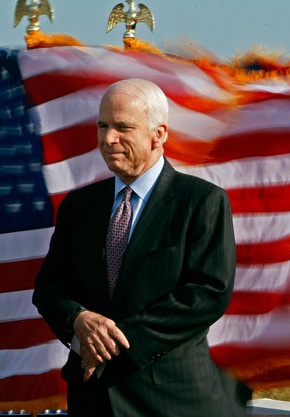
Arizona Senator John McCain has seriously tarnished his reputation for integrity  since losing the Presidential election in 2008, particularly during his last campaign for re-election to the Senate. The best of McCain was on display this week, however, as he delivered a strong and eloquent denouncement of torture (a.k.a “enhanced interrogation techniques”) on the Senate floor, in response to the ethically offensive arguments being put forth by many conservatives that the successful elimination of Osama bin Laden somehow magically transformed the evil practice of torture into a respectable tactic of national security. It is an important, courageous and persuasive statement from a U.S. Senator with special qualifications to make it, as one who had been tortured himself, and as fine a legacy as McCain, or any Senator, could aspire to.

Sen. McCain said, in part (you can read the entire text of his speech here)…

“Mr. President, the successful end of the ten-year manhunt to bring Osama bin Laden to justice has appropriately heightened the nation’s appreciation for the diligence, patriotism and courage of our armed forces and our intelligence community.  They are a great credit and inspiration to the country that has asked so much of them, and like all Americans, I am in their debt.

“But their success has also reignited debate over whether the so-called, ‘enhanced interrogation techniques’ of enemy prisoners, including waterboarding, were instrumental in locating bin Laden, and whether they are necessary and justifiable means for securing valuable information that might help prevent future terrorist attacks against us and our allies and lead to the capture or killing of those who would perpetrate them.  Or are they, and should they be, prohibited by our conscience and laws as torture or cruel, inhuman and degrading treatment. Continue reading →

Comment of the Day: “The Jaundiced Eye of Noam Chomsky”

You can find the original post here, and under it, my response to this comment by reader Trafford Gazsik. I’d say that Christopher Hitchens’ rebuttal to Chomsky, linked in the post, and my post about the ethics of bin Laden’s execution address the issues raised, make up your own mind.

“I like Chomsky and as a non-American, I can assure you that rather than filling my head with anti-American sentiments, his writings have reassured me that America remains a country populated with mostly decent people and that the world at large should not give up on the place just yet.

“I’m interested to know which part of Chomsky’s analysis you do not agree with:

– Do you disagree with the assertion that the Bin Laden ‘takedown’ was an assassination?

– Do you reject the assertion that the assassination took place within the territory of another sovereign state without the knowledge or permission of the government of that state, in clear contravention of international law and customs?

– Do you deny that Bin Laden had not been tried in any court, and was for legal purposes, an innocent civilian of Non-US nationality residing in Non-US territory? Continue reading →

Appearance of Impropriety I: Federal Judge in a Whites Only Club? Ethical, As Long As He Doesn’t Like The Policy. Wait…WHAT?

Our Motto: "Trying to find a qualified black member for 110 years...and still looking!"

Is it an ethical violation for a Federal judge to belong to a whites-only country club?

Sure it is. Was that so hard?

Apparently for a judicial appeals panel in Tennessee, it is.

In May of 2008, an anonymous woman complained to the chief judge of the 6th Circuit Court of Appeals that Federal bankruptcy  Judge George Paine II’s  membership in the ritzy Belle Meade Country Club violated the judicial ethics code of conduct that decrees that judges “should not hold membership in any organization that practices invidious discrimination on the basis of race, sex, religion, or national origin.”  This was a reasonable complaint to make, since the judicial codes for both Federal judges and Tennessee judges say that…

 CANON 2: A JUDGE SHOULD AVOID IMPROPRIETY AND THE APPEARANCE OF IMPROPRIETY IN ALL ACTIVITIES

2 C   A judge shall not hold membership in any organization that practices invidious discrimination on the basis of race, sex, religion, or national origin. Continue reading →

The Uncommon Common Dilemma

Emily Dickinson, he's not.

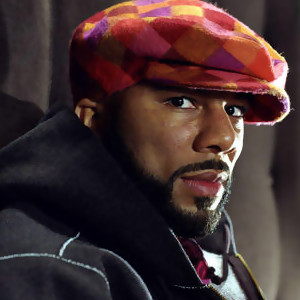
It is unusual to encounter a situation where there is no course that doesn’t violate some legitimate ethical principle. The dilemma involving rapper Common’s controversial invitation to the White House is one of them. None of the options are strictly ethical, and this has led advocates both for and against his inclusion in Michelle Obama’s poetry event, “An Evening of  Poetry at the White House,” to behave unethically themselves. Let’s see: what comes closest to being ethical conduct of the possible outcomes?

Option A: Michelle has her poetry event, but doesn’t invite any mainstream rapper. Ethical breaches: Incompetence, bias, censorship, dishonesty.

Rap is the most dynamic and popular form of poetry in America today. Having an event to “showcase the impact of poetry on American culture” at the White House that excludes popular rappers is absurd on its face; it would be like the White House celebrating the influence of sports in American culture and omitting football. Continue reading →

Ethics Quote of the Week: Washington Post Columnist Michael Gerson

“In determining who is a “major” candidate for president, let’s begin here. Those who support the legalization of heroin while mocking addicts are marginal. It is difficult to be a first-tier candidate while holding second-rate values.”

—-Washington Post columnist and former Bush advisor Michael Gerson, pronouncing presidential candidate Rep. Ron Paul’s Libertarian endorsement of drug legalization ethically unacceptable.

Gerson’s deconstruction of the all-too-common and increasingly ominous calls for legalizing addictive drugs nicely captures the trio of ethical flaws of the advocacy: it denies the crucial and legitimate government role defining responsible conduct for society, it embraces the myth that recreational drug use “does no harm,” and it is arrogant and selfish, condemning the poor and reckless to problems that their fragile resources cope with, in order to bestow a dubious “freedom” that the drug advocates do not need. Continue reading →

Comment of the Day: “Osama’s Assassination: The Ethics Elephant in the Room”

First time commenter Margo Schulter delivers a powerful, passionate and eloquent absolutist rebuttal to my post asserting an ethical defense of Osama bin Laden’s targeted killing/assassination/execution by U.S. military personnel. My immediate response to her can be found in the comments to the original post here; I don’t want to re-post it with this post because Margo’s thoughtful comment should be read and thought about prior to considering my rebuttal. Ethics Alarms is blessed with many sharp and persuasive comments, and this is one of the finest. In the grand tradition of absolutism, her answer to my question about firing the bullet that would kill an unarmed and submissive Osama  is “I wouldn’t fire that bullet to save the whole universe.” And she explains why:

“Please let me try to put my best foot forward, and keep a spirit of civility and friendly inquiry, as I say that my whole being — my guts, heart, intuition, and intellect –cry out, “No exceptions! Executions, extrajudicial or legal, are _wrong_!” I wonder what an MRI might show, and what neuroethics might say, about how people in the U.S.A. and elsewhere have such different reactions to what I would call a consummately evil and dehumanizing act.

“Please let me also apologize for the length of this comment, nevertheless just the starting point for a dialogue with lots of ramifications. How do pacifists like me see the scale of moral evils in different kinds of violence, and when might we consider using certain forms of nonlethal force? Also, there’s a way that President Obama might have modified his strategy a bit to fit Frances Kamm’s Doctrine of Triple Effect (DTE), illustrating what I see as the dangers of this intellectually intriguing concept. I’d love to join a dialogue going in any or all of these directions.

“It’s curious. You write, “I assume you shoot him dead.” And my whole being cries out, “You assume wrong!” While I’m not a physicalist, I do recognize that while we’re in this world experience and behavior are mediated through the brain, so I wonder what an MRI or the like would show for
people who have these radically different intuitions. Continue reading →

Osama’s Assassination: The Ethics Elephant in the Room

You are one of the Navy Seals raiding Osama bin Laden’s Pakistan compound. Bin Laden rushes out, with a white flag, shouting “Mercy!”, “I surrender!” and “I’m so, so sorry!” He throws his flag down, puts his hands up, and falls to his knees, pleading for his life. What do you do?

I assume that you shoot him dead. I would. Is this ethically defensible? Continue reading →

Guess Who Invited Donald Trump to the White House Correspondents Association Dinner?

OK, who's the wiseguy that brought the skunk to the picnic?

I missed it, but the Washington Post of April 28 revealed who it was that invited Donald Trump, fresh from a month of trying to make the President’s citizenship a campaign issue while denigrating Obama’s integrity, legitimacy, and honesty, to the annual light-hearted White House Correspondents Association dinner, where the President is always a featured “performer.” It was buried in the gossipy Style section, but there was the culprit. Who invited him?

The Washington Post invited him, that who.

Inviting Trump to that event is in approximately the same good taste as inviting blogger Pamela Geller to a Park51 (a.k.a. “the Ground Zero Mosque”) controversy, or allowing a group of “Truthers” to crash a testimonial to Dick Cheney.

What could the Post have been thinking? “He’s a fascinating figure to Washington right now!” the Post’s representative breathlessly explained on the 28th. We are to assume, then, that if the dinner was being held this week and Osama bin Laden hadn’t been dispatched (most respectfully, of course) to Davy Jones’ Locker, the Post might have invited Osama’s bullet-riddled corpse to slump at its table.

The Post was stirring the pot, is what it was doing, and that is not the media’s proper of ethical role. If the intention was to set up Trump, who had been called everything from a joke to a fool to a thug to a racist by various Post writers only days before, to be insulted to his face by host Seth Myers and the President, that is taking sides in the news rather than reporting it. If it the intent was to position volatile elements together in the hopes of sparking a story, that is unethical  journalism too.

The paper got both results that it presumably desired: Trump was a sitting duck at the dinner, and then he embarrassed himself by later complaining about the skewering he so richly deserved. It also, not for the first time, showed how rusty those old ethics alarms are at the offices of Washington, D.C.’s most prestigious newspaper.

[Thanks to sharp-eyed Post reader Robert Sher.]

Ethics Hero: New Orleans Saints QB Drew Brees

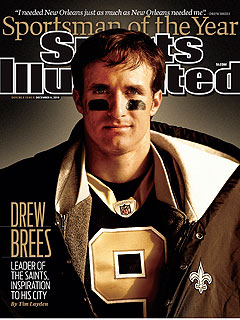
Drew Brees is one professional athlete—yes, there are others—who sees the riches he acquires in his high-paid trade as a star NFL quarterback as tools to achieve good ends. He has established an impressive foundation to assist children in New Orleans, and now he is using his wealth to keep his team together and get them ready for the coming season.

As NFL training camps remain in limbo while the courts decide the legality of the owners’ lock-out, Brees’s Saints are training anyway, because he is picking up the bill, paying Tulane staff to help out during practices and flying in his personal trainer to oversee the team’s conditioning program, even arranging for the Tulane Institute of Sports Medicine to provide insurance for players who need it. Brees has also arranged for lodging for some of the younger players on the team.

Quarterbacks are always team leaders in name and reputation, but Drew Brees is exhibiting exemplary leadership and character by acknowledging his special resources and using them for the benefit of his colleagues during a crisis. Wealth and influence can accomplish wonderful things if the individual who is wealthy and influential has the ethical character to make it so. Drew Brees is such an individual, and a magnificent example of leadership as well.

____________________________

Note: Ethics Bob posted on Drees right about the same time I did. You can read his comments here.

In Search of Accountability, Fairness, Justice and a Champion: the Unending Persecution of Anthony Graves

Job would pity Anthony Graves

Governments and other bureaucracies are capable of unimaginable callousness, stupidity, and wrongful conduct, allowing individual fools to multiply their power to harm exponentially, and then to see an inhuman computer-driven monstrosity run amuck as everyone denies responsibility. You could not devise a better example of this process than what Texas is doing to Anthony Graves.

He is an innocent man convicted of murder in 1994 who was released last October after spending 18 years in prison, condemned to death. He had been convicted with fabricated evidence and coached testimony employed against him by former Burleson County District Attorney Charles Siberia, and a state investigation got a Texas judge to set Graves free. But the maw of Texas bureaucracy wasn’t through ruining his life. Continue reading →