The effort to prompt some input into the 2018 Ethics Alarms Awards will obviously continue for another day or two, as my promise to “be posting these periodically during the day and evening” was foiled by intervening priorities yesterday. There are two polls this time (here was the first, still open), and again, please don’t hesitate to expand on your votes.
Nominations for “Unethical Profession Of The Year”
Once, there was never any question about the “winner” of this category: it was inevitably educators or, more often, journalists. One of the horrible consequences the 2016 Post Election Ethics Train Wreck, however, is that almost all the professions dived into the muck, sought headlines by making the kind of biased and irresponsible statements that society depends on professionals to eschew, and they have continued their self-debasement ever since. While journalists and educators—in this I include all academics as well as teachers and administrators, have still disgraced themselves beyond debate—they have real competition now. Each profession nominated will be linked to a representative Ethics Alarms post. The nominees are…Continue reading →
1 Christmas gift ethics. What’s your opinion of a relative who says that the only thing she wants for Christmas is for family members to donate to her favorite leftist candidate for City Council? I don’t recall the Christmas tradition being “Make people do whatever you would do” Day, do you? Let’s have a Christmas Eve poll!
2. Change: I now believe “the wall” is necessary and the President’s resolve is ethical. My change of heart comes after watching all Democrats and many Republicans simultaneously say they want secure borders and then continue to encourage illegal immigration with their rhetoric and votes. The wall is necessary to send an unequivocal message, which has been Trump’s message since he announced his candidacy: “Come here legally, or don’t come. If you get here by breaking our laws, you are not welcome and will never be welcome, no matter what you do.”
Correctamundo!
Anti-Trump GOP Senator Bob Corker claims that the showdown over authorization of funding for the Wall is a “made-up fight, so the president can look like he’s fighting, but even if he wins, our borders are going to be insecure.” It’s not a “made-up” fight at all. Republicans have been afraid to upset Hispanic-Americans and Democrats want nice, reliable, left-voting poor folks to swell the voting rolls, so they have sent deliberately mixed messages, particularly regarding the “Dreamers.” If a wall did nothing other than stop “migrant caravans,” it would be worth it.
Trump also promised a wall. Breaking promises is not the same as a lie, unless the promise was a lie when it was made, but Trump, who we have been told lies incessantly, has also been far more determined to fulfill campaign promises than any President within memory. (Obama promised to address the national debt. He promised to have the most transparent administration in history. He promised that lthe use of chemical weapons by Syria would be the “red line.” He promised to be President of all the people, not just Democratic base demographic groups. He promised that if you like your heath care plan…well, you know the rest.)
It is the Democratic position on the wall that is a sham, because the money involved is a relative pittance. They are grandstanding, and the President is not.
3. Slot machine ethics. How did I miss this? Three Las Vegas visitors who hit multi-million dollar jackpots playing slot machines are fighting the casinos’ efforts to void the pay-offs on the grounds that the machines “malfunctioned.” The episodes all occurred earlier this year. Unless there is a prominent notice on or around the slots pointing out that there is a limit to the payoff in any single play and specifying what the limit is, I think the casinos are obligated to live with losing whatever one of their evil, manipulative, Skinnerian machines cough up.
This isn’t like a malfunctioning ATM machine. Players are led to believe that whatever comes out when they pull the lever or push the button is theirs. If casinos can say that their machines malfunctioned and they are not responsible for the result, then gamblers should have the same option: “I’m sorry, but my limit on gambling losses was just $500. I shouldn’t be responsible for the additional $10,000 I lost on blackjack, because I malfunctioned.” Continue reading →
1. Yes, Merry Christmas, dammit. Those responsible for that moment of doubt and ethical uncertainty every time I encountered a stranger on my just completed Ethics Rock Extreme road trip to New Brunswick, New Jersey deserve to be entombed alive in peppermint and plum pudding. The greeting simply says, “I wish you to be joyful and happy in a season where people are a little less selfish and a little more ethical: I’m not trying to indoctrinate you into Christianity!” Much of this completely unnecessary addition to holiday stress is due to to jerks—yes, I think the word is fair—like Julia Ioffe, the author of “Please don’t wish me ‘Merry Christmas’/It’s impolite and alienating to assume I follow your religion.”
I thought Charles Dickens slam-dunked that nonsense definitively in “A Christmas Carol,” followed by almost all the Christmas movies that make the same obvious point except to deliberate holiday wet-blankets like Ioffe. No, jerk, the greeting is an expression of cultural unity among human beings, and the celebration of values that need have not be restricted to religious Christmas holiday because this is also a secular tradition as well. As soon as I get this post up, I’m going to re-post the Ethics Alarms Christmas commentary.
Somebody send it to Julia.
2. 2018 Hypocrisy Award, locked up! It doesn’t matter if you are happy or disappointed to see President Trump pull U.S. troops out of Syria and Afghanistan; you should still be able to marvel at the blatant, shameless, pandering, hateful and, really, laughable—if the cultural fad of denigrating the President of the United States regardless of what he does wasn’t so destructive and wrong— hypocrisy by news media Trump-haters, among others. Glenn Greenwald, who sees the world from a leftward perspective but maintains his integrity, called out MSNBC’s Rachel Maddow, who could be the symbol of the whole nauseating. He tweeted,
This upset Glenn’s loyal progressive followers, one of whom sent this fascinating retort:
“The most bizarre aspect of Glenn Greenwald’s inexplicable credibility is his ability to appear as first an advocate and then an opponent of almost everyone and everything. Can’t choose one perspective.”
See? To people like this—the commenter’s handle is IstandwithMaxine, which pretty much explains everything—is that they have been brainwashed to believe that is is bizarre unless adopts a single view—theirs. of course, otherwise you are evil–and never alters it or admits that it may need re-thinking when that view leads to dead ends, disasters and pitfalls, no matter what new information arises. Someone like Greenwald, who tries to apply the same standards of analysis and ethical judgment to all regardless of whether it advances an ideology, is just untrustworthy, a traitor.
This cartoon has been circulating online. It is 100% fair and accurate regarding Trump’s critics self-indicting reaction: Continue reading →
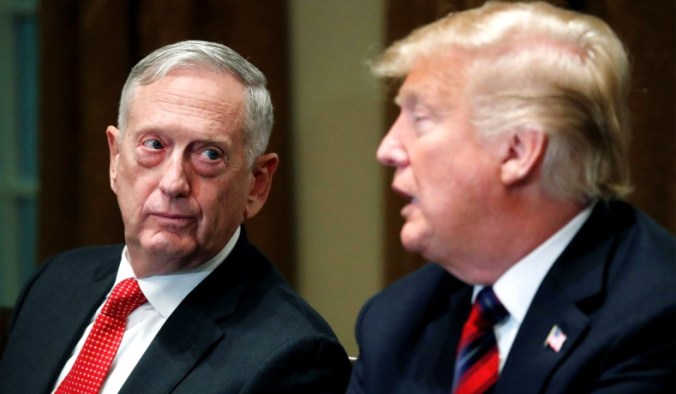
President Trump announced that he was ending the U.S. mission in Syria, and drawing down the troop level in Afghanistan. His Secretary of Defense,General Mattis, resigned in protest, and copied his letter of resignation to the world.
The news media, social media, and full time anti-Trump hysterics, among others, went bonkers.
What’s going on here? A President who has long held that U.S. domestic priorities are more important than “being the world’s policeman” followed through on his promise. As is his wont, he sprung the actual news without laying a foundation to cushion the blow. Nobody knows whether the decisions will work out or not, but the assumption is that because this President is the one making the decisions, they must be stupid, evil, or both. This, despite the fact that Barack Obama essentially did the same thing regarding Iraq, except that Iraq gave much more promise of stabilizing with continued U.S. presence. Syria is still in chaos, and nobody can confidently say when and if it will not be. As for Afghanistan, the U.S. has been expending lives and treasure there for a mind-blowing 17 years. What is the mission? Funny—I thought the original mission was to punish the country for sponsoring the 9/11 attacks. We could have declared the point made long, long ago. Is the President wrong to say “Enough is enough”?
I have no idea—and neither do you.
Having no idea, not having seen the data, not having been advised, and not being President of the United States, I have little basis to challenge or deride the decision. But what’s really going on here is what has been going on since January, 2017. Any decision or action by this President is immediately assumed to be wrong. The analysis attached to it afterwards is superfluous. The position is that President Trump did it, it’s wrong because he’s a Nazi/idiot/ grifter /fool, and that’s all we need to know.
This, of course, makes it impossible, literally impossible, to get honest, trustworthy analysis about anything.
Anyone who criticizes Trump in public, even certifiable slime like Steve Bannon, James Comey, and Omarosa, suddenly is embraced by “the resistance ” and the news media using the formula that the enemy of my enemy is my friend. This rewards unethical conduct, and “Mad Dog” appears to have fallen into the trap, to his eventual shame. As a lawyer, I know it is unethical to drop a client, my employer, and make any pubic statements whatsoever impugning his or her judgment or conduct. It is also unethical to do this in any professional relationship. Professionals know this: I presume at one time Mattis knew this. But having paid attention to how routine betrayals of this President have been cheered and praised, he apparently couldn’t resist temptation.
Now, as a lawyer, my duties are codified. That doesn’t mean that professionals who don’t have the same duties codified aren’t obligated to follow them. Continue reading →
The New York Times obituary for Dr. Fred Greenstein states early on, “Dr. Greenstein, who taught politics at Princeton University for nearly three decades, first made his mark with a reconsideration of Eisenhower, who was long perceived as disengaged from the job. Dr. Greenstein’s book, “The Hidden-Hand Presidency: Eisenhower as Leader” (1982), upended that view.” Professor Greenstein first “made his mark” with me when I was in college, and discovered some scholarly articles he had written about the psychology of leaders and U.S. Presidents, and later, a thin volume, written in 1969, called “Personality and Politics.” His writings, research and theories gave me the idea for my honors thesis, which set out to determine whether there was an “American Presidency type” which our system tended to guide to the White House. (My conclusion: there was indeed.)
My research on this project informs my opinions and analysis to this day. The thesis was a bear: my thesis advisors told me it was far too ambitious. It required reading all the major biographies and autobiographies of the Presidents to that point,matching them to various psychology studies, and trying to find legitimate and documented similarities in background and character that might have predictive value. I always intended to expand my thesis, which was well-received by the Government Department, into a book, but life, as often happens, got in the way.
Professor Greenstein, however, kept expanding and refining his theories. In addition to showing why Ike was not a weak President, as Kennedy-worshiper Arthur M. Schlesinger Sr., ranked him (infuriating my father, along with other veterans), but a strong one with a unique and confident leadership style, Greenstein continued to analyze this most difficult, complex and personal of leadership roles in later works: “Presidents and the Dissolution of the Union: Leadership Style from Polk to Lincoln” (2013); “Inventing the Job of President: Leadership Style from George Washington to Andrew Jackson” (2009); “The Presidential Difference: Leadership Style from FDR to Clinton” (1996) and “How Presidents Test Reality: Decisions on Vietnam, 1954 and 1965” (1989). Continue reading →
I guess there are more foolish, dumb, frightening members of Congress than this guy. Think about that.
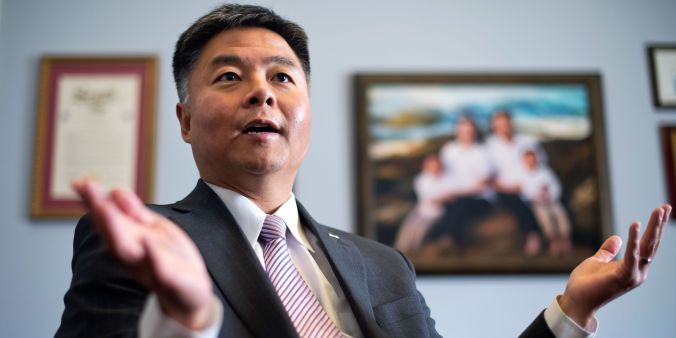
Lieu, the very model of a modern California Democrat, told CNN host Brianna Keilar, among other things,
“I would love to be able to regulate the content of speech. The First Amendment prevents me from doing so, and that’s simply a function of the First Amendment, but I think over the long run, it’s better the government does not regulate the content of speech.”
And then, he tweeted,
“Would I like to regulate Fox News? Yes, but I can’t because the First Amendment stops me. And that’s ultimately a good thing in the long run.”
You see, people qualified to the leaders of a democracy don’t want to operate like totalitarians. I don’t trust people who want to summarily execute or imprison political opponents without due process or a trial, but who add “But I can’t because of the Constitution, and I guess that OK.” Or, say things like “I wish I could keep slaves/ outlaw religions/ confiscate guns/ nationalize businesses/ take away private property and give it to whoever I want but there’s that dang Constitution.” Such people are wannabe totalitarians, don’t really like our rights, and would crush them in a second if they saw a chance.
That’s Ted Lieu. That’s a lot of Democrats and progressives. Lieu is just of the few dumb enough to admit it.
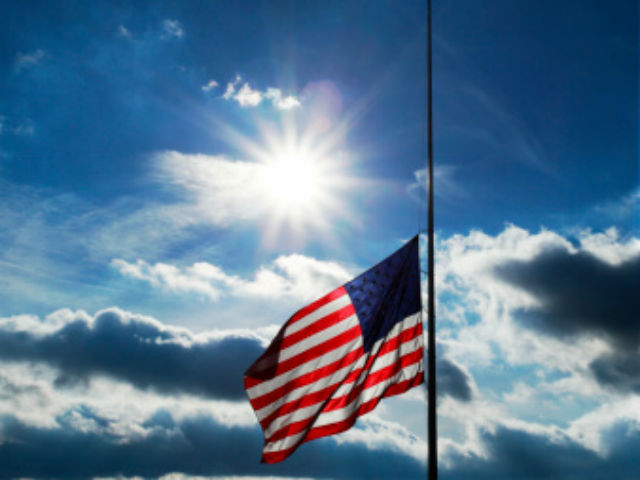
This is a National Day of Mourning, and since President Trump ordered it, reporters, pundits and Democrats are bitching about it. It also helps that the dead President in question is a Republican. Had a National Day of Mourning been designated to bury recently-canonized Trump-hater John McCain, I doubt any complianing would have been put in print. Or (still kicking) Jimmy Carter, on my ranking list an equally inept President as Bush #1.
Over at the National Review, Charles Cooke questions whether we “over-honor” our Presidents, writing in part,
“Irrespective of whether he was a great man or a poor one, George H. W. Bush was a public employee. He was not a king. He was not a pope. He did not found or save or design the republic. To shut down our civil society for a day in order to mark his peaceful passing is to invert the appropriate relationship between the citizen and the state, and to take yet another step toward the fetishization of an executive branch whose role is supposed to be more bureaucratic than spiritual, but that has come of late to resemble Caesar more than to resemble Coolidge.”
Well, that’s your quiz: is he right? Or is the National Day of Mourning just a waste of money and over-kill, if you’ll excuse the term?
Your Ethics Alarms Ethics Quiz of the Day, dedicated to George Herbert Walker Bush, is…
1. The sad part is that this is newsworthy. The Boston Red Sox accepted their invitation to visit the White House and be honored for their World Series victory. In doing so, they buck the trend of the past couple years of championship teams “boycotting” what should be a unifying, purely ceremonial event of national pride (and fun, since that’s what sports are supposed to be about) in order to make some kind of incoherent statement of disapproval regarding President Trump. Of course, this is all virtue-signalling, as if being expressly unpatriotic, disrespectful and divisive while insulting the President is a virtue. (Sportswriter love the boycotts.)
Boston manager Alex Cora is Puerto Rican, and had criticized the national response to the island’s hurricane emergency. Some thought that he would lead his team to snub the White House, but Cora is a smarter, wiser, stronger leader than that, as he showed all season long.
2. Great. France accepts government by mob rule. President Emmanuel Macron’s administration today suspended planned increases to fuel taxes for at least six months in response to weeks of violent protests. The fuel taxes, which most heavily burden French citizens least able to endure them, were expressly aimed at curbing climate change, though there isno evidence whatsoever that they would accomplish that. So it was a bad policy, but even bad policies should not be vetoed by mob rule. Macron’s capitulation to violent protests is cowardly—though so, so French—and undermines the rule of law, not just in France, but worldwide.
These are the times even the most hardened-Trump-hater should be grateful that the U.S. has a leader who cannot be extorted in this manner.
Should be, but, of course, won’t.
3. If they didn’t have double standards…well, you know the rest. Human rights groups say China has detained up to 2 million Uighurs, a Muslim minority in the country, to promote “ethnic unity” in the country’s far west. This week over 270 scholars from 26 countries released a statement drawing attention to “mass human rights abuses and deliberate attacks on indigenous cultures” taking place in China. “In the camps, these detainees, most of whom are Uighur, are subjected to deeply invasive forms of surveillance and psychological stress as they are forced to abandon their native language, religious beliefs and cultural practices,” the statement said.
Never mind. The news media is just thrilled that the President has called a temporary truce in the trade war with China, is meeting with its leader, and that the two countries may soon again be working together, creating jobs and wealth on both sides of the Pacific. Meanwhile, the same people cheering our efforts to accommodate China have pronounced the President a monster for not risking relations with the Saudi’s over the murder of a single journalist. Continue reading →
For me, anyway: I woke up feeling healthy for the first time in 17 days. Now the day’s ethics stories will make both of us feel sick. I’m sorry.
1. The Sliming. The news media is determined, in the absence of any verified or verifiable evidence, to continue sliming Brett Kavanaugh. The Washington Post placed the story about his return to coaching girls’ basketball in its “Public Safety” section. Nah, there’s no mainstream media bias!
This below-the-belt innuendo that the Supreme Court Justice is a threat to the young women on his team was caught, criticized, and the Post claimed it was an accident. You know, if journalists played it straight, and had any credibility as objective, fair commentators, such an explanation would be credible. But they don’t, and it’s not.
Then there was the Huffington Post and AOL, which ran this story, headlined “Ford Is Still Receiving Death Threats, Kavanaugh Is Back To Coaching Basketball.”
The innuendo here is that there is some kind of injustice that the accused gets to resume his life while the accuser’s life is still disrupted. No, one who is accused should always be able to return to his life if the accusation is unproven and unconvincing, though that’s often not the case, and not the case with Kavanaugh as his continued sliming by the Left-wing media demonstrates. As for Blasey-Ford, no one should endure death threats. This is, however, a false dichotomy. There is no evidence that Kavanaugh did anything wrong, much less that he is a sex offender. My view is that Blasey-Ford, for political reasons, raising a high school episode that she could not confirm and didn’t recall herself for 30 years in order to discredit an adult judge of sterling reputation and credentials was unethical, irresponsible, and unfair.
2. The Sliming, cont.: Mark Twain Prize Division. Julia Louis-Dreyfus, inexplicably awarded the Kennedy Center’s Mark Twain Prize as the individuals who has “had an impact on American society in ways similar to” Twain—Julia Louis-Dreyfus? Seriously?—-used her acceptance speech to display her Twain-like rapier wit and take cheap shots at Justice Kavanaugh. (They are too idiotic and unfunny to warrant repeating.) It takes a lot of gall for someone to be accusing a public figure of sexual assault at any event sponsored by the John Fitzgerald Kennedy Center, or with Kennedy anywhere in the name. Indeed, it took some gall for Dreyfus to even accept the award. I searched her resume to find any evidence that she ever wrote a funny line or witticism of her own, which should be the criterion and usually has been, even with wan selections like Tina Fey, a minor wit if there ever was one. The precedent for Louis-Dreyfus would be Carol Burnett, who also is just a comic actress whose wit comes from other artists, though she bestrides the like of Fey and Louis-Dreyfus like a Colossus. Sad and politically incorrect to admit, but comedy just isn’t a field where women seem to excel, so once again, the quest for diversity involves a compromise in values. Continue reading →
I’m not exactly a fan of lawyer/muckraker/journalist Glenn Greenwald, but I’m getting there. Greenwald certainly has an ideological agenda, and it informs both his choice of topics and the slant of his reporting. However, in an age where the mainstream journalism establishment has made the tragic decision to be largely a propaganda organization for its one favored political party, and has willfully misinformed the American public in pursuit of that party’s interests, primarily power, Greenwald stands out for his non-partisan approach, his consistent standards, his integrity, and most of all of late, his refusal to participate in counter-factual condemnations of President Trump for conduct that the news media has either shrugged away or tolerated in the past from other Presidents.
The title is true beyond question; I pointed out the same fact here, writing in part regarding the Khashoggi murder and the New York Times editorial calling the Trump administration’s policy response “a guide to how they might increase their standing in the eyes of the American president as well as how far they can go in crushing domestic critics without raising American ire”:
The question of how far the U.S. should go in pursuing its own interests while excusing unethical or immoral acts by foreign governments is an enduring one the stretches at least back to the United States alliance with Stalin in World War II. Outside of the fact that [ the Khashoggi murder] involves a journalist, however, the Trump “guide,” even stated in deliberately pejorative terms, seems to me to vary not one bit from the standards used by previous administrations, including the Obama Administration. China…Cuba…Iran…and yes, the Saudis, who have overseen state-sanctioned brutality and human rights outrages affecting whole classes of people, not just one journalist, for a long as anyone can remember.
Trump’s “new blueprint,” it seems to me, varies from the old blueprint not one bit. Whether the old blue-print is necessary or defensive is another issue.
Well, that was comparatively nothin’ from me as an ethics rebuke, a pea-shooter compared to Greenwald’s tour-de force. His conclusion is uncompromising and irrefutable: Continue reading →




 Ethics Alarms