In a post yesterday, I wrote, in the final note on the ethical implications of this week’s election results,
“None of this would have unfolded in quite the same way, I am certain, without a corrupt journalism sector that has totally abdicated the duty of its profession in favor of partisan propaganda. I am more convinced than ever that the Republic will not function efficiently or engender responsible citizenship until there is news media commitment to fair, objective, responsible, unbiased and honest communication to the public of what it needs to know to make intelligent decisions about their governance. There has been some progress toward that end this year, but not nearly enough.”
Well, evoking William Barrett Travis when Santa Anna demanded the surrender of the Alamo, the New York Times “answered with a cannon shot.”
“The Times’s Profit Jumps With 460,000 More Subscribers” the headline today reads. “The Times now has 12.33 million total subscribers to all of its products. It has said it is aiming for 15 million by the end of 2027.” The article (gift link!), which you can read yourself if you have the stomach for it, has lots of other good news for the Times bottom line,
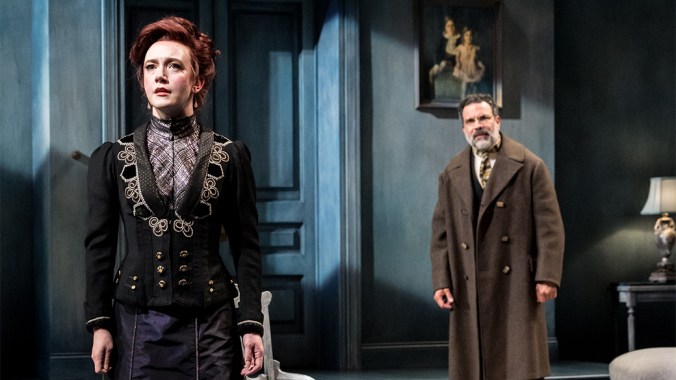
In “Alice’s Adventures in Wonderland,” Louis Carroll’s Mad Hatter asks Alice the riddle, “Why is a raven like a writing desk?” One would think that the question in the headline above is equally obscure (the Guthrie, in Minneapolis, is one of the most respected and celebrated regional theaters in the country) but it has an answer. Like the Colbert late night show, which has since its inception sought to exclude anyone who isn’t woke, obsessed with progressive politics or, since 2015, Trump Deranged, the Guthrie now aims at entertaining only that same audience, except in its case only the wealthy, white, upper-middle class demographic within that audience, or others willing to sit still for relentless leftist propaganda and cant.
A recent audience member for The Guthrie’s production of Henrik Ibsen’s “A Dolls House” wrote about his experience. “A Doll’s House” is about as moldy a feminist tract as there is (I once called the play the drama equivalent of Helen Reddy’s “I Am Woman” but much longer, and even more over-exposed (it was written in 1879, so its analogies with the real state of womanhood, especially in the U.S., have been increasingly forced as time goes by. (No, her husband did not stop Nora from having an abortion: she would never have dreamed of killing an unborn child.)
The Philadelphia Phillies, who had the best record in the National league this season are desperate for a World Series championship. They last won it in 2008, and have only won a World Series twice since the team was founded in 1883. Last night the Phillies lost the deciding game of the NL Divisional Series to the Dodgers in a dramatic, extra inning contest (with no stupid “zombie runner” because MLB plats baseball the right way in the post season) on a disastrous final play that is destined to live in Philadelphia infamy.
The culprit was pitcher Orion Kirkering. With two outs and the potential Dodger winning run on third base in the 11th inning, he got the batter to hit a weak grounder back to him. First he fumbled the ball, recovered, and only had to throw to first base to get the third out and end the inning. But he saw the base runner from second running home, and inexplicably threw the ball to his catcher, or tried to. In his panic, he threw wildly. The run scored, the game was lost, and the Phillies season was over.
In baseball terms, Kirkering choked. When the game was on the line and professional athletes are supposed to rise to the occasion and be at their best, he was at his worst. A whole city blames him for the crushing loss: he is now Philadelphia’s Bill Buckner.
All I can do for Orion is to remind him of my father’s favorite poem, by Rudyard Kipling, which he told me gave him hope and solace as young, fatherless boy during the Depression, and later, when having to cope with his own tragedies, failures and perceived shortcomings. I think of it often, and read it again just two weeks ago.
The poem is, of course, “If.”
If you can keep your head when all about you
Are losing theirs, and blaming it on you,
If you can trust yourself when all men doubt you,
But make allowance for their doubting too;
If you can wait, and not be tired by waiting,
Or being lied about, don’t deal in lies,
Or being hated, don’t give way to hating,
And yet, don’t look too good, nor talk too wise:
If you can dream – and not make dreams your master;
If you can think – and not make thoughts your aim;
If you can meet with Triumph and Disaster
And treat those two imposters just the same;
If you can bear to hear the truth you’ve spoken
Twisted by knaves, to make a trap for fools,
Or watch the things you gave your life to, broken,
In writing the previous post about the Swiss organization that is paid to help people kill themselves, I was planning on mentioning Phillip Barry’s mysterious cult drama “Hotel Universe.” Barry, whose most lasting work is “The Philadelphia Story” but who was once one of Broadway’s most successful playwrights, wrote a fascinating but perplexing drama about how the suicide of a friend during a group vacation sends his characters on an existential journey into fantasy, madness, or a mass hallucination. My now defunct theater company performed the piece, because that was the kind of non-commercial, crazy productions we gravitated to. The last words of the dead friend were, “Well, I’m off to”…somewhere. I couldn’t remember. The suicidal woman I was writing about had told her family she was off to Lithuania, which is what reminded me of “Hotel Universe.”
But I couldn’t remember where Barry’s character was “off to” when what he meant was “I’m going to kill myself now.” It was driving me crazy, so I thought, “What a perfect question for AI! ” So I asked Google’s bot, “In ‘Hotel Universe,’the man who is going to kill himself says, I’m off to…” Where?” The thing answered quite assertively,
“Name Withheld” says that a member of her book club typically regurgitates online reviews of the assigned books that she seldom reads, aggressively presents them as her own, and is begging for a slapdown. “In the days before a meeting, she will casually share with me that she ‘couldn’t get into it,’ but she never says so to the other members. I sit there steaming but don’t reveal her duplicity. What would you do?,” she asks Prof. Appiah, the Times Magazine ethics advice columnist in lat week’s column, “A Woman in My Book Club Never Reads the Books. Can I Expose Her?”
“I get why you’re peeved,” the professor says. So do I: she thinks a social book club is a seminar for credit. “Still, the first rule of book clubs is that someone will always show up having read only the first chapter and the last page, armed with three profound observations from Goodreads.” No, that’s the second rule of book clubs. The first rule is to provide a regular opportunity for people to get together and socialize in the context of a structure more potentially engaging than arguing about Donald Trump. “Your job, in any case, isn’t to police her page turns. Cast yourself as the enforcer, and you betray the spirit of a group dedicated to forging connections through stories.”
Bingo.
“But the goal isn’t to humiliate her…maintain your small, imperfect community. One thing you’ll have learned from your books, after all, is that the flawed characters are always the most human.” Yadayadayada. Maybe she’s having cognitive issues. Maybe she’s dyslexic. Maybe she’s lonely and just wants company. Maybe she’s insecure about her analytical ability. The woman’s cheating in her book club exploits literally hurts nobody but herself at worst, and possibly allows her some human contact that she desperately needs at small cost to the other members.
Sure, the inquirer can expose her. To me, however, the fact that she’d even consider it means I’d rather have the book faker in my club than her.
It was a year ago yesterday that Joe Biden revealed for all to see that America had a senile President. This was established beyond all doubt when he responded to an early question in his debate with Donald Trump by muttering and slurring Authentic Frontier Gibberish, ending with the immortal declaration, “We beat…Medicare.”
Even though anyone with two neurons to rub together knew that moment was curtains for hopes of a Biden re-election, the Democrats tweeted out the flaming lie above.
Yesterday social media wags were taunting and mocking Democrats for a tweet that “hasn’t aged well,” but it’s not funny. It’s terrifying. That tweet demonstrated then and demonstrates now just how Orwellian, Machiavellian, dishonest, ruthless and untrustworthy the Democratic Party has become. It has no regard for transparency, no respect for the public, and no shame.
Even as it was engaging in “it isn’t what it is” disinformation, the Democrats were hustling behind the scenes to dump Biden from their ticket. They issued that tweet knowing full well that Biden didn’t win the debate, he disgraced himself in it. But like the committed totalitarians they are, his party directed its faithful to believe what they told them to believe. Biden won the debate as Oceania has always been at war with Eastasia.
A trustworthy, democracy-supporting, patriotic political party doesn’t issue a message like that. A dangerous political party does.
Ugh. Ann Althouse flagged this comment from a reader named Malika, reacting to a New York Time Crossword Puzzle clue that read, “Girl in Jefferson Airplane’s ‘White Rabbit'”:
“I love this style of clue, where even if you don’t know the exact trivia (I’ve never heard of the band or the song) you can puzzle it out based on the context.”
The answer is “Alice,” and if Malika doesn’t know the “exact trivia,” she never heard of “Alice in Wonderland,” which is a foundational work of English literature with important literary, historical and satirical significance. It means she is unaware of the many movies made of that book (and its twin, “Through the Looking Glass”), doesn’t know who Lewis Carroll is, has no idea what firmly established “mad hatter” in our lexicon, or “Cheshire cat,” or what “Jabberwocky” refers to.
Then there’s the ignorance of the Sixties, the Vietnam era and the drug culture indicated by her lack of familiarity with the iconic song “White Rabbit.” The Jefferson Airplane anthem has been used on “The Sopranos,” “Stranger Things,” “The Twilight Zone,” “The Simpsons,” in the films “The Game,” “Fear and Loathing in Las Vegas,” “The Matrix,””Platoon.” Not only doesn’t Malkia know about any of this, she doesn’t think she should and is willing to broadcast the fact that she doesn’t.
What else didn’t her schools, parents and narrow culture teach her? How many reference points that would help her understand the context of the issues, events and people affecting her life is she lacking? As Don Rumsfeld might say, it isn’t just that she doesn’t know, she doesn’t know what she doesn’t know, and doesn’t know that it’s a problem that she doesn’t know it.
Here it is: “Can Male Authors Publish Books Under Female Names?”
Well, of course they can, but the real question is little better. “I’ve recently heard some sharp comments from friends about male authors publishing books under female names. The pseudonyms are sometimes gender-neutral, but in genres dominated by women, readers assume that these writers are women too,” blathers “Name Withheld.” ” I know there are historical examples of the inverse: female writers using male names or gender-neutral names that are assumed to be male. But are these equivalent? Whatever difficulty male authors may face in majority-female literary genres today cannot compare to women’s historical struggle to live a public life. Is it unethical for these male authors to present themselves this way?”
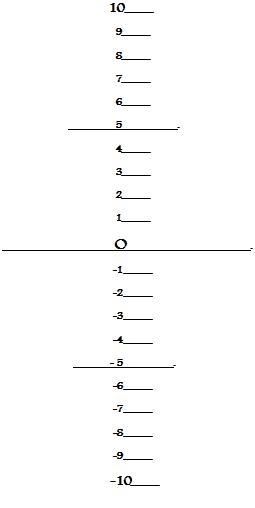
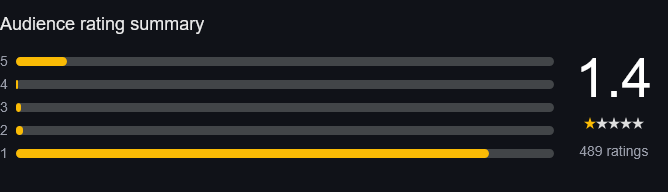
Why is the Cognitive Dissonance Scale the graphic I chose for the final word on Disney’s “live-action” remake of Walt’s biggest and most important hit, 1937’s “Snow White and the Seven Dwarfs”? (For some perspective, realize that we have the same relationship on the timeline to that film that it had to the Presidency of Millard Fillmore.) It is clear that this cultural ethics train wreck, which EA has been dutifully covering (here,here, here, here here, and here), is now stuck inextricably in cognitive dissonance territory. For most viewers, what they think about the movie will be influenced far more by their biases and what they associate with the movie than the movie itself.
That’s how the scale works, as I keep explaining ad nauseam. If Disney is generally a plus-5 on a ticket-buyer’s scale (once upon a time, Disney would have been a plus-10 or higher on everyone’s scale) and the movie in a vacuum would be at “Meh”-level Zero, Disney would pull the film into positive territory. If Disney is in negative territory already for a different viewer, the film begins with an anchor chained to its metaphorical ankles.
Thus it is hardly surprising to see this as the early returns on the film (which doesn’t officially open in theaters until tomorrow):





 Ethics Alarms