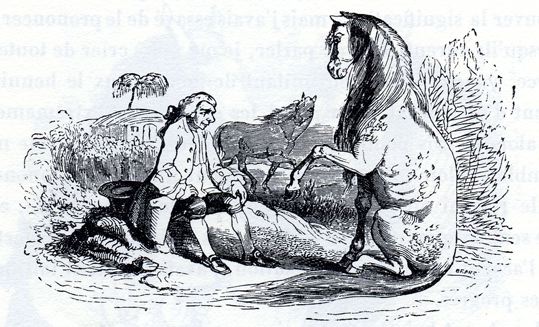
“The Truth About Human Nature”: Gulliver, Horse People, Absolutism and Lies

Gulliver among the Houyhnhnms

As I recuperate from air travel hell and try to gather my wits, here is a provocative essay examining how Jonathan Swift explored the complex function of lying in human nature. The essay is by Prof. Lee Perlman, in the New Atlantis, and you can read it here.

___________________________________

Source: The New Atlantis

Graphic

Occupy Eduardo Saverin

Too bad for Severin that they don’t make students read this any more.

You use the culture, markets, resources and freedom of the United States to turn your innovation into a fortune, and when your nation needs you, more than ever, to contribute your fair share to address its serious economic crisis, you decide to flee to foreign shores.

 That’s Facebook co-founder Eduardo Saverin.

Despicable.

Occupy Wall Street and its offspring engage in slander and bigotry by characterizing all wealthy, successful individuals as selfish leeches, but their stereotype fits Saverin like a wetsuit. As his company is poised for a public offering and his shares in it are about to lay golden eggs, he has decided to give up his citizenship, and his tax obligations, to live in luxury in Singapore. This will save him at least 67 million dollars in taxes, and probably more. His lawyer-spokesman says that the timing of Saverin’s exodus is coincidental; he just had an overpowering desire to live in Singapore.

Right.

Well, good riddance. The U.S. needs his money, and had a right to it, but it doesn’t need him. He is an ungrateful, greedy and selfish wretch, and richly deserves to be remembered as this generation’s Philip Nolan, “The Man Without A Country.”

__________________________

Facts: Bloomberg

Graphic: Barnes and Noble

Ethics Alarms attempts to give proper attribution and credit to all sources of facts, analysis and other assistance that go into its blog posts. If you are aware of one I missed, or believe your own work was used in any way without proper attribution, please contact me, Jack Marshall, at  jamproethics@verizon.net.

Ethics Flashback: A Letter From Kurt Vonnegut

Mr. Vonnegut

[From the lovely website Letters of Note comes the memory  of this, a letter sent on November 16, 1973 to the Chairman of the Drake, North Dakota, School Board by the late author Kurt Vonnegut. The Chairman, Charles McCarthy, (a name evoking, appropriately, both the rights-flattening Senator of “Have you no decency?”  fame and the dummy) had been outraged that a teacher at the high school had used Vonnegut’s classic novel, “Slaughter-House Five,” in class, and with the support of his board, saw that all the copies of the book purchased were burned in the school’s furnace, followed by others that he deemed “obscene.” Vonnegut, whose novels teem with ethical themes, especially the importance of kindness, learned about the book-burning from news reports, and wrote the following correspondence.

Apparently he received no reply.]

“Dear Mr. McCarthy:

I am writing to you in your capacity as chairman of the Drake School Board. I am among those American writers whose books have been destroyed in the now famous furnace of your school.

Certain members of your community have suggested that my work is evil. This is extraordinarily insulting to me. The news from Drake indicates to me that books and writers are very unreal to you people. I am writing this letter to let you know how real I am. Continue reading

The Principle President Obama Cannot—or Will Not— Grasp

President Obama's learning curve.

As I observed the uproar building over the neighborhood watch murder of Trayvon Martin, the Sanford, Florida teenager fatally shot by a 911 caller who found him “suspicious,” I found myself hoping against hope that President Obama could muster the restraint—restraint that he has too often failed to exercise in the past—to stay out of a local law enforcement matter that is far from resolved. Presidents are not talk-show hosts, and their comments carry excessive power and influence. Picking and choosing among the myriad Americans who suffer misfortune, tragedy and injustice to render support and sympathy is a fool’s game, and an irresponsible act by a national leader. President Obama is no fool, but in this area his flat learning curve has been shocking. He injected himself into the Cambridge police’s altercation with a cranky law professor before he knew all the facts; he rendered a verdict on a coal mine cave-in before fault had been established; he injected himself into a local controversy over the location of a mosque, and he even entered the dispute over Rush Limbaugh’s insults to a law student. Every one of these abuses of his office and influence attracted appropriate criticism (though not nearly enough of it) and caused other problems as well. I thought that maybe…maybe…the President finally might have figured out what virtually every other President understood by the time he had been inaugurated.

Nope! Continue reading

Comment of the Day: Anti-Bullying Mis-steps: The Perils of Changing Cultural Norms (Part 2)

From Penn, excellent and valuable insight on “The Hunger Games” controversy, going into relevant issues and facts that my post did not. Here is his Comment of the Day on the post, Anti-Bullying Mis-steps: The Perils of Changing Cultural Norms (Part 2):

“The purpose of this argument scares the hell out of me. As one press-screener’s review had it, and as the trailers make clear, “The Hunger Games” tells the story of a televised fight to the death between(sic) a group of youngsters in which only one can survive.” If I believed there were any merit to the MPAA system, yes, R is what it should be. [“This Film is Not Yet Rated” is the movie to see on this subject.] Continue reading

Old Testament Treatment For The Miramonte Elementary School Culture

It could be worse; at least no teachers have been turned into pillars of salt.

Following the discovery that two Miramonte Elementary School teachers, Mark Berndt and Martin Springer,  allegedly engaged  in lewd activity with students, Los Angeles Unified School District made the brave decision to replace all teachers and staff, with everyone being re-assigned. Predictably, there have been protests and criticism. The basic argument: it is excessive and unfair. The good teachers, whoever they were, weren’t at fault.

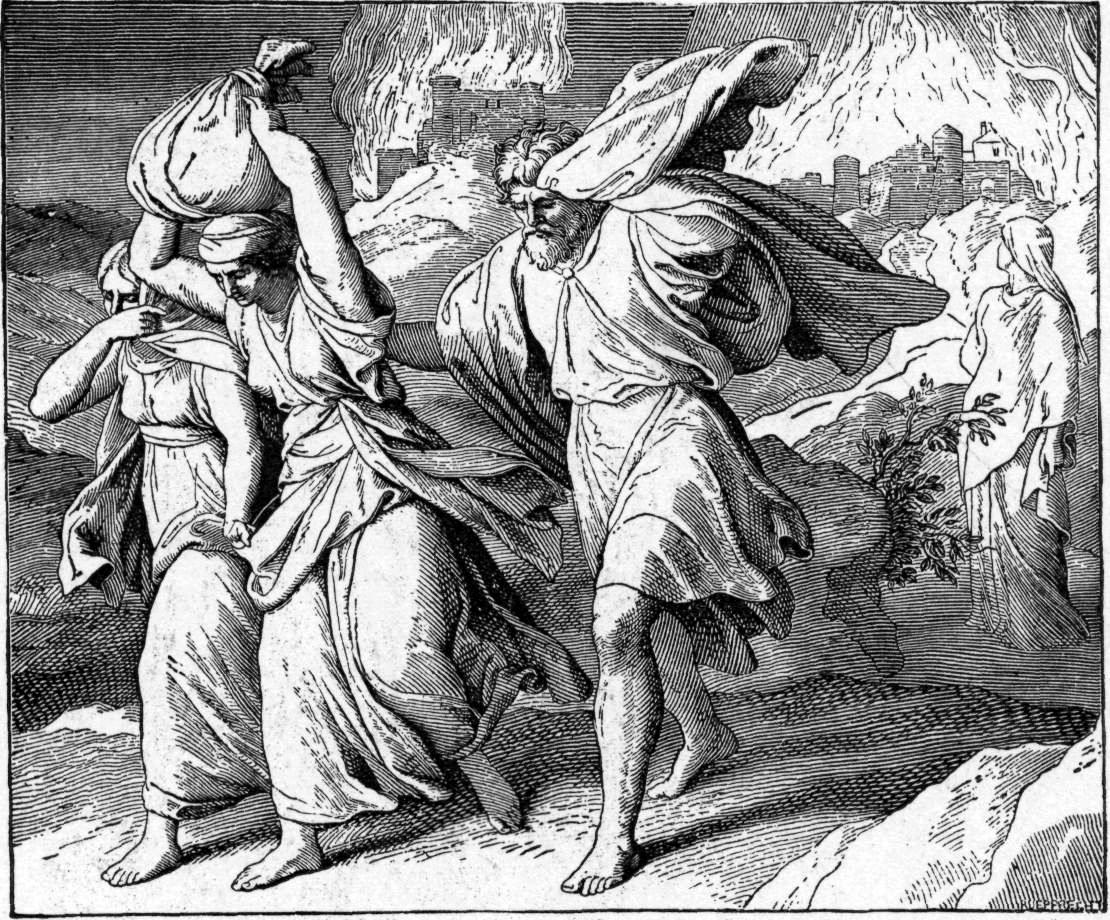
Yes, they were; at least, they were responsible, and share accountability for a culture they were part of. The school district’s decision correctly assumes that when two members of a relatively small teaching staff abuse young children over a long period, something is rotten at the school beyond those teachers. Oversight is lax, administrators are looking the other way, teachers are protecting colleagues or refusing to acknowledge the implications of what they see or hear. There is a substantial chance that the Miramonte Elementary School didn’t just have some proverbial bad apples, but that it had created a culture that encouraged apples to go bad. There can be no certainty that Berndt and Springer were the only abusers on the staff, and the safety of children is at stake. Clear out the school, and wipe out the culture; have new personnel from top to bottom. It is easier to start over with a rotten culture than to try to fix it: this was God’s attitude in the Old Testament, and He had a point. The difference is that He killed off corrupt cultures with floods and fire, or just made them wander in the desert for generations.  Luckily, this isn’t Congress, Wall Street, Hollywood, or Rupert Murdoch’s empire. You can start all over with a school. Continue reading

The Admirable Mr. Sondheim

And an ethical hat it is, too!

Readers who are not interested in the art of lyric writing and the mechanics of constructing a Broadway musical should probably avoid the second and final installment of Stephen Sondheim’s chronicle of his creative life, “Look, I Made a Hat.”  They will be missing something important nonetheless: a rare example of truly ethical memoirs.

As in his first volume, “Finishing the Hat,” America’s pre-eminent composer-lyricist for the stage reveals himself as a gentleman, an adult, and a thoroughly ethical human being, and does so not by proclaiming his virtues, but by demonstrating them in his writing. He is not uncritical, but always fair and kind. He accepts personal responsibility for projects that failed, and is generous with giving credit for projects that were successful. There is no false modesty in Sondheim about his own skills and achievements, but neither does he seem to overvalue them or seek his reader’s admiration by blowing his own horn.

The line Sondheim walks in both books is fine, and he walks it finely. For example, I initially thought his decision to only criticize the techniques of other lyricists who are dead was a cowardly one, but upon reading both books it is clear that the decision was motivated by kindness. Sondheim takes the craft of lyric-writing very seriously, and his integrity would not allow him to censor a critical observation regarding a colleague’s work when he believed the criticism was illuminating and had merit. Realizing how hurtful a critique from someone of his reputation and accomplishments could be, Sondheim restricted his frank and (mostly)  fair assessments to writers beyond wounding. If Jerry Herman isn’t grateful, he should be. Continue reading

Ethics Hero Emeritus: Christopher Hitchens (1949-2011)

Too many excellent writers are writing about Christopher Hitchens in the wake of his premature death from cancer for me to add much of value. I disagreed with Hitchens frequently, but then, so did everyone. What I appreciated was his integrity, which was unshakable. What I admired, and will always try to emulate, was his refusal to be seduced by convention, ideology, political agendas and partisan bias. Hitchens looked at the world with clear and piercing eyes, and dissected what he observed with a mind that was curious, rigorous, and forever open. Thus he was never a comfortable ally for liberal or conservative, Republican or Democrat, because he would never hesitate to arrive at conclusions that shocked his friends and cheered his friend’s enemies. He was fearless and principled.

Most of all, however, Christopher Hitchens wrote like an angel, a simile the committed atheist would have hated. It is a measure of the depths to which popular taste and intellect have fallen that the Mark Train Prize was awarded in recent years to the pedestrian likes of Will Farrell and Tina Fey when Hitchens routinely churned out prose wittier than their best efforts on the most inspired days of their creative lives. He was truly the spiritual and literary descendant of Mark Twain, as well as Swift, Ambrose Bierce, H.L. Mencken, George Bernard Shaw, W.S. Gilbert, Dorothy Parker, Gore Vidal and the rest of the select crew of social critics blessed with the ability to infuriate, illuminate and amuse simultaneously. When he focused all of his passion, intellect and rhetorical skills on a topic he cared about, Hitchens was as close to an irresistible force as a writer can be. Yet his mission was always noble. His constant goals were truth, justice, fairness, and wisdom. Of him it could be fairly stated, as of few others, that while Christopher Hitchens was around, bullshit was never safe.

I’ll close with four links about Hitchens: the New York Times obituary, the Washington Post obituary, a collection of comments and other links about Hitchens, a collection of his essays, an appreciation from a friend, and a collection of some of his best quotes.

If you can only read one, choose the last. The list is heavily tilted toward Hitchens’ attacks on religion, and he wrote about so many other things, but it is representative of his skill and style. One quote on the list  in particular I remember well, and it makes me laugh every time I read it:

“If you gave [Jerry] Falwell an enema he could be buried in a matchbox.

Ah, we’ll miss you, Hitch!

The Media’s Despicable Catch-22 Against Herman Cain

Mr. Cain...meet Capt. Yossarian. He'll expain everything.

I have to rub my eyes, slap my forehead, and keep reminding myself that astounding as it seems, many of the same journalists I hear calling the detail-free and meaningless sexual harassment rumors about Herman Cain “devastating” never considered the sexual harassment issue worth discussing during President Clinton’s Monica Lewinsky crisis, and ignored Juanita Broderick’s credible claims that Clinton sexually assaulted her when he was Arkansas Attorney General. Times have changed, have they? How convenient.

CNN’s Gloria Borger, whose sneering daily coverage of all Republican presidential candidates on has to be seen to be believed, asked the Perry campaign operative Cain has accused of leaking the story to Politico what it would mean for Cain’s candidacy “if the sexual harassment charges are true.” That question is incompetent, dishonest and reckless journalism, because there are no “sexual harassment charges,” and there is no possible way that they can be proven “true.” Borger’s phrasing of her question implies that there is a standing accusation of wrongdoing, and there is not; it also suggests that there is a fair process available to determine truth, when there is not. Thus she exploits the public’s ignorance about sexual harassment (which she quite possibly shares) to impugn Cain without a molecule, atom, or photon of evidence. Nothing. Continue reading

Scary Ethics Theater: The Strange Case of the Freedom of DISinformation Act!

"It's Halloween! What better time for a good ETHICS SCARE in ERIC HOLDER'S JUSTICE DEPARTMENT!!! Come along, children! Don't be afraid!"

Welcome, visitors, to SCARY Ethics Theater on this All Hallow’s Eve!

Tonight we ask the scary question, “When is it ethical to be unethical?  For the chilling answer, we must enter the mysterious lair of Eric Holder’s Justice Department!!! Bwahahahahahahaha!!!

Come inside! Don’t be frightened!

The Holder-Obama Justice Department has proposed a regulation that would allow federal law enforcement agencies to tell people seeking information under the Freedom of Information Act that the government has no records on a certain subject, when it really does. That is, the regulation will officially sanction legal lying in response to FOIA requests by citizens. Continue reading