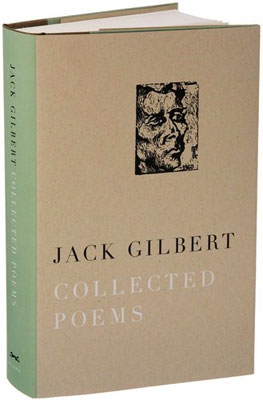
Trust and “The Paradoxical Commandments” of Dr. Keith

In case you were wondering what was on that third tablet that Moses dropped…

I’m preparing a long business ethics program for a large corporation with some ethics issues (which is to say, for a large corporation), and while reviewing my files on business leadership re-discovered some material that I hadn’t looked at for a long while. One of them was “Anyway,” a poem that was also turned into an inspirational book by its author, Dr. Kent M. Keith.  He first wrote it for student leaders in 1968 while an undergraduate at Harvard.

One wonders if what he called “The Paradoxical Commandments” would have occurred to anyone but a student, before he could become jaded, cynical, disillusioned, or stuffed with so many scholarly  details, controversies and nuances regarding ethics that such an idealistic view was tainted forever.  (I should note that Dr. Keith has obviously become none of those things, perhaps because he was able to remain true to his own youthful advice.)

The poem is really about trust, the essence of ethics. There is no question that those who trust—in people, in institutions, in justice, in fairness—will inevitably be betrayed and disappointed, sometimes tragically.  Yet to stop trusting in those things, which so much human experience and simple logic dictates is the safest, most sensible course, is to damn one’s life and the society we live in to perpetual mediocrity, fear, and darkness. Democracy is based on trust of an idea: that human beings can be trusted to live their own lives, and that under the inspiration and catalyst of freedom, will create, persevere, love and build a healthy and happy society. There is plenty of evidence that suggests that trusting this idea is risky and foolish, yet trust is its only hope for fruition. So we must trust anyway.

I’ve never posted Dr. Keith’s poem on Ethics Alarms before. I should have. Here it is: Continue reading

“Print the Legend” Ethics: The Unjust Obscurity of Mary Quantrell

Barbara Fritchie, as in the poem. But the Barbara in the poem was really Mary.

Today is the anniversary of the Battle of Antietam, the single most bloody day in the Civil War, with nearly 21,000 casualties on September 17, 1862.  Most of us, at least those of my generation, were introduced to the battle with a poem, “The Ballad of Barbara Fritchie,” by John Greenleaf Whittier, telling the tale of a brave old woman, ninety years old, who confronted Confederate General Stonewall Jackson’s troops as they marched through Frederick, Maryland to the battlefield, by waving Old Glory after the troops had fired at it, and saying,

Shoot, if you must, this old gray head,
But spare your country’s flag,’ she said.

Barbara Fritchie is now an icon, and has been portrayed in novels and films. Her house is a historic landmark, and the town uses her name and the poem to market everything from candy to T-shirts. And, I learned this Sunday, it is all a lie, though not old Barbara’s fault. The poet got his facts wrong, or used excessive “poetic license” because “Barbara Fritchie” pleased his ear better than “Mary Quantrell”, the name of the real flag-waver, and a 90-year old patriot made for a more colorful plot than a mere 30-something with chutzpah. Whittier also made Jackson the antagonist of the tale, when in fact the general was the less flamboyant and famous A.P. Hill. In 1876 Quantrell wrote to Whittier pleading with him to correct the record, signing her letter, in quotes, as “Barbara.” He did nothing. Continue reading

Writers Writing About Ethics, Without Any

Sorry, can’t use you.

Writer Joe Konrath has written one of those blog posts about ethics that makes me want to defenestrate myself, a post that expounds on rationalizations as a substitute for ethical analysis because he is incapable of the latter, arriving at fatuous and misleading conclusions. Naturally his post was picked up and expounded upon by another blogger, Ben Galley, who has even launched an ethics-challenged website called Ethiks to promote similar ethics rot.

Both writers are holding forth about recent scandals in the publishing world, involving so-called “sock puppetry,” where a writer anonymously praises his own books on-line or trashes the work of competitors, and writers paying for positive reviews. Both are also laboring under juvenile ethical delusions, and obnoxiously so, among them:  that “everybody does it” is a valid excuse for cheating, that the fact that a critic of unethical behavior might engage in such behavior himself under certain conditions invalidates the ethical criticism, and that unethical people insisting that unethical conduct isn’t puts such conduct in a “grey area.” None of these is true; none of these is remotely true.

The ethically-clueless tenor of both posts can be gleaned from this section, by Galley:

“Ethics in life are a grey area. No less in the book industry. To borrow JA’s analogy, the claim of “I would never kill” goes out of the window pretty quickly when protecting your family against a murderous intruder. The line of ethics is never a straight one, often zig-zagging through a charcoal no-man’s land of right and wrong. The question is this: Where does the line lie for you? It’s nothing less than personal. Some people simply shrug at the thought of sock-puppetry. Others go a shade of red and grit their teeth. Sadly, we can write all the codes and edicts we like, the point is that not everyone will a) agree, nor b) abide.”

Let me see: wrong, wrong, irrelevant, wrong, not necessarily, no it isn’t, NO, it REALLY ISN’T, and so what?

Most ethical questions are not gray at all: these definitely aren’t. They are clear as clear can be. “Sock puppetry” is dishonest and unfair. An author paying for positive reviews, and a critic accepting payment from an author to review his work, is blatantly dishonest and a conflict of interest. There is no “gray” about it; they are just wrong. Anyone who draws the “line” anywhere else is wrong too. It doesn’t matter whether everyone agrees: those who don’t agree are unethical. So are those who can’t “abide.” Their unethical conduct doesn’t alter right and wrong.

Konrath’s piece wastes our time with a long argument claiming that unless one is as pure as the driven snow, not only can’t you call unethical conduct what it is,  the fact that you can’t calls into question whether the unethical conduct is really unethical at all. Here’s his “quiz,” which Konrath presents triumphantly as if it is a real brain-buster, when anyone with a modicum of honesty, decency and common sense should be able to score 100% without straining a neuron.

Here it is, with my answers in bold: Continue reading

Ethics Dunce: Novelist R J Ellory

“Jellybean”

Yes, he really did: best-selling British crime novelist R J  Ellory actually went on Amazon, and using fake names like “Jellybean” and “Nicodemus Jones,” wrote rave reviews of his own books . In one review, he called one of his novels a “modern masterpiece” and wrote that it “just stopped me dead in my tracks.”

How embarrassing. Sales a little soft lately, R J? He also used fake identities to post negative reviews of his rivals’ works. Continue reading

Comment of the Day: “The Case of the Mildly Profane Valedictorian”

Thank you, Lorraine. Just…thank you.

Short, concise, to the point and irrefutable, the Comment of the Day by new commenter Lorraine M. (a lawyer, and a good one–she’s an old friend) settles the looming mystery in the “heck-hell” controversy over an Oklahoma student’s Valedictorian address at graduation, by going to the source: a passage in one of the “Twilight” films that Kaitlin quoted. A battle has been raging in the thread on the original post over whether I was right to hold that she owed the school an apology for using mild profanity in front of the assembled parents at the Prague High graduation ceremony, and it was beginning to look like I was going to have to watch “Twilight” to settle the matter. Saving me from that horrible fate alone warrants this being the Comment of the Day, on the post The Case of the Mildly Profane Valedictorian.

“In the Twilight movie, the graduate making the speech uses the word “hell.” Kaitlin Nootbaar’s written version of her speech substituted “heck.” Her conscious decision in this regard strongly suggests that Kaitlin knew that “hell” was inappropriate in the context of her graduation speech or, at the very least, likely would be considered inappropriate by school authorities. Any claim otherwise at this point is highly suspect. An apology is warranted.”

Yes, it is.

“The Truth About Human Nature”: Gulliver, Horse People, Absolutism and Lies

Gulliver among the Houyhnhnms

As I recuperate from air travel hell and try to gather my wits, here is a provocative essay examining how Jonathan Swift explored the complex function of lying in human nature. The essay is by Prof. Lee Perlman, in the New Atlantis, and you can read it here.

___________________________________

Source: The New Atlantis

Graphic

Occupy Eduardo Saverin

Too bad for Severin that they don’t make students read this any more.

You use the culture, markets, resources and freedom of the United States to turn your innovation into a fortune, and when your nation needs you, more than ever, to contribute your fair share to address its serious economic crisis, you decide to flee to foreign shores.

 That’s Facebook co-founder Eduardo Saverin.

Despicable.

Occupy Wall Street and its offspring engage in slander and bigotry by characterizing all wealthy, successful individuals as selfish leeches, but their stereotype fits Saverin like a wetsuit. As his company is poised for a public offering and his shares in it are about to lay golden eggs, he has decided to give up his citizenship, and his tax obligations, to live in luxury in Singapore. This will save him at least 67 million dollars in taxes, and probably more. His lawyer-spokesman says that the timing of Saverin’s exodus is coincidental; he just had an overpowering desire to live in Singapore.

Right.

Well, good riddance. The U.S. needs his money, and had a right to it, but it doesn’t need him. He is an ungrateful, greedy and selfish wretch, and richly deserves to be remembered as this generation’s Philip Nolan, “The Man Without A Country.”

__________________________

Facts: Bloomberg

Graphic: Barnes and Noble

Ethics Alarms attempts to give proper attribution and credit to all sources of facts, analysis and other assistance that go into its blog posts. If you are aware of one I missed, or believe your own work was used in any way without proper attribution, please contact me, Jack Marshall, at  jamproethics@verizon.net.

Ethics Flashback: A Letter From Kurt Vonnegut

Mr. Vonnegut

[From the lovely website Letters of Note comes the memory  of this, a letter sent on November 16, 1973 to the Chairman of the Drake, North Dakota, School Board by the late author Kurt Vonnegut. The Chairman, Charles McCarthy, (a name evoking, appropriately, both the rights-flattening Senator of “Have you no decency?”  fame and the dummy) had been outraged that a teacher at the high school had used Vonnegut’s classic novel, “Slaughter-House Five,” in class, and with the support of his board, saw that all the copies of the book purchased were burned in the school’s furnace, followed by others that he deemed “obscene.” Vonnegut, whose novels teem with ethical themes, especially the importance of kindness, learned about the book-burning from news reports, and wrote the following correspondence.

Apparently he received no reply.]

“Dear Mr. McCarthy:

I am writing to you in your capacity as chairman of the Drake School Board. I am among those American writers whose books have been destroyed in the now famous furnace of your school.

Certain members of your community have suggested that my work is evil. This is extraordinarily insulting to me. The news from Drake indicates to me that books and writers are very unreal to you people. I am writing this letter to let you know how real I am. Continue reading

The Principle President Obama Cannot—or Will Not— Grasp

President Obama's learning curve.

As I observed the uproar building over the neighborhood watch murder of Trayvon Martin, the Sanford, Florida teenager fatally shot by a 911 caller who found him “suspicious,” I found myself hoping against hope that President Obama could muster the restraint—restraint that he has too often failed to exercise in the past—to stay out of a local law enforcement matter that is far from resolved. Presidents are not talk-show hosts, and their comments carry excessive power and influence. Picking and choosing among the myriad Americans who suffer misfortune, tragedy and injustice to render support and sympathy is a fool’s game, and an irresponsible act by a national leader. President Obama is no fool, but in this area his flat learning curve has been shocking. He injected himself into the Cambridge police’s altercation with a cranky law professor before he knew all the facts; he rendered a verdict on a coal mine cave-in before fault had been established; he injected himself into a local controversy over the location of a mosque, and he even entered the dispute over Rush Limbaugh’s insults to a law student. Every one of these abuses of his office and influence attracted appropriate criticism (though not nearly enough of it) and caused other problems as well. I thought that maybe…maybe…the President finally might have figured out what virtually every other President understood by the time he had been inaugurated.

Nope! Continue reading

Comment of the Day: Anti-Bullying Mis-steps: The Perils of Changing Cultural Norms (Part 2)

From Penn, excellent and valuable insight on “The Hunger Games” controversy, going into relevant issues and facts that my post did not. Here is his Comment of the Day on the post, Anti-Bullying Mis-steps: The Perils of Changing Cultural Norms (Part 2):

“The purpose of this argument scares the hell out of me. As one press-screener’s review had it, and as the trailers make clear, “The Hunger Games” tells the story of a televised fight to the death between(sic) a group of youngsters in which only one can survive.” If I believed there were any merit to the MPAA system, yes, R is what it should be. [“This Film is Not Yet Rated” is the movie to see on this subject.] Continue reading