Some Post Iowa Debate Ethics Awards

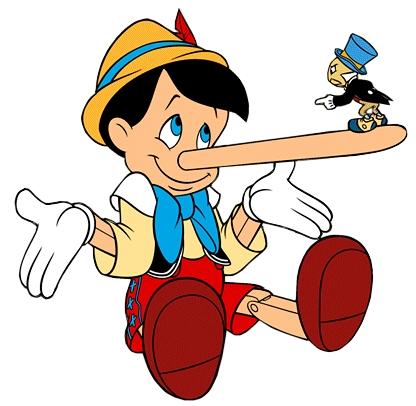
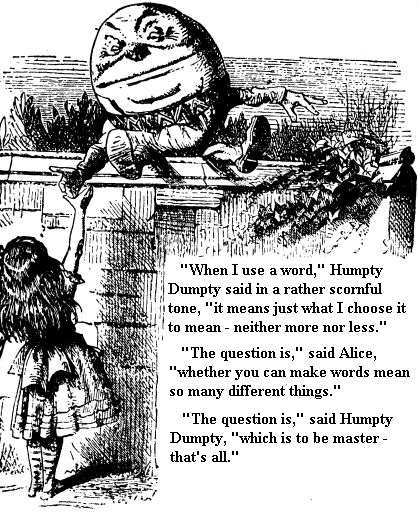
Other than the fact that both would look crazy on the cover of Newsweek, how is Humpty Dumpty like Michele Bachman?

The GOP pre-Iowa straw poll presidential debate last night earned a few ethics awards, with many more to come as we get to know these pretenders better:

Journalistic Integrity Award: Chris Wallace, Fox news anchor and questioner.

Wallace continues to bring legitimate and fair journalistic practices to his job, and gets accused of being biased anyway. Or, as in this case, (and as when he shocked Michele Bachmann by asking her directly what everyone was implying, “Are you a flake?”), conservatives who expect softballs from Fox react with indignation that an assumed ally is asking a tough question. Wallace asked Newt Gingrich about his flailing campaign organization, and Gingrich angrily called it a “gotcha” question. That’s not a “gotcha,” Newt, and you know it. When most of a candidate’s  campaign staff, those who know him  best, have indicated that they don’t think he has a chance—or perhaps shouldn’t have a chance—by jumping ship, it is fair and responsible to ask a candidate to explain. Continue reading
Scent Branding, Mind-Control, and Ethics

Agreed: this is scary. We're not there yet. We don't even know if "there" exists.

A recent article on the web that purported to explore the ethics of “scent branding” was fascinating for two reasons.

First, “scent branding” is a term I had never encountered before, for a practice that I had not focused on. About five seconds of thought, however, made me realize that indeed I was aware of the phenomenon, and had been for quite a while. “Scent branding”—using fragrances in a commercial environment to create a desired atmosphere and to prompt positive feelings, recollections and emotions from patrons—has been around a long, long time, though not under that label. When funeral parlors made sure that their premises smelled of flowers rather than formaldehyde, that was a form of scent branding. Progress in the science of scent allowed other businesses to get into the act: I was first conscious of the intentional use of smell when I spent a vacation at the Walt Disney World Polynesian Villages Resort. The lobby and the rooms had a powerful “tropical paradise” scent, a mixture of beach smells, torches and exotic fauna. It was obviously fake, like much in Disney World; also like much in Disney World, I found it effective, pleasant, and fun. I certainly didn’t think of it as unethical. I was normal in those days, however.

Well, more normal.

The second aspect of the article, entitled “Is it Ethical to Scent Brand Public Places?”, that caught my attention was that it had an obvious agenda. The piece was opposed to scent branding, and set out to find the practice unethical in order to justify condemning it. Continue reading

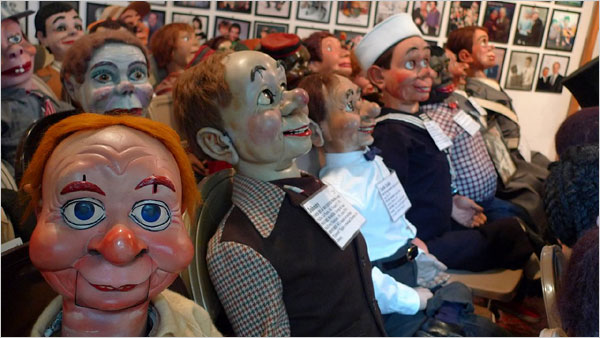
Rep. Wu and the Scourge of Government by Ventriloquist Dummies

I have a 90% completed post tentatively entitled “Why We Are Doomed” sitting in my drafts file, and I can’t bring myself to finish or post it. I don’t want to believe we are doomed, so the Golden Rule keeps telling me that I shouldn’t be trying to convince others we are doomed. I believe in hope. I believe that cultures, especially this culture, can do the right thing and still be successful, provided that they can find leaders and role models who represent and encourage ethical values.

On the other hand, I really do believe we, that is to say, the United States of America, are probably doomed.

A story unfolding now, a sad saga that has really been unfolding for a long time, illustrates one of the factors I lament over in my languishing draft. Rep. David Wu (D-Ore.) has been accused of an “unwanted sexual encounter” with the teenage daughter of a longtime friend. We have to be careful here, but there seems to be little doubt that the “encounter” occurred.  The Oregonian has reported that sources aware of the incident say that Congressman Wu, who is 56, “acknowledged a sexual encounter to his senior aides but insisted it was consensual.”

Wu has been a train wreck waiting to happen for a long, long time. Continue reading

We Know Enough about Ethics Already

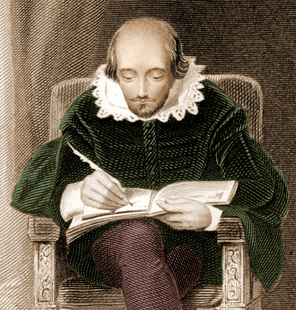
If Shakespeare understood ethics so well, why are we still pretending to be ignorant about it?

I awoke to read about a breathlessly announced new work on ethics, a book called “Blind Spots: Why We Fail to do What’s Right and What to do About it.” Business Professor  Ann Tenbrunsel and co-author Max Bazerman write that we are unaware of the “ethical blind spots” that keep us from recognizing how we engage in unethical actions. The book cites tests and new research showing behavior that the authors call “ethical fading” and “motivated blindness.” They examine such case studies as Enron and the Madoff scam to show how people “believe they will behave ethically in a given situation, but they don’t. Then they believe they behaved ethically when they didn’t. It’s no surprise, then, that most individuals erroneously believe they are more ethical than the majority of their peers.”

Stop the presses! Conflicts of interest make us ignore core values and act in our own best interests, and we rationalize our actions to avoid confronting the true nature of our conduct!

Oops! I just stated the entire thesis of the book. I’m sorry, Ann! Apologies, Max! Continue reading

Fact Checker Ethics, Part II: Validating Deceit, and Practicing It Too

Et tu, Fact Checker?

In its review of Washington Post “Fact Checker” Glenn Kessler’s shameful refusal to call the Democratic dissembling on Social Security, Ethics Alarms saved the best—which is to say, worst—for last.

Beginning with a statement typical of Obama Administration and Democratic leadership positioning on the subject, Rep. Xavier Becerra’s (D-Calif.) “Social Security has never contributed a dime to the nation’s $14.3 trillion debt…not one penny to our federal budget deficit this year or any year in our nation’s history,” Kessler gives a brief history of Social Security, why it has no more money, and concludes with this nonsense:

“Becerra is sincere in his convictions and his statement is true, so far as it goes. Yes, Social Security in the past has not contributed to the nation’s debt. But it’s basically a meaningless fact and actually distracts from the long-term fiscal problem posed by the retirement of the baby boom generation and the shrinking of the nation’s labor pool.” Continue reading

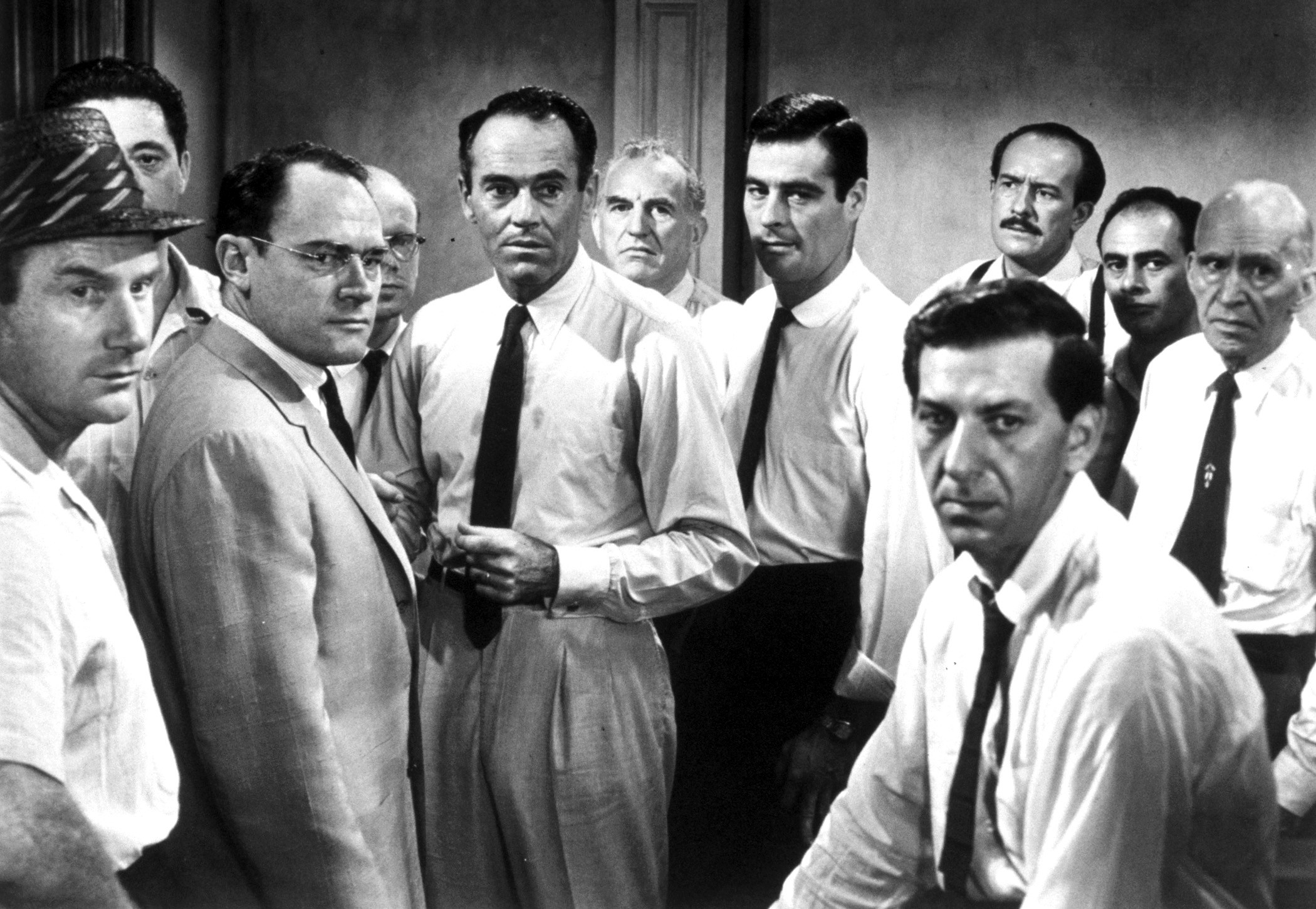
“Twelve Angry Men,” A Million Angry Fools, and the Jury System

Their defendant was probably guilty too.

Ethics Alarms All-Star Lianne Best sent me this link about a member of the Casey Anthony jury who is going into hiding because of all the hate and criticism being directed at jury members and their controversial verdict. Her plight, which must be shared by other members of the much-maligned jury, highlights the unethical, not to mention ignorant, reaction of the public to the Florida ex-mother’s narrow escape from a murder conviction she almost certainly deserved.

The problem begins with publicity. We may need to re-examine the logic behind broadcasting high-profile cases. The combination of live courtroom feeds and quasi-semi-competent commentary gives viewers the mistaken belief that they are qualified to second guess the jury, and they are not. They are not because the jury is in the courtroom, and the viewers aren’t. The jury and TV watchers see different things; individuals communicate different emotions and reactions in person than they do on camera. There is only one fair and sensible way to answer those on-line instant polls that ask, “Do you think Casey Anthony should be found guilty?”, and that is “I don’t know.”

Most of all, the viewers and pundits are not present in the jury room. Continue reading

Perspicacious Ethics: The Media Has A Duty Not To Make Us Dumber

Gore Vidal once said, “As societies grow decadent, the language grows decadent, too.” Certainly the media is accelerating the decadence of society; does it have to intentionally do in the language as well?

On ABC’s This Week, host Christiane Amanpour casually used the word “perspicacious.” Discussing the Constitution,  one of Amanpour’s guests mentioned that Benjamin Franklin wrote that he wouldn’t mind being preserved in a vat of Madeira wine in order to see if the Constitution held up 200 years later. Amanpour responded that Ben was amazingly perspicacious when the Constitution was signed.

Apparently  the word perspicacious stumped the 7th grade drop-outs in the booth, because suddenly a box appeared with the definition and pronunciation of the word under Amanpour. Then, commenting on the incident, the web site Mediaite wrote that Amanpour “might avoid using such fancy language so that viewers in the future don’t mistake her show for a Rosetta Stone class teaching the English language.” Continue reading

Ethics, Porn, and the Creepy Professor

The Ronald Ayers saga raises the intriguing, Weiner-esque ethical issue of whether a college professor being creepy is sufficient reason to fire him.

The former economics professor was fired by the University of Texas for viewing pornography on an office computer, which the University’s policies forbade. The chain of facts has the ring of Kafka: 1) a student claims he hears “sexual noises” emanating from Ayers’ office, which 2) is considered sufficient provocation (the professor denied the accusation that he was not “master of his domain” at work) for the school to search his computer, which 3) uncovers evidence that he looked at some pornographic sites, and 4) also that he searched for the term “teen,” which 5) the university deems sufficient to indicate that he was searching for child pornography, so 6) they fired him, after three decades and tenure on the faculty.

University records say Ayers at first denied the allegations that he viewed pornography, but when confronted with a printout of his computer records, admitted that it may have happened “at the end of a long work day.” Ayers later told administrators seeing the porn was for “academic research.”

Uh-huh… Continue reading

Strauss-Kahn and His Accuser, Victims of The Postman

The accuser of Dominique Strauss-Kahn, the former IMF head who has been devastated by her sensational rape charge, now admits that parts of her original account of the incident and an earlier accusation of rape she made to seek asylum in the U.S. were false.

The Altantic’s Megan McArdle sums up the Ethics Train Wreck thusly:

“There are two possibilities here, neither of them good:

1) A woman with an unsavory past, who has done desperate things to get out of terrible economic conditions, was raped by a prominent figure, and he’s going to get away with it because of her history.
2) A serial cad had consensual sex with a chambermaid, and she attempted to destroy him with a false rape allegation for personal gain. And because of the presumption that women don’t lie about rape, she has succeeded in destroying him . . . though not so much in the personal gain part. To quote Ray Donovan, ‘Where do I go to get my reputation back?'” Continue reading

Remember Gettysburg

Today is July 1, which is being treated across the United States as the gateway to a long weekend and the Fourth of July, and little more. July 1 is also, however, the anniversary of the first day of the Battle of Gettysburg, the most important and most deadly battle of the many important and deadly conflicts in the American Civil War. The two American armies that clashed in the Pennsylvania town sustained more than 50,000 casualties on the Gettysburg battlefield, which may be the saddest and noblest place in America.

If you have not made at least one pilgrimage to the battlefield, you owe it to yourself, and to the memory of the combatants, to go. Continue reading