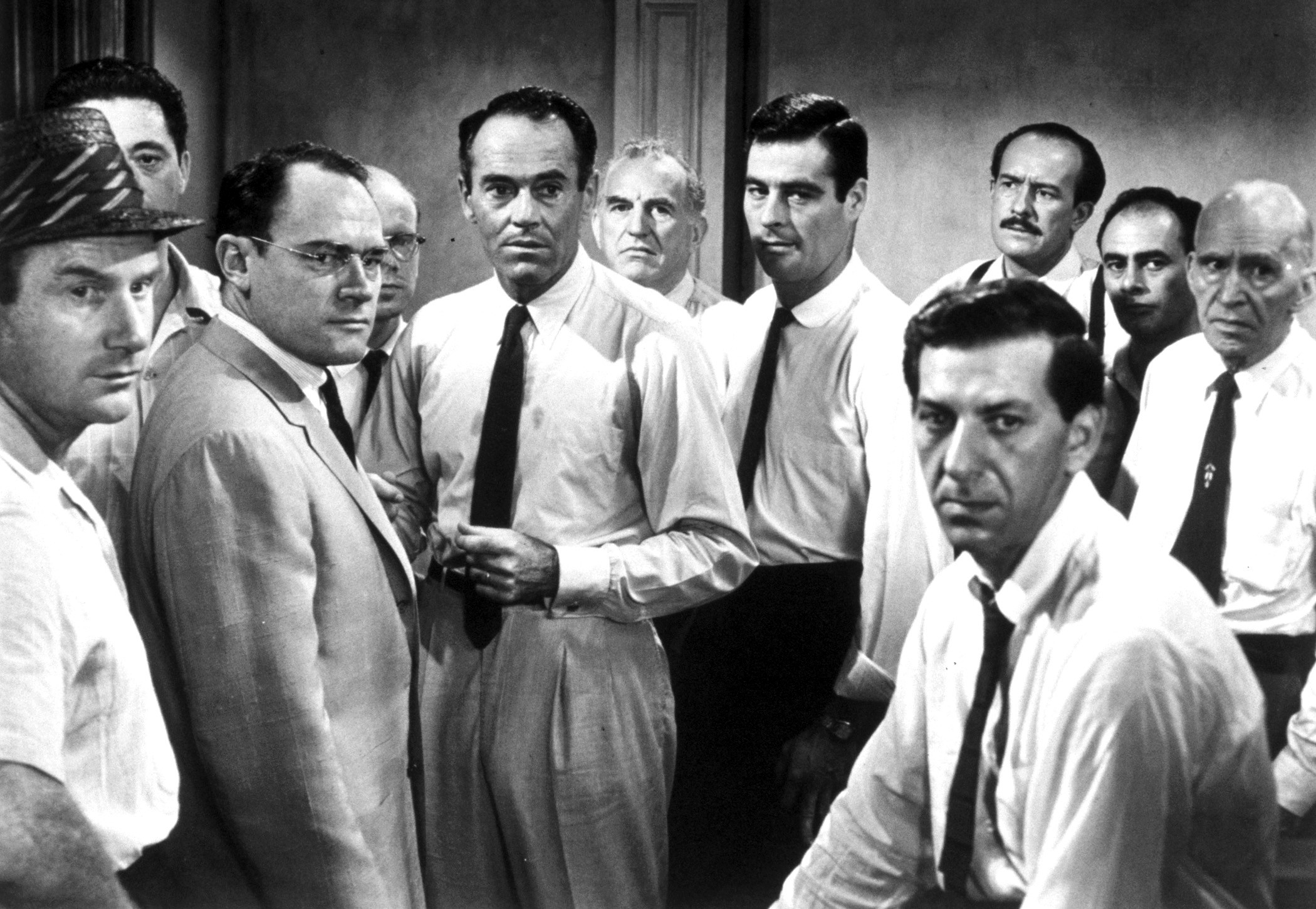
“Twelve Angry Men,” A Million Angry Fools, and the Jury System

Their defendant was probably guilty too.

Ethics Alarms All-Star Lianne Best sent me this link about a member of the Casey Anthony jury who is going into hiding because of all the hate and criticism being directed at jury members and their controversial verdict. Her plight, which must be shared by other members of the much-maligned jury, highlights the unethical, not to mention ignorant, reaction of the public to the Florida ex-mother’s narrow escape from a murder conviction she almost certainly deserved.

The problem begins with publicity. We may need to re-examine the logic behind broadcasting high-profile cases. The combination of live courtroom feeds and quasi-semi-competent commentary gives viewers the mistaken belief that they are qualified to second guess the jury, and they are not. They are not because the jury is in the courtroom, and the viewers aren’t. The jury and TV watchers see different things; individuals communicate different emotions and reactions in person than they do on camera. There is only one fair and sensible way to answer those on-line instant polls that ask, “Do you think Casey Anthony should be found guilty?”, and that is “I don’t know.”

Most of all, the viewers and pundits are not present in the jury room. Continue reading
Perspicacious Ethics: The Media Has A Duty Not To Make Us Dumber

Gore Vidal once said, “As societies grow decadent, the language grows decadent, too.” Certainly the media is accelerating the decadence of society; does it have to intentionally do in the language as well?

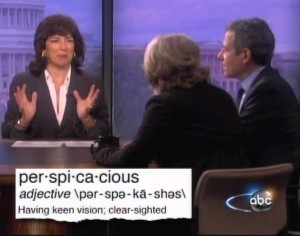
On ABC’s This Week, host Christiane Amanpour casually used the word “perspicacious.” Discussing the Constitution,  one of Amanpour’s guests mentioned that Benjamin Franklin wrote that he wouldn’t mind being preserved in a vat of Madeira wine in order to see if the Constitution held up 200 years later. Amanpour responded that Ben was amazingly perspicacious when the Constitution was signed.

Apparently  the word perspicacious stumped the 7th grade drop-outs in the booth, because suddenly a box appeared with the definition and pronunciation of the word under Amanpour. Then, commenting on the incident, the web site Mediaite wrote that Amanpour “might avoid using such fancy language so that viewers in the future don’t mistake her show for a Rosetta Stone class teaching the English language.” Continue reading

Ethics, Porn, and the Creepy Professor

The Ronald Ayers saga raises the intriguing, Weiner-esque ethical issue of whether a college professor being creepy is sufficient reason to fire him.

The former economics professor was fired by the University of Texas for viewing pornography on an office computer, which the University’s policies forbade. The chain of facts has the ring of Kafka: 1) a student claims he hears “sexual noises” emanating from Ayers’ office, which 2) is considered sufficient provocation (the professor denied the accusation that he was not “master of his domain” at work) for the school to search his computer, which 3) uncovers evidence that he looked at some pornographic sites, and 4) also that he searched for the term “teen,” which 5) the university deems sufficient to indicate that he was searching for child pornography, so 6) they fired him, after three decades and tenure on the faculty.

University records say Ayers at first denied the allegations that he viewed pornography, but when confronted with a printout of his computer records, admitted that it may have happened “at the end of a long work day.” Ayers later told administrators seeing the porn was for “academic research.”

Uh-huh… Continue reading

Strauss-Kahn and His Accuser, Victims of The Postman

The accuser of Dominique Strauss-Kahn, the former IMF head who has been devastated by her sensational rape charge, now admits that parts of her original account of the incident and an earlier accusation of rape she made to seek asylum in the U.S. were false.

The Altantic’s Megan McArdle sums up the Ethics Train Wreck thusly:

“There are two possibilities here, neither of them good:

1) A woman with an unsavory past, who has done desperate things to get out of terrible economic conditions, was raped by a prominent figure, and he’s going to get away with it because of her history.
2) A serial cad had consensual sex with a chambermaid, and she attempted to destroy him with a false rape allegation for personal gain. And because of the presumption that women don’t lie about rape, she has succeeded in destroying him . . . though not so much in the personal gain part. To quote Ray Donovan, ‘Where do I go to get my reputation back?'” Continue reading

Remember Gettysburg

Today is July 1, which is being treated across the United States as the gateway to a long weekend and the Fourth of July, and little more. July 1 is also, however, the anniversary of the first day of the Battle of Gettysburg, the most important and most deadly battle of the many important and deadly conflicts in the American Civil War. The two American armies that clashed in the Pennsylvania town sustained more than 50,000 casualties on the Gettysburg battlefield, which may be the saddest and noblest place in America.

If you have not made at least one pilgrimage to the battlefield, you owe it to yourself, and to the memory of the combatants, to go. Continue reading

An O. Henry Story Comes To Life

James Verone, a.k.a. " the Rosa Parks of health care," a.k.a. "Soapy"

The media thoroughly disgraced itself by hyping the stupid story of James Verone, an out-of-work 59-year-old man with health problems who robbed a bank in Gastonia, N.C., for $1,  and then  waited patiently for the cops to arrest him.“When you receive this a bank robbery will have been committed by me. This robbery is being committed by me for one dollar. I am of sound mind but not so much sound body,”read the note that Verone handed the bank clerk.

Verone grabbed his 15 minutes of fame with gusto, telling the local TV station that he became a thief out of sheer desperation. He needed health care, he said, and had no other way to get it than through the free care provided in jail. The problem with this is that he had plenty of better options than turning to intentionally unsuccessful crime. A hospital in Gastonia, Gaston Memorial Hospital, offers discounts up to 100% to low-income patients. There is also a free health clinic five miles from the bank Verone robbed, and more in nearby Charlotte. Or Verone could have received treatment from of the state-of-the-art medical facilities at the University of North Carolina, whose mandate is to provide “medically necessary health care to the citizens of North Carolina, regardless of their ability to pay.”

Naturally, few of the media reports, calculated to use this idiot’s stunt to shill for government-financed health care, bothered to report any of this. Continue reading

How the Lack of Ethics Cripples Democracy, Reason #1: Ethical Leadership Is Neither Encouraged Nor Rewarded


How many elected leaders will be responsible when it means risking THIS?

Washington Post Metro columnist Robert McCartney relates the cautionary tale  of Fairfax (Va.) School Board member Liz Bradsher.  The school board, like others across the nation, was required to make some tough choices with its resources scarce and stretched to the breaking point.  The costs of renovating a high-achieving elementary school in the Fairfax County countryside  didn’t pass an objective, cost-benefit analysis, so the board voted to close it. Bradsher, whose district includes Clifton, the neighborhood served by the school, was expected to vigorously oppose the move.  But after studying the costs and enrollment forecasts, she reluctantly concluded that it made more sense to shutter the facility so the county could spend scarce renovation dollars where they would benefit more children.

She did what was best for the Fairfax community as a whole, which, as an elected official, is her duty. But rather than appreciating the courage it took to agree to close a beloved institution in her district for the greater good, she is being attacked. Anonymous postings on a popular local website have spread false rumors that she has a drinking problem and that her marriage is on the rocks. She is receiving threatening letters, and obscene e-mails.   Continue reading

Phony Online Lesbian Ethics

Lesbian blogger Paula Brooks

When the media and internet were buzzing about the shocking discovery that the celebrated blogger “A Gay Girl in Damascus” was really “A Straight American Man in Scotland” who had fooled all his readers and followers through the lie-machine called the Internet, one of those who expressed shock and criticism of the hoax was Paula Brooks, the deaf lesbian editor of the popular lesbian news blog, Lez Get Real. When a man who said he was Brooks’ father told Washington Post reporters who called to interview the blogger that they could only speak to her through him because of her hearing disability, the reporters did some checking. Son of a gun: Paula’s “father” was really Paula, who was really Bill Graber, a straight, married, former construction worker.

Observations: Continue reading

Death Photo Ethics

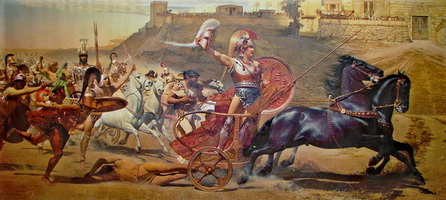
Even before Achilles dragged the corpse of Hector behind his chariot through the dust around the walled city of Troy, the tradition of demoralizing the enemy by degrading and displaying the bodies of its dead heroes was well-established. The United States was horrified when this was done to our fallen servicemen in Somalia, and it is one of the most barbaric and unnecessary practices of war.  While the Geneva Convention doesn’t mention the displaying of enemy corpses, a 2005 publication by the Red Cross called Customary International Humanitarian Law does. It was written to address issues that international treaties omitted, and its Rule 113 reads:

“Each party to the conflict must take all possible measures to prevent the dead from being despoiled. Mutilation of dead bodies is prohibited. Continue reading

Fake Quote Ethics

"Osama? The SOB had it coming."---Gandhi

Among the wise commentators who tut-tutted the unseemly rejoicing among Americans upon learning of the death of Osama bin Laden was the Rev. Martin Luther King, who sagely remarked, “I mourn the loss of thousands of precious lives, but I will not rejoice in the death of one, not even an enemy.” Rev. King’s words were immediately picked up and quoted yesterday in hundreds of blogs and news commentary, grateful for the silver-tongued orator and civil rights warrior’s ability to find just the right way to sum up what was troubling—to some— about the post-bin Laden festivities.

Wait...how could he do that? Rev. King is as dead as Osama! Well, he could do that because somebody decided to give his or her own sentiments the added influence, credibility and moral authority of an American hero, put their words in Rev. King’s mouth, and tweeted them to the world. [UPDATE: Now we know that’s not  exactly what happened—this time. An American teacher in Japan introduced a genuine King quote with her own sentiments, and her careless Facebook friends lost the quotation marks. Thanks to Barry Deutsch for the sleuthing.] Continue reading