The “Everybody Draw Muhammad Day” mess is a wonderful example of how ethics train wrecks begin to engulf anyone who get near them. It also an example of an idea that is clever, funny, well-intentioned, and wrong. Continue reading
Literature
History Lesson: Stephen Ambrose
Over the past two decades, historians have gone from obscure scholars to media stars, as the 24 hour news cycle prompted TV news shows to bring the best-selling non-fiction authors out of the archives into the studios. There the masters of the past were suddenly opining on the present, as the likes of Douglas Brinkley and Doris Kearns became as ubiquitous as Pat Buchanan or George Will. The supposed wisdom and solemn reliability of historians has put them in other unlikely roles too, such as Truman biographer David McCullough lending his soothing baritone to the narration of Kan Burns’ epic Civil War documentary.
One of the catalysts for this development was the late historian Stephen Ambrose, who hit on a formula to make history both provocative and lucrative.. Ambrose turned himself into the troubadour of World War II, inspiring dramatic renditions of his books, such as “Band of Brothers,” and launching a “Greatest Generation” industry. Shortly before Ambrose died in 2002, a brief scandal erupted when it was revealed that one of his histories was significantly plagiarized (Kearns had one of her books similarly discredited), but he handled the potential disaster deftly, admitting that he inadvertently published some verbatim notes, and died soon enough thereafter that the scandal did little to suppress sales of the “Band of Brothers” DVDs. The truth was, however, that more than one of his books stole from other sources.
Now new evidence is making it clear that Ambrose, the historian pop star, was indeed a full-fledged fraud, raising the question, “Who are these guys?” And why should we trust them? Continue reading
Oprah and the Icons: the Ethics of Lying to Make a Difference
Kitty Kelley’s unauthorized, rip-the-mask-off-the-icon bio is out, and now Oprah Winfrey must weather the inevitable de-construction of some of her meticulously self-created image. Oprah is pretty much untouchable now; I was a guest at her “O” Magazine Expo last Fall in Kansas City, and it was clear that her status with he legion of followers is somewhere between a guru and a goddess. There aren’t many revelations, short of proving that she is secretly Dick Cheney in an elaborate disguise, that could do much to reduce her cultural influence or undo her popularity.
Still, it used to be that heroes, celebrities and cultural icons could count on the whole truth about their personal and career embellishments to surface only late in life, or more often, long after death. Thus it has been a standard tool of rising figures in America to carefully craft an inspiring story and an appealing persona that excite and engage the public, and the truth has had little to do with it. It’s worked, too. Continue reading
Bertolli Makes Us Dumber
Just as sick people have an ethical duty not to spread their illnesses, ignorant people have a duty not spread their ignorance far and wide. This duty is not observed with much fealty by school teachers, much less the writers of TV shows and commercials, so my expectations are low. Still, there are limits. Continue reading
Comedy Ethics, Censorship, and Culture
(The current uproar over the use of various versions of the word “retarded” by Rahm Emanuel and Rush Limbaugh seems to warrant a reprint, slightly revised, of the following essay on ethics and comedy, a January 2008 post on The Ethics Scoreboard. The word “retard” also came in for criticism in a comic context last year, with its use in the Ben Stiller comedy “Tropic Thunder.” Of course, comedy is one thing, and gratuitous cruelty is another. In either case, the issue is the use of a word, not the word itself. As discussed in the previous post, it is appropriate for any group to promote sensitivity and to encourage civility. It is unethical to try to bully others into censoring their speech by trying to “ban” words, phrases or ideas. )
Here is the essay:
Comedy Ethics
“Saturday Night Live” has, not for the first time in its three decade run, ignited an ethics controversy with politically incorrect humor. Was SNL ensemble member Fred Armison’s impression of New York Governor David Paterson, who is blind, including as it did a wandering eye and featuring slapstick disorientation, legitimate satire or, as Paterson and advocates for the blind have claimed, a cruel catalyst for discrimination against the sight-challenged?
It is not an easy call, though the opposing sides of the argument probably think it should be. And it raises long-standing questions about the balance between ethics and humor. Continue reading
Unethical Website: www.r-word.org
White House Chief of Staff Rahm Emanuel, criticized for using the word “retarded’ during a private meeting last summer, has told advocates for the mentally disabled that he will join their campaign to help end the use of the word.
I’m sure he will. Emanuel, like too many politicians, is willing to throw Freedom of Speech and thought under the bus if it gets him out of hot water with the politically correct. But while the efforts of the Special Olympics to “end the r-word,” as its website http://www.r-word.org puts it, are understandable and well-intentioned, they couldn’t be more wrong. Or dangerous. Continue reading
Literary Quotation Ethics
I am gradually catching up on “Criminal Minds,” the CBS crimes drama that operates in an America where there are serial killers under every rock. On an episode from 2008, the show used a quotation (famous quotations generally begin and close each episode) attributed to Ayn Rand, the author/philosopher who championed “objectivism” and her own peculiar brand of non-compassionate individualism. The quote: “We are all brothers under the skin—and I, for one, would be willing to skin humanity to prove it.”
This seemed a little harsh even for Ayn Rand; I figured she must have been having a bad day. “Nice lady,” I commented to my wife, who rolled her eyes, for she is not a Rand admirer. Later, I mentioned the quote to a quotation-obsessed friend, who informed me that the words were really uttered by an Ayn Rand villain, Ellsworth Toohey, the unprincipled newspaper columnist who makes life miserable for the hero of The Fountainhead, Howard Roark.
Was “Criminal Minds” fair to Ayn Rand? Continue reading
What Rudyard Kipling Taught My Father
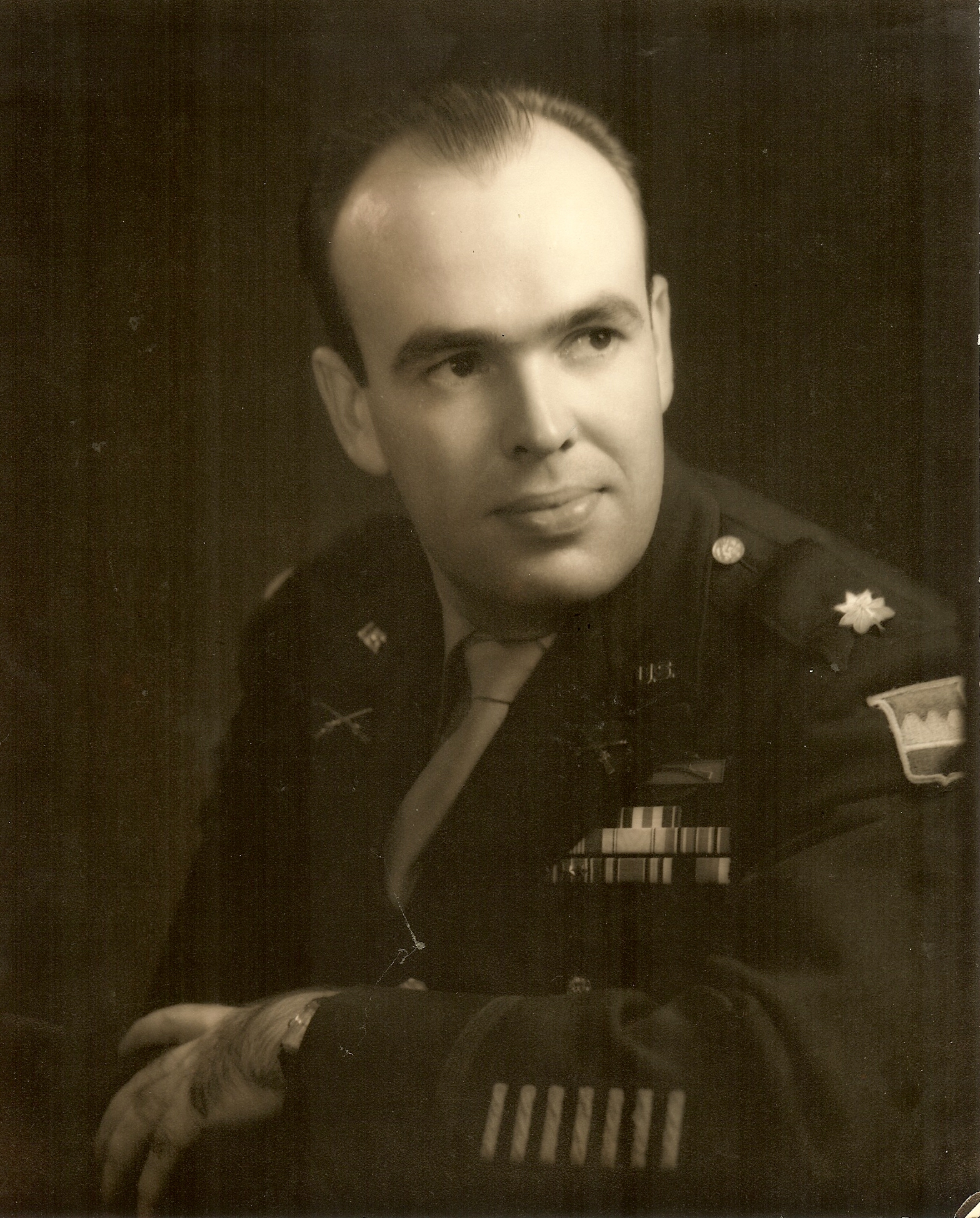
Today the Army buried my father, Major Jack Marshall, Sr., with full military honors. He had earned them, for he was a hero in World War II. Let me correct that: every soldier who serves in battle is a hero, but my Dad had a few special distinctions, like a Silver Star and a Bronze Star to go with his Purple Heart. He sustained a crippling wound to his foot from a hand-grenade, healed enough to jam what was left of it into a boot, and went on to fight in the Battle of the Bulge.
Under the clearest of blue skies, with the cemetery covered in snow, a caisson drawn by black horses, one without a rider, carried my father to a gravesite ceremony where the American flag draping his casket was carefully folded by six soldiers and given to my mother, following a 21-gun salute. My father was a hero off the battlefield as well, a profoundly ethical and courageous man throughout his life, and how he got that way is worth examining. Continue reading
See? I proved my own point…
Ethics Alarms stalwart Glenn Logan alerted me to the fact that I carelessly mispelled science fiction great Poul Anderson’s name badly in my previous post. My ignorance regarding his correct name, however, also shows how unjustly the passing years have eroded the science fiction writer’s fame. (My spelling and proof reading eroded long ago.) One more reason why James Cameron needs to give him some credit for inspiring “Avatar” : I would have probably gotten his name right if I had seen it on the Imax screen in 3-D.
Or if I could read…my apologies to the late, great Poul Anderson, his fans, and anyone who was confused by the reference to “Pual” Anderson, who is a collector of souvenir ash trays and resides in New Rochelle.
James Cameron, Poul Anderson, and Posterity’s Loss
James Cameron, whose ground-breaking film “Avatar” will soon be the top-grossing movie of all time, is currently being bashed in some of the more obscure corners of the blogosphere for plagiarism. This time the criticism is not based on his blatant borrowing from Russian science fiction, but for his lifting of ideas from an American master of the genre, Poul Anderson. Anderson wrote a novella in 1957 entitled “Call Me Joe” that chronicled the adventures of a paraplegic who becomes telepathically merged with a manufactured alien life form created to explore a planet. He is exhilarated by the sensations and power of his artificially-created body, and eventually is seduced into abandoning his humanity completely to become a significant figure in the development of a new civilization. Along the way, he battles vicious alien creatures. Sound familiar? Yes, these are major components of “Avatar” as well. Continue reading
 Ethics Alarms