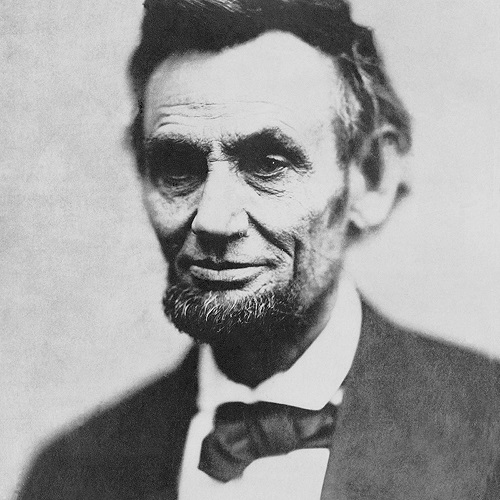
“Lincoln should be with us all these days especially since ‘malice toward none’ has been replaced by malice toward all, as if in our ideological arrogance we have forgotten that neither God nor justice is necessarily on our side.”
—-Philosophy scholar Michael Ignatieff, Ph.D. professor at Central European University in Vienna, Austria, in his recent book, “On Consolation,” his examination of how figures in history, literature, music, and art searched for solace while facing tragedies and crises.
In a chapter devoted to Abraham Lincoln’s Second Inaugural Address, delivered in March 4,1865, near the end of the Civil War and with his own assassination six weeks away, Ignatieff explains that Lincoln concluded that “neither side could ever know what God intended by the fiery trial,” so “the victor had no right to raise the sword of vengeance while the defeated had the right to claim the dignity of honorable defeat. Humility about the ultimate meaning of the war, in other words, created the space for mercy.” Continue reading →
The Times has compiled its list of the “best books of the last 125 years” as part of the celebration of the 125th anniversary of its Book Review Sunday supplement. Readers are invited to vote for their favorite on the list of twenty-five.
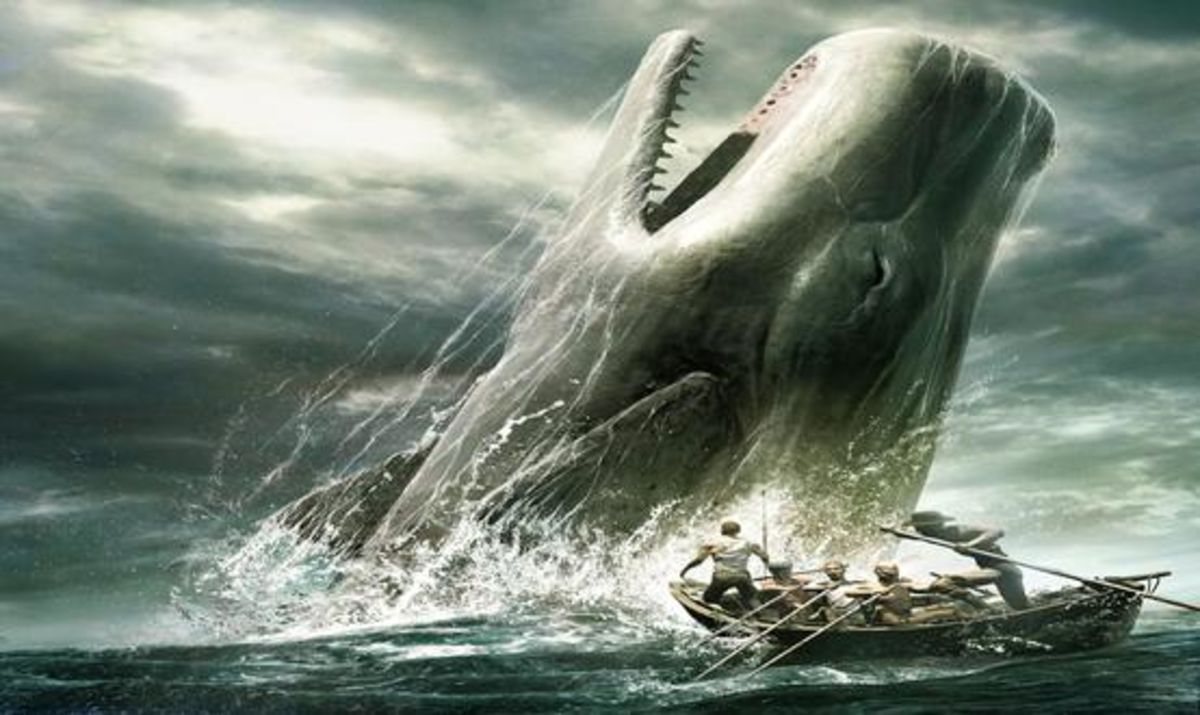
Today marks the 170th anniversary of the publication of Herman Melville’s “Moby-Dick” or “The Whale”(never forget that hyphen!). What does the 19th century novel with the most famous opening line in American literature have to do with ethics? Oh, only everything…and not just ethics, but leadership, values, perspective, chaos, hubris, and the ethics-related fact that you never know how things will work out, so all you can do is the best you can.
“Moby-Dick” was Jack Marshall, Sr.’s favorite novel by far, and he had read almost every classic of his era and going back 200 years before he was in high school. I read the book in a tattered hard-cover edition full of my dad’s notes in the margins. (If only I could have read his handwriting!) “Moby-Dick” is tough sailing; public schools did Melville no favors by making high-schoolers read it, even in the redacted versions. Hollywood did even more damage: the book cannot be filmed. The best and most profound parts of novel are the narrator, Melville/Ishmael’s philosophical musings, like when he asks what a dead whale might be thinking when a harpooner nearly downs in its brains.
Eventually, I was able to honor both Dad, Melville and Orson Welles by mounting a production of Welles’ brilliant (but flop) theatrical version, “Moby-Dick Rehearsed,” which I repaired thanks to my father’s comments and inspiration. It was, by far, the most successful production of the American Century Theater’s two decades, the most successful professional production Orson’s invention has ever had, and my most satisfying experience as a director.
“Turn the following into real sentences and put them in a paragraph briefly explaining, ‘the perfect murder.’ Items should appear in your paragraph according to the order of importance. There are 10 ideas here, so if you remove one you have to add an idea of your own.
I’ll post the 25 stipulations from Part I at the bottom of Part II for easy reference; I’ll be quoting the number in some cases. But not right now…I realized that an introduction is necessary.
It’s important to clarify an essential point up front: as long as the two sides in the abortion controversy refuse to acknowledge the validity of the other side’s interest and concern, no solution to the problem is possible, and until that point, it is almost a waste of time discussing it. In this respect, it is like another ongoing ethics conflict, the dispute between Israel and the Palestinians. (That one I believe is hopeless, and the only solution is an unethical one: a war that leaves one side or the other standing. That may happen; I don’t see it as a likely resolution of the abortion question.
Related to this condition precedent to any resolution is the fact that the pro- and anti- abortion sides (Let’s send “pro-life and “pro-choice” to ethics hell where they belong) must stop demonizing the other. That practice makes compromise and literally impossible, and a problem like abortion cannot be addressed ethically without the recognition that balancing of interests must occur at some level.
In this area, abortion separates itself from the ethics and human rights dispute it most resembles. The analogy is useful in some respects (as we shall see), but not in the area of compromise. The period preceding the Civil War was a fiasco of attempted compromise regarding slavery, and every attempt made the situation worse, more unethical, more unjust, and more contentious. Slavery really is an absolutist problem: it is absolutely wrong, and there are not ethical principles on both sides, unlike abortion. The pro-slavery case was economic, making slavery an ethics dilemma (non-ethical considerations vs ethical ones), unlike abortion. Because abortion is an ethics conflict, each side must accept a solution that is partially unethical, or there will never be a solution.
Baseball had a rare PR triumph earlier this month when it held a regular season game between the New York Yankees and the Chicago White Sox in the Iowa cornfield diamond that was the setting for the cult movie favorite “Field of Dreams.” The TV ratings were the best for any regular season broadcast in 16 years. That’s amazing, but maybe it shouldn’t be. Despite rumors of its demise, baseball still has a cultural bedrock of tradition, nostalgia and history unmatched by any other sport, professional or amateur. So many Americans would not tune in to a baseball game if they didn’t still have a flicker of affection for the sport, and if your argument is, “Yeah, but that’s just because of the movie,” the movie wouldn’t have become iconic if a lot of people didn’t care about baseball. As Terrence Mann said,
Now my confession: I’m not a wild fan of the film, nor that scene. The scene in particular is unforgivably stagey and artificial: it’s right out of the (much better) book, “Shoeless Joe,” and not even the great James Earl Jones could make it sound like anything but a recitation. I got annoyed, during the hype for the game broadcast, with “Field of Dreams” being repeatedly called “The greatest baseball movie.” I don’t regard it as that; I think it just barely makes the top five, and I could be talked out of ranking it that high.
For good reasons, many baseball writers, fans and bloggers have criticized the film over the years, and not just because it is shamelessly manipulative. But it is that. Baseball writer Craig Calcaterra, a vocal debunker of the film, writes,
“I will fully admit that a story about a father and son repairing a longstanding rift over a game of catch — with or without the magical realism elements — could form the basis of a MAJOR chills moment in an absolutely fantastic movie. The problem, as I’ve said in the past, is that “Field of Dreams” does not earn its chills moment. It is lazy in that it does not sketch out the dispute between Ray and his dad in anything approaching realistic terms — it’s dashed off in the rushed intro with almost no details — and it does nothing to explain why Ray’s moving the Earth and the Heavens to bring his dad back to that ball field is so important or why it serves as the “penance” Ray must pay for whatever reason. With no buildup or backstory, there’s no payoff.”
But worse, for me and others, is the slipshod handling of baseball history. “Shoeless Joe” Jackson was not innocent of taking a bribe to throw the 1919 World Series, he was guilty. He was not a thoughtful, wise-cracking Ray Liotta, he was just north of being a moron. He batted left-handed, and famously so, not right-handed like Liotta. When Frank Walley’s character, a magically reincarnated and youthened old ballplayer named Archie “Moonlight” Graham, whose single appearance in the major leagues was in 1905, is nearly beaned by a close pitch, he says “Hey ump, how about a warning?” Umpires didn’t warn pitchers for throwing at batters in 1905, and not for more than a half-century after that. Sloppy.
The title of Rationalization 1D comes from literature, specifically George Bernard Shaw’s 1912 drama, “Pygmalian,” better known today for its musical adaptation,”My Fair Lady.” The moment when Shaw’s obnoxious and misanthropic antihero Henry Higgins defines his rationalization occurs in Act 5; Alan J. Lerner lifted it almost verbatim for his book of the musical. Arrogant speech expert Higgins, having been rebuked by Eliza, the flower girl whom he taught to speak like an upper-class British woman to win a bet, for his cruel and uncivil conduct toward her says in his defense,
HIGGINS. … If you come back I shall treat you just as I have always treated you. I can’t change my nature; and I don’t intend to change my manners. My manners are exactly the same as Colonel Pickering’s.
LIZA.That’s not true. He treats a flower girl as if she was a duchess.
HIGGINS. And I treat a duchess as if she was a flower girl.
LIZA. I see.
HIGGINS.Just so….The great secret, Eliza, is not having bad manners or good manners or any other particular sort of manners, but having the same manner for all human souls: in short, behaving as if you were in Heaven, where there are no third-class carriages, and one soul is as good as another.
I immediately thought of this exchange when Gov. Andrew Cuomo of New York, in his rambling denial of multiple sexual harassment and sexual assault allegations, proclaimed his innocence (His victims don’t understand him!) by arguing that as a red-blooded Italian he’s just wired to be physically demonstrative, and treats everyone the same way.
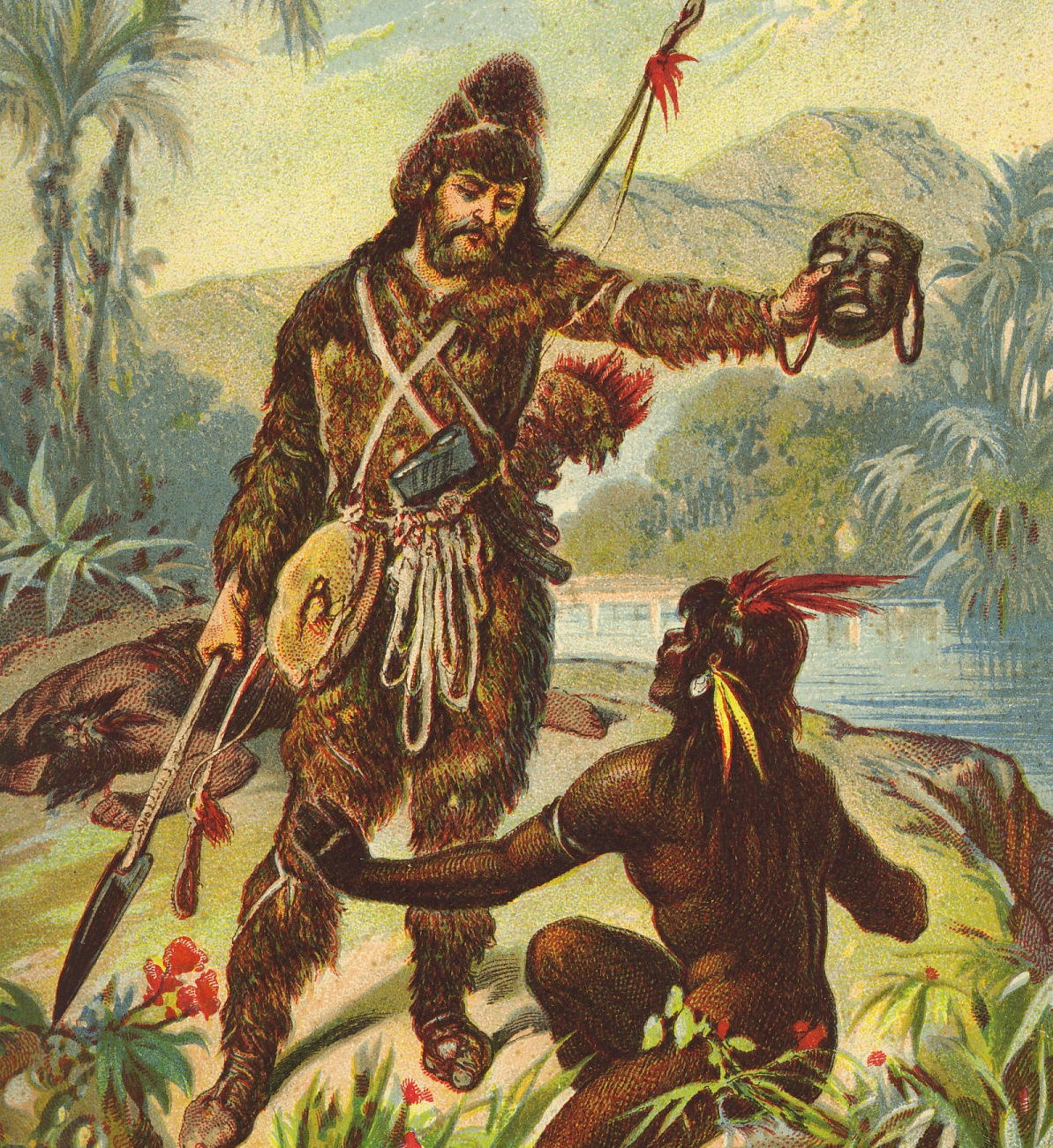
I was looking for Robinson Crusoe and Friday illustrations, and boy, if they thought that Teddy Roosevelt statue that’s they’re taking down in New York City radiated white supremacy, they hadn’t checked out Daniel Defoe’s masterpiece lately. Is that novel ever read in school any more? (It’s a terrific novel, and one of my Dad’s favorites…and he read everything.) With “To Kill A Mockingbird” being banned in some schools, I wonder how much literature will be sacrificed to political correctness and The Great Stupid. And how many pop culture nuggets…I was alternately amused then shocked to hear the 1957 Australian goof “Tie Me Kangaroo Down” played on Sirius XM, for the song is hilarious as well as racially insensitive to the max with this verse (remember that the song purports to quote the last requests of an old Aussie stockman on his deathbed):
Let me Abos go loose, Bruce
Let me Abos go loose
They’re of no further use, Bruce
So let me Abos go loose!
I just checked:one of the lyrics websites excised that verse while claiming that it was printing the whole song.
But I digress. Write about anything you want, as long as it has an ethics theme…
The predictable appeal of racist “antiracism” cant to the world of scholarship and academia in the wake of the fraudulent George Floyd Freakout is producing amusing or frightening results, depending on one’s regard for higher education and resistance to despair.
Today’s sample of Authentic Frontier Gibberish, for example, comes from “Confronting “White Feminism” in the Victorian Literature Classroom,” recently published in the scholarly journal, “Nineteenth Century Gender Studies.” The author is University of California Professor Lana Dalley, who complains that Victorian feminists are “problematic” [There’s that word again!] because they promote “white feminism.” In other words, social commentators and writers of over a hundred years ago don’t seem to reflect the current approved woke perspective of 2021. This is, apparently, a surprise. Here’s her first paragraph, an AFG classic:
“The transition to virtual learning in Spring and Fall 2020 intersected with international protests for racial justice and, more locally, Ronjaunee Chatterjee, Alicia Mireles Christoff, and Amy R. Wong’s call to “undiscipline Victorian Studies” by “interrogat[ing] and challeng[ing] our field’s marked resistance to centering racial logic” (370).(1) More specifically, they call for “illuminat[ing] how race and racial difference subtend our [Victorianists’] most cherished objects of study, our most familiar historical and theoretical frameworks, our most engrained scholarly protocols, and the very demographics of our field” (370). Since then, numerous virtual roundtables and panels have convened to discuss critical approaches to race within Victorian studies and to ponder the relevance of contemporary social justice movements to a field whose borders are historically drawn. This essay emerged from one such panel and offers practical suggestions for reframing pedagogical approaches to Victorian feminist discourses in order to “center[] racial logic” and “illuminate how race and racial difference subtend” those discourses.(2) Its suggestions are certainly not meant to be exhaustive, but simply to offer one set of practices for making the Victorian literature classroom more responsive to contemporary conversations about race and gender.”
I was going to include this in the Morning Warm-Up, which was already weird, but then realized that I wasn’t sure what the ethics verdict should be. Thus it became an ethics quiz.
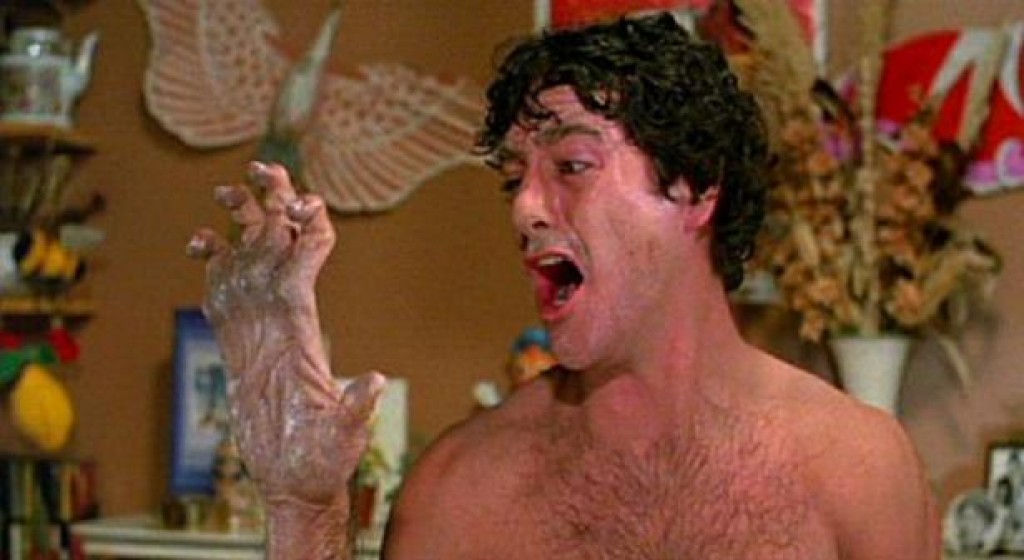
Which American novelist would seem like the most unlikely to author a werewolf story? I wouldn’t put him at the top of my list, but John Steinbeck, a Nobel laureate known for somber Depression-era literary classics, would certainly be in the top ten. Yet the lionized author of “Of Mice and Men,” “The Grapes of Wrath,” “Cannery Row” and “Travels With Charley” did write a werewolf novel, in 1930, when he was a struggling writer. Completed under the pseudonym of Peter Pym, “Murder at Full Moon” was never published. A single copy sits in an archive in Texas, including drawings by Steinbeck himself.
Gavin Jones, scholar of American literature at Stanford University, has read the book, and pronounced it fascinating, complete and publishable. The agents for Steinbeck’s estate, however, have so far rejected his entreaties. “It’s a potboiler, but it’s also the caldron of central themes we see throughout Steinbeck’s later work,” Jones insists, and argues that the public should be able to read it. The author’s literary agents, the guardians of Steinbeck’s legacy, demur, saying,


 Ethics Alarms