Ethics Quote Of The Month: New York Times Columnist Ross Douthat

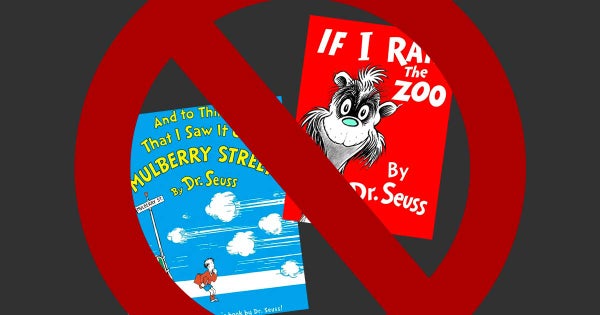
seusscancelled-header

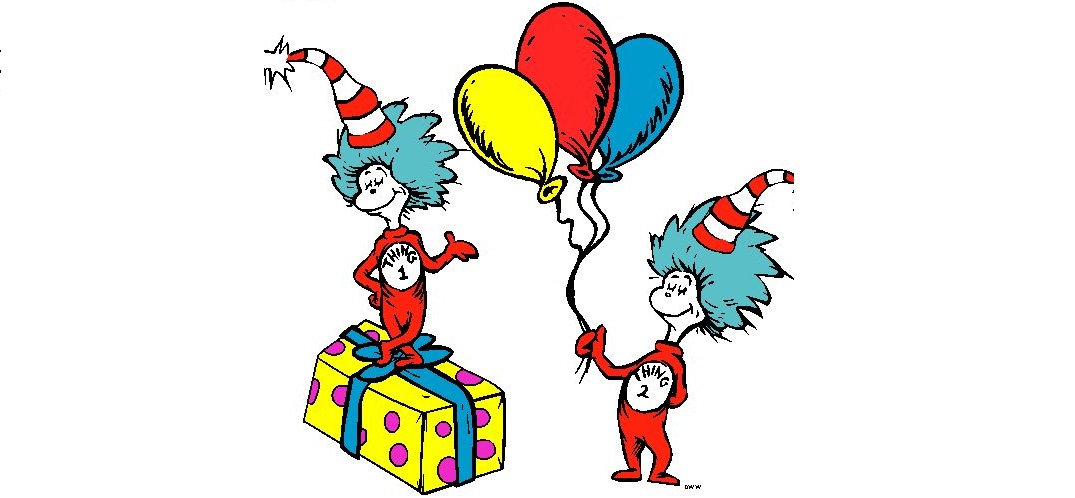
“It was mildly creepy to hear that the custodians of Theodor Geisel’s estate, Dr. Seuss Enterprises, consulted with a ‘panel of experts’ and decided to cease publishing six Seuss titles because they ‘portray people in ways that are hurtful and wrong.’ But it was much creepier that so few people notionally in the free-expression business, so few liberal journalists and critics, seemed troubled by the move.”

New York Times columnist Ross Douthat, one of the paper’s three token conservatives (or perhaps “non-knee-jerk Democrats” is more accurate), in his column, “Do Liberals Care if Books Disappear?”

The question is a rhetorical one. Douthat knows the answer, and so do regular Ethics Alarms readers: “Only if the books that disappear are those they agree with.” Though the column focuses on the Dr. Seuss metaphorical book-burning, Douthat properly interprets what it signifies. Of course, he is appropriately late to the party, for it was obvious well before “If I Ran the Zoo” was under attack that the totalitarian-tending Democrats and their progressive supporters and allies were in favor of “good” censorship. Never mind—Americans rushed to their mailboxes to vote an anti-free speech regime into power anyway.

Better late than never for Ross, I guess. Here are some highlights (but read his whole piece):

Continue reading

And Today In The Attack On Liberty And The Pursuit Of Happiness That Is Known At Ethics Alarms As “The Great Stupid”…

Liberty weeps

Online retailer eBay has announced that it will no longer allow owners of the six Dr. Seuss books eliminated this week from Theodore Geisel’s published children books to sell the books online in its auction platform.

Citing its offensive materials policy, eBay Corporate Communications Specialist Parmita Choudhury explained, “At eBay, we have a strict policy against hate and discrimination to ensure our platform remains a safe, trusted and inclusive environment for our global community of buyers and sellers.We’re currently sweeping our marketplace to remove these items. It can take some time to review all existing listings and provide education to impacted users. We’re also monitoring the newly published list to be reviewed.”

First they came for Yertle the Turtle….

Continue reading

Happy Birthday, Dr. Seuss! You’re Cancelled, You Racist.

Suess birthday

Today is Dr. Theodore Geisel’s birthday. Better known to the world as Dr. Seuss, the author and illustrator of such classic children’s books as “The Cat in the Hat,” “Horton Hears A Who,” and my personal favorite, “Fox in Socks” because it drives my wife crazy, was born this day in Springfield, Massachusetts, in 1904. Geisel, who used his middle name and his mother’s maiden name as his nom de plume, wrote 48 books (even some for adults). His work has now sold over 200 million copies and been translated into multiple languages. His style of verse and illustrating have been imitated and parodied countless times. Jesse Jackson even read “Green Eggs and Ham” on Saturday Night Live.

Nobody ever thought of Dr. Seuss books as “racist” until recent fads, events , cancel culture and The Great Stupid washed over the land. Well, OK, not “nobody.” Ethics Alarms had a post about the Seuss Museum in Springfield cutting a piece out of a Dr. Seuss mural because three prominent children’s authors who had been invited to attend the Children’s Literature Festival at the Museum threatened to boycott the event on the theory that the mural, painted to replicate a scene from Dr. Seuss’s first book “And to Think That I Saw It on Mulberry Street,”  was, they claimed, offensive. It had, said one of the grandstanding hysterics, a “jarring image” of a man with slanted eyes and a coolie’s hat using chopsticks to eat rice, because, apparently, Chinese people never wore such hats, don’t use chopsticks and hate rice. I wrote, while awarding the museum an Ethics Dunce designation (I’m thinking about adding a “Weenie of the Week”…what do you think?):

There is nothing racially jarring about Geisel’s painting of a “Chinaman” except to someone already looking for offense. Dr. Seuss’ drawings can be fairly termed cartoons. The definition of a cartoon is “a simple drawing showing the features of its subjects in a humorously exaggerated way.”  What are these juvenile children book authors asserting…that all cartoons are racially insensitive? That only cartoon of non-whites are offensive?…Normal Americans, meanwhile, understand the cartoon art form, recognize that features are exaggerated, and thus do not take drawings like those by Dr. Seuss (or Matt Groening, the creator of The Simpsons) as literal or malicious.

Well, silly me. I thought this was just a one-off moment of woke insanity: I have since learned that the Woke never sleep. In the post, I referenced “The Simpsons” and the fact that nobody had called for the elimination of Apu. Apu has since been cancelled as “racially insensitive.” The show also decreed that white voice actors can no longer portray black characters, so Dr. Hibbard has a new sound. Presumably “The Simpsons” will eventually seek a low IQ hick to voice “Cletis the Slack-Jawed Yokel” and a socially awkward MIT PhD. to do the voice of Prof. Frink.

Continue reading

Comment Of The Day: “Ethics Quote Of The Month (Yes, It’s More Impeachment Analysis, And I’m Sick Of It Too, But This Is Important): Professor Jonathan Turley”

Sentence first

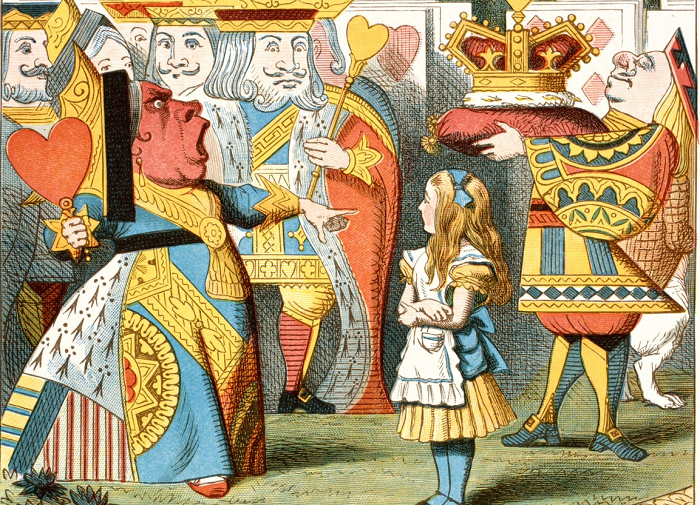
Here is Aaron Paschall’s Comment of the Day (he gets extra credit for the “Alice in Wonderland” quote) on the post, “Ethics Quote Of The Month (Yes, It’s More Impeachment Analysis, And I’m Sick Of It Too, But This Is Important): Professor Jonathan Turley”:

“Sentence first, verdict afterward!”

The nitpicking of “’Legally, due process only applies to life, liberty, and property,” she lectured. “A job is none of those.’” honestly terrifies me. This is the consequent of thought processes like the argument against Justice Kavanaugh: “It isn’t a ‘trial,’ it’s a job interview. Due process doesn’t apply outside a court of law.” Or the one which we see now extolled in defense of Facebook/Twitter bans: “Private companies can ban whoever they like – the government isn’t doing a thing. Freedom of speech has no bearing outside of the government.” In attacking Trump and more than Trump, they’ve whittled away virtually all defenses or niceties like fairness, decency, moderation, humility, justice, the benefit of the doubt and a million more. How they can bear to stand on such a barren plain of life and declare it rich and good is beyond me.

In C.S. Lewis’ “The Silver Chair,” Puddleglum the Marshwiggle was a gloomy sort. Near the end of their adventure, he and his comrades found themselves deep underground, with a fire emitting thick, bewildering fumes. The villain of the piece encouraged them to give up, that the surface world they were trying to escape to didn’t even exist – it was a figment of their imaginations. The sun, the sky, the wind – illusions, and one she was trying to save them from expending their lives in fruitless search of. At the last moment, when nearly everyone was convinced, Puddleglum stamps his foot into the center of the fire, putting it out – and filling the room with the scent of burnt Marshwiggle, which was not nearly so nice. And he addressed the witch with what is one of my favorite quotes ever:

Continue reading

Ethics Quote Of The Month: Novelist Raymond Chandler ( 1888-1959)

Chandler

“Down these mean streets a man must go who is not himself mean, who is neither tarnished nor afraid. He is the hero; he is everything. He must be a complete man and a common man and yet an unusual man. He must be, to use a rather weathered phrase, a man of honor—by instinct, by inevitability, without thought of it, and certainly without saying it. He must be the best man in his world and a good enough man for any world.”

—-Novelist and detective story master Raymond Chandler, in his essay, “The Simple Art Of Murder,

The quote continues,

He will take no man’s money dishonestly and no man’s insolence without a due and dispassionate revenge. He is a lonely man and his pride is that you will treat him as a proud man or be very sorry you ever saw him.”

My father, Jack A. Marshall Sr., was not much for revenge, but otherwise Chandler’s quote, which he liked very much, was descriptive of Dad as well.

There has been a lot of discussion of courage here of late, both because I see it lacking at a crucial and defining time in our history, and because it must be found, as this nation has always managed to find it before, sometimes at the last moment before it was too late.Women should not feel snubbed by Chandler’s quote, which just wouldn’t read as well using two genders, or “they.” He was a typical male sexist of his time (though a complicated one), but today he would concede that his description of courage knows no gender limitations. In my immediate family, it describes with equal accuracy my grandmother, my mother, my sister, my late mother-in-law, and especially my wife. Cross her at your peril.

I had forgotten Chandler’s quote until I was reacquainted with it in an episode of “Blue Bloods,” when police commissioner Frank Reagan (Tom Selleck) used it to describe his late son.

Yet PETA’s Campaign To Limit Speech Is No More Unethical Than Other Attacks On Freedom Of Expression, Just More Self-Evidently Stupid…

Speciesism

It doesn’t matter what words, phrases or expressions politically-motivated censors try to eliminate from the language, be it gender pronouns, “retard,” fuck,” “nigger” (or “niggardly”), “bitch,” “Karen,” or “master; ” “a chink in the armor,” “sexual preferences,” “Illegal aliens,” or “anchor babies.” The intent is to limit the ideas that can be expressed, and, eventually, thought. The principle is pure Orwellian linguistic: what the brain can’t express, it can’t imagine. The technique is unethical; worse, it’s a weapon against democracy and freedom of thought.

PETA, the U.S. organization that most egregiously misuses the word “ethical” in its name (with CREW, Citizens for Responsibility and Ethics in Washington is a close second) would like to erase the boundaries between human beings and animals in law and culture. Thus it must have seemed like a natural progression to them to come up with “speciesism,” a form of alleged bigotry in which humans view themselves as superior to animals, just because they are. Hence the new directives above. PETA wants dictionaries to excise from the language derogatory metaphors involving certain animals. “Animal-related slurs used to debase humans reinforce inaccurate and harmful characterizations of animals,” PETA says.

“Oh, shut up and get a life, you silly people,” Ethics Alarms says. Animal metaphors and comparisons contribute to the richness of language and literature, and unlike negative characterizations of human individuals and groups, nobody’s feeling are hurt, because, see, one of the reasons humans are superior is that they can read and understand complex language.

Continue reading

January 7, 2021 Ethics Nightcap, The “Everything Is Spinning Wildly Out Of Control” Edition

spinning-out-of-control

Well, the national mood is clearly infecting Ethics Alarms. First a self-banned commenter from the past starts sending me private hate mail for no discernible reason. Then another banned commenter sends an attack comment while I’m sleeping. THEN a previously rational commenter of some note proclaims his exit because, he says, all I write about is politics, and because he said I excused the President for inciting a riot (which I did not). Then another commenter started calling participants here Nazis,and yet another commenter, whom I trust to use more restraint, also used a Nazi analogy to describe the Hill riot yesterday.

I expect better here, frankly; better, fairer, and more civil.

I get it: readers aren’t immune from being freaked-out during freakouts, but please, read “If,” (my father’s favorite poem, and a lifetime credo for him and his son) and calm the hell down:

If you can keep your head when all about you
Are losing theirs and blaming it on you;
If you can trust yourself when all men doubt you,
But make allowance for their doubting too;
If you can wait and not be tired by waiting,
Or, being lied about, don’t deal in lies,
Or, being hated, don’t give way to hating,
And yet don’t look too good, nor talk too wise;

If you can dream – and not make dreams your master;
If you can think – and not make thoughts your aim;
If you can meet with triumph and disaster
And treat those two imposters just the same;
If you can bear to hear the truth you’ve spoken
Twisted by knaves to make a trap for fools,
Or watch the things you gave your life to broken,
And stoop and build ’em up with wornout tools;

If you can make one heap of all your winnings
And risk it on one turn of pitch-and-toss,
And lose, and start again at your beginnings
And never breath a word about your loss;
If you can force your heart and nerve and sinew
To serve your turn long after they are gone,
And so hold on when there is nothing in you
Except the Will which says to them: “Hold on”;

If you can talk with crowds and keep your virtue,
Or walk with kings – nor lose the common touch;
If neither foes nor loving friends can hurt you;
If all men count with you, but none too much;
If you can fill the unforgiving minute
With sixty seconds’ worth of distance run –
Yours is the Earth and everything that’s in it,
And – which is more – you’ll be a Man my son!

(And if you let Rudyard’s 19th Century male bias dissuade you from paying attention to his message, you’ll be a fool, my friend.)

I’ll only address one of the commenter upsets I described above: the accusation that Ethics Alarms has been writing about politics and neglecting ethics. I resent that, because I have been killing myself trying to find non-political ethics stories that are worth writing about, at a time when almost everything has been politicized. At the same time, I cannot in good conscience fail to explicate the unethical and unprecedented effort to sabotage an elected US President and all that has involved and corrupted since 2016, so this has necessarily involved many posts, more than I would have liked. It is the most significant U.S. ethics catastrophe of the last hundred years at least, and attention should be paid. What happened yesterday was a direct and predictable consequence of this.

Yet even so, Ethics Alarms has been and continues to be about all topics and all spheres of ethics. There are four or more posts most days, and four or five mini-posts in the “warm-ups.” Find another website that includes more diverse material on the topic of ethics; go ahead, try.

I will also note that the complaining commenter has not availed himself of the open forums, which exist specifically to invite readers to raise issues related to ethics that I may have missed or neglected. This is a participatory forum.

Annoyingly, the commenter who made this complaint also said that he had mostly “skimmed” posts here for the last year or so. Well, Ethics Alarms is not for “skimming,” and if one cannot read all of what I write, I’m not very interested in your opinions on what you have only half-comprehended.

Continue reading

Ethics Flotsam And Jetsam, 1/4/21, Borne Back Ceaselessly Into The Past

Gatsby

 “The Great Gatsby‘s” 1925 copyright expired on January 1, 2021, and right on cue, Amazon announced that it was selling a now-legal prequel to that wildly over-praised F. Scott Fitzgerald novel called “Nick,” by Michael Ferris Smith: “A tumultuous origin story of one of the most famous and unforgettable literary narrators, Nick is a true cross-continental bildungsroman. This emotional novel successfully puts “The Great Gatsby” into an entirely new perspective and era: from the battlefields of World War I to the drunken streets of Paris and New Orleans. Dive back into the world of an unparalleled classic.”

It’s not unethical exactly, I guess it’s just pathetic. This author was waiting to scavenge someone else’s original work, and had his rip-off ready the second the bell tolled. The similarly creatively challenged among you now can repurpose and sell as your own books like Virginia Woolf’s “Mrs. Dalloway,” Ernest Hemingway’s “In Our Time,” Franz Kafka’s “The Trial” (in German) Theodore Dreiser’s “An American Tragedy,” John Dos Passos’s “Manhattan Transfer,” and Sinclair Lewis’s “Arrowsmith” (a personal favorite) among others.

1. Nah, the Democrats aren’t turning into totalitarians! That’s going to be the most-used gaslighting reference here in the ordeal to come I fear, as foretold by this screed in the New Yorker (Pointer: Arthur in Maine) by John Cassidy. Its thesis is that there are legislative steps that can be taken to make sure no political outsider like Donald Trump will ever again defeat establishment hacks like Hillary Clinton and Joe Biden.

Among the steps to “Trump-proof” the Presidency: require all candidates to sell off any businesses they own (lifetime politicians don’t own businesses), force them to release their tax returns, try various end-arounds the Electoral College (none of which are constitutional, in my view), and adopt ranked-choice voting so third and fourth party candidates have no chance whatsoever (they do it in New Zealand, so it must be better than our system).

I’d take the time to fisk this thing, but it begins falling apart on its own like Captain Queeg on the witness stand about halfway through, descending into standard anti-Trump blather about “norms,” lies, and “verbal assaults on the media” (which thoroughly deserved them).

The author really exposes his bias when he cites Citizens for Responsibility and Ethics in Washington as his ethics authority, a group that somehow only finds ethics violations in the Republican Party.

Continue reading

Morning Ethics Warm-Up, 12/29/2020: Another Dark Date For Ethics

Becket-murder-2

December 29 is one of the bad days in ethics history, beginning with the 1170 murder of England’s Archbishop Thomas Becket as he knelt prayer in Canterbury Cathedral by four knights of King Henry II. The knights were not explicitly ordered to kill Becket, the King’s friend who had become a problem when he took his role as Archbishop of Canterbury to be a calling to defend the Church against royal efforts to constrain its power. Instead, Henry made his wishes known by making the public plea to his court,

“What a parcel of fools and dastards have I nourished in my house, and not one of them will avenge me of this one upstart clerk.”

This is often quoted as “Will no one rid me of this troublesome priest?” Either way, the idea of such an oblique request is to relieve a leader of responsibility for the actions of subordinates, giving the leader plausible deniability. It didn’t work for Henry, but it may have worked for, for example, President Obama, whose Internal Revenue Service illegally sabotaged Tea Party groups in advance of the 2012 election, greatly assisting Obama’s efforts to defeat challenger Mitt Romney. In truth, when a powerful superior makes his or her desires known, it may as well be an order. An order is more ethical however, because it does not require the subordinate to take the responsibility upon himself.

1. But The worst example of a U.S. ethical breach on this date is the Massacre at Wounded Knee in 1890, when the U.S. Cavalry killed at least 146 Sioux at the Pine Ridge reservation in South Dakota. It is definitely the most people killed because of a dance: the government was worried about a growing Sioux cult performing the “Ghost Dance,” which symbolized opposition to peaceful relations with whites, and was seen as inciting violence. On December 29, the U.S. Army’s 7th cavalry surrounded a band of Ghost Dancers under the Sioux Chief Big Foot near Wounded Knee Creek and demanded they surrender their weapons. A fight broke out between an Indian and a U.S. soldier, a shot was fired, and an unrestrained massacre followed. Of the estimated almost 150 Native Americans were killed (some historians put this number at double that number), nearly half of them women and children. The cavalry lost only 25 men. Many believe that the tragedy was deliberately staged as revenge for Custer’s Last Stand 14 years earlier, which seems like a stretch to me.

Continue reading

“A Christmas Carol”

-A-Christmas-Carol2

The entire text of “A Christmas Carol” is and has been for a long time listed under Inspirations on the Ethics Alarms homepage. If you haven’t read it (preferably out loud, to your family) recently, I urge you to do so. It is wonderful, and still, after all the movies and TV specials and songs and rival Christmas-themed stories, the best of the genre. It is also delightful literature, and, because I am an incurable romantic, a sap, and a Christmas addict, the story and Dickens’ telling of it gets to me every time.

The first version of the film adaptations of “A Christmas Carol” I saw when I was knee-high to Robert Reich was the version starring Alistair Sim. Many aficionados of “A Christmas Carol adaptations think it is still the best, and I won’t argue with them. Because the movie is in black and white and has been superseded by so many other versions, it is hard to find it on TV now except for the streaming services. Even the much inferior version starring Reginald Owen (with the entire Lockhart family, including young pre-“Lassie,” pre-“Lost in Space” June, as the Cratchits) is shown more than the classic Sim film. In these cynical times, the version of “A Christmas Carol” most likely to be available, sort of, is Bill Murray’s “Scooged.” It’s not the worst version—the musical starring Albert Finney wins that booby prize (“Thank you very much! Thank you very much!” Yecchh.)—but cynicism and dark humor really don’t belong in this story

My personal choice for the best adaptation goes to the 1984 George C. Scott version, if you don’t count “Mr. Magoo’s Christmas Carol,” and you probably shouldn’t, though I love it. The 1984 film has David Warner as Bob; Edward Woodward is the best Ghost of Christmas Present ever; and I think this is the scariest version of Marley.

Here it is…