This has to be illegal. If it isn’t, it is certainly unethical.
I got a call this morning with a caller ID that stated it was from a hospital. If I say “hello” and there is an odd pause, usually followed by a telltale <click> and voice saying “Hello?” I hang up immediately. because it’s a robocall. This time, however, there was no click, and a clear, unaccented, assertive voice called out, “Hello!” I was curious, so I responded,”What do you want?” “We’ve been trying to reach you,” the cheerful young woman said. “Have you been made aware of Medicare cash paybacks?” THEN I hung up. I know an AI bot when I hear one.
The problem is, most people over the age of about 40 do not. This one was good, the best I’ve heard yet. Way back in 2015, Ars Technica wrote about the then-new use of interactive robocalls, but that was before the AI revolution. Last night I had been watching a new streaming series starring Nicole Kidman and Jamie Lee Curtis in which a character is addicted to conversing with an AI version of her dead wife. These fake people are improving at a logorhythmic rate, and in about a week the non-humans calling me will be undetectable. That doesn’t mean they will be the same as real callers, which means neglecting to announce to an individual that the voice on the other end of the line is AI-generated is fraud, dishonest, a lie, and, of course, unethical.
There needs to be a tough law or regulation against this practice. Now.
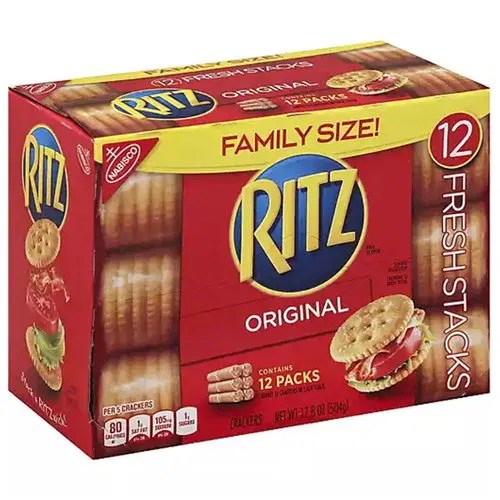
For some reason, a grocery store sale led me to purchase an absurd number of Ritz cracker boxes in late 2023. Those crackers lasted until just a few weeks ago, so I only had to buy another box last week. I knew immediately that the new box was smaller and lighter than the ones I had been staring at for over two years.
Sure enough, Nabisco replaced cracker packs with smaller packs in 2024 resulting in about 30% fewer crackers by weight while keeping the same price. But that’s not what most annoyed me. The crackers themselves are noticeably smaller, and also thinner. I’ve been eating Ritz crackers, the favored crackers in the Marshall family, most of my life. I knew their size like I know my nose. I can’t find a good photo that demonstrates the difference, but it is dramatic.
That means, of course, that the “ORIGINAL” label on the front of the box is a lie, and false advertising. The weight is on the box as required, and if an alert consumer is paying attention, he or she knows that the price is the same for fewer crackers. But there is no way the smaller Ritz can accurately be called the “original” version.
Who knows what other hidden surprises will be in store for cracker aficionados in the years ahead?
“Realtors have made extensive use of the tech, manipulating photos of properties beyond recognition by giving facades and interiors a heavy coat of AI-generated paint. Text descriptions of properties have turned into a heap of ChatGPT-generated buzzwords, devolving an already frustrating house hunt into a genuinely exasperating experience. Making sense of what a rental apartment actually looks like in the real world has regressed into a guessing game. We’ve already come across bizarre listings of inexplicably classified houses with smoothed-over architectural features, misplaced trees, nonsensically rearranged furniture, and mangled props.”
Fortunately, the people most likely to cheat using AI are also the ones who have exceeded their Peter Principle ceilings and are incompetent at their chosen fields, hence the felt need to used bots to try to fool others who probably are smarter than they are. The ethics values are incompetence and dishonesty.
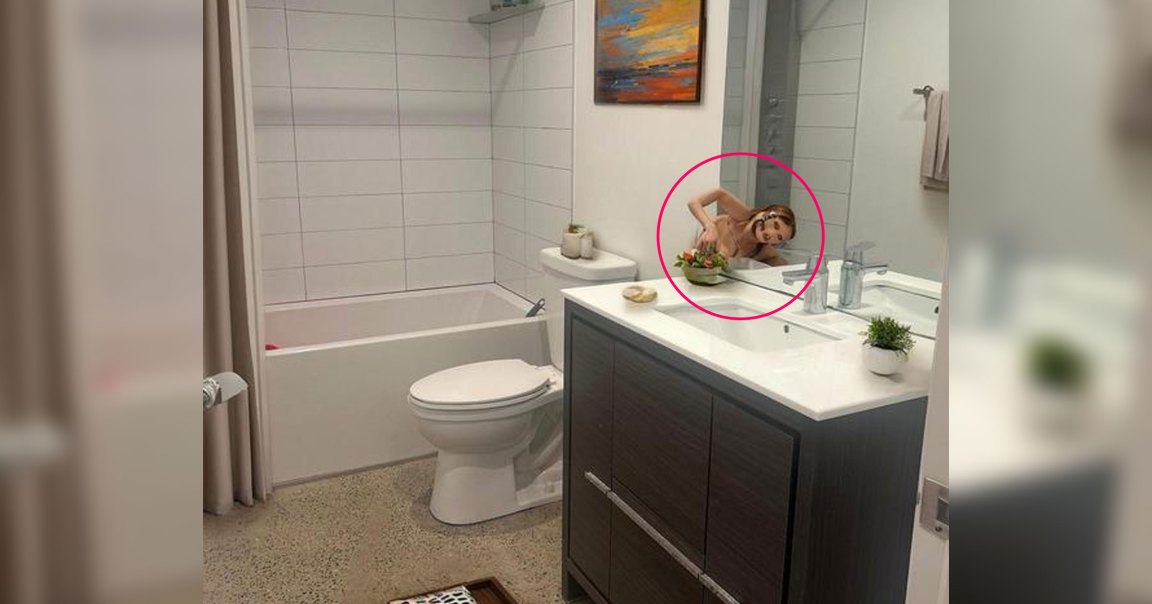
And thus we have the risible tale of the listing for a property in Fort Totten, a suburb in northern Washington, D.C., that has been taken down from Apartments.com. While the ad was up, it seemingly promised that for just $1,800 a month, a lucky renter could have her own bathroom Hell-spawn. See it in the photo above, crawling onto the bathroom sink?
Giraffe360, an AI image editing tool for real estate photos, points out on its website that real estate organizations “consistently prohibit” edits that remove or alter structural elements, erase or modify views, or digitally renovate or upgrade interiors or exteriors. “Here’s a simple test: if an edit would require physical renovation to achieve in real life, it shouldn’t be in an MLS listing photo,” it advises. But there is a loophole: edits that create H.P. Lovecraft creature features on the property probably should also be taboo.
“How do you not notice the melted demon crawling out of the wall before you hit publish?” one user wrote, attempting to rebut the presumption that AI image editing tools were involved. That’s an easy question that regular Ethics Alarms readers can answer by quoting The Waco Kid: “You know. Morons!”
I guess I’ve read too many articles like “Country Star Issues Blunt Response After Being Criticized for Her Appearance: ‘I’m Seething’” Not that I’ve read a lot of articles about country singer Lauren Alaina, yet another star in that genre introduced to the world by “American Idol”: I’ve never heard her, or of her. But I have been reading and hearing performers, particularly women, going into high dudgeon about fans, movie-goers, concert ticket-buyers and others who criticize them regarding their physical appearance, particularly their weight. Apparently Lauren’s furious because a lot of people criticized her weight based on a recent video of her performing. The singer wrote on Instagram in part,
“I’m literally so mad right now. I’m seething…We’ve got to change the way we’re talking about women on social media. We need to retire the obsession with women’s bodies. If you care about the music…talk about the music. If you don’t…. well, that’s fine too. But this culture of speculating about women’s bodies? It’s tired. Do better.”
Alana went on to emote about the phenomenon later. “A few weeks ago, I saw a TikTok of me up on stage singing, and all of the comments were about my weight,” she sobbed. “People were saying that my tour needed to be sponsored by Ozempic and just horrible things. It really affected me,” she said. “I am in recovery from an eating disorder that I’ve battled for a very long time. This just really upset me…I have an 8-month-old daughter, and we can’t talk about women this way. This is bull crap. If you’re a woman out there and people are commenting on your body, and saying this, myself included, we’ve gotta ignore that, and we all need to be better. This is crazy.”
“Well allow me to retort!” I say, in my best Samuel L. Jackson impression. (No, I’m not going to shoot her.)
I was going to get this up before the Super Bowl, but it turns out that the issue was further crystalized by the game itself. As happens approximately 50% of the time with this annual spectacle, the game was a yawn, and much of the news coming out of the contest involved the NFL’s deliberate transformation of what was once considered a unifying family cultural event, like Fourth of July fireworks, into a partisan, progressive statement about how America sucks, with expensive TV ads extolling capitalism and patriotism at the same time. That’s message whiplash, and ethically irresponsible.
As the New York Times explained, without criticism, the NFL took a hard turn Left when it put Barack Obama pal Jay-Z, the rap star and impresario, in charge of the Super Bowl halftime show after the 2018 Super Bowl had triggered anger from fans over players “taking a knee” during the National Anthem. The Times, spinning as usual, says that the kneeling was intended to “draw attention to police brutality and social justice issues.”
As Ethics Alarms pointed out at the time, none of the kneelers, including its cynical originator, over-the-hill quarterback Colin Kaepernick, ever explained coherently what they were kneeling about. What “police brutality”? Oh, you know, Mike Brown, whom Black Lives Matters still says was “murdered” on its website. What social justice issues? Oh, you know: it’s time for white people to be discriminated against to make up for slavery. The left-turn was a greed-induced mass virtue signal to blacks, clueless young fans, and Democrats. (It helped that President Trump vociferously attacked Kaepernick and Co., so the kneeling appealed to the Trump Deranged too. (See Dissonance Scale, Cognitive)
A British personal trainer and fitness coach named Sama Hoole posted this on “X”:
1866: Cotton seeds are agricultural waste. After extracting cotton fiber, farmers are left with millions of tons of seeds containing oil that’s toxic to humans. Gossypol, a natural pesticide in cotton, makes the oil inedible. The seeds are fed to cattle in small amounts or simply discarded.
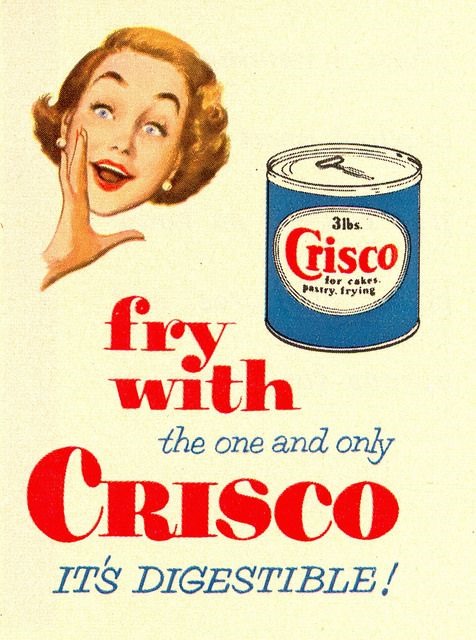
1900: Procter & Gamble is making candles and soap. They need cheap fats. Animal fats work but they’re expensive. Cotton seed oil is abundant and nearly worthless. If they could somehow make it edible, they’d have unlimited cheap raw material. The process they develop is brutal. Extract the oil using chemical solvents. Heat to extreme temperatures to neutralise gossypol. Hydrogenate with pressurised hydrogen gas to make it solid at room temperature. Deodorise chemically to remove the rancid smell. Bleach to remove the grey color. The result: Crisco. Crystallised cottonseed oil.
Industrial textile waste transformed through chemical processing into something white and solid that looks like lard. They patent it in 1907, launch commercially in 1911. Now they have a problem. Nobody wants to eat industrial waste that’s been chemically treated. Your grandmother cooks with lard and butter like humans have for thousands of years. Crisco needs to convince her that her traditional fats are deadly and this hydrogenated cotton-seed paste is better. The marketing campaign is genius. They distribute free cookbooks with recipes specifically designed for Crisco. They sponsor cooking demonstrations. They target Jewish communities advertising Crisco as kosher: neither meat nor dairy. They run magazine adverts suggesting that modern, scientific families use Crisco while backwards rural people use lard.
But the real coup happens in 1948. The American Heart Association has $1,700 in their budget. They’re a tiny organisation. Procter & Gamble donates $1.7 million. Suddenly the AHA has funding, influence, and a major corporate sponsor who manufactures vegetable oil.
1961: The AHA issues their first dietary guidelines. Avoid saturated fat from animals. Replace it with vegetable oils. Recommended oils: Crisco, Wesson, and other seed oils. The conflict is blatant. The organization issuing health advice is funded by the company that profits when people follow that advice. Nobody seems troubled by this. Newspapers report the guidelines as objective science. Doctors repeat them to patients. Government agencies adopt them into policy. Industrial cotton-seed oil, chemically extracted and hydrogenated, becomes “heart-healthy” while butter becomes “artery-clogging poison.”
1980s: Researchers discover that trans fats, created by hydrogenation, directly cause heart disease. They raise LDL, lower HDL, promote inflammation, and increase heart attack risk more than any other dietary fat. Crisco, as originally formulated, is catastrophically unhealthy. This takes 70 years to officially acknowledge. Procter & Gamble’s response: Quietly reformulate without admission of error. Remove hydrogenation, keep selling seed oils, never acknowledge that their “heart-healthy” product spent seven decades actively causing the disease it claimed to prevent. Modern seed oils remain. Soybean, canola, corn, safflower oils everywhere. Same chemical extraction process. Same high-temperature refining. Same oxidation problems. Just without hydrogenation so trans fats stay below regulatory thresholds. These oils oxidise rapidly when heated. They integrate into cell membranes where they create inflammatory signalling for months or years. They’re rich in omega-6 fatty acids that promote inflammation. They’ve never existed in human diets at current consumption levels. But they’re cheap. Profitable. And the food industry has spent a century convincing everyone they’re healthy. The alternative, admitting that industrial textile waste shouldn’t have been turned into food, would require acknowledging the last 110 years of dietary advice was fundamentally corrupted from the start. Your great-grandmother cooked with lard because that’s what humans used for millennia. Then Procter & Gamble needed to sell soap alternatives and accidentally created the largest dietary change in human history.
We traded animal fats that built civilisations for factory waste that causes disease. The soap company won. Your health lost.
I have no idea if this is all true, partially true, a matter of dispute, or complete fantasy. But I bet RFK Jr. likes it. The story, which certainly has the ring of truth, also raises the issue of trusting science and experts, especially when business interests and money are involved.
My personal favorite use of Crisco was when people would mix it with food coloring and sugar and call it “frosting.”
Why not start off the day with a humiliating confession? Nothing else has been working lately…
Back in May, I wrote about that ad above in which a goofy pitchman for the Allied Injury Group nicked or squashed a couple of legal ethics rules in the course of exactly the kind of lawyer advertising the profession was afraid would result when it had to eliminate the unconstitutional ban on the practice. It was a harsh post and should have been. I wrote in part,
“…the spokesperson calling himself “Your Favorite Attorney” is an actor, indeed a stand-up comic named Shaun Jones. All of the jurisdictions prohibit lawyer advertising in any form that is misleading or that includes false information. A sole practitioner can’t call her firm “X & Associates,” for example, if she’s the only lawyer in the firm. Putting a non-lawyer in front of a camera and calling having him call himself an attorney is an undeniable violation, and an intentional one… Jones also says that if the client doesn’t make money, “I” don’t make money. That is deceit. The firm will argue that the actor is only saying that if the firm doesn’t win its cases, the actor won’t get paid. But his statement is intended to refer to contingent fees for attorneys, and he isn’t one. “
Having done my duty to flag these hacks, I then proceeded to put the wrong law firm name in the headline! I have a typo and proofreading problem, as even casual visitors here know; I’ve gotten better, but the fact that these posts are usually written in fits and starts while I try to complete actual income-relating work [Thank you, by the way, to those of you who sent me generous contributions or gifts over the holidays, or kind words of encouragement that I appreciated just as much.] means that I sometimes miss glaring errors. That’s not an excuse. But it’s true.
This one was a doozy, made worse by my obstinate habit of proofing everything but the headlines. And so it was that The Allied Law Group, a distinguished and, based on my research, an impeccably professional and trustworthy firm that specializes in civil appellate law, media and First Amendment law, open government laws, regulatory litigation, legislation and general litigation, but not personal injury law, was unjustly and wrongly impugned.
That firm’s clients include lawyers, public interest groups, trade associations and media organizations. Their website is impressive and professional; I would even say, as one who is often asked to review the content of lawyer websites for ethics violations, exemplary.
So this was a really bad mistake on my part, and I could not be more sorry, embarrassed, contrite and remorseful. I apologize to the firm, its lawyers, its staff and clients. The post has been corrected, and let us never speak of it again.
I want to note that the firm attorney I spoke with was thoroughly civil, respectful, and, frankly, nicer than I might have been in a similar situation. She did not threaten me, as many lawyers are wont to do. She did inform me of the undeserved abuse that her firm has been getting—even death threats!—from people who have confused the firm with Allied Injury Group. People want to kill unethical lawyers now? I did not see that coming. I do have a hard time believing that anyone inclined to send death threats reads an ethics blog, but never mind: I accept responsibility for contributing to the confusion.
The Allied Law Group’s representative also didn’t make any demands during our conversation, because before she finished her second sentence I said: “I’ll fix that post immediately.” Nor did not instruct me to post this: I told her that I would compose an apology and get it up as soon as possible, because that’s my policy when I screw up.
Finally, I want to thank commenter Ric, who sent in a comment flagging the error last November. As Herman Kahn said, unlikely disasters occur when there’s a 1% confluence of bad management and bad luck. I try to read all reader comments. I missed that one.
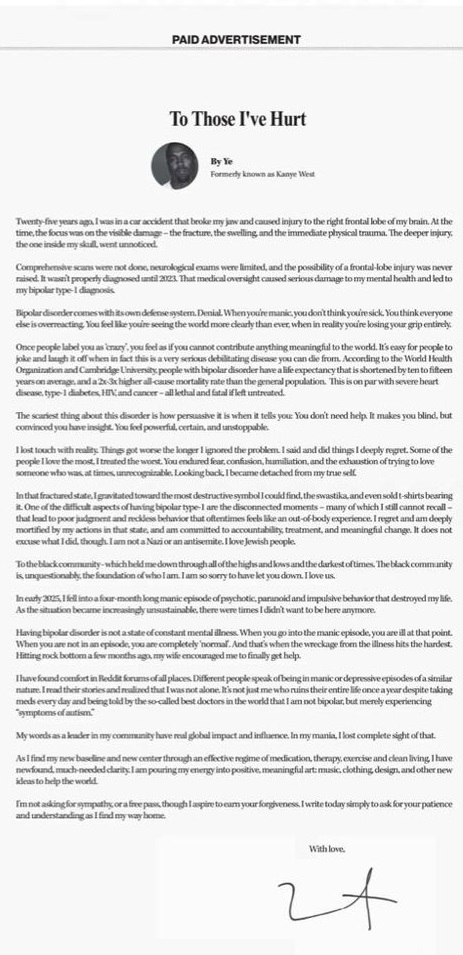
That’s the full page ad that “Ye,” aka. Kanye West, paid to have placed in, of all papers, the Wall Street Journal. I wonder what percentage of WSJ readers even know who the hell he is? Never mind; he did it. Here’s what the ad says (I hesitate to put down “he wrote’):
“Twenty-five years ago, I was in a car accident that broke my jaw and caused injury to the frontal lobe of my brain. At the time, the focus was on the visible damage – the fracture, the swelling, and the immediate physical trauma. The deeper injury, the one inside my skull, went unnoticed….”
It wasn’t properly diagnosed until 2023. That medical oversight caused serious damage to my mental health and led to my bipolar type-1 diagnosis. Bipolar disorder comes with its own defense system. Denial. When you’re manic, you don’t think you’re sick. You think everyone else is overreacting. You feel like you’re seeing the world more clearly than ever, when in reality you’re losing your grip entirely.
Once people label you as crazy, you feel as if you cannot contribute anything meaningful to the world. It’s easy for people to joke and laugh it off when in fact this is a very serious debilitating disease you live from….
The scariest thing about this disorder is how persuasive it is when it tells you: You don’t need help. It makes you blind, but convinced you have insight. You feel powerful, certain, and unstoppable.
I lost touch with reality. Things got worse the longer I ignored the problem. I said and did things I deeply regret. Some of the people I love the most, I treated the worst. You endured fear, confusion, humiliation, and the exhaustion of trying to love someone who was, at times, unrecognizable. Looking back, I became detached from my true self.
In that fractured state, I gravitated toward the most destructive symbol I could find: the swastika, and even sold t-shirts bearing it. One of the difficult aspects of having bipolar type 1 are the disconnected moments – many of which I still cannot recall that lead to poor judgment and reckless behavior that oftentimes feels like an out-of-body experience. I regret and am deeply mortified by my actions in that state, and am committed to accountability, treatment, and meaningful change. It does not excuse what I did, though. I am not a Nazi or an antisemite. I love Jewish people.
To the black community – which held me down through all of the highs and lows and some of my darkest times. The black community is, unquestionably, the foundation of who I am. I am so sorry to have let you down. I love us.
In early 2025, I fell into a four-month long manic episode of psychotic, paranoid and impulsive behavior that destroyed my life. As the situation became increasingly unsustainable, there were times I didn’t want to be here anymore.
Having bipolar disorder is not a state of constant mental illness. When you go into the manic episode, you are ill at that point. When you are not in an episode, you are completely “normal.” And that’s when the wreckage from the illness hits the hardest. Hitting rock bottom a few months ago, my wife encouraged me to finally get help.
I have found comfort in Reddit forums of all places. Different people speak of being in manic or depressive episodes of a similar nature. I read their stories and realized that I was not alone. It’s not just me who run [sic] their entire life once a year despite taking meds every day and being told by the so-called best doctors in the world that I am not bipolar, but merely experiencing “symptoms of autism.”
My words as a leader in my community have real global impact and influence. In my mania, I lost complete sight of that.
As I find my new baseline and new center through an effective regime of medication, therapy, exercise and clean living, I have newfound, much-needed clarity. I am pouring my energy into positive, meaningful art: music, clothing, design, and other new ideas to help the world.
I’m not asking for sympathy, or a free pass, though I aspire to earn your forgiveness. I write today simply to ask for your patience and understanding as I find my way home.”
It’s time to check the old, Ethics Alarms Apology Scale to see where this whatever it is fits.
According to the scale, this is the hierarchy of apologies, their function and their motivation, from most admirable to the least credible:
Do I really have to explain what’s unethical about this?
I hope not.
It’s something special, all right. Talk about shattering “norms.” Also good taste, the respect for the office, the line between celebrity and public service, and… well, you fill in the rest.
The mainstream media is terrible at covering lawsuits, and this one is no exception. Attention should be paid, however. The allegations are serious, and particularly ominous for professional sports, which are all in a perilous state right now thanks to their greedy negligence allowing gambling to taint their credibility. The law suit, which has mountains of evidence to support it, alleges a conspiracy among Fanatics Inc., the National Football League and TikTok “to monopolize the sports memorabilia market, suppress competition, and destroy small business sellers.” The specific allegations are:
Violation of Sherman Act §1 (Conspiracy in Restraint of Trade)
Violation of Sherman Act §2 (Monopolization / Attempted Monopolization)
Violation of Clayton Act §3 (Exclusive Dealing)
Violation of California Cartwright Act
Violation of California Unfair Competition Law (Bus. & Prof. Code §17200)
Tortious Interference with Contractual Relations
Tortious Interference with Prospective Economic Advantage
False Advertising and Unfair Competition (Lanham Act §43(a))
Common Law Unfair Competition
Breach of Covenant of Good Faith & Fair Dealing
The victims of the conspiracy are passionate NFL fans, collectors, and families who began lucrative businesss selling NFL souvenir items only to be threatened and blocked, costing them dearly.
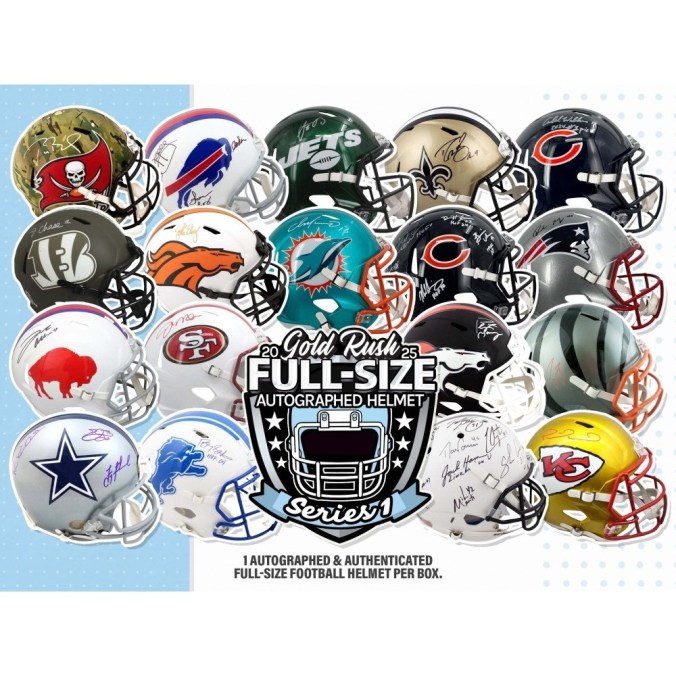
If you aren’t a sports memorabilia collector, you may be unaware of the extent to which a company called Fanatics dominates the business. One reason for this is that the part of the memorabilia business at issue exploded in activity and profits fairly recently. During the stupid pandemic lockdown, small business entrepreneurs calling themselves “breakers” devised a new approach to sports memorabilia and collectables marketing by livestreaming so-called “box breaks” on TikTok, eBay and other platforms. The result was billions in secondary-market sales and thousands of everyday Americans profiting while retired professional athletes had income from participating in autograph signings and memorabilia events.
All was well, and everyone profited, until 2021, when Fanatics, backed by equity funding from Silver Lake Technology Management and with the cooperation of the NFL and other sports leagues, decided to monopolize the collectibles and memorabilia industry. Fanatics acquired exclusive licensing rights from the major sports leagues and players’ associations, purchased the iconic trading card manufacturer Topps, and launched new brands such as Under Wraps. The scheme was to take the autograph and memorabilia markets away from independent dealers and breakers, fixing the profits while freezing the small business memorabilia traders out.


 Ethics Alarms