Here it is: “Can Male Authors Publish Books Under Female Names?”
Well, of course they can, but the real question is little better. “I’ve recently heard some sharp comments from friends about male authors publishing books under female names. The pseudonyms are sometimes gender-neutral, but in genres dominated by women, readers assume that these writers are women too,” blathers “Name Withheld.” ” I know there are historical examples of the inverse: female writers using male names or gender-neutral names that are assumed to be male. But are these equivalent? Whatever difficulty male authors may face in majority-female literary genres today cannot compare to women’s historical struggle to live a public life. Is it unethical for these male authors to present themselves this way?”
Today this unwelcome turd turned up on my mailbox from a “Kerry Brad”…
Good morning! What if I told you the typical Ashley Madison member isn’t a reckless playboy but a brown-haired engineer, a highly successful Virgo, and – more often than not – the eldest child in their family? New data from Ashley Madison, the discreet dating platform with more than 80+ million members worldwide, reveals a surprising reality about who’s engaging in non-monogamy – and it’s not who you might expect.
The numbers tell a fascinating story:
More than one-third (33%) of respondents say they’re happy in their marriages/relationships.
70% of members stick to just one affair at a time, debunking the myth of serial cheaters, while only 2.7% have had four or more affairs simultaneously.
Women seek affairs earlier than men – 13% of women have been in their relationship for less than a year before looking elsewhere, compared to just 3% of men.
While men in engineering and trades make up a significant portion of members, women in sales, IT, and law enforcement also turn to affairs.
Virgos, Geminis, and Scorpios are among the most likely to stray.
This data challenges everything we think we know about who joins Ashley Madison and why. I’d love to connect you with Paul Keable, Chief Strategy Officer at Ashley Madison, who can dive deeper into the typical profile of an Ashley Madison member, what this reveals about modern relationships, and more. Let me know if this data would be a fit for an upcoming story. I look forward to hearing from you, either way!
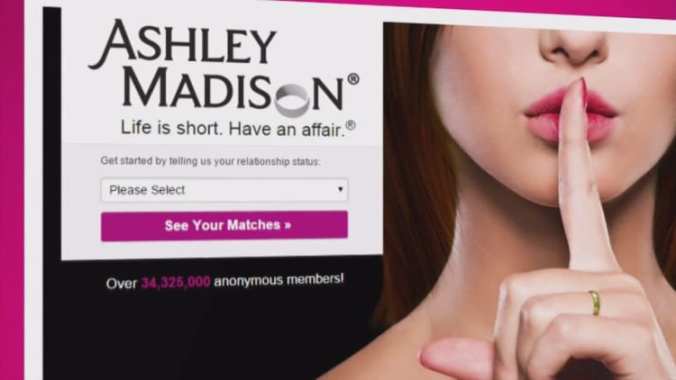
The letter cam complete with a copy of the company’s member survey. Not familiar with Ashley Madison, you lucky stiff? Its website homepage used to welcome viewers (maybe it still does; I am not moved to check) thusly:
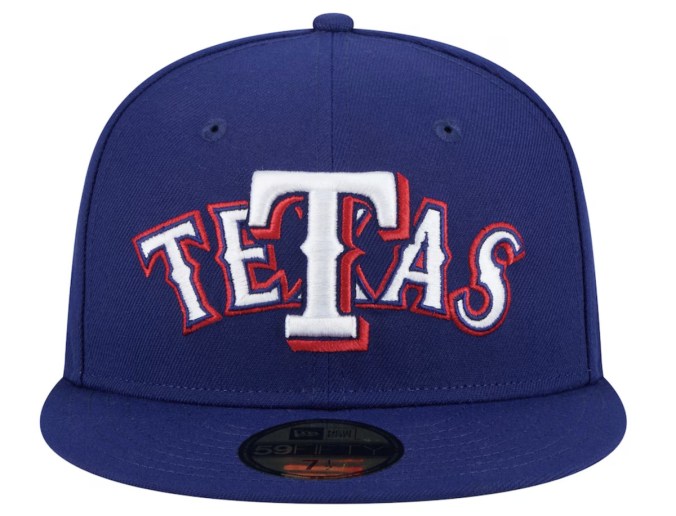
Remember that little problem with the new Texas Rangers “double logo” cap? The Chesapeake Baysox say “Hold my beer!”
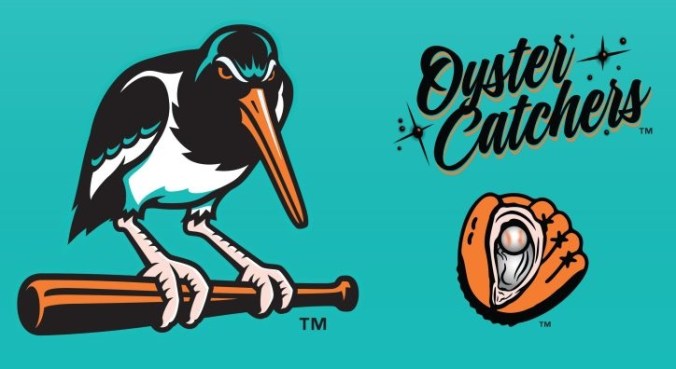
The Double-A minor league affiliate of the Baltimore Orioles in the Eastern League unveiled a new “alternate identity”: the team is also calling itself the Chesapeake Oyster Catchers as “a tribute to the Chesapeake Bay’s rich heritage and thriving ecosystem.” Let me interject here that I don’t understand why a baseball team wants or needs an “alternate identity,” unless it’s the Chicago White Sox, who last season broke the modern record for lousiness with 121 losses (out of 164 games). How does a baseball team turn into Batman? Well, never mind…
The team unveiled two new logos centers inspired by the oyster catcher, a distinctive black-and-white shorebird with an orange beak that flocks in Maryland’s Chesapeake Bay. The bird hunts shellfish, and thus “is a symbol of strength and ingenuity—qualities that define both the Chesapeake region and its passionate baseball fans.”
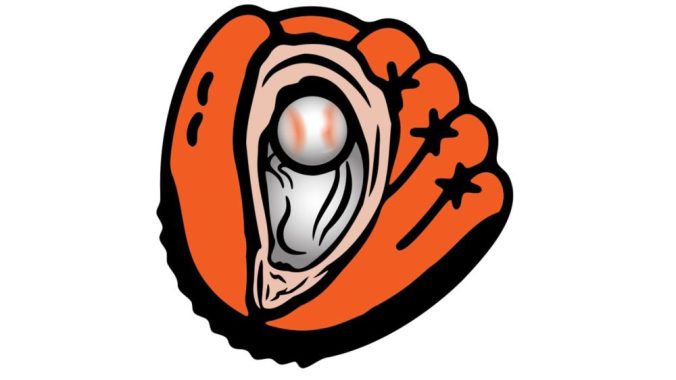
And here is a close-up of the one that no one connected with the team seemed to be paying enough attention to…
“Wait,” some social media wags noted on social media, “Isn’t that thing in the glove a…?”
Yikes and holy female anatomical parts, Batman! The Baysox/Oystercatchers quickly removed that onscene logo from its social media posts, website, and online stories. That’s a good first step: now fire everyone in the marketing department who didn’t see what that “oyster” looked like and say something before the team embarrassed itself and everyone else.
We shall see if the ethical value of accountability is completely dead in our culture by how many people are fired by Major League Baseball in the aftermath of the Great Baseball Cap Disaster of 2025. It should be a lot.
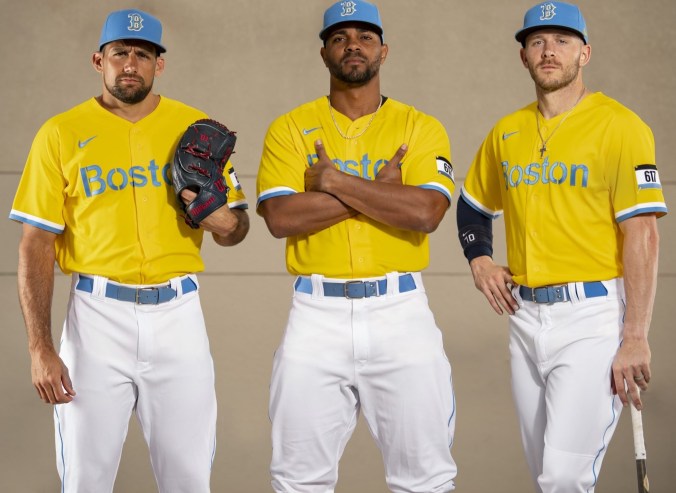
Baseball finally figured out that the clubs could make a lot of money by constantly adding new uniforms and baseball cap options to each team. (I blame former Commissioner of Baseball Peter Ueberroth, whose entire function during his tenure was to modernize the sport’s merchandising and public relations.) I thought this hustle had reached its apotheosis with the dreadful “City Connect” uniforms that were inflicted on the teams a few years ago, creating inexplicable eyesores like this for the RED Sox…
but the sport’s greed and lack of taste knows no bounds. Fans and collectors actually bought those jerseys and caps (to be fair, some of the redesigned uniforms aren’t quite that bad), along with the “vintage” uniforms and caps, the Mother’s Day uniforms and caps, the stupid “nickname” jerseys, the boring All-Star team jerseys and caps, “turn-back-the clock” uniforms….As P.T. Barnum said, “There’s a sucker born every minute.”
So someone got the bright idea to foist these ugly team caps off on the public, since obviously baseball fans will buy anything:
Huh. Well, I guess dining out habits in the U.S. have been evolving since the pandemic, as today’s news stories astutely observe…
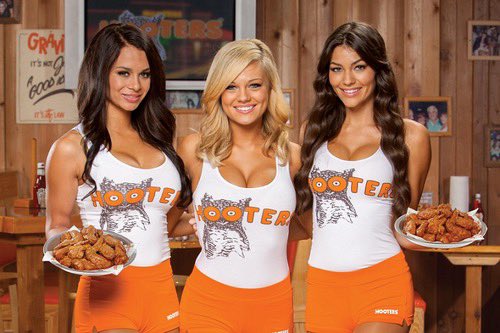
Hooters, famous (or infamous) for a crude play on words and its mandatory attire for waitresses, is preparing for a potential bankruptcy filing as it works with creditors on a plan to restructure its operations, according to Bloomberg News.
The Chengdu Snow Village project in the Sichuan province in southwestern sought to attract tourists over the Lunar New Year holiday by promoting its property as a “winter wonderland,” showing photos of thick, gleaming white snow covering the grounds and the roofs of its cabins. When the tourists arrived, however, the “snow” they saw was obviously puffs of cotton, plastic, beds sheets and other white camouflage. One structure was covered in what looked like bedding material with visible staples.
The Snow Village issued an apology on social media blaming warm weather in the region. No, the warm weather wasn’t the problem. The problem was and is the complete breakdown in societal and cultural ethics in China, a direct result of Mao’s “cultural revolution” that induced the nation’s full embrace of Orwellian government alternate realities in the 20th Century. In 2020, as political correctness censors sought tp protect China from its accountability for the world pandemic, a Hong Kong protester summed up the ethical status of China with the memorable quote, “Don’t trust China….China is asshole! ”
Two controversies raise issues of ethical line-drawing in state and local laws.
1. Sign or Art? Leavitt’s Country Bakery in Conway, a community of more than 10,000 people in New Hampshire, erected a colorful mural over the store in 2022. It was the creation of local high school art students showing sunbeams shining down on a mountain range made of sprinkle-covered chocolate and strawberry doughnuts, a blueberry muffin, a cinnamon roll and other pastries. The muralwas popular with everyone but the local zoning board, which ruled that the painting was not art but advertising. This meant it was a sign, and at about 90 square feet, four times bigger than the local sign ordinance allows. Lawyers for Conway insist that “restricting the size of signs serves the significant government interest of preserving the town’s aesthetics, promoting safety, and ensuring equal enforcement.” The store’s owner sued the town in federal court in 2023, saying his freedom of speech rights were being violated. He’s seeking a symbolic single dollar in damages.
[From your host: This is an epic post about something I know absolutely nothing about, except that I received the calls and marketing materials Wall Phone is writing about—JM]
***
“Well, not that. Actually, I have been trying to reach you about the Telephone Consumer Protection Act, TCPA for short. If you’re reading this, someone connected to your company, someone who cares about your company, and someone who cares about their career and livelihood, has been told that your company is violating at least one provision of this Federal law.
“If you don’t listen to them, it would be prudent of them to begin looking for another job. They shouldn’t want to go down with your ship. If they need to maintain some kind of licensure, they also don’t want to lose their credentials for whatever wrongdoing was going on that got them in contact with the person who gave them this webpage.“
Have you ever wondered why those auto warranty calls stopped? It’s because the government has fined the people connected to that advertising campaign more than six and a half million dollars. The fine came with a lifetime ban on any form of telemarketing. What would happen to your company if this kind of fine and ban were to be imposed on you?
“But we don’t make outgoing calls, let alone robocalls!”
And yet you have appeared to have done so. What you thought was a prospective customer told you about this page because they want you to stop harassing them.
“But our company is not harassing them!”
And yet you have appeared to be doing so. And worse, much worse, you appear to have been doing this for years.
“Years?”
Yes.
“But we only recently adopted this marketing partner/strategy!”
And you had better stop. Yesterday. Hopefully your contract has some sort of an enforceable indemnification clause that MIGHT protect you, but it probably won’t. If your marketing agreement does have such a clause, its actual purpose is to pacify any possible reservations at the signing stage of your marketing agreement with them, not the actual true purpose of these contractual things–to avoid the creation of moral hazard.
“Moral hazard” is explained below if you’re not familiar with that term. It’s high time you were.
The reason this indemnification clause on your contract won’t help you is the telemarketing company will be gone when the time comes that you’ll need it. They are betting that by the time it takes for you to figure out that you need to use indemnification, it will be too late. This page is here to help you figure it out sooner, help you recover as much as possible, and make their scam less profitable.
You need to—as soon as possible!—FIRST ask your bank how many of the past payments you made to your marketing partner that you can reverse, THEN ask the marketing partner for refunds. If you think you handling this business with them politely will work, then you have already lost. They will transfer all funds out of their accounts. They will disappear. You’ll lose more than if you IMMEDIATELY reverse as many payments as you can, because they’re not operating in good faith and they’re not intending to refund anything.
You are the victim of a scam. Victim of a crime. It’s literally an organized crime syndicate you are dealing with and they hav done this before, perhaps dozens of times before. They’re counting on you being polite and patient so they have time to disappear, whitewash a new business name on their operations, then start over. They don’t care that they destroyed your agency or business, they have thousands of other prospects they can milk this scam on. They have been doing this for years.
Here’s now sinister this ad is: I must have watched it six or seven times before I thought, “Hey…wait a minute!”
The male “bad date” in the ad is so disgusting a viewer is half-hoping the woman pulls out a .44 and shoots him right between the eyes. This is masterful manipulation at work…he begins with an insult framed as blame causing him disappointment: “You’re too short.” Asshole. Then he reveals his narcicissm and boastfulness, showing the selfie “by the dumbbells.” Giant asshole! Next the air-drumming comment…UNBELIEVABLE asshole! When he gets to the bit about forgetting his wallet and “Sugarmamma,” the viewer is seeing red, and feeling that the victim of this toxic creep is being noble by just sneaking out rather than setting him on fire.
But she isn’t. She’s being an asshole too, just a slightly better one. Leaving the table on false pretenses to escape is cowardly and indefensible. Moreover, someone who misbehaves as outrageously as the “bad date” needs to be told just clearly how unacceptable his conduct is and why, since he obviously doesn’t know. His next victim will at least partially be the runaway date’s fault.
The commercial also showed an anti-female bias by making the bad date a male and his victim female. A genders switched version would inspire at least a substantial reaction from viewers of “What a weenie! The jerk doesn’t have the guts to confront that jerk!” But teh woman in the ad is also a weenie—it’s just that the Hyundai marketers are calculating that running away from confrontations and unpleasant situations is a girl thing, and socially acceptable.
No, it really isn’t. This is not only a stereotype, it’s a damaging one. Why haven’t we elected a female President yet? Accumulated cultural poison like this commercial is one of the reasons.
Incidentally, I hope that actor who plays the asshole was well paid for his performance, because he may end up dying single and alone as a result.
I have mentioned here frequently that one of two things I learned in college that have been most useful in my life and career is Leon Festinger’s Cognitive Dissonance Scale. The concept illustrated by the scale is also one of the most useful tools for ethical analysis, often essential to answering the question, “What’s going on here?” the entry point to many perplexing situations. Check the tag: it just took me 15 minutes to scroll though the posts that got it. I was surprised to find that I didn’t use the tag until 2014, when the scale helped me conclude that the Tea Party, then in ascendancy, was “doomed by a powerful phenomenon it obviously doesn’t understand: Cognitive Dissonance.” Heard much about the Tea Party lately? See, I’m smart! I’m not dumb like everybody says…I wrote then,
As psychologist Leon Festinger showed a half a century ago, we form our likes, dislikes, opinions and beliefs to a great extent based on our subconscious reactions to who and what they are connected with and associated to. This is, to a considerable extent, why leaders and celebrities are such powerful influences on society. It explains why we tend to adopt the values of our parents, and it largely explains many marketing and advertising techniques that manipulate our desires and preferences. Simply put, if someone we admire adopts a position or endorses a product, person or idea, he or she will naturally raise it in our estimation. Ifhowever, that position, product, person or idea is already extremely low in our esteem, even though his endorsement might raise it, even substantially, his own status will suffer, and fall. He will slide down the admiration scale, even if that which he endorses rises. If what the individual endorses is sufficiently deplored, it might even wipe out his positive standing entirely.
The implications of this phenomenon are many and varied, and sometimes complex. If a popular and admired politician espouses a policy, many will assume the policy is wise simply because he supports it. If an unpopular fool then argues passionately for the same policy, Festinger’s theory tells us, it might..
1. Raise the fool’s popularity, if the policy is sufficiently popular.
2. Lower support for the policy, if he is sufficiently reviled, and even
3. Lower the popularity of the admired politician, who will suffer for being associated with an idea that had been embraced by a despised dolt.
This subconscious shifting, said Festinger, goes on constantly, effecting everything from what movies we like to the clothes we wear to how we vote.
Here, for the heaven-knows-how-many-th time, is the scale in simplified form…