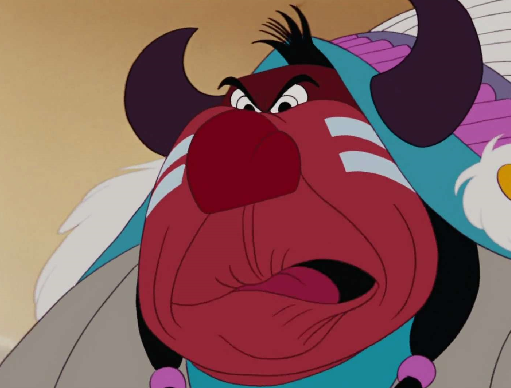
I recently watched the Disney “Peter Pan,” long my favorite of the classic animated films, which I had not seen from beginning to end in decades. I was genuinely shocked at the portrayal of the Indians, which would make the average movie Western seem politically correct and the Washington Redskins seem like a compliment. I know the story is a fantasy; I know that these are not supposed to represent real Native Americans, but a Victorian child’s visualization of the villains of their games. Nevertheless, it is hard to imagine the effect of such a film on a Native American child as being anything but devastating. The Neverland Indians, and their heroine, Tiger Lily, have been a human relations problem since at least the civil rights era, and the provocation is legitimate: did you recall (I had forgotten) that Tiger Lily belonged to the “Piccaninny tribe”? That James Barrie was a funny guy. Continue reading
Marketing and Advertising
Who’s That Woman On The Cover of “O” Magazine?
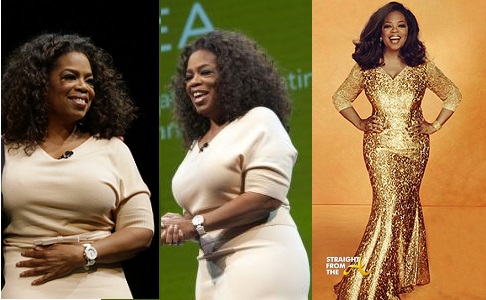
By purest coincidence, I was looking through a magazine rack at CVS yesterday and taking notice of how well Oprah Winfrey has been keeping the pounds off lately. Then, this morning, I saw footage of her walking across a stage to announce her latest venture, something to do with chai tea. Mama mia! The woman I saw smiling and waving, presumably the real Oprah, was easily 50 pounds heavier than the look-alike who has been gracing the cover of recent O’s, though I will say, as mitigation, that the strategically shot March cover has a graphic over OW’s gut.
I could not care less how much Oprah weighs or what she looks like. However, an ethical narcissistic—and what else can you call a woman who publishes a magazine named after herself that has her as the cover model for every single issue?—has limited choices:
- Keep yourself in fabulous shape, so you are fit to be a cover girl (by your own standards)
- Don’t put yourself on the cover when you don’t feel cover-worthy
- Use cartoons, or
- Let it all hang out.
Not an ethical option: showing your loyal, trusting readers that you look one way, when in fact you look a whole lot fatter.
Yes, yes, I know—photoshopping, airbrushing, make-up, glamor photos, “it’s done all the time.” This is Oprah’s magazine, her image and her body, and pictures communicate. Her covers say “This is what I look like, be like me.” If she doesn’t look like her covers or even close, that’s an outright, calculated lie. It’s really as simple as that.
Dana Milbank’s Weird and Un-American Concept of Loyalty
This happens now and then—I consider posting on a topic, decide, “Nah, I must be the only one who sees it this way,” and then another commentator—one people actually pay attention to—flags exactly the same issue I decided nobody would notice or care about. This time it was James Taranto, one of my favorites, who saw the same disturbing sensibilities that I did in Washington Post columnist Dana Milbank’s bizarre column today.
Titled “Why millennials have abandoned Obama,” the Post’s flakiest liberal accuses young voters of disloyalty to their hero because they don’t want to sacrifice their own autonomy and well-being to help the President’s misbegotten health care bill succeed. It is well-known that a sufficient number of young Americans must sign up for health care insurance—which, for them, is over-priced under the law—to make the rest of the numbers add up. So far, they aren’t doing it. Milbank:
“The administration announced last week that only 1.08 million people ages 18 to 34 had signed up for Obamacare by the end of February, or about 25 percent of total enrollees. If the proportion doesn’t improve significantly, the result likely will be fatal for the Affordable Care Act.”
Milbank then makes the jaw-dropping argument that Obama should take this personally, that it is a betrayal by his troops in his hour of need. After all, Milbank tells us, these were the same voters who elected Obama, seeing him as a transformative candidate. Shouldn’t they be willing to sacrifice now and make their health insurance decisions according what will be best for him?
What??? Of course not! Oh, I have no question that the President thinks this way. It was Obama, after all, whose solution to the depressing unemployment numbers has been to tell business leaders to hire more people, because he said so, and because it would make his policies look more successful. Businesses would be happy to hire more employees, of course, if the stuttering administration didn’t keep changing the rules, laws and assumptions, wasn’t feeding global uncertainty by inept foreign policy, threatening to make energy costs skyrocket, and generally be the least business-friendly government in recent memory. Businesses don’t change their behavior because it helps a President politically, they do it because it will help them make money. The same is true of individuals, young and old. “This will make my life easier and more secure” is a reason to buy health care. “This will help a President I voted for rescue his grand plan that he lied about, managed incompetently and that isn’t working right” is not.
Why does Milbank think it is? Continue reading
“Noah” Ethics
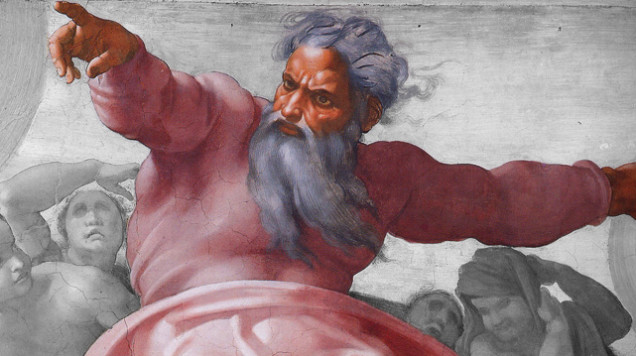
There is nothing unethical about “Noah,” the biblical spectacular that harkens back to the grand old days when Cecil B. DeMille reigned supreme. I haven’t seen the movie, and yet I can say that with absolute certainty. The reason I can say it that there is no way on earth that a movie about Noah and the Ark, in this day and age, could possibly be unethical. Even if the Old Testament were literal fact, which it is not, cannot be and in all likelihood was never intended to be, “Noah” couldn’t possibly be unethical, because it is a movie.
Never mind that of all the Biblical fables, with the possible exception of Adam and Eve, the tale of Noah is perhaps the most obviously impossible. The movie is art—of one kind or another—and does not represent itself as a documentary or make any factual assertions whatsoever. Thus it can be distinguished from a truly unethical film like Oliver Stone’s “JFK,” which intentionally misrepresented recent historical facts to “prove” a theory of the Kennedy assassination that was irresponsible and almost certainly false. Is “Noah” dishonest? It is impossible to be dishonest about a presumptively non-historical event about which there is no direct evidence whatsoever, and when there is no intention to deceive. Is it disrespectful? Art has no duty to be respectful. Is it fair? Fair to who? An artist’s stakeholders are those who appreciate his or her art. Does it do harm, or intend to? No. Continue reading
Ethics Observations On The President’s “Funny or Die” Appearance.
You should watch the entire “Funny or Die” bit here.
1. As has been obvious from the beginning of his administration, President Obama has retained the most incompetent, tone-deaf, leadership-ignorant and inept advisors in recent history, and those advising his predecessors were nothing to be proud of. This means that President Obama has tolerated, and worse, followed the advice of such incompetent advisors. He also selected them. He is accountable.
2. For the President of the United States, in the middle of an international crisis in which his authority, power and stature is central, to submit himself as a prop in a comedy video is irresponsible, reckless, and shows abysmal priorities and judgment. Continue reading
Those Unethical, Exorbitant, Non-Profit Speaking Fees…But Don’t Blame Bill Clinton!
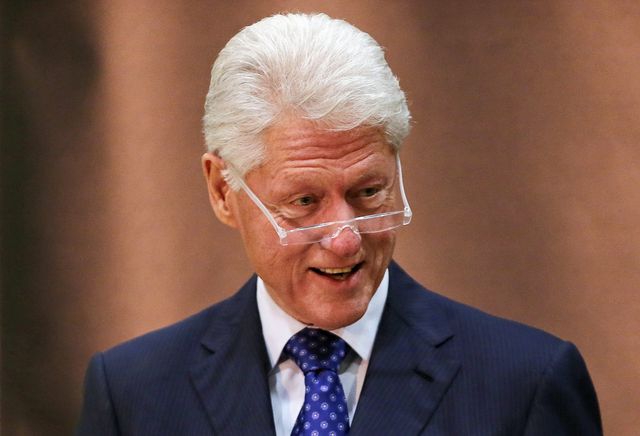
In the middle of instituting two rounds of major layoffs in 2012, the non profit Washington Hospital Center gave Bill Clinton a whopping $225,000 speaking fee to appear at its annual Cardiovascular Research Technologies conference, where Clinton expounded on health care reform and his own battle against heart disease. The hospital didn’t disclose the $225,000 payment on its annual Internal Revenue Service forms, but it surfaced on the list of income sources the ex-President provided on his wife’s required ethics filing as Secretary of State. This waste of precious funds is unconscionable, and it is also all too common.
The story was originally broken by the Washington Times, with its angle being that Clinton was the villain. I will always enjoy a little Clinton-bashing, but that is unfair and ridiculous. No one forced the hospital to pay such an exorbitant fee. No one forces any organization to pay such speaking fees; if organizations wouldn’t pay them, Clinton and other blue chip speakers would charge what the market would bear. Both Clintons charge in this range to speak, and remember, the time they devote to spreading their pearls of wisdom is typically an hour or less. Non profits as well as deep pocket corporations like Goldman Sachs, American Express and Fidelity Investments also pay the fees or similar ones, and it is an abuse of discretion whether the payer is a non profit or not. * Continue reading
Lawyer Daniel Muessig’s Clever, Effective, Legally Ethical And Thoroughly Despicable Ad
Just as I’ve been desperately trying to explain that lawyers do not represent bad people because they like them or want to loose them upon the world, here comes innovative Pittsburgh lawyer Daniel Muessig, whose clever TV ad proclaims that this is exactly what he wants to do. Here it is:
Is this an ethical ad? According to the Pennsylvania Rules of Professional Conduct, it is within the conduct permitted by the state’s legal ethics rules. The ad isn’t misleading. It doesn’t make promises the lawyer cannot keep. It doesn’t represent dramatic recreations as fact, or use broad metaphors and exaggerations. (Lawyer ads are held to a standard of literalness that presumes the public has never see any other kinds of advertising in their entire lives.) Once upon a time the various state bar advertising regulations included prohibitions on “undignified” communications, or those that undermined public trust in the profession, but those days are long past: the standards were necessarily vague, and breached free speech principles.
So we have this: a lawyer who appeals to his future criminal clients by saying that he thinks like a criminal, believes laws are arbitrary, that other lawyers will “blow them off” and that he visits jails frequently because that’s where his friends are. He attacks his own colleagues and profession, denigrates the rule of law he is sworn to uphold, and seeks the trust of criminals not because of his duty as a professional, but because he’s just like them. Muessig is willing to undermine the law-abiding public’s belief in the justice system and the reputation of his profession and his colleagues in order to acquire clients. I’m sure his strategy will work, too. Continue reading
Gift Horse Ethics: The Babe, The Splendid Splinter, and The Ethics Of Self-Promoting Virtue
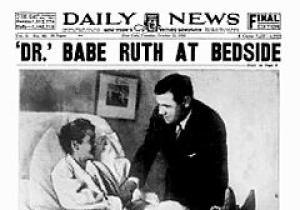
Baseball slugger Babe Ruth was famous for visiting hospitals and orphanages to give kids a thrill. Babe always had reporters in too to record his noblesse oblige , of course. He was an orphan himself, and nobody should doubt the Bambino’s genuine dedication and generosity when it came to kids. He just wasn’t going to let his good deeds go unnoticed.
Other baseball greats, notably Ted Williams, made most of his visits without fanfare or publicity, and he didn’t tip off the press. “The Splendid Splinter” wasn’t visiting kids in cancer wards because he wanted his fans to know what a good guy he was. He did it because he wanted to make sick children feel better.
Was the Babe less ethical than Williams? Did his self=promotion take the ethical sheen off of his good deeds? This is the issue raised by the activities of the “Magician Prankster” who calls himself “Magic of Rahat” on YouTube and Twitter. He recently posted a video called “Homeless Lottery Winner” showing him playing a prank on a homeless man, who ends up with $1,000. He is understandably grateful:
Slade Sohmer however, on HyperVocal, is hearing ethics alarms: Continue reading
Darling Ellen’s Deceptive Tweet For Samsung
Ellen DeGeneris is adorable, and as ideal a public face to place on the image of gay acceptance and same-sex marriage as you could concoct in a marketing strategy meeting. She’s funny, she’s friendly, she’s nice: to be threatened in any way by Ellen is to be the epitome of an irrational homophobe.. Her accumulated good largely insulated her from the negative criticism she earned with a shockingly inept performance as this year’s host of the Academy Awards ceremony. She didn’t exactly make one long for Seth (“We saw your boobs!”) McFarland, last year’s oppressive MC,but watching her—any experienced performer could see the signs of a comic who knew she was bombing and had no idea what to do about it—was uncomfortable when it wasn’t deadly boring.
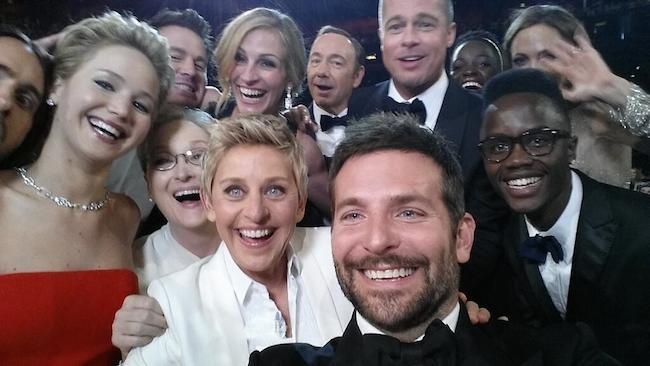
The one routine that seemed successful was DeGeneris’s successful effort to create the “most re-tweeted tweet of all time,” which she accomplished by dragooning Bradley Cooper, Julia Roberts, Meryl Streep, Angelina Jolie, Brad Pitt, Jennifer Lawrence Lupita Nyong’o, Kevin Spacey and Jared Leto in to take a selfie with her. It garnered over 3 million retweets at last count. But it was a set-up. This was not just a fun party stunt with friends, which is how it was represented to the audience and indeed to the stars themselves. No, the selfie was part of a very pricey deal between the Academy and Samsung, which sells the recently enhanced Galaxy S5 Ellen used to take the picture.
From the Wall Street Journal: Continue reading
LEGO Ethics: When Political Correctness Doesn’t Hold Up To Reality
LEGO is under fire from gender equality activists for offering a feminine-oriented version of the brightly-colored construction blocks, dubbed the Friends line, that is aimed to appeal to the tastes of little girls. This special version of plastic bricks and mini-figures was launched in 2011:
“Unlike the bright primary colors of the regular Lego sets, the Friends colors tend toward pink and purple and soft pastels. The comical mini-figures of the regular Lego lines have been replaced by five slender and stylish plastic tweens of various ethnicities, each with her own narrative story, along with puppies, kitties, “My Little Pony”-style horsies and baby animals ranging from penguins to lions. Little girls are encouraged to build things, all right: patios, cozy kitchens, cafes, beauty shops, doghouses for the puppies, stalls for the horses, all characterized by a level of decorative detail unknown in the regular Lego universe.”
And guess what? Girls like it! LEGO had found that its market was 90% male, so it came up with LEGOS that indeed do engage little girls more than the traditional sets. Friends ended 2012 as LEGO’s fourth-best-selling product line. The number of girls playing with and enjoying LEGOs tripled. Continue reading