Ethics Thought Experiment: Let’s Play “What If?”

"This SWAT gag is, like, hilarious, Kendall!"Totally, Kylie. Hey, look! They just shot Khloe!""Awesome!!!"

“This SWAT gag is, like, hilarious, Kendall!
“Totally, Kylie. Hey, look! They just shot Khloe!”
“Awesome!!!”

“Swatting,” the ultra-vile and dangerous “joke” in which someone falsely calls down a SWAT team on a household that is neither in peril or threatening it, is seriously and criminally wrong—even when the victims are the almost as vile, if not necessarily dangerous, Kardashian family. The victims of a “swatting prank” yesterday, the rich, spoiled, vulgar and useless reality show family immediately reminded us of why someone might be moved to swat them by making a big joke out of the whole thing, or at least the younger generation of Kardashians did. I don’t know about you, but I can’t wait until sisters Kendall and Kylie Jenner are posing in obscenely tacky and expensive boob-exposing outfits while having inane and semi-grammatical conversations on their own E! reality show. SWAT me now, Lord!

But let’s not talk about how unethical swatting is, which is obvious, or how depressing the celebrity of the Kardashians is, which is makes me want to stick my head in a fryer. Let’s muse on what will happen if and when one of these swatting incidents leads to an exchange of gunfire—perhaps because a Second Amendment enthusiast is convinced that President Obama is making his big move to enslave the populace, and by God, he’s not going down without a fight. Let’s also muse on what will happen if that exchange of gunfire results in the deaths of one or more children. Just to make sure something happens in our hypothetical, let’s stipulate that the dead children are white, cute, and recently recorded a tear-inducing video urging world peace and racial harmony. Continue reading

Now THAT’S An Unethical Lawyer!

Even Arnie didn't try THIS...

Even Arnie didn’t try THIS…

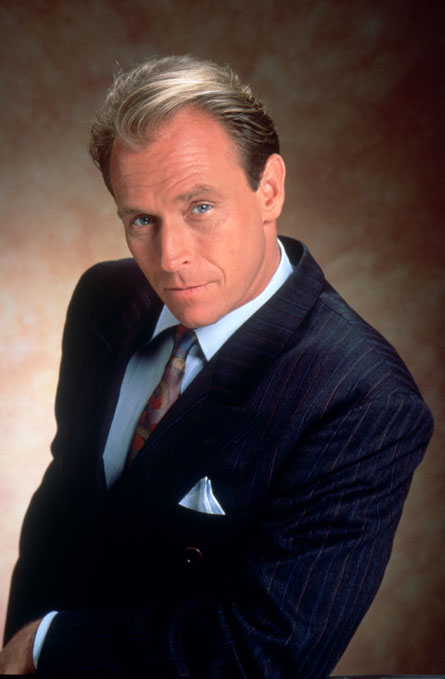
It’s bad enough that Minnesota lawyer Thomas P. Lowes had sex with his divorce client. That’s explicitly forbidden since Minnesota adopted ABA Model Rule 1.8 k, what “L.A. Law” fans fondly refer to as “the Arnie Becker Rule.” Not professional, exploits the relationship, interferes with independent judgment, a conflict of interest, you know, all that stuff.

But Lowes went a step further, and set some kind of a new record for…

  • gall,
  • unreasonable billing practices (ABA Rule 1.5)
  • inflated self image, or
  • always working on the case, no matter what, OR
  • …mixing legal work with prostitution.

…by charging his client/lover/sex toy his hourly fee for the time they spent having sex!

Continue reading

Ethics Quote of the Month: Jodie Foster

Jodie foster

Why is Jodie Foster’s stream of consciousness speech as she accepted the Golden Globe’s lifetime achievement honor, the Cecil B. DeMille Award, worthy of praise for its ethical values?

  • It was genuine, open and honest. Celebrities are paid to live their lives in public, and all of them struggle to find the proper, fair, and sane balance between what they are obligated to show the world, and what they keep secure in their private lives. Nobody has struggled with this balance more than Foster, or suffered moire because of it. A performer since she was a toddler, she never really had a choice to live a normal life. Her speech was a gift to the public revealing inner thoughts and emotions about someone it cares about but has never known as well as it would like to. Continue reading

Danger! Shameless Opportunists At Work!

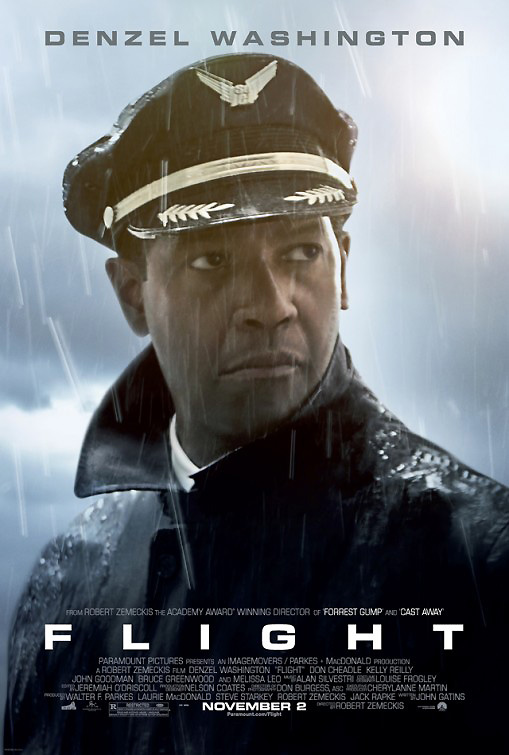
Lance Armstrong wouldn't understand this movie at all.

Lance Armstrong wouldn’t understand this movie at all.

Less than two weeks after Ethics Alarms wrote about the ethics-free deliberations in the Lance Armstrong camp about whether or not to finally tell the truth and “apologize,” Armstrong prostrated himself in a 90 minute confession to Oprah Winfrey, who has branded herself as America’s confessor, capable of washing away sin and shame with a hug, a tear, and a stern word.

It makes me want to vomit, frankly.

I saw this coming, of course, as did you. One thing we could count on with Lance (and Bill, and Pete, whose odious club Armstrong joins with the Oprah tactic) was that he would do whatever was necessary to benefit him. There is nothing, absolutely nothing, in common with a genuine confession and a real apology in Armstrong’s 180 degree reversal with Oprah, or in the necessary preparations for it he engaged in, like apologizing to the cycling community and the Livestrong staff. When Armstrong thought he could continue to fool some of the people all the time by lying, posturing, and viciously attacking—sometimes with lawsuits—those who he knew were telling the truth about his cheating, he continued to lie. Now that the jig is up and he has no other options, he’s going to come clean and weep softly with the Big O. Sociopaths are usually very good actors. Some of them have won Academy Awards. Continue reading

The Fourth Annual Ethics Alarms Awards: The Best of Ethics 2012

nonpartisan

One of the reasons there are always more negative stories than positive ones on Ethics Alarms is that ethical conduct is still much more common than unethical conduct, and thus has to be more spectacular to be worthy of comment. At least, that’s my rationalization this year….

Here are the 2011 Ethics Alarms Awards for the Best in Ethics:

Most Important Ethical Act of the Year:

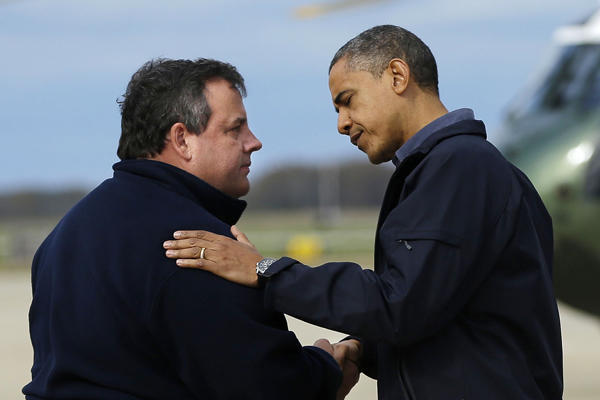
New Jersey Governor Chris Christie’s public display of appreciation to President Obama for the rapid Federal response to Super Storm Sandy. Naturally, Christie was subsequently called a turncoat and blamed for Mitt Romney’s loss.

Outstanding Ethical Leadership

Supreme Court Chief Justice John Roberts. Roberts’ decision to confound conventional wisdom and to vote to uphold the constitutionality of  the Affordable Care Act, a.k.a. Obamacare, reaffirmed the ideological independence of the Court while giving due deference to the will of Congress. Roberts was derided by Republicans and conservatives, while liberals and Democrats patted themselves on the back, presuming that they had intimidated him into rejecting the so-called conservative wing of the Court by their (irresponsible, dishonest and unethical) accusations that the Court put politics ahead of law and justice. Roberts, in truth, just interpreted the law, which is what his duty required.

Heroes of the Year

Seniors at Lexington (Ky) Catholic High School. When a gay couple was told by school administrators that they were not welcome at their senior prom, a significant number of their classmates moved the prom to the parking lot, where a good time was had by all. Courage, respect, fairness and kindness. These seniors are ready for the real world, which needs them more than they need it. Continue reading

Comment of the Day: “Are Musicals Reviewed By Ignoramuses?”

WordPress, for only the second time in three years, was kind enough to include my recent post about Stephen Sondheim’s footnote lament that musicals were the only art form largely reviewed by incompetents. This has brought a lot of new visitors to Ethics Alarms, and I hope they are interested in ethics as well as musicals. One such new reader is a Prof. Ratigan, who apparently does some reviewing himself. Here is his Comment of the Day, on the Jan 3, 2013 post (Here’s something weird—last year’s Jan.3 post was also about Sondheim!) Are Musicals Reviewed By Ignoramuses?…

Two points. The first is the literacy issue. I think it’s interesting that it would appear that a good reviewer is either a novice or a master where everything in between is amateur. I’ve been reviewing movies for the past year (on a blog) and I’ve definitely felt that in my own stuff. The more movies I watched and connections I could draw, the more it became apparent how much I really needed to do to become proficient. I needed to read a lot more literature, read a lot more scripts, and watch a lot more movies. Otherwise, I would start to create a context but have a nagging feeling that the director/writer/actor (who are often scholars of film) might/probably know more than me and were doing something else. It seems that these musical reviewers aren’t expected to take the next step from reviewer to analyst. Continue reading

The Fourth Annual Ethics Alarms Awards: The Worst of Ethics 2012 (Part 2)

reid

The 2012 Ethics Alarms Awards for the Worst in Ethics continues (you can catch up with Part I here , and the Best is here), and yes, it gets worse…

Worst Friend and Relative

Lori Stilley, who faked cancer to get sympathy, favors, parties and money from those who cared about her.

Most Unethical Advice

Emily Yoffe, Slate’s “Dear Prudence,” wins for a year of bad advice in kinky situations, the bottom of the barrel being when she advised a daughter who observed her mother illegally filling out her invalid grandparents’ 2012 absentee ballots to reflect the mother’s electoral preferences to do nothing about this combination of elder abuse and voter fraud.

Shameless Bad Character Division Continue reading

Ethics Hero: Stanford Law Prof. Pamela Karlan, Pulling A McLuhan

One of the funniest moments in Woody Allen’s Academy Award-winning comedy “Annie Hall” is the classic scene in which Woody squelches a pompous know-it-all standing in line behind him at a movie theater. The man is holding forth on film criticism and finally begins pontificating on the theories of Marshall McCluhan, a Sixties media scholar most famous for the quote, “The media is the message.”  Woody acts out everyone’s fantasy who has had to listen to strangers blather on about topics they aren’t qualified to discuss by magically producing the real McCluhan to confront the man. “You know nothing of my work!,” McLuhan tells the shocked pedant.

Today Stanford law professor pulled a McCluhan on none other than George Will, who, she pointed out in a letter to the Washington Post, recently used her law review article to bolster his position by substantially misrepresenting—or misunderstanding–what it actually said:

“Mr. Will’s column distorted my Harvard Law Review article in details both large and small. Yes, the Framers of our Constitution intended to limit the federal government’s power to protect liberty. But they also crafted the new Constitution to empower the government to deal with critical problems. For much of our history, the Supreme Court recognized congressional resourcefulness as a source of our nation’s strength. By looking only to James Madison and 1787, Mr. Will ignored the post-Civil War 14th Amendment, which explicitly authorizes Congress to enforce guarantees of liberty and equality.

“As for my discussion of the court’s Citizens United ruling, I did not attack “spending by outside groups,” as Mr. Will wrote. Rather, I pointed out only that there has been a significant increase in such spending (much of it in forms that leave voters in the dark as to who bankrolled the messages they hear) and that reasonable people can disagree about whether this is good for democracy.

“Finally, for someone who prides himself on his linguistic precision, Mr. Will’s attack is particularly tone-deaf. “Disdain” means “scorn” or “contempt.” Nothing in my article expresses scorn or contempt for the court or for judicial review. I — like many other Americans, including some of their colleagues and many of their predecessors — simply disagree strongly with the approach some justices have taken and the conclusions they have reached in some recent cases.”

Take that, George! Continue reading

Ethics Dunces: The Videogame Burners of Southington, Conn.

book burning

On January 12, they are burning “violent videogames” in Southington, a Connecticut town not far from Newtown, scene of the Sandy Hook massacre.

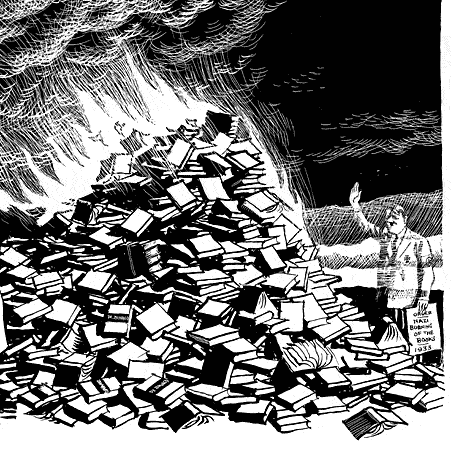
Is there a more irresponsible, historically ignorant, un-American, First Amendment-offending, foolish, ignorant and ugly act than burning speech and art because you object to their content? They burned rock and roll records  in the Bible Belt during the 1950s—that was stupid, disgusting and frightening. Hitler, you may recall, burned books; the USSR too. In 2013, consigning electronic media like videogames to the flames is indistinguishable from burning books. I would expect American citizens of normal intelligence to immediately realize that.

I guess I would be wrong.

The local group organizing the bonfire has put out some rationalization for it. I could not care less what sad reasoning and warped values motivate their book-burning. It is a symbolic insult to freedom of thought.

No question: book burnings are legal and protected speech. It is also conduct redolant of mob rule, ignorance, intolerance, fear, hate, and Ray Bradbury novels. Some activities have earned permanent revulsion, legal or not, in American culture because they are the traditional tools not of democracies, but of totalitarian governments,  the enemies of democracy and free thought. Book burning is one of them.

And burning videogames is exactly the same thing.

Update: The news accounts eventually make it clear that the group will collect the various forms of violent entertainment in a dumpster, which will also include movies and recordings, and that the actual incineration will be performed by city workers, as part of their rubbish disposal duties. Is this better? Worse, because now the town government is participating? I don’t think it is useful or enlightening to play parsing games. I see this event as indistinguishable from a book-burning, and while The Guardian’s description of it as such could be called misleading (or inflammatory?), I salute them for correctly diagnosing what this is in its essence.

Are Musicals Reviewed By Ignoramuses?

STEPHEN SONDHEIM

OK, but Stephen: compared to you, everyone is an ignoramus!

Stephen Sondheim completed his personal memoirs about his career in American musicals more than a year ago, but they are so thoughtful, detailed and dense that I keep discovering new treasures, provocative observations by a first-rate mind. Yesterday, I found one that was buried in a footnote, in the middle of a technical tangent that most readers, like me in my first tour through the books, probably skimmed.

Sondheim pointedly did not use his erudite analysis and reflections in his two retrospectives (“Finishing the Hat” and “Look! I Made a Hat!”) to settle scores with critics, a group that obviously annoyed and to some extent handicapped him over the course of his long career. In this brief footnote, however, the composer/lyricist delivers a withering verdict:

“The sad truth is that musicals are the only public art form reviewed mostly by ignoramuses.”

At the end of the note, he repeats the indictment, this time changing the description to “illiterates.” Sondheim is accusing theater critics of engaging in professional conduct they are incompetent to perform, rendering expert opinions that are not really expert, and as a result, misinforming the public and undermining the efforts of serious artists, like him.  If he is right, not only are the critics unprofessional and unethical, the media organs that hire and publish them are unethical as well. Continue reading