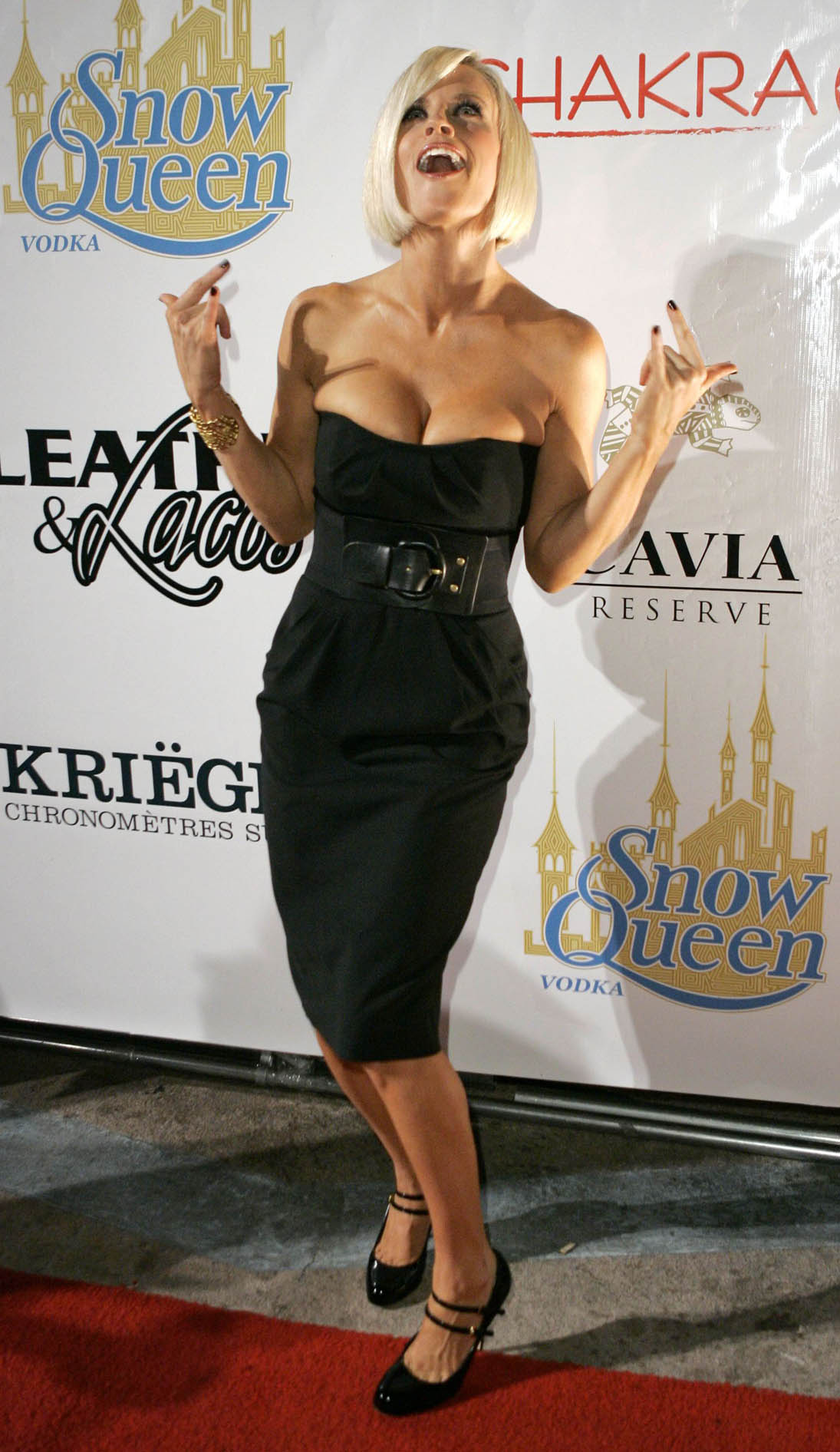
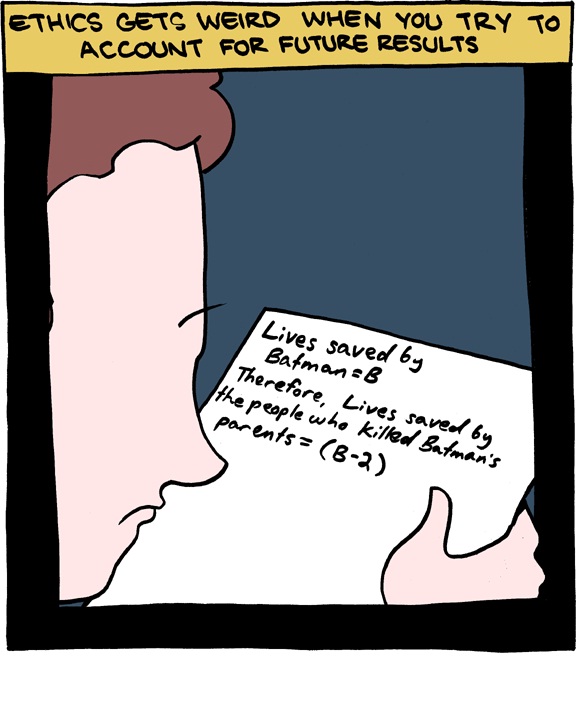
What A Race! It’s A Thrill A Minute With Roseanne Barr Lapping Spike Lee As The Biggest Celebrity Dunce in The Trayvon Martin Ethics Train Wreck!

An earlier classy career high for Roseanne...mocking the National Anthem.

And you thought Spike Lee had established an unapproachable low point in celebrity, self-indulgent, arrogant irresponsibility by trying to tweet George Zimmerman’s address (all the better to get him killed), and inadvertently siccing the sickos on an elderly Florida couple who were minding their own business? How charmingly naive of you! For remember, no matter how ignorant and unethical a celebrity may be, there are always, always, bigger, more ethically clueless jerks and fools with an entry in Wikipedia and an itch to get back in the limelight.

A celebrity like…Roseanne Barr! She lapped Spike’s mean-spirited Twitter idiocy in his own chosen medium by… Continue reading

Ethics Hero: Kendra Wilkinson

“I have no talent. I have nothing to offer.”

Are you paying attention, "Sitch"?

With that honest, candid, unadorned, modest and undeniably true self-assessment in a recent interview with People magazine, cable reality show star (“Kendra”) Kendra Wilkinson instantly became an Ethics Hero, a role model for other empty-shell pop culture celebrities, and my favorite Hugh Hefner girlfriend of all time.

Now if Kendra’s integrity could only persuade Nicole Richie, Snookie, “The Situation,” Paris Hilton, Megan McCain, Bristol Palin, Tori Spelling, Lauren Conrad, Heidi Montag, Ivanka Trump, Jack and Kelly Osborne, Michael Lohan, and, of course, all the Kardashians, to make the same confession and voluntarily hurl themselves into a landfill (in Jersey, of course), our trivialized, brain-rotting culture can finally start to heal itself.

But you don’t have to go to the landfill, Kendra.

You do have something offer.

Ethics.

Comment of the Day: Anti-Bullying Mis-steps: The Perils of Changing Cultural Norms (Part 2)

From Penn, excellent and valuable insight on “The Hunger Games” controversy, going into relevant issues and facts that my post did not. Here is his Comment of the Day on the post, Anti-Bullying Mis-steps: The Perils of Changing Cultural Norms (Part 2):

“The purpose of this argument scares the hell out of me. As one press-screener’s review had it, and as the trailers make clear, “The Hunger Games” tells the story of a televised fight to the death between(sic) a group of youngsters in which only one can survive.” If I believed there were any merit to the MPAA system, yes, R is what it should be. [“This Film is Not Yet Rated” is the movie to see on this subject.] Continue reading

Anti-Bullying Mis-steps: The Perils of Changing Cultural Norms (Part 2)

If "Hunger Games" should be able to bypass the ratings because kids can learn from it, then why shouldn't a film like "A Clockwork Orange," a better film, should also get a pass?

When society decides makes altering attitudes about any conduct a priority,an immediate danger is that it will destroy other societal safe-guards and damage other valid cultural norms in its tunnel-vision.

“Hunger Games,” a film about the consequences of bullying based on a best-selling novel, is about to hit theaters with an R rating, meaning that teens, the prime target of the nation’s anti-bullying effort, can’t see the film without their parents’ permission. Katy Butler, a young bullying victim, has led a national effort to get the film’s ratings reversed. Predictably, politicians have jumped on the bandwagon.

“Over 13 million American youths will be bullied over the course of this year alone, making it the most common form of violence experienced by young people in our nation,” begins a letter from Rep. Mike Honda (D.- Calif.) to his colleagues, in support of Butler’s campaign. “We cannot hope to control this epidemic … without discussing tough issues publicly and bringing them to the forefront of the consciousness of the American public.”

“YES! RIGHT ON! OF COURSE!” Except that what Butler and Honda are proposing essentially undermines the entire purpose of movie ratings, and if their efforts succeed, there is no way anyone will be able to argue that the system has a shred of integrity at all. Continue reading

The Process Can Be Ugly, And Sure Was This Time, But This Is How Cultural Ethics Standards Change

Greta was the tipping point.

The Rush Limbaugh-Sandra Fluke Ethics Train Wreck is over at last, but unlike with many such debacles, something positive occurred. I believe that an emphatic cultural standard was established that calling a woman—any woman, famous or not, liberal or conservative—a derogatory term designed purely to denigrate her by denigrating her gender will not be considered acceptable in political, quasi-political or arguably-political commentary henceforward. If such rhetoric occurs in a comic or entertainment context, no politician or elected official can appear to endorse the individual who utters the offensive words.

I’m not arguing right now whether this is a good or a bad development, but merely that it happened, and that it is a real change. For this to happen, a conservative radio talk show host had to use the terms “slut’ and “prostitute” to make the botched satirical point that a feminist law student activist who argued that free contraceptives were a woman’s right was the equivalent of women who wanted to be “paid for sex.” If pundits and bloggers had merely declared this statement uncivil and cruel, nothing more would have happened, and the incident would have been quickly forgotten. But sensing political points to be scored in an election year, and with the added incentive of being handed what was seen as powerful ammunition to attempt a frontal attack against a detested partisan critic, Democrats,  progressives, feminists, activists, Obama strategists and left-biased journalists decided to cast the Limbaugh’s poor judgment in extreme terms. Continue reading

“The Good Wife” Ethics Addendum: Why Misrepresenting the Legal Profession’s Standards Does Real Harm

Sure, it was a comedy, but how many people believe that Jim Carrey's compulsively lying lawyer was not that far from the truth?

A comment from reader Penn on my post about “The Good Wife’s” recent misrepresentation of legal ethics standards got me thinking, and what it got me thinking was that I was too easy on the show.

Penn asked why I waste my time watching programs that raise my blood pressure, and there are two answers. The first is what I wrote back: it’s not a bad show; in the past it has been a very good one, even from the legal ethics perspective. I have used several scenarios from episodes in seminars.

The second answer, which I didn’t mention in my response to Penn, is the more important one, however. Good show or not, millions of Americans get their information about the legal profession from the portrayal of lawyers and law on TV and in movies. From these fictional sources, they think they know that most lawyers are liars, that they allow their clients to lie, that they put witnesses on the stand who they know will lie under oath. The public thinks that lawyers abuse the law, don’t earn their fees, don’t give a damn about their clients (unless they are sleeping with them), switch sides routinely and confuse juries to release serial killers on more victims. Continue reading

“The Good Wife,” Flunking Legal Ethics 101

CBS’s “The Good Wife” remains ensconced in my Hall of Fame for TV lawyer dramas, but last night the series committed the kind of “what the hell?” blatant legal ethics gaffe that causes many lawyers to avoid such shows.

The situation is one that may be dramatic but hardly unusual: the client who lies on the witness stand. Unlike a lot of the ethical conundrums that are concocted in the fevered brains of TV scriptwriters (“Your client leaves a human head in your office—what do you do?”—“The Practice”), this is one that is thoroughly explored in law school and one which every competent litigator has to be prepared to face, because 1) it happens and 2) the legal ethics rules about how a lawyer is supposed to handle it have bounced all over the place, like William Shatner. Continue reading

Kind and Exploitive: SNL Performs A Rare Ethical Unethical Act

Lindsay Lohan, when everything was possible, and the future was bright.

Tomorrow, Saturday Night Live is bringing back Lindsay Lohan as Guest Host. This a decision that defies ethical analysis. On one hand, it is certain to be a ratings winner, as the curious will tune in to see if Lohan has a meltdown, look prematurely aged by her various addictions, or does or says something that continues her five year-run of self-destructive behavior. Lindsay is almost finished with her court-ordered rehab and community service, but her status in show business could hardly be much lower. She is widely regarded as uninsurable, and a candidate for a relapse at any time. Since the lapsed child star last hosted SNL, she has stood trial for grand theft, been held in contempt of court, been sentenced to jail twice, and made the classic desperation career move of posing nude for Playboy, a last ditch tactic that 1) almost never works, and 2) is usually reserved for fading pop stars and marginal TV actresses in  their thirties, not a 25-year-olds.who should be in her career prime. If there ever was a ratings-motivated “let’s give the people a train wreck to gawk at” call, this was it. Continue reading

Ethics Hero: Journalist Harris Meyer

Harris Meyer is an Ethics Hero because he won’t let a bad lesson go unchallenged.

Meyer is an award-winning  freelance journalist and a former editor at the Yakima (Wash.) Herald Republic. That was the paper that first broke the story of Gaby Rodriguez last year, which I wrote about here. With the encouragement of her high school principal, Rodriguez, a senior, embarked on some amateur social science research that involved deceiving everyone in her life except her mother, one (of seven) siblings, her boyfriend, and the principal. She pretended that she was pregnant, suing padding. She faked the pregnancy for months, finally announcing the sham in a student assembly. This extended hoax was supposedly designed to expose how pregnant teenagers are treated by their peers and others. It was, by any rational standard, a despicable thing to do—a betrayal and exploitation of her friends,  her boyfriend’s family, her siblings and teachers. Deception on such a scale must be justified, if at all, by both need and necessity. Were there other, less destructive ways to investigate the treatment of pregnant teens? Sure there were; interviews come to mind. Collecting published journals and other accounts. But Gaby’s unethical stunt was in spiritual synchronicity with a reality show-obsessed culture, where fake is entertaining and collateral damage is of no concern.  I wrote: Continue reading

Academy Awards Curtain Call Ethics: The Unkindest Snub of All

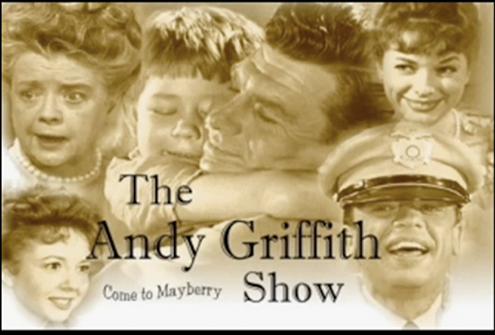
Every year the Academy Awards manages to neglect a distinguished actor or actress who has died since the previous Oscars ceremony, and usually it is inexplicable. Two years ago, it was Farrah Fawcett who was snubbed. This year  Oscar was more callous and negligent than ever before, robbing at least eight deserving performers of their final curtain calls, and there is  just no excuse for it. As usual, Oscar flacks will claim that time was limited, but that won’t fly: why was there time to include, for example, Whitney Houston, who not only had minimal film credentials but who also  had an entire awards show dedicated to her just a week ago? Whitney hardly rated a gratuitous nod from Oscar, especially while it was snubbing so many real actors.

I will be generous and apply Hanlon’s Razor, but with reluctance: it seems to me that there were too many blatant omissions and too many obscure insiders included for it all to be accidental. Did the behind-the-scenes members of the Academy stage a coup, and demand that their fallen colleagues get their names displayed this year to millions of Americans who almost certainly never heard of them? If so, that still couldn’t justify the Academy of Motion Picture Sciences showing such apathy and disrespect for deceased actors that audiences do remember, or if not, should be reminded of one last time.

Here are the actors who Oscar neglected to help us remember, appreciate, and thank: Continue reading