Further Thoughts On “Icons” [Corrected and Expanded]

I know this is a tangent; its (attenuated) connection to ethics is my contention that members of the culture and society have an obligation to maintain at least minimal cultural literacy, without which it is, I beieve, impossible to be a responsible, competent, engaged and credible member of society. A DC Bar set of legal ethics opinions (370 and 371) regarding social media made an equivalent point. No, a lawyer doesn’t have to use social media in his or her practice or participate in it, but a lawyer must know what it is, how it works, the various varieties, and more because it is a major feature of modern life and American society.

I was re-watching the excellent (and tragically truncated) Netflix series “Mindhunter” over the weekend. At several points, the brilliant, well-educated FBI research consultant played by Anna Torv reveals a total ignorance of sports, at one point, for example, confusing minor league baseball with the Little League. The major sports in the U.S. are too central to American history, entertainment, language, culture and passion for a competent citizen to be that clueless….and an amazing number of people, especially women, are that clueless. You don’t have to know the infield fly rule, but if you don’t know the names and at least basic facts about Babe Ruth, Lou Gehrig, Shoeless Joe Jackson and Jackie Robinson, you have some homework to do.

In the wake of the “Jaws” post, the comments it sparked and the provocative Comment of the Day on it, I have some further thoughts about icons.

Continue reading

Comment of the Day: “Jaws Ethics”

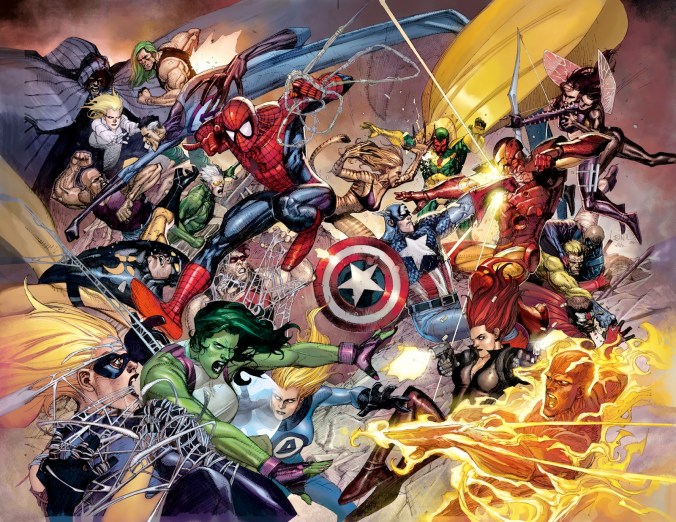
The “Jaws” post, predictably, set off a lively debate about cultural icons, though, significantly, nobody yet has tried to maintain that “Jaws” isn’t one. Along comes halethomp with this Comment of the Day exploring the matter of whether Disney’s Marvel movies, now in decline, qualify as “iconic.” Personally, I don’t think so. There are iconic super heroes to be sure, but perhaps because they were late to the party, no Marvel character qualifies to stand next to Superman and Batman. No single film qualifies either in that genre by my standards: I think TCM host Ben Mankiewicz nailed it when he compared the Marvel film franchise to MGM musicals. Both genres have intense, loyal devotees, but neither has produced a societal- and culture-wide icon. Maybe “Singing in the Rain,” qualifies, but its a close call. Icons create lasting images, quotes, values and lessons that cross generations, ideally gaining vigor over time and becoming powerful cultural influences. Personally, having been familiar with the principle that great power confers great responsibility from other sources, I have been surprised that Spiderman’s Uncle Ben has been getting credit for it. No, I don’t think resuscitating a classic maxim that younger generations missed because of galloping illiteracy should qualify one for icon status, but that’s just me.

Here is halethomp’s Comment of the Day on the post, “Jaws Ethics.”

***

Two quotes within the original post and the comments stood out to me as examples of the cultural arrogance that Jack often laments, both applying to the Marvel franchise (I include the various streaming series in this). “A competent, curious, responsible member of society wants to see “Jaws” because 1) it is famous 2) it is a cultural touch-point 3) one should understand why people remember and care about it and 4) when the public embraces anything so completely,” and “Marvel movies like their predecessor print comics are just good versus evil with different characters.”

First, regarding cultural impact, there are few as great as the line “With great power comes great responsibility” which Uncle Ben tells Peter Parker just before dying. I believe a great cultural reference is one that most people know regardless of whether they know its origin. It is not necessary to have ever read a comic book or seen a superhero movie or cartoon to know that quote: in fact, it has been applied and misapplied by many people for generations. In Jack’s own words, Marvel must be recognized as a cultural touch-point.

With regard to this blog, Marvel movies and television shows should be required viewing for their ethics implications. I have not watched all of the Marvel programs. I have no interest in Ant Man, Doctor Strange, Ms. Marvel, etc. However, the best ones represent not just conflicts between heroes and villains but within individuals and society at large, and provide a visual, cultural reference to real conflicts that have existed in our society in parallel with those of the comics and screens.

Continue reading

It’s Not The Ignorance and Cultural Illiteracy So Much, But The Shamelessness…

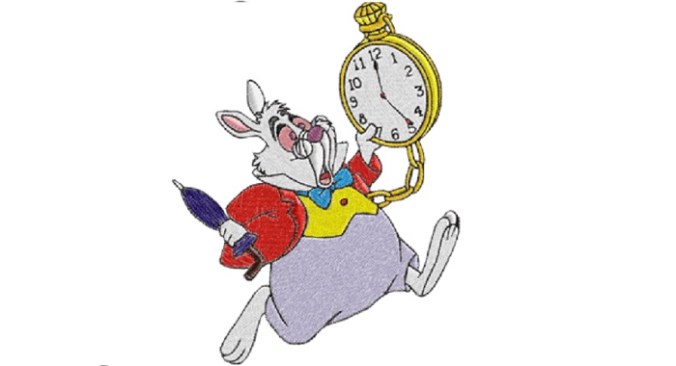
Ugh. Ann Althouse flagged this comment from a reader named Malika, reacting to a New York Time Crossword Puzzle clue that read, “Girl in Jefferson Airplane’s ‘White Rabbit'”:

“I love this style of clue, where even if you don’t know the exact trivia (I’ve never heard of the band or the song) you can puzzle it out based on the context.”

The answer is “Alice,” and if Malika doesn’t know the “exact trivia,” she never heard of “Alice in Wonderland,” which is a foundational work of English literature with important literary, historical and satirical significance. It means she is unaware of the many movies made of that book (and its twin, “Through the Looking Glass”), doesn’t know who Lewis Carroll is, has no idea what firmly established “mad hatter” in our lexicon, or “Cheshire cat,” or what “Jabberwocky” refers to.

Then there’s the ignorance of the Sixties, the Vietnam era and the drug culture indicated by her lack of familiarity with the iconic song “White Rabbit.” The Jefferson Airplane anthem has been used on “The Sopranos,” “Stranger Things,” “The Twilight Zone,” “The Simpsons,” in the films “The Game,” “Fear and Loathing in Las Vegas,” “The Matrix,””Platoon.” Not only doesn’t Malkia know about any of this, she doesn’t think she should and is willing to broadcast the fact that she doesn’t.

What else didn’t her schools, parents and narrow culture teach her? How many reference points that would help her understand the context of the issues, events and people affecting her life is she lacking? As Don Rumsfeld might say, it isn’t just that she doesn’t know, she doesn’t know what she doesn’t know, and doesn’t know that it’s a problem that she doesn’t know it.

Unabomber Memorial Ethics Explosions, 5/15-18/25 (PS: I’m Not Dead, but Thanks Neil, Ryan, Jon et al. for Worrying About Me…)

Yes, it is I.

My internet went out right before midnight on the 14th, which means my office and home phones also haven’t worked since then until just a little while ago. Neither did my streaming services. Verizon, which I switched back to in November because Comcast was unreliable and cost too much, put me through the usual customer service Hell before I reached what I thought was a competent human being. It took me almost a half an hour of arguing with Verizon’s “automated assistant” to get to said CHB, who immediately contradicted hiscyber-colleague by confirming that yes, there had been an “incident” in my area (the bot had denied it) and a crew was working on the outage. That was the supposedly the good news; the bad news was that I might be trapped in the Stone Age (okay, I’m exaggerating: that statement would go into the Washington Post’s Trump Lie Database if the President said it) until as late as 4:45 pm on the 15th.

But you didn’t read this post on the 15th, did you? That would be because 4:45 pm. came and went, and still I couldn’t communicate with the outside world. Meanwhile, clients were screaming, Ethics Alarms was languishing, “fish is jumpin’” and I was reduced to singing “Summertime” from “Porgy and Bess” for some reason. In a 52 minute phone call with Verizon in which I listened to a very polite, pleasant, customer service representative who spoke relatively clear pidgin English in a high-pitched voice (I couldn’t place the accent), I discovered that the company couldn’t send a technician to my house until Friday afternoon. Next, my phone stopped receiving signals too, so I couldn’t even keep up with comments.

A very nice technician showed up at 1:30 pm and was fooling around with things for an hour. He replaced “the box” and then told me that he had been informed that the problem couldn’t be resolved by him, and that his supervisor told him to tell me that the outage wouldn’t be corrected until 6:45 am yesterday, Saturday the 17th. It wasn’t. Verizon promised to have another technician come by between 11am and 3pm on Sunday. That actually came to pass, and it turned out the previous technician had inserted the wrong thingy in the wrong plug, or something.

Ol’ Crazy Ted, the Harvard grad terrorist, has again been proven right: it’s ridiculous what I (you, we) can’t do without key technology, and one of them is maintaining an ethics blog.

Well, I still could prepare a post on Word and have it ready to go up when civilization reappears, so that’s what I started to do Friday morning and am revising now, as I try to forget that I have God only knows (I switched to singing the Beach Boys because I can’t remember all the words to “Summertime” right now) how many emails to answer that I haven’t seen yet. I don’t have email on my cell phone, you see, because I tell my ethics classes that the less confidential, client-related stuff you have on your phone, the better.

Meanwhile,

Continue reading

A Teacher Gives Up: Ethics Observations

This is a TikTok video that is now unavailable on that platform for some reason—maybe the Chinese don’t want the truth getting out there. The video is long, and the distraught teacher is obviously not a video pro, but her message is heartfelt as well as astute. Attention should be paid.

I stumbled on Hannah’s lament as I was preparing to write another post that it quickly subsumed. That one was a response to this [Gift link!] in which a Hollywood screenwriter blames the public for the fact that Hollywood movies stink now. “The true problem lies with you, the audience,” he writes. “[I]t’s hard to argue that Hollywood is doing anything other than giving you, the moviegoing public, what you want.” I was going to call my response, “It’s the Culture, Stupid!” and point out that Hollywood is as much responsible for the culture as it is now a victim of it.

Hollywood helped create the attention deficit-afflicted, literature starved, culturally illiterate generations that drive politics and commerce now. As Hannah’s video makes clear, there are a lot of factors that have created an American public that is unable to absorb complex issues or enjoy stories that will teach them something valuable about life and humanity. Hollywood and the entertainment industry are as culpable as any of them.

Continue reading

Confronting My Biases, Episode 20: The Chessboard Tell

It’s been three years since I last mentioned this ethics pet peeve. I was triggered just yesterday by the commercial above, which I was inclined to favor because it includes my late father’s favorite dog breed (also one of mine), the majestic Irish Wolfhound. I have nothing new to say about the issue, but as I wrote in 2022, “If this post stops just one human being from making that stupid mistake, my life will not have been in vain after all.”

In the ad above, we twice catch glimpses of a garden chessboard, like those royalty once would use with human beings as the chess pieces. (Mel Brooks spoofs this recreation in his “History of the World, Part 1.”). I saw the ad several times before I realized the board was set up wrong. I would never buy a Range Rover Sport anyway, but if I were in the market for one, that inexcusable gaffe would ensure that I bought something else. Or took the bus.

Continue reading

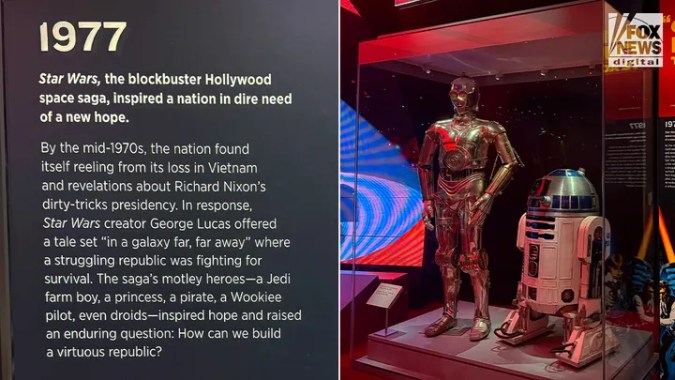
The Ethics Alarms Obligatory Nod to “Star Wars”…

I deliberately did not post this yesterday because I object to holidays based on bad puns, but I’ve been holding it for a while, ever since the demise of one of the quirkiest and most original ethics websites, Law and the Multiverse, still on the links list because its essays are timeless.

Are Americans Too Trivial and Easily Distracted to Run a Competent Democracy? The 100 Men vs. a Gorilla Controversy…

When I heard that social media was in lather over the idiotic question of whether a hundred men could defeat a single silverback gorilla in hand-to-hand combat, I immediately thought of the scene above from the film “Stand by Me.” But those characters in the movie (based on Stephen King’s novella “The Body” and directed by Rob Reiner before Trump-Derangement ate his brain) were twelve. There are so many fascinating and important questions that not only are fun to ponder but that also are beneficial for society to debate that the social phenomenon of millions being obsessed with an idiotic hypothetical of no value whatsoever threatens to plunge me into a pit of despond.

Why should I devote my time and energies to trying to inspire my fellow human beings to become more skilled at ethical reasoning when this crap is what more of them find stimulating? “Fiddling while Rome burns” is dumb; arguing about impossible hypotheticals as ridiculous as whether Superman could beat Mighty Mouse in a fight—which in my view is a better question to argue over than the gorilla vs. 100 men nonsense—makes fictional Emperor Nero seem positively enterprising.

Calling this a “thought-experiment” is insulting to thought experiments, but it apparently first was raised on TikTok several years ago. Never mind that gorillas are generally reticent and would never engage in such a match: a Twitter/X post on the topic a week ago re-ignited the debate. As you can see, the author is a moron; @DreamChasnMike wrote, “i think 100 niggas could beat 1 gorilla everybody just gotta be dedicated to the shit.” Call me an elitist if you must, but as a matter of principle I would avoid reflexively pondering anything deemed worthy of discussion by someone like Mike. The fact that so many otherwise rational people are rushing to do so now is worthy of analysis, however.

Is it because so many, like me, have decided that the Trump-Deranged are officially mentally ill, and can only be engaged in infantile discussions? Is it because, as I have speculated here before more than once, the efforts of our rotten, political indoctrinating education system and our dishonest, biased, incompetent journalism have combined to lower the media IQ in the U.S. to around 83?

Continue reading

Regarding “Conclave”

As the Cardinals meet in Rome to find a new Pope for real, it is a propitious time to consider “Conclave,” the “thriller” (as Wikipedia calls it, a stretch) about a fictional conclave after the death of a fictional Pope. I had several friends recommend the film to me, and I finally watched it this week.

I’ll complete this ethics overview without spoilers since the film is relatively new, but wow, what a disappointment. Strong cast, excellent performances, brilliant production design and cinematography, but still, “Conclave” has to be one of the most wildly over-praised films I’ve seen since “Don’t Look Up!,” “The Crying Game” or “Ghost.” This overt Hollywood woke propaganda piece received eight nominations at the 97th Academy Awards, a number once reserved for all-time classics like “Ben-Hur,” “West Side Story” or “Lawrence of Arabia.” Its Best Picture nomination shows how far movie-making standards have fallen and that it won Best Adapted Screenplay is outrageous, since the screenplay was the worst aspect of the movie, predictable, over-wrought and unbelievable.

My late wife was superb at sleuthing out “surprise” endings of movies by the half-way mark or earlier; this time I felt like I was channeling her spirit because I guessed the movie’s ending (and woke propaganda mission) the second the key character showed up. I also thought, “Oh no, really? They are stooping to this?” Indeed they were.

“Conclave” is, ultimately, trivial and soap opera-ish, no better and less entertaining than the loony movie version of Dan Brown’s follow-up to “The Da Vinci Code,” “Angels and Demons.” Along the way to an anti-climax, we get more of the “white man bad/black man victim,” pro-LGTBQ+ proselytizing that Tinseltown has been addicted to for years.

I’ll give “Conclave” this: it was better than “Snow White” and a lot shorter than “Wicked.”

Mis-Remembering the Mutiny on the Bounty, a “Print the Legend” Classic

Today, April 28, is the anniversary of the famous mutiny on board the H.M.S. Bounty, when Fletcher Christian, the ship’s “master’s mate,” seized control of the ship and set its captain, William Bligh, adrift in the Pacific with a small group of sailors who refused to join Christian’s rebellion. The story of the mutiny and its aftermath has become a romantic cautionary tale that inspired three major Hollywood treatments, each with star-studded casts. If you ask the average American what happened on The Bounty, he or she will probably reply that a cruel captain who abused his crew was challenged by an honorable and courageous officer who took over the ship from a monster, and met with tragedy himself. Virtually no accounts of the event support that version of events, but that is the legend, and it persists to this day.

Why? It’s a better story, at least a clearer and more morally uplifting story than the truth, that’s why. Real life is messy and our heroes and villains tend to be more complicated than our emotions can handle, and this is especially true of the Bounty story. You see above the most famous moment from the great John Ford film, “The Man Who Shot Liberty Valence,” when the old newspaper editor refuses to report the shocking discovery that the heroic deed leading to the successful political career of a famous statesman and U.S. Senator never occurred. Ethics Alarms has discussed the “Print the legend” phenomenon so many times that it has its own tag. None of the examples that I have examined deserve that tag more than the mutiny on the Bounty.

Continue reading