Comment of the Day: “Justice for the Nicholas Brothers” [UPDATED]

This was another dreary Saturday (almost all Saturdays have been dreary since Grace died, to be honest) until Ethics Alarms provided a triple treat. A new commenter debuted with a Comment of the Day, and I always love that. Better yet, the comment arrived on an old post, one from July of 2012. I also love that, as it shows that these poor rhetorical exercises with too many typos don’t always vanish like random pebbles thrown into the surf, but sometimes provide amusement and perspective to readers months and even years later, giving hope that my existence has some meaning after all.

Best of all, however, is that Kevin Hall’s Comment of the Day focuses much deserved attention on the amazing Nicholas Brothers, probably the greatest tap dancers who ever lived, whose memory is tragically faint because of the racism that restricted their careers. That number above, from a film that was seen almost exclusively by black audiences when it was released, is perhaps the most famous film performance by Harold and Fayard Nicholas, and it is certainly characteristic of their amazing style, but there are others. There is also a website dedicated to their lives and artistry. I feel about the Nicholas Brothers a bit like King Arthur does about the legend of Camelot as he expresses it in the final song in that Lerner and Lowe musical…

Ask every person if he’s heard the story
And tell it strong and clear if he has not

Here is Kevin Hall’s Comment of the Day on the post, “Justice for the Nicholas Brothers.” I can’t resist some brief comments at the end…

Continue reading

Cultural Literacy Note: “Drinking the Kool-Aid”

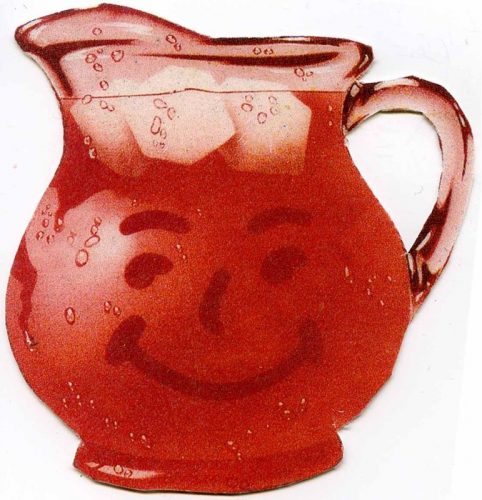
The Daily Mail headline is beyond stupid—-“People are only just realizing the dark origin of ‘drinking the Kool-Aid’ phrase”—-but sharp-eyed commenter Other Bill was quite astute to draw it to my attention (Thanks, OB) with an email this morning.

Apparently several historically and culturally illiterate whipper-snappers on social media expressed surprise at the “dark origin” of the common phrase “he (or she) drank the Kool-Aid” to describe someone who has been gulled into believing something false or dangerous. Yet this gap in the younger generations’ knowledge shouldn’t be surprising. Oh, there was a movie about the horrible incident and it is one of the best examples of the dangers of cults. But the Jonestown mass suicide of the 918 American followers of cult leader Jim Jones in Guyana occurred almost 50 years ago, in 1978. As unusual and shocking as it was, the poisoned powered drink massacre is not the kind of event likely to be covered in history courses: schools barely cover World War I. How would someone under the age of 50 come to know about the event?

Continue reading

Who Had “Trump Turning Into James K. Polk” On Their 2025 Bingo Card? [Corrected]

This is the kind of thing that even die-hard Trump true believers should find, if nothing else, odd.

Although it was barely discussed during the campaign, President-Elect Trump is sparking head-explosions and headlines by talking about expanding American geography and territories. He says he wants to take the Panama Canal back; he says he wants Denmark to hand over Greenland, and he also wants to make Canada a state.

The U.S. hasn’t added any significant geography to its dominion since the Spanish American War, and gave up the Canal Zone to Panama during the Carter Administration. James K. Polk, the Democratic President who came into office as the herald of “Manifest Destiny,” had well-publicized designs on the Oregon territory as well as Mexican holdings from the start of his administration, and was threatening both Great Britain and Mexico to get his way. In the end, Polk got most of the Oregon territory in a compromise deal the English, and although it took a war with Mexico to do it, snatched California and the New Mexico territory. Then Polk retired and promptly died, his mission complete. Whether one ranks him as one of our most successful Presidents depends on how one feels about American imperialism, or perhaps whether one believes that, upon reflection, acquiring California was a mistake.

Continue reading

Ethics Dunce: ESPN (Disney)

The College Football Playoff quarterfinal at the Allstate Sugar Bowl between the University of Georgia Bulldogs and Notre Dame, postponed from New Year’s Day to yesterday afternoon because of the deadly terrorist attack on Bourbon Street began with a solemn rendition of the National Anthem, a moment of silence, and a defiant crowd chant of “USA! None of this was deemed worthy of broadcasting by the main platform for the event on cable, ESPN. After all, they had ads to sell.

ESPN cut to a commercial break as the moment of silence began, and deliberately—don’t buy the narrative that it was inadvertent—chose not to let the national audience see the emotional prelude to the game including the “U.S.A!” eruption from the crowd. Disney and ESPN are so blinded by their institutional wokeness that they couldn’t recognize that the pre-game ceremonies had cultural and societal significance.

Continue reading

Social Media Doesn’t Make College Kids Act Like Morons—Being Morons Make College Kids Act Like Morons

(I’m always happy when I can justify posting a Charles Addams cartoon.)

I’m sure this discouraging episode will somehow make it into the dispute over whether TikTok, which apparently gathers data from millions of Americans to put in the clutches of China’s Dark Masters, should be banned or not. The incident isn’t about TikTok, however.

Apparently there is now a viral TikTok-promoted fad in which people lure suspected sexual predators to some location, lie in wait for them, and either call the police or, for even more fun, beat them up. The “game” is modeled after an unethical vigilante TV reality show on ABC that lasted three seasons; I wrote several posts about it on Ethics Alarms’ now unavailable predecessor, The Ethics Scoreboard. Starring “Dateline” reporter Chris Hanson, the show that aired from 2004-2007 would use the internet and phone calls to lure someone seeking underage sexual companionship to a hidden camera ambush. The entertainment came from watching Hanson walk out from behind a bush and make the sick bastard huminahumina his way into coast-to-coast humiliation. The pre-crime predators who were thus “caught” almost never were convicted of anything.

In Worcester, Massachusetts (that’s pronounced “Wuster,” you Bay State ignoramuses!) students at Assumption University came to the wrong assumption that the “To Catch a Predator” game was a good use of their time. Easton Randall, Kevin Carroll, Isabella Trudeau, Kelsy Brainard, and Joaqin Smith, all 18, decided that a “creepy guy” was a sexual predator, so a female student used dating site Tinder to lure him to where he would think was a meeting place for a hook-up with a 17-year old girl. They had enlisted about 30 other students to lie in wait with them, and the mob chased and assaulted him as the stunt was recorded. Oh, the views it would attract! Randall told police that the idea was to emulate “the Chris Hansen videos where you catch a predator and either call police or kick their ass,” but the incident “got out of hand and went bad.”

Ya think?

Continue reading

Comment of the Day: “Presuming Bias Also Makes You Stupid…and a Failure”

I think it is fitting to end 2024 with one of Steve-O-in NJ’s historical epics, this one in response my challenge at the end of the post to name a figure who would rebut the statement on the Victory Girls blog regarding Kamala Harris, “Never has so much been handed to one person who didn’t deserve it.” My mind immediately went to the Kim Kardashian’s sisters Khloe and Kourtney, who attained fame, celebrity and riches because their oldest sister had a viral sex tape. But moving from government and politics into pop culture is cheating.

Steve-O takes up that challenge with gusto in this Comment of the Day to the post, “Presuming Bias Also Makes You Stupid…and a Failure”. Here is it is….

***

It really depends on how far back in history you are willing to go. I could name you at least 10 monarchs who were handed a whole lot they didn’t deserve for no reason other than accident of birth without even putting on my thinking cap:

  1. Edward VIII of the UK – a child who never quite grew up and just wanted everything his own way, also TERRIBLE judge of character.
  2. Louis XVI of France – clueless and careless, led him to the guillotine
  3. Alfonso XIII of Spain – not up to the job and paved the way for fascist Franco.
  4. Selim II of the Ottoman Empire – called the Drunkard or the Sot for a reason, led to the huge defeat at Lepanto and Turkey’s long slide down into the Third World.
  5. Henry VIII of England – initially might even be considered heroic but ultimately destroyed by his excessive appetites and dictatorial nature.
  6. Mary I of England – Henry’s eldest daughter, called Bloody Mary for a reason.
  7. Charles II of Spain – the misshapen result of generations of Hapsburg inbreeding.
  8. Hirohito of Japan [above, with Khloe and Kourtney] – allowed himself to be a puppet for overambitious generals and admirals, didn’t stand up to them until defeat was certain.
  9. Cixi Yukian of China – waited till it was too late, then foolishly threw in with the Boxers, resulting ultimately in the Chinese Empire collapsing.
  10. Oh yes, lest we forget William II of Germany, who pushed wise old Bismarck aside and led the German Empire into WWI and its destruction.

If I put on my thinking cap, I could probably triple that list. The fact is that when you hand someone power based on something other than merit, you throw the dice and risk ending up with someone who’s either useless or a puppet for the unscrupulous.

Continue reading

Comments of the Day (In the Thread of the Month!): “Wait…So Everyone’s Been Lying To Me All These Years About What Angels Look Like?”

s

The commentariate on EA always surprises and delights me, and the response I got to an off the wall post inspired by an AP story about “biblically correct” angels was a perfect example. The resulting thread was a veritable primer on anglelology, with Ryan Harkins weighing in with three substantive posts and several others contributing valuable insight as well.

I don’t deserve you.

One more Christmas tradition that I left fallow this year—like almost all of them—in the absence of my wife was our Christmas Eve reading aloud of the children’s book “The Littlest Angel,” by Charles Tazwell. Grace loved the story so. She would always cry at the place where the Littlest Angel gives his most cherished possession, a simple wooden box where he kept his earthly treasures when he was a child on Earth, as his gift to the soon-to-be-born son of God:

The Littlest Angel trembled as the box was opened, and there, before the Eyes of God and all His Heavenly Host, was what he offered to the Christ Child. And what was his gift to the Blessed Infant?

“Well, there was a butterfly with golden wings, captured one bright summer day on the high hills above Jerusalem, and a sky blue egg from a bird’s nest in the olive tree that stood to shade his mother’s kitchen door. Yes, and two white stones, found on a muddy river bank, where he and his friends had played like small brown beavers. And, at the bottom of the box, a limp, tooth-marked leather strap, once worn as a collar by his mongrel dog, who had died as he had lived, in absolute love and infinite devotion.”

Somehow, it doesn’t work quite as well if one is thinking of the Cherubim as having eyeballs all over his wings or three heads. But that’s just me…

Here are two of the many remarkable comments first from Ryan Harkins, and then from Sara B. on the post, “Wait…So Everyone’s Been Lying To Me All These Years About What Angels Look Like?” :

***

(First, Ryan)

Continue reading

Reflections On The Ethical Holiday


“Christmas is built upon a beautiful and intentional paradox; that the birth of the homeless should be celebrated in every home.”

—G.K. Chesterton.

“It’s Christmas Eve. It’s the one night of the year when we all act a little nicer, we smile a little easier, we cheer a little more. For a couple of hours out of the whole year we are the people that we always hoped we would be.”

—Frank Cross (Bill Murray) in “Scrooged”

CHARLIE BROWN: I guess you were right, Linus. I shouldn’t have picked this little tree. Everything I do turns into a disaster. I guess I really don’t know what Christmas is all about. Isn’t there anyone who knows what Christmas is all about?

LINUS: Sure, Charlie Brown. I can tell you what Christmas is all about.  Lights, please?

“And there were in the same country shepherds abiding in the field, keeping watch over their flocks by night. And lo, the angel of the Lord came upon them, and the glory of the Lord shone round about them. And they were sore afraid. And the angel said unto them, ‘Fear not, for behold, I bring you tidings of great joy which shall be to all people. For unto you is born this day in the City of David a savior, which is Christ the Lord.’ And suddenly there was with the angel a multitude of the heavenly host, saying, ‘Glory to God in the highest, and on Earth peace, goodwill toward men.’”

That’s what Christmas is all about, Charlie Brown.

—Charles M. Schulz

“Our hearts grow tender with childhood memories and love of kindred, and we are better throughout the year for having, in spirit, become a child again at Christmas-time.”

—Laura Ingalls Wilder

“Then the Grinch thought of something he hadn’t before!

What if Christmas, he thought, doesn’t come from a store.

What if Christmas…perhaps…means a little bit more!”

—Dr. Seuss, “How the Grinch Stole Christmas”

“Want to keep Christ in Christmas? Feed the hungry, clothe the naked, forgive the guilty, welcome the unwanted, care for the ill, love your enemies, and do unto others as you would have done unto you.”

— Steve Maraboli, in “Unapologetically You: Reflections on Life and the Human Experience”

“My idea of Christmas, whether old-fashioned or modern, is very simple: loving others. Come to think of it, why do we have to wait for Christmas to do that?”

— Bob Hope

“I heard the bells on Christmas Day
Their old, familiar carols play,
And wild and sweet
The words repeat
Of peace on earth, good-will to men!”

—Henry Wadsworth Longfellow

“There are many things from which I might have derived good, by which I have not profited, I dare say,’ returned the nephew. ‘Christmas among the rest. But I am sure I have always thought of Christmas time, when it has come round—apart from the veneration due to its sacred name and origin, if anything belonging to it can be apart from that—as a good time; a kind, forgiving, charitable, pleasant time; the only time I know of, in the long calendar of the year, when men and women seem by one consent to open their shut-up hearts freely, and to think of people below them as if they really were fellow-passengers to the grave, and not another race of creatures bound on other journeys. And therefore, uncle, though it has never put a scrap of gold or silver in my pocket, I believe that it has done me good, and will do me good; and I say, God bless it!”

—Fred, Scrooge’s Nephew, in Charles Dickens’ “A Christmas Carol” Continue reading

Wait…So Everyone’s Been Lying To Me All These Years About What Angels Look Like?

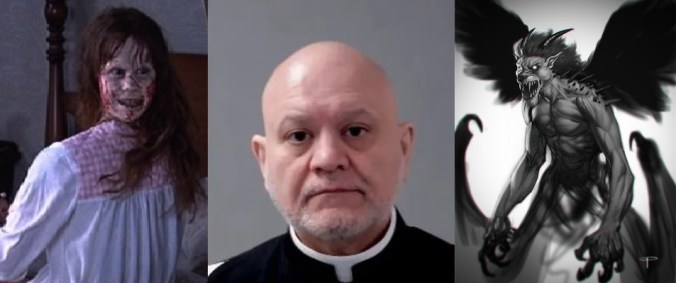
Above you will see three interpretations of what angels—you know, those benign, heavenly creatures we hear on high and observe, “Hark! They sing!,” the celestial guardians like the funny little old man who shows Jimmy Stewart that he’s really led a wonderful life, the kind of immortal being that appeared to Mary to tell her she was going to bear the Son of God, you know, those things?—really look like. The version on the left is from the Mike Flanagan horror series “Midnight Mass.” It’s a scary angel, but not as scary as the ones that show up in Robert and Michelle King’s scary TV series “Evil,” which look like this…

Yikes.

The version of Gabriel in the center is pretty much how I had been taught and told and shown how angels look for most of my life, and I assumed that was how they are represented in the Bible. Now, this is at least partially my own fault for not knowing the Bible better than I do, but when artists, churches, Sunday school teachers, movies, tree ornaments, Christmas cards and children’s books all show angels as friendly-looking Scandinavians with big, white, fluffy wings, I think I can be excused for assuming that there is at least as much authority for those representations as there is for anything else in the Bible—-an assertion to which Carnac the Magnificent (oh, look it up, ye of pop culture deficit!) would say to me, “You are wrong, Ethics Breath!”

Continue reading

Don’t Diss “Do You Hear What I Hear?”When I’m Around, and Other Rueful Notes On The Blue Christmas Ahead

I’m probably not celebrating Christmas anywhere but on Ethics Alarms this year. Last Christmas was truly awful in every way, with my wife Grace in pain and suffering from some creeping malady that killed her in February  and that I was too blind to detect (and so were her doctors). We were also in our worst financial crunch in 25 years of running our ethics business, my son was having personal problems, and all was definitely not happy and bright.

I am certainly conflicted about the holiday this year. I am a passionate Christmas booster, as long-time readers here know, because I regard the secular holiday as a vital social balm as well as an ethics catalyst. It is a unique holiday that calls on us to be kind, generous and forgiving, and, if possible (I’m trying!) to just be happy for life and its wonders. I am not religious, but I do believe that this is a profoundly ethical time of year. We all need Christmas, frankly. I need it, even though I dread every minute of it this year.

One of the special features of Christmas is that it is soaked with nostalgia and traditions along with bittersweet memories of people and events long past. Charles Dickens got this aspect of the holiday exactly right; it is why I love “A Christmas Carol” so much and have so often participated in public presentations of the story. My last professional directing gig was a staged reading of it, and that was the fourth time I have overseen one; I also have organized and directed three mass “radio” readings, using conference call technology and the sound effects wizardry of Keith Bell. (Where is Keith these days? See, there’s another memory knocking!).

With The American Century Theater, I co-wrote and presented two Christmas musical revues: “If Only In My Dreams,” which centered on the letters GIs wrote home at Christmastime during World War II, and “An American Century Christmas,” a salute to the old-fashioned TV Christmas specials and perennial Christmas movies like the three that have Ethics Alarms “guides’ here: “It’s A Wonderful Life,” which I posted at Thanksgiving, “White Christmas,” which will be updated and posted soon, and on Christmas Eve this year, “Miracle on 34th Street.” The first revue was more popular, but the second was my favorite, because it was generated entirely by my own warm memories of what Christmas was like for me and my sister growing up in Arlington, Massachusetts.

Both of our parents were Depression kids in poor families and their Christmases were spare at best, so both were determined to make the holiday magical for their children. And it was. We would decorate the tree carefully and lovingly a week before the 25th—I remember my mother insisting that each strand of genuine tin tinsel saved for years be placed individually on the branches—and go to bed after hanging our (huge) stockings with visions of sugarplums dancing in our heads. When we got up on Christmas morning, my parents had meticulous constructed a “Christmas panorama,” with the giant stockings stuffed with gadgets, oranges, walnuts and small packages lying by the fireplace, and the whole living room covered with presents, mine on the left of the living room, my sister’s on the right. The gifts were mostly unwrapped, and the vista was ever spectacular.

My father, a photography fanatic who was terrible at his hobby, had the old home movie projector spotlights blazing. He would record Edith and I coming down the stairs to see the amazing treasure left by Santa as mom looked on beaming and eager to see our reactions. My parents insisted on going through this ritual even after we were in college! My mother wouldn’t let the tradition go.

In 1963, the week before Christmas, Bing Crosby hosted “The Hollywood Palace,” a live variety show that was always headed by some entertainment legend, though Bing had the honor more than anyone else. That week he introduced a new Christmas song, the last popular Christmas song to have an unambiguous religious context. That was “Do You Hear What I Hear?,” and the video above was what I saw live. Something in the song immediately resonated with me; I was always a Bing Crosby fan, following the guidance of my father, but I loved everything about the new song despite its childlike simplicity. I said so immediately following Bing’s rendition. Sure enough, the song was playing on our old Magnavox stereo when my sister and I came down the stairs in our pajamas on Christmas morning.

“Do You Hear What I Hear?,” Bing’s version of course though there have been hundreds of covers, is the first Christmas song I play every year as soon as whiffs of holly, evergreens and mistletoe are in the air. It throws my mind back to those magical Christmases that Grace and I tried to recreate for our son every year while he was growing up. That magic was significantly dimmed when my father died, in his sleep, on my birthday in 2009, leading to the saddest Marshall Christmas. The spirit fell away a bit more the next year, when my mother, who never got over losing the love of her life after 58 years of marriage, was in the hospital fighting a voracious hospital infestion that killed her two months later. Christmas was never the same after Mom died: it was her joy and obsession. Still Christmas reminds me of her, and Dad, and that lost magic…and Bing.

I was pondering when and whether to put up a post about “Do You Here What I Hear?” this year when I checked out Ann Althouse’s blog and discovered that she had posted the video as a joke after her post about Jill Biden getting a laugh at her Christmas comments wishing the assembled “joy.” Apparently some took her choice of words as a sly swipe at Kamala Harris’s ill-fated “joy” theme.

In the comments to the post, some wags made jokes about how  the shepherd boy tells the king to bring the “child shivering in the cold” silver and gold when what the baby needed was a blanket or a space heater. Yeah, good one: they made those jokes in 1963. Some jackass wrote, “If you listen to the lyrics, “Do You Hear What I Hear” ranks right up there with “Santa Claus is Coming to Town” for supposedly secular seasonal songs with aggressively creepy quasi-Christian imagery applied to Progressive pieties.”

Oh, bite me. The song was never intended to be “secular” and how it can be heard as “anti-Christian” is beyond me. And Bing: he was a devout Catholic, and one of the reasons Crosby became the voice of Christmas is that he sang Christmas music with such reverence and conviction. (The other reason was that he had that amazing, rich, expressive voice.).

It is especially perverse to impugn the lyrics of a Christmas song written by a man with the first name “Noël.”  “Do You Hear What I Hear” was written in October of 1962 during the Cuban Missile Crisis, by a married songwriting team that wondered at the time if it would be the last thing they ever did. Regney, the lyricist, was born in France and had studied music at the Strasbourg Conservatory and at the Conservatoire National de Paris. When France was overwhelmed by Hitler’s troops in 1940, he was conscripted into the German army. As a Nazi soldier, Noël secretly joined the French underground and served as a spy, passing information along to the resistance. Once he led German soldiers into a trap where they were massacred by French fighters who cut them down in a crossfire. Regney was shot too, but survived.  He then deserted and worked with the French underground until the end of the war. Continue reading