In South Orangetown, New York, the school superintendent stepped in and cut the swastikas from Tappan Zee High School’s student production of “The Producers” less than a week before the production. Of course, the Mel Brooks musical satire based on his film “The Producers” employs swastikas on Nazi flags and armbands during its famous campy “Springtime For Hitler” number and at other points in the show. Before someone posted a picture of the swastikas on the stage on a Facebook page, this aspect of “The Producers” had somehow escaped the attention of school administrators.
Some parents were shocked, and complained. After checking out the stage, the superintendent cut the costume details and set dressing.“There is no context in a public high school where a swastika is appropriate,” South Orangetown Superintendent Bob Pritchard told CBS. Pritchard consulted with local rabbis before making his decision.
Rabbis, of course, would be a natural audience for “The Producers.” (Reports that the rabbis suggested a production of “Fiddler on the Roof” instead have not been confirmed.)
Your spring-is-in-the-air Ethics Alarms Ethics Quiz of the Day is…
Is this example of school censorship of the performing arts fair, responsible and ethical?
The problem is that our educational system belches out new graduates who have been indoctrinated into rigid and often absurd ideas about right and wrong, They quickly fill the culture with those ideas and their freedom-stultifying emanations. The ideas act like viruses: if you don’t diagnose them and wipe them out, our very minds are at risk.
Here is an example, by mere coincidence, concerning casting ethics, the same topic as the recent post about how some African-Americans seem to want to discriminate on the basis of skin shade, at least when it comes to casting movies. (Who knew?) I was reading Entertainment Weekly on an airplane, as I only read Entertainment Weekly on airplanes, and this whole issue (The “Batman v. Superman” issue) struck me as being written by 22 year-olds. In a review of Tina Fey’s latest bomb (“Whiskey Tango Foxtrot”—“WTF,” or What the Fuck, get it?), reviewer Leah Greenblatt wrote this…
“And its more than a little disappointing that the two major Afghan supporting roles are filled by obviously non-Afghan actors….”
Leah doesn’t bother to explain why it’s a little disappointing; she just assumes it’s obvious, as in, “What? They didn’t hire real Afghans to play Afghans? I’m outraged!” Meanwhile, a young impressionable reader who assumed that a film reviewer has some expertise in such things, would absorb this heretofore unknown standard of decency and take it as cant. Contagion! This is how the political correctness virus eats our brains. Continue reading →
I have been following this story for some time with a mixture of amusement and horror; satisfaction too, I suppose, as it is nice to see that black grievance-mongers are equally irrational when the imagined offender is black rather than white. There is integrity in this, after the irrationality of it all.
Nina Simone’s tribute website calls her a “classically trained pianist who evolved into a chart-topping chanteuse and committed civil rights activist.” As a white kid growing up in the Sixties, I missed Simone almost entirely: she wasn’t a regular guest on TV variety shows. In college, I encountered aficionados who referred to her as brilliant, and I tried to appreciate her song stylings. She was one of those singers that I could understand why she was famous and exceptional without wanting to listen to her for pleasure. At the time I regarded Simone as a cult singer, but that was unfair; she was obviously more important than that. I was also unaware of her considerable significance in the civil rights
Three years ago, Zoe Saldana was cast as Nina Simone in “Nina”, a major Hollywood film about the singer’s life, replacing singer Mary J. Blige, who was originally cast but dropped out. Immediately, the choice of Saldana, a rising black actress of Dominican and Puerto Rican parents best known for her work as Uhura on the “Star Trek” reboots, “Avatar,” and “Guardians of the Galaxy”, was attacked. She wasn’t a singer, isn’t a “true” African-American and doesn’t resemble Simone sufficiently, the critics said.
All of these accusations are ridiculous on their face. Most biopics about famous singers, though not all, star actors rather than vocalists: all singing is dubbed in after the film anyway. When, in the history of drama, has there been a rule that the performer’s ethnicity had to match the role he or she was playing? I wrote about the foolishness of this issue most recently here. What matters isn’t that Yul Brenner wasn’t really a Thai, what matters is that he was fantastic at playing the King of Siam. Continue reading →
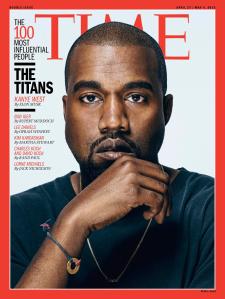
Kanye West, a major and influential figure in pop music and with young black African-Americans particularly, has been a constant force for racial division, most notably when he told a live national audience that the response to the New Orleans recovery after Katrina was deliberately slow in order to harm African Americans. Despite the fact that he has repeatedly revealed himself to be a shameless jerk as well—really, it’s inconceivable that someone of such taste and class as Kim Kardashian would marry someone like that, but who can map the human heart?—West continues to promote racial distrust and division, making the musician a cultural and societal pollutant, the human national equivalent of Flint water.
His latest racist outburst was a series of tweets yesterday to his millions of followers that proceeded this way, within a minute…
To Pitchfork, Rolling Stone, New York Times, and any other white publication. Please do not comment on black music anymore…
I love love love white people but you don’t understand what it means to be the great grandson of ex slaves and make it this far…
The system is designed for colored people to fail and one of our only voices is music. One of our only ways out is music.
Hilariously, West’s complaint was that a Pitchfork review “only” gave his album a “9 out of 10” rating. He explained that he deserved a “30 out of 10.”
The racists.
This is more evidence that strong, vocal and influential forces in pop culture and the black community have abandoned the goals of racial respect, integrated society and equal justice and opportunity for the new goals black separation, special status, double standards, and disrespect. This has been the message of protesting activists on dozens of campuses; it was the message of the Black Lives Matter/Black Panthers salute Americans were subjected to by Beyoncé at the Super Bowl halftime show, and that is West’s irresponsible message as well.
On the eve of her Super Bowl 50 half time show performance, Beyoncé released “Formation,” a video full of references to Black Lives Matter tropes and propaganda, including “Hand Up! Don’t Shoot!” (You can view it here. The earlier version of this post had an unofficial version: I apologize for the error.) Then in her portion of the Super Bowl 50 halftime show, the pop star gave the sold-out stadium and world-wide audience a live version of the video, including backup dancers wearing Black Panther berets who formed an X, apparently alluding to black Muslim activist Malcolm X, and raised their fists in the “black power” salute. African-Americans activists wrote that they saw the performance as a tribute to the 50th Anniversary, not of the Super Bowl, but to the Black Panthers.
The halftime show was part of a marketing plan messaging across multiple platforms, from social media to mainstream media. Once the show was seen in the context of the more explicit video, a controversy emerged, just as Beyoncé ‘s marketing geniuses hoped it would. Former New York mayor Rudy Giuliani was among the vocal critics, calling the show “outrageous” said telling Fox News,”This is football, it’s not Hollywood, and I thought it was really outrageous that she used it as a platform to attack police officers who are the people who protect her and protect us, and keep us alive.” Protests are planned at NFL headquarters.
What’s going on here?
1. Stipulated: Beyoncé’s sole intentions are to sell, make money, and get buzz. If she has a genuine political motive, and I doubt it, it is secondary to the good ol’ profit-making motive that has made her a mega-millionaire. She and her husband Jay-Z have been linking their brand to Black Lives Matter because they see profit in it, that’s all. Is it crass and ethically inert? Sure it is…just like the music business and the rest of show business. Is it particular disgusting, at a time of dangerous racial division in this country heightened by liars, crooks, complicit activists and cynical politicians, to try to make money by glamorizing it? Yes indeed, but the Julie Principle needs to be applied here. Fish gotta swim and birds gotta fly, and if you are paying any attention to people like Beyoncé, you can’t be shocked or overly angry at them when they show that their motives are purely non-ethical at all times. Yes, Beyoncé’s conduct was culturally irresponsible and unethical. “This is my shocked face:”
2. That said, hijacking the Super Bowl halftime show to make a race-baiting, divisive, anti-police demonstration out of what is supposed to be a unifying, fun, family-friendly cultural event, by extolling the racist Black Lives Matter, the criminal and racist Black Panthers, and destructive lies like “Hands Up, Don’t Shoot!” is indeed outrageous. The stunt deserves every bit of criticism it has recieved and more. Continue reading →
This morning I was listening to a CNN reporter in New Hampshire interviewing an ordinary, middle aged woman who is a Trump supporter, and she dropped a word inappropriate for TV live. The interviewer said, “You just said a cuss word!” and she just ignored him. In Phoenix, Don Harris, the head of Arizona’s largest NAACP chapter, was discussing the somehow national scandal over six white teenage Desert Vista High School students posting a photo of themselves aligned so the letters on their T-shirts spelled N-I-*-* E-R when he just couldn’t resist saying that a TV reporter who had just interviewed him had “nice tits”as he was speaking to another TV interviewer.
The recording was posted, and Harris had to resign as Chapter president. Called about the incident by another reporter, Harris said, among other things, “I’m really fucking sorry. I’m going to slash my wrists . . . Better yet, I’m going to throw myself out of a fucking window, except I’m on the first floor . . . I’m one of the best goddamned people in the state. They’ve seen me now, they’ve seen what I’ve done. I’ve given up my law practice. I’m down here six, seven days a week. That’s what my commitment is. I support NOW, the women’s organization — goddamn! — are you shitting me? Are you going to write this up?”
Why yes, Don, you vulgar fool, they are.
Harris and the dumb New Hampshire woman (I did say she was a Donald Trump supporter, right?) are victims of the crude and ugly culture of rudeness and incivility being imposed on the culture. If you don’t fight back, you will be sucked in: your civility and decency ethics alarms will become rusted and useless. At the 2016 Golden Globes awards, knowing they were on live TV and in front of an audience of adults, various presenters and award winners used the words cunt, sugar tits, fuck and fucking (twice). Speaking like this in private or controlled workplace surroundings is as old as the hills, but somewhere the principle has been lost in which such gutter discourse was understood to be ugly, lazy and the mark of an unmannerly lout when it leaks into more formal, or public settings. Who thinks this is a positive development? Continue reading →
We can do all we can, and do everything right, but so much in our culture and lives is determined by pure luck, good, bad, and as in this case, terrible.
I didn’t set out to make the news media’s tolerating unethical race arguments the theme today, I really didn’t. While I was researching ESPN’s decision not to hire whites on its new website, to which the Wall Street Journal shrugged and said, by not saying, “Wait….WHAT?” in effect, “Sure, go ahead, discriminate!”, I came upon this piece of journalistic offal called “100 Times A White Actor Played Someone Who Wasn’t White” on the Washington Post website. It was authored by Meredith Simons, a law student and freelance writer. Well, Meredith, free-lance writers get away with these miserably researched and unfairly gathered articles a lot, but if you try to sneak this kind of crap past a judge or a senior partner, you’re going to have a rude awakening.
The fact that her article is incompetent and unfair in myriad ways doesn’t mean that Hollywood has been an equal opportunity employer throughout decades past. It hasn’t, but it has reflected the society and tastes in which it operates, and often has been a leader in race attitudes, as in the film “Imitation of Life.” There is work to be done, but careless articles like Simons’ just causes ignorance and confusion.
The immediate impetus for her hit piece on Hollywood casting was apparently the controversy over the casting of white actor Joseph Fiennes as Michael Jackson in a planned biopic. Simons calls him “African American icon Michael Jackson,” which is the lawyer’s trick of framing an issue to rig the debate—good one, Meredith—but skin-bleaching, child-molesting, whitebread pop star Jackson is hardly an “African American” icon: he’s a national pop icon who went out of his way to reject race and racial labels. That is what the song “Black and White” was about, right? Sure, the casting was a gimmick, but it’s a clever and legitimate gimmick that I would guess Jackson would have approved of enthusiastically. When they make “The Rachel Dolezal Story,” will Simons complain if a black actress gets the part?
So based on a phony race controversy—two, in fact, with the Oscar nomination spat included—Simons comes up with an even more phony list. “Despite decades of protests over racially inappropriate casting and the recent protests over the lack of diversity among Oscar nominees, filmmakers continue to cast white actors as minority characters on a depressingly regular basis,” she writes.
(A tip for Social Justice Warriors: don’t write about the performing arts and casting if you don’t know a damn thing about either. The purpose of the performing arts is 1) to make a good product and 2) to make money. Anything that in any way interferes with either is irrelevant. There is no such thing as “racially inappropriate casting” if it furthers either of these objectives, or ideally both. It is not Hollywood’s job to eradicate racial inequality in the U.S. If it helps, that’s responsible and ethical of the movie-makers. This is, however, neither its art nor its business.)
Simons’ list is the epitome of the Texas Sharpshooter fallacy done badly. The fallacy consists of cherry-picking facts that support a predetermined argument and “drawing a circle around them” as if they are the sole relevant facts, while intentionally or mistakenly omitting equally relevant facts that would tend to disprove it. Bad lawyer that she is, she draws a metaphorical circle around “facts” that don’t even support her argument. I’m not going to go through the entire hundred (say “thank-you, Jack!”) but I’ll point out some of her most egregious botches.
To begin with, either she didn’t see the movies on the list, or intentionally misrepresents them. My favorite, and typical of her terrible research: Continue reading →
As the controversycontinues over the white-washed pool of actors nominated this year for the Oscar awards, gay British actor Sir Ian McKellen has stated that homophobia is just as prominent in the film industry as racism.
McKellen, perhaps most prominently known for his work in the Lord of the Rings and X-Men series, spoke with Sky News today about why he felt sympathetic to the minority actors who felt like they were being overlooked by the Academy. While McKellen said that the concerns had merit, he also stated that black people were not alone in feeling disenfranchised by Hollywood.
“It’s not only black people who’ve been disregarded by the film industry, it used to be women, it’s certainly gay people to this day,” McKellen said. “And these are all legitimate complaints and the Oscars are the focus of those complaints of course.”
In a separate interview with The Guardian, McKellen also said that actors have won Oscars for playing gay characters in the past, and yet despite being nominated himself, no openly homosexual actor has ever won.
Now, you need some background for this round, panel.
It is almost certain that a very large proportion of Hollywood is gay, and it has always been this way. The exact percentage is open to question, but those who have worked in other areas of show business encounter a large percentage of gay men, and also women, among designers, producers, directors, and actors, at all levels of the theater. In most college theater programs, there is a clear predominance of gays among both faculty and students. It would be strange indeed if the dominance of gays in the other aspects of show business was significantly different from the demographics in film. This suggests that there must be a strong contingent of closeted or privately gay men and women among the voting members of the Academy of Motion Picture Arts and Sciences.
So now your question, panel: Was Ian McKellen’s bold assertion…
Apparently panicked by the negative reaction to its all-white 2016 Oscar nominations, and determined not to give MC Chris Rock more ammunition than he already has, the Academy of Motion Picture Arts and Scientists has rushed into place new voter qualifications for next year’s awards. Under the new rules, members who have not worked over the past 30 years will lose the right to cast Oscar ballots unless they have been nominated for an Oscar themselves.
What’s going on here?
1. Is this substituting real bias for unfairly assumed bias?
Sure it is.
As one soon to be disenfranchised voter told the Hollywood Reporter, “The Motion Picture Academy, in the spirit of Affirmative Action (which has worked so well in our universities), is determined to take the Oscar vote away from the Old White Guys…Personally, I wish they’d examine their complex preferential ballot procedure which clearly isn’t working right. But no, blame the Old White Guys.” Others noted that to assume older voters, many who were at their peak during the rebellious Sixties and the Civil Rights Era, weren’t voting for black artists was foolish. The new rules seem to be an obvious attempt to stigmatize and penalize older voters. The seniors, said one dissenting Academy member, are often “perfectly vibrant and very much with it and, while they may be retired, it doesn’t mean they aren’t functioning on all cylinders. They have earned the privilege of being in the Academy through their work and just because they’re no longer active doesn’t mean that they can’t be a good judge of what they’re looking at.” Former actress Delores Hart, who gave Elvis Presley his first screen kiss and who was the top-billed star of “Where the Boys Are?,” was direct, saying, “It’s age discrimination.”
Of course, Hollywood has long-accepted age-discrimination, and Saturday Night Live would never skewer the Oscars for that.Continue reading →



 Ethics Alarms