Phylicia Rashad, the African American actress best known for playing “Claire Huxtable,” Bill Cosby’s wife on his legendary sitcom, was resolute about not be dragged into the crisis facing her on-screen hubby, as woman after women has come out with allegations that she was raped, sexually assaulted or drugged by funny, ol’ Bill. She should have stayed that way. Unfortunately, she allowed a Hollywood celebrity reporter to pull some quotes out of her, and now she has a crisis of her own. Now we know she values loyalty, group identification, show business protocol and her own financial interests over decency, fairness, honesty, justice, compassion, respect for women, and truth.
Or, I suppose, she might be an idiot.
Rashad’s take on Cosby’s problems was also odd, as it focused very little on the man being accused of such heinous acts. She didn’t say, or at least such remarks weren’t reported, that he was a wonderful human being, or that she could not imagine the man she worked so closely with all these years doing what so many alleged victims claim. She said that she “loves” him. In show business, this is like the host of a TV talk show saying a guest is a close personal friend: it is routine, and means nothing. Rashad’s defense of Cosby consisted of dismissing his victims’ stories as baseless, and this:
“What you’re seeing is the destruction of a legacy. And I think it’s orchestrated. I don’t know why or who’s doing it, but it’s the legacy. And it’s a legacy that is so important to the culture….Someone is determined to keep Bill Cosby off TV. And it’s worked. All his contracts have been cancelled…This show represented America to the outside world. This was the American family. And now you’re seeing it being destroyed. Why?”
Why. Huh. That’s a head scratcher isn’t it? Yes, why would the entertainment value of family situation comedy about a wise, loving father , the wife whom he adores and his brood of adorable, normal, kids, including three, and ultimately four, teenage girls be diminished in the least by overwhelming evidence that the actor playing said father is a sick, ruthless, sexual predator and the King of Hypocrites? Continue reading →
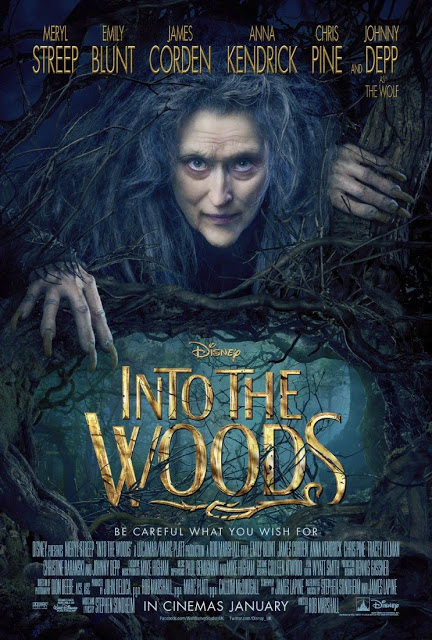
There is no reason in the world, other than Hollywood’s endless racism and lack of imagination, for this movie (or the original play, alas) to have an all-white cast. Why do movies feel like they’d rather die than show us a diverse cast? (And please don’t say “they cast the best people for the roles.” I thought the whole cast was good, but Streep was the only one who turned in a performance so unique that you couldn’t imagine anyone else doing the role.)
—–Ampersand, a.k.a. Barry Deutsch, opining on the assets and deficits of Rob Marshall’s film adaptation of “Into the Woods” on his blog
I hate to pick on Barry—OK, that’s not true, I enjoy it immensely—but this statement could stand as the distillation of knee-jerk liberal thinking on race, and it is wrong in so many ways that I hesitate to start counting. The sentiment, however, poses a nice counterpoint to the discussion here about the black James Bond controversy, so I can’t resist taking aim at it.
1. So casting a mega-million dollar film—-in a dicey genre (Have you heard? Big budget Hollywood musicals died in the Sixties…) and a limited audience—with actors who comport with that audience’s expectations of the musical the film is based on is racist, eh? More unfair words and inexcusable race-baiting were seldom uttered in word or written in ink. If a director had a vision that supported casting African American actors in traditional Grimms’ fairy tale roles and could make it work, I would salute him, but Rob Marshall had other priorities. He knew that every cut would be scrutinized and attacked by the Sondheim fanatics (which, by the way, are as white as a dove convention in a blizzard); he knew that the show itself was seriously flawed; he knew that every single adaptation of a Sondheim musical (“West Side Story” doesn’t count) has been a critical and box office bomb. He had every reason to keep his casting choices as close to the traditional images of the characters and the way they were portrayed on Broadway, and none of those reasons were racism.
2. It’s impressive how casually a race-obsessed progressive will accuse a professional of racism as a first response. Irresponsible, unfair, disrespectful, and in this case, ignorant of both commerce and art. Continue reading →
The most interesting aspect of ethics is at the margins, those situations where absolutists are challenged to hold to their principles because of unforseen variations that no general analysis could anticipate. The absolute ban on torture as unethical becomes shaky under the “hidden nuclear bomb” scenario. Capital punishment opponents find that their compassion evaporates when asked whether Hitler or bin Laden deserved execution.
“The human language is not sufficiently precise to define a rule that will achieve its desired effects, that is work, in every instance. There are always anomalies around the periphery of every normative system, no matter how sound or well articulated. If one responds to an anomaly by trying to amend the rule or system to accommodate it, the integrity of the rule or system is disturbed, and perhaps ruined. Yet if one stubbornly applies the rule or system without amendment to the anomaly anyway, one may reach an absurd conclusion or an unjust result. The Ethics Incompleteness Principle suggests that when a system or rule doesn’t seem to work well when applied to an unexpected or unusual situation, the wise response is to temporarily abandon the system or rule and return to basic principles to find the solution. No system or rule is going to work equally well with every possible scenario, which is why committing to a single system is folly, and why it is important to keep basic ethical values in mind in case a pre-determined formula for determining what is right breaks down.”
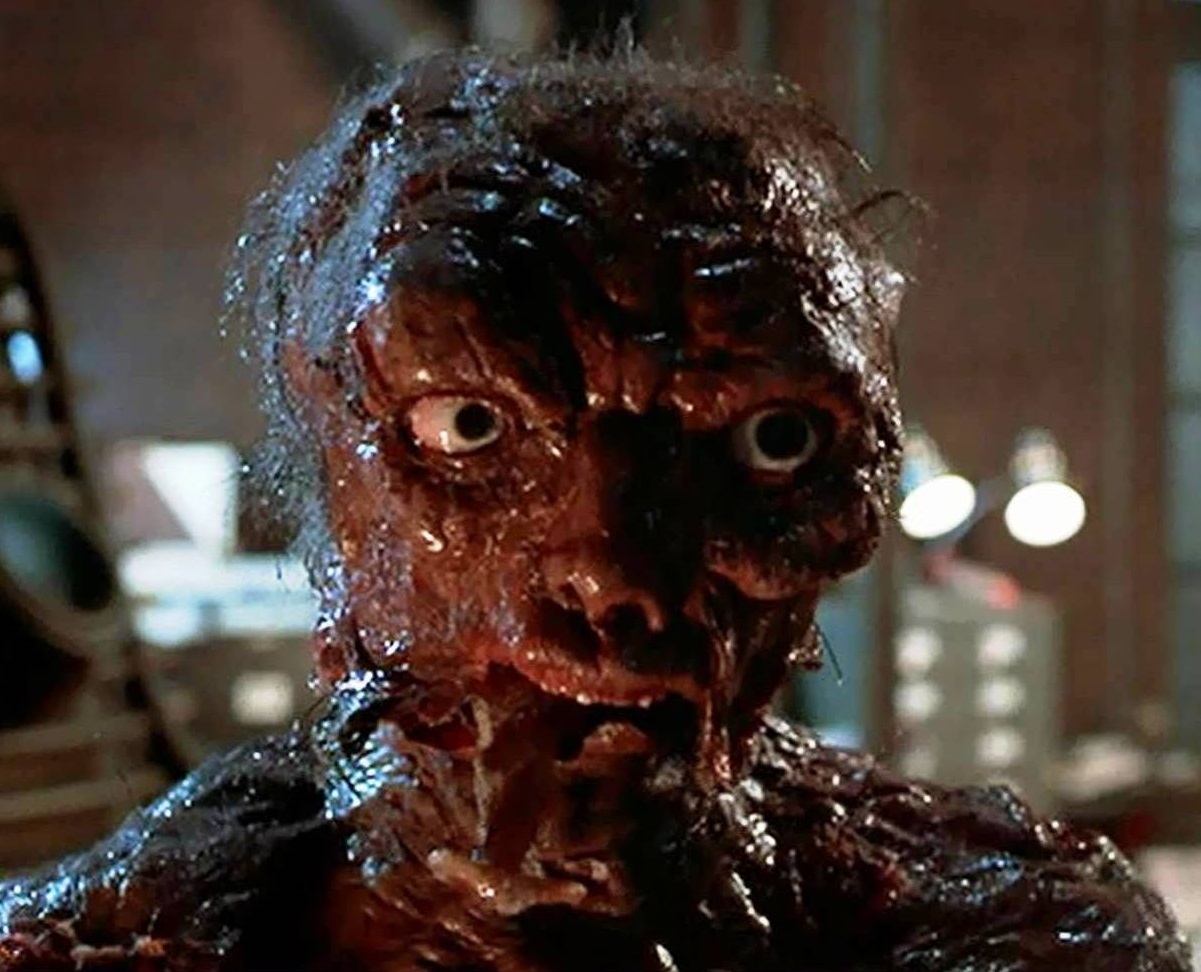
I was watching the Jeff Goldblum remake of “The Fly” (written and directed by David Cronenberg) last night, and rather than being properly horrified by Geena Davis’s nightmare of giving birth to a yard long fly larva, I found myself wondering how anti-abortion absolutists would handle her unusual dilemma. The film follows the tragedy of scientist Seth Brundle (Goldblum ) who has developed a means of teleportation. The process involves a computer breaking down a body, then transmitting the atoms electronically to a receiving “pod,” and reassembling them there. Unfortunately, when Seth tests the device on himself, an unnoticed fly gets into the sending pod, and the result is a version of Brundle that has fly DNA mixed in. (In the memorably campy Vincent Price original, what arrived in the receiving pod was a man with a giant fly head and a fly with a tiny human head.) Gradually Brundle mutates in form and mind into a monstrous hybrid, but before he knows what has happened to him, he impregnates girl friend Davis. Soon she realizes that something with insect DNA is gestating inside of her, though all tests show a healthy human embryo. Not surprisingly, she wants an abortion.
Would those who argue that abortion is murder maintain that she shouldn’t be able to have one, or that aborting the fetus is wrong? Let’s make the problem harder: let’s say she only learns that she has a fly-baby in the third trimester, when our laws wil not permit abortions unless the mother’s life is in peril. Some questions: Continue reading →
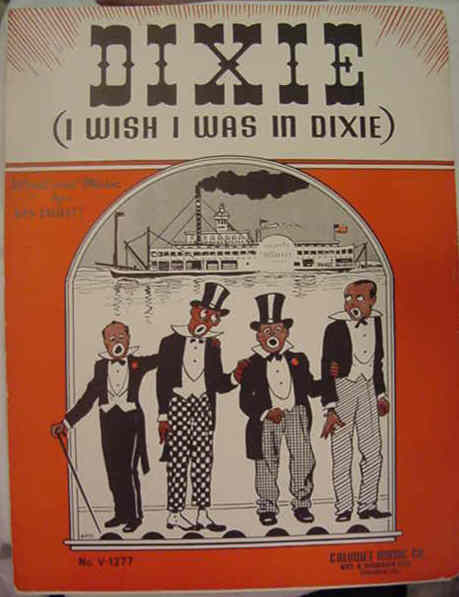
I will introduce this fascinating Comment of the Day by one of the blog’s masters of the long form comment, Chris Marschner, by saying that I think it is only tangentially related to the post, though he would disagree. Chris is writing about the history of “Dixie” and why it should not be associated with racism. Whether I agree with that analysis or not, the fact is that the public does overwhelmingly associate the song with a longing for the simplicities of the Old South, when the darkies were singing in the cotton fields and those Northern folks weren’t sticking in their noses where they don’t belong. This is the basis of an Idaho court’s decision to overturn the conviction of a black defendant after the prosecutor gratuitously and needlessly quoted the lyrics of the song in her closing argument. That decision was correct, because the issue is whether the comment could reasonably have been an appeal, or seemed like an appeal, or have had the effect of an appeal, to racial bias. I don’t think that conclusion is arguable.
The prosecutor failed her client – the people- not because she used the words of an 19th century song but because she failed to come to understand that history and culture of the US has been so bastardized that even an appellate court has no understanding and context of the origins of the song and the history and culture of the south. And, because of its misunderstanding believes the lyrics to be racially prejudicial.
“Maybe Erica is so young, color blind and historically ignorant that she had no idea that “Dixie” has been played at Klan rallies and used as the campaign theme for states rights, segregationist, white supremacy candidates since the Civil War. Maybe she didn’t recognize the cotton reference as racial.”
This song was written by a northerner named Daniel Decatur Emmett and performed in New York in an 1859 minstrel show by Emmitt in blackface. The reference to cotton is geographic in nature because cotton represented the primary agricultural commodity and wealth creator of the southern states – nothing more unless one is predisposed to finding anything related to the antebellum south as racist
Many songs have been coopted by various groups but to suggest that lyrics of Dixie are inherently racial because they are used by White supremacists is faulty logic. If a white supremacist adopted the image of Leonardo D’Vinci’s David or Venus d’ Milo or other classical work of art on their flag that would not mean that any such depiction suggests racial superiority. Continue reading →
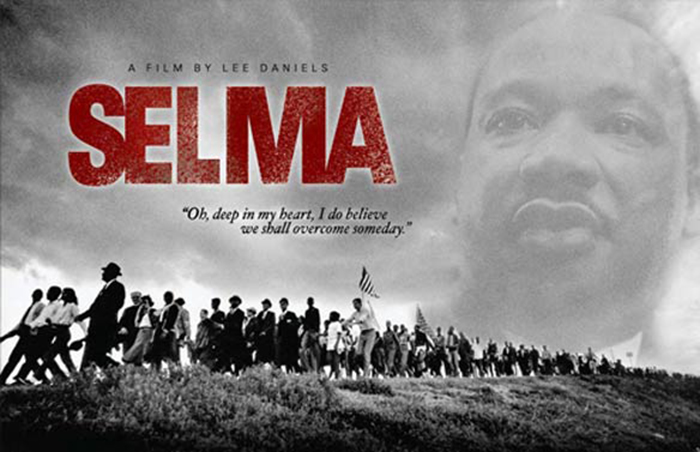
“How to reconcile facts and feelings, art and fealty to the truth? When filmmakers recall with pride about the deep reporting and research they’ve done for their projects, then they deserve to be held accountable for their projects. For fact-based films, accuracy becomes a formal element, along with acting, design and cinematography. It’s up to each viewer to identify the threshold where artistic license compromises the integrity of the entire endeavor. Cinema has more responsibility in this regard precisely because of its heightened realism, its ability to burrow into our collective consciousness and memory, where the myth has a tendency to overpower settled fact. But viewers have responsibilities, too. If accuracy has become a formal element of historical dramas, then the ensuing fact-checks have become just as integral a part of how we view them. That means it’s incumbent on audiences to engage in a mode of spectatorship that, rather than decide who’s right, can listen to and respect expert critiques, and still open themselves up to a piece of filmed entertainment that speaks to less literal, more universal truths.”
The question of whether film makers have an ethical obligation to fairly represent history, and particularly individual historical figures, in their movies has been a topic visited frequently at Ethics Alarms, and I’m not going to re-hash conclusions that have been thoroughly discussed before, such as
…here,regarding the casting of “The Impossible” with a gleamingly light-skinned central family and the changing of the real life heroine from Spanish to British
…here, discussing complaints that a fictional event was not portrayed accurately in “Noah”
…here, exploring the many falsehoods, some quite despicable, in James Cameron’s “Titanic”
and here,discussing “Lincoln” screenwriter, playwright Tony Kushner’s inexcusable choice to represent a real life former Congressman voting against the Thirteenth Amendment abolishing slavery when in fact he voted for it.
The conclusion of that last one sums up the lessons of the rest, I think. Kushner’s defense against criticism of the collateral damage his invented facts wreaked was to argue that they were legitimate tactics in the pursuit of drama and “greater truths.” He then compared smearing the reputation of a Congressman, to the detriment of his descendants, to misrepresenting the kinds of socks Lincoln wore. (Kushner can be a brilliant writer, but his ideological utilitarianism is repellant.) I wrote: Continue reading →
In the episode that ran yesterday, the campus bimbo-turned-feminist “Boopsie” ranted about sexual assault cover-ups of by institutions, and singled out the University of Virginia as a culprit, forbidding her college age daughter from attending school there. [ Notice of correction:I am informed by a reader that “Sam” is Boopie’s daughter, not her son as I wrote originally. Thus she is forbidding her daughter from attending a school where she thinks she is likely to be raped, rather than forbidding her son from going to a school where major magazines will unjustly accuse his fraternity of being a cult of rapists. I apologize for the error.] The premise was based on the anonymous allegations of a fraternity campus assault that were turned into a sensational expose by a feminist reporter with an agenda, and guilelessly published in Rolling Stone without confirmation, fact-checking, or a minimal level of ethical journalistic practices. “Jackie’s” rape accusations have been shown to be substantially or completely fabricated, and story has been thoroughly discredited for more than three weeks.
Why are Trudeau and his fictional creations still calling UVA a hotbed of sexual assault? There are several reasons: Continue reading →
This is a rare collaborative Comment of the Day, as texaggo4 and Penn combined for a fascinating discourse on the trend in Christmas holiday music and its significance in response to my December 23 post, prompted by listening to one too many renditions of “I Saw Mommy Kissing Santa Clause” and “Santa Baby.” It’s a wonderful job by both participants here, reinforcing my conviction that the the debates following the posts are as valuable, or more so, than the posts themselves.
First up is tex, followed by Penn’s response. Here is their combined Comment of the Day on “Remembering Christmas Music”:
Christmas only exists because of Christ. That being said, pull the religion out of the holiday and ultimately the holiday disappears and all of its associated trappings.
Christmas music has several “genres”, not classified nor exclusive:
1) Theological or religious: directly communication the story or the theology of the Incarnation.
2) Modern references to the festivals associated with the Christ-Mass.
3) Modern references to the neo-pagan Christmas folklore…Santa Claus, Saint Nick, Father Christmas, etc.
4) Modern references to the American folklore… Frosty the Snowman, etc
5) Modern references to the post-materialist Capitalist associations with Christmas— Christmas party songs.
6) Modern references to the post-narcissist associations with Christmas…songs about sex….
great.
We all saw this coming…it is predictable. take the religion out of a religious holiday and you can only assume that artistic messages (songs included) pertaining to the Holiday will have less and less to do with the ethical message of the holiday until eventually, watered down, it isn’t even worth playing the secular versions of that Holiday’s music.
What are the secularists complaining about? They asked for this.
Hmmm, how should I describe this? I would say that a law is being used to violate the First Amendment rights of an unethical jerk who is intent on abusing them.
Or, in the alternative, Jasen Dixon may just be an idiot.
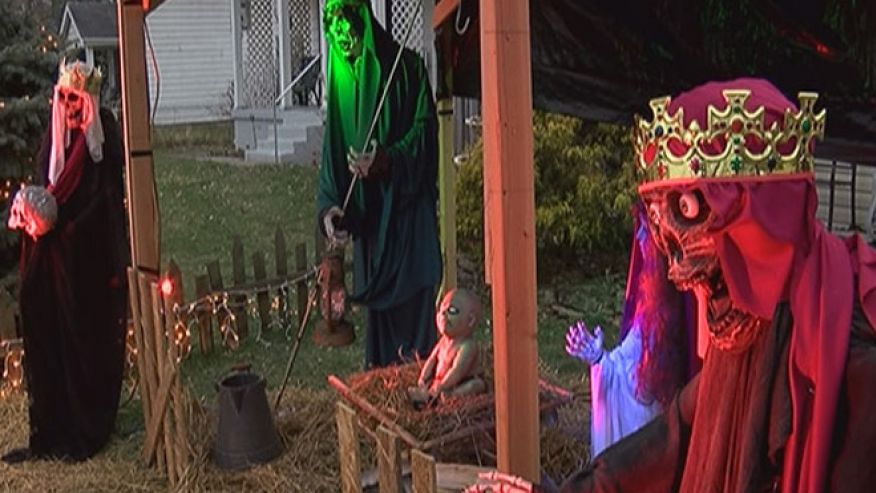
Sycamore Township, which is just outside Cincinnati, has responded to complaints by neighbors by applying various ordinances against Dixon’s unusual Nativity scene that he constructed in his front yard. It features life-size figures portraying Joseph and Mary as the walking dead, and a zombie baby Jesus, who has pale skin and pure white eyes. Here, here’s a close-up of Zombie Baby Jesus:
Awwwww!
Dixon suspects that the township laws, which prohibit structures in the front or the side yard of a residence that occupy more than 35 percent of its total area, and require that the primary structure must be 3 feet from the street and 6 feet from the dwelling, are really being selectively enforced against him because his holiday display offends some people….well, almost everyone. I suspect this as well.
Poor Jason says he doesn’t mean any harm: he’s just doing the best he can to celebrate the birth of baby Jesus. “I wanted a Nativity and I worked with what I had,” says Dixon, who manages a nearby haunted house called “The 13 Rooms of Doom.” He says his First Amendment rights are being infringed.
“I’ve lived here for 15 years and I’ve never had a violation of any kind,” Dixon said. “It’s a holiday decoration. I know if it was a real pretty Nativity scene they wouldn’t be saying anything.”
It is slowly dawning on me that Christmas music, one of the annual joys of my childhood and perhaps yours, is in a perilous state, both culturally and aesthetically. The best of the songs musically are religious in nature, which means that schools won’t pass them along to their charges as happened routinely when I was a child, and even playing them on the radio is likely to be regarded as a religious statement. I just loved the music, as I think most kids would if they ever got the chance before they were brainwashed into believing the ancient songs were subversive.
A full court cultural press is underway to make those songs as rarely heard outside of church as hymns, and I don’t see the trend as reversible. One obvious bar to a comeback: current pop stars don’t have the pipes to sing most of them without causing a sound pollution emergency. Or, if one of the few singers who could actually hit the notes dared to cover a carol like “O Holy Night,” he or she would feel required to apply flourishes of the sort that make every rendition of “The Star Spangled Banner” at a major sports event an invitation to PTSD.
Even for the more secular Christmas repertoire, the clock is running out. The most listenable versions, and the definitive ones in most cases, are by performers of the past who are not just dead, but also long forgotten by the current culture. An hour of classic Christmas recordings on the radio is now a reminder of how old I am and close to joining great singers like Bing Crosby, Judy Garland, Andy Williams, Nat King Cole, Jo Stafford, Burl Ives, Gene Autry, Frank Sinatra, Dean Martin, Elvis—dead, dead, dead. I guess Brenda Lee is still alive, so “Rockin’ Around The Christmas Tree” is a little less depressing, but it’s a minor classic at best. It’s gotten so bad that when I hear “The Little Drummer Boy,” I find myself wondering if the whole Harry Simeone Chorale is dead too—Harry died in 2005, and the recording is 56 years old, after all.
Meanwhile, our post-modern culture is sneering at the whole idea of Christmas songs, and Christmas itself. Most modern Christmas songs either are making fun of Christmas, about sex, or just lousy. The tradition is being undermined in more creative ways, too: this week I watched a 2012 straight-to-video movie called “12 Disasters of Christmas,” based on the loopy premise that “The Twelve Days of Christmas” was really a coded recipe for stopping the 2012 apocalypse predicted by the Mayan calendar. “The Mayans knew that the knowledge would have to be preserved for centuries, so they devised a song that would carry the secret and would be passed on and learned by children for generations,” explains the old codger who’s figured it all out. (But why would they choose such a monotonous and stupid song?) Come on, guess: How does the “Chosen One” stop the end of the world?[Answer below.]*
The movie is on to something, though. The Christmas songs that have the best chance of persevering though this age of cynicism and cultural illiteracy may be those that either tell a story or that have an interesting one related to their creation. The simple and beautiful tune of “Silent Night,” for example, as one of those films they used to show in school assemblies every year before some anti-religious hysteric sued, was composed for guitar in response to a Christmas Eve crisis for a small church in the Austrian alps in 1818: the church organ wasn’t working. I have found that Irving Berlin’s “White Christmas” affects me far more deeply since I learned that the Berlins’ infant son died on Christmas day, and that while his children celebrated Christmas as a cultural holiday, Berlin and his wife did not. They spent each Christmas after their son’s death in mourning. The song is a wistful remembrance of a happier time that the composer will never experience again.
Maybe another Christmas song will persevere if its origins are remembered; I was reminded of its history this week as a result of the thaw in U.S. relations with Cuba. Though my wife hates it, the song is one of my favorites, perhaps because it brings back warm memories: I watched the song’s first national broadcast with my sister and parents, and the Marshalls bought the recording the next day.
It was 1962. Noel Regney and Gloria Shayne were a husband and wife songwriting team of modest success. They were saddened by the lack of any spiritual content in popular Christmas songs then; imagine what they would think today.
Like all Americans, they were petrified during the thirteen days of the Cuban Missile Crisis, when the world stood on the brink of nuclear annihilation. As the crisis intensified, Regney found himself inspired to write down a simple poem with a Christmas theme. (Later, the couple would say that neither of them could ever sing the song through, because of the strong emotions it recalled.) When the nation could finally take a deep breath of relief as the threat ended, Gloria devised a melody for her husband’s words, though he had always been the composer when he and wife wrote songs together.
The result of this unique variation on their collaboration was recorded before the end of 1962, but it wasn’t until the following year, when Bing Crosby sang the team’s creation live on ABC’s “Hollywood Palace,” that it became widely known. The song written during the Cuban Missile Crisis became a best-seller, Crosby’s last hit Christmas record, and also the last popular Christmas song to have a religious theme.
It was, and remains, a prayer for peace.
____________________________
* By finding and wearing FIVE GOLDEN RINGS, of course!
Does anybody even bother to think about what racism is any more before accusing people of it? Do journalists think about the circumstances before they parrot knee-jerk accusations of racism from the likes of Sharpton and others? Based on the evidence of reaction to the infamous memo from a Sony honcho regarding the performance of Denzel Washington pictures abroad, apparently not.
Everywhere, this screed by an unnamed Sony executive is being called “shocking,” “unbelievable,” and, of course “racist.” It is nothing of the kind. In a scenario that reeks of the surreal Samuel L. Jackson fiasco where Ethics Alarms was virtually alone in noting that Jackson’s on-air accusation that a white TV host had confused him with fellow black star Lawrence Fishburne because “all blacks look the same to him” was unfair and completely meritless, the news media is just running with a demonstrably false accusation.
Here are the relevant portions of the e-mail exchange based on what has been reported in the media:
“I am not saying The Equalizer should not have been made or that African American actors should not have been used (I personally think Denzel is the best actor of his generation.) [But] Casting him is saying we’re ok with a double if the picture works. He’s reliable at the domestic [box office], safe, but has not had a huge success in years. I believe…the non event pictures, extra ‘bets’ should have a large inherent upside… Here there isn’t a large inherent upside….I believe that the international motion picture audience is racist – in general, pictures with an African-American lead don’t play well overseas…Sony sometimes seems to disregard that a picture must work well internationally to both maximize returns and reduce risk, especially pics with decent size budgets.”
Let’s examine this “unbelievable” e-mail, line by line and then as a whole, for ethical misconduct and incipient racism:
“I am not saying The Equalizer should not have been made or that African American actors should not have been used (I personally think Denzel is the best actor of his generation.)”
No problem there, right?
“[But] Casting him is saying we’re ok with a double if the picture works.”
The baseball analogy, a “double” over a “home run,” is a conclusion based on Washington’s films’ grosses and hard facts, not racism. It is a legitimate opinion, and one that in a business context must be made as a matter of fiduciary duty. Foriegn box office is about half (or more) of a typical film’s profit. If a star isn’t as popular in foreign markets as in the U.S., then metaphorically speaking, a “home run” is more difficult, and maybe impossible. Continue reading →




 Ethics Alarms