In this limited series of as yet undetermined length, I’ll be examining the legal ethics issues raised by the Netflix limited series of as yet undetermined length based on the Michael Connelly character, fed through the filter of the ubiquitous David Kelley.
I’m not going in strict order chronological order because why should I? This issue is a rich one, and arrived in Season 3 of the show. A prostitute whom Mickey had advised and had testified to help a client in Season 2 turned up dead, and he agreed to represent the man, her cyber pimp, accused of killing her before he realized she was the victim. Mickey liked and sympathized with the victim; whether he was officially her lawyer is a bit vague, but she seemed to think of him that way.
Can a lawyer represent a defendant accused of killing a lawyer’s client? Sure enough, this has happened; there’s even a Supreme Court case about it.
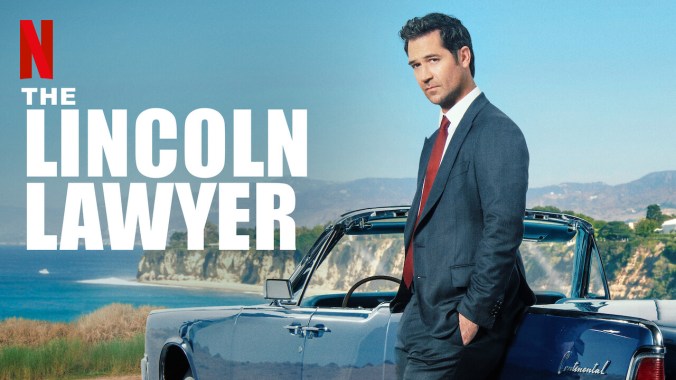
Netflix’s “The Lincoln Lawyer” series has dropped its fourth season. This gave me an excuse to revisit the first three seasons of the legal show, based on the Matthew McConaughey film, itself based on Michael Connelly novels, about sketchy a Los Angeles criminal defense attorney whose office usthe backseat of a chauffeur-driven Lincoln town car. The series—it’s Netflix after all—has DEI’ed the movie, with Micky Haller, the central character, being transformed into a Mexican-American who speaks Spanish frequently (though not as often as Bad Bunny) and is played by Manuel Garcia-Rulfo, a Mexican actor who only plays Hispanic roles when he appears in U.S. movies and TV shows. He was, for example, the gratuitous Hispanic father in the ostentatiously “diverse” “Jurassic World” franchise addition last year (the worst of them all, in my opinion). That is not to say he isn’t an appealing, intelligent, entertaining leading man in “The Lincoln Lawyer.”
The show makes a point of highlighting legal ethics dilemmas, as Mickey habitually tightropes along ethical lines to zealously represent his clients. A fellow legal ethicist thinks the show is unusually good in this realm. I’m not quite so enthusiastic. I will examine some of the legal ethics dilemmas that surfaced in the first two seasons over the next couple days.
“This should be the real message of the story: Stanford must reform its disability accommodation system so it is fair, helping only those who need it most. At the same time, the university should encourage students to live up to the greatest human attributes: hard work, honesty, perseverance and excellence. As things stand, it’s teaching us the worst lesson of all: cheaters always prosper while the good get punished.”
—Elsa Johnson, the Stanford student who wrote about how students there contrive “disabilities” to gain advantageous accommodations from the school.
This was the conclusion of “I exposed Stanford’s disability racket. I was stunned by the reaction on campus.” Ethics Alarms discussed Johnson’s original essay here. In her follow-up, she claims that the reaction to her “whistle-blowing” article (my term, not hers) were generally positive, that her fellow students were glad she exposed a culture on campus that encouraged students to cheat. She wrote in part,
“I braced for the worst — but when the story broke, I was floored.The piece did go viral, but the response was overwhelmingly positive. I was flooded with messages of support. “Was that your article on disability at Stanford?” a recent grad from Stanford’s Business School texted me. “THANK YOU for writing it and the courage to include your own story among the examples. I came straight from the army to Stanford and was initially deeply uncomfortable with the ‘gaming’ of the system I saw, for disabilities and other issues. And by the time I graduated two years later, I found myself playing some of those games. I didn’t know if I had lost a part of myself and my integrity, or if this was simply the real world I had to navigate.”
I am considerably cheered by that response, if indeed it was the general response and not one cherry-picked to make an interesting follow-up. I confess that I have my doubts.
We’ve had some interesting discussions here about “experts” here of late, notably this post. I am rapidly reaching the point where anyone who appeals to authority to justify his or her position, particularly if the authority is a study, a report, an “expert” or a scientist, immediately inspires my skepticism and even suspicion. Now what?
Once again, Duke professor and researcher Dan Ariely is in the news, and not in a good way. Ariely, professor of business administration in the Fuqua School of Business is named 636 times in the more than 3 million additional Epstein files released on January 30. He may be innocent of any wrong-doing and he and Epstein may have just played in a Fantasy Baseball league together, but the problem this creates for me is that I have been using Ariely’s work as authority in my ethics seminars for as long as I can remember.
For more than a decade, I told incoming members of the D.C. Bar as part of their mandatory ethics training that such sessions as mine were essential to making their ethics alarms ring. To support that thesis, I related the finding of research performed by Dan Ariely when he was at M.I.T. Ariely created an experiment that was the most publicized part of his best-selling book “Predictably Irrational,” giving Harvard Business School students a test that had an obvious way to cheat built into it and offering small rewarde for the students who got the highest scores. He tracked how many students, with that (small) incentive to be unethical, cheated. He also varied the experiment by asking some students to do simple tasks before they took the test: name five baseball teams, or state capitals, or U.S. Presidents.
None of these pre-test questions had any effect on the students’ likelihood of cheating, except for one question, which had a dramatic effect. He discovered that students who were asked to recite a few of the Ten Commandments, unlike any of the other groups, never cheated at all. Never. None of them. Ariely told an NPR interviewer that he had periodically repeated the experiment elsewhere, with the same results. No individual who was asked to search his memory for a few of the Ten Commandments has ever cheated on Ariely’s test, though the percentage of cheaters among the rest of the testees is consistently in double figures. This result has held true, he said, regardless of the individual’s faith, ethnic background, or even whether they could name one Commandment correctly.
The classic moral rules, he concluded, reminded the students to consider right and wrong. It wasn’t the content of the Commandments that affected them, but what they represent: being good, or one culture’s formula for doing good. The phenomenon is called priming, and Ariely’s research eventually made me decide to start “The Ethics Scoreboard” and later this ethics blog.
[From your Host:This excellent essay arrived on an Open Forum, and as I sometimes do, has been elevated from Comment of the Day status to a Guest Column. I’ll even forgive Sarah for making me look bad in comparison to such thoughtful, eloquent and perceptive work.]
***
“The embarrassment is that chemistry was treated as a mere technicality rather than the foundation of the entire conclusion. The embarrassment is that skepticism—real skepticism, the disciplined refusal to accept claims without robust evidence—was framed as denial rather than diligence.”
This particular article discusses the extraordinary claim that our brains contain a huge amount of microplastics. The problem with this claim is that the study has a fatal methodological flaw. The study relies on spectroscopy and detecting signatures of chemicals to determine a sample’s composition. However, the fats in the brain break down into similar compounds as polyethylene, which means without further differentiation methods, there is no way to tell if the “microplastics” the study detected were actually just normal lipids found in the brain. The whole article is worth reading, as it does an excellent job of explaining the issue.
I recently saw a post on Facebook that decried the idea that experts could be challenged by some novice watching a few YouTube Videos and reading a few scientific papers. This led to a long discussion in the comments, which was unfortunately extremely one-sided. Most everyone agreed that trying to correct an expert in their field was utter hubris.
“Take something you are good at, like maybe changing transmissions. Imagine someone who has watched a few YouTube videos comes up and tells you that you are doing it all wrong. How would you respond?”
The main problem with this is that, in terms of changing a transmission, we can obviously see who is right and who is wrong. The car will run, or the car will not. Indeed, if you truly are an expert in changing transmissions, you can step up and, in simple terms, explain why your process is the correct one, what is wrong with the YouTube watcher’s process, and even perhaps teach your skeptic how to do it correctly.
With any field of expertise, we have to remember that experts are people too, and all humans have flaws. Experts can be tempted by money, power, prestige, and politics. There are also limitations that even experts struggle to overcome. For example, in many branches of research, there are serious problems (often ethical in nature) in creating a good control group.
Why not start off the day with a humiliating confession? Nothing else has been working lately…
Back in May, I wrote about that ad above in which a goofy pitchman for the Allied Injury Group nicked or squashed a couple of legal ethics rules in the course of exactly the kind of lawyer advertising the profession was afraid would result when it had to eliminate the unconstitutional ban on the practice. It was a harsh post and should have been. I wrote in part,
“…the spokesperson calling himself “Your Favorite Attorney” is an actor, indeed a stand-up comic named Shaun Jones. All of the jurisdictions prohibit lawyer advertising in any form that is misleading or that includes false information. A sole practitioner can’t call her firm “X & Associates,” for example, if she’s the only lawyer in the firm. Putting a non-lawyer in front of a camera and calling having him call himself an attorney is an undeniable violation, and an intentional one… Jones also says that if the client doesn’t make money, “I” don’t make money. That is deceit. The firm will argue that the actor is only saying that if the firm doesn’t win its cases, the actor won’t get paid. But his statement is intended to refer to contingent fees for attorneys, and he isn’t one. “
Having done my duty to flag these hacks, I then proceeded to put the wrong law firm name in the headline! I have a typo and proofreading problem, as even casual visitors here know; I’ve gotten better, but the fact that these posts are usually written in fits and starts while I try to complete actual income-relating work [Thank you, by the way, to those of you who sent me generous contributions or gifts over the holidays, or kind words of encouragement that I appreciated just as much.] means that I sometimes miss glaring errors. That’s not an excuse. But it’s true.
This one was a doozy, made worse by my obstinate habit of proofing everything but the headlines. And so it was that The Allied Law Group, a distinguished and, based on my research, an impeccably professional and trustworthy firm that specializes in civil appellate law, media and First Amendment law, open government laws, regulatory litigation, legislation and general litigation, but not personal injury law, was unjustly and wrongly impugned.
That firm’s clients include lawyers, public interest groups, trade associations and media organizations. Their website is impressive and professional; I would even say, as one who is often asked to review the content of lawyer websites for ethics violations, exemplary.
So this was a really bad mistake on my part, and I could not be more sorry, embarrassed, contrite and remorseful. I apologize to the firm, its lawyers, its staff and clients. The post has been corrected, and let us never speak of it again.
I want to note that the firm attorney I spoke with was thoroughly civil, respectful, and, frankly, nicer than I might have been in a similar situation. She did not threaten me, as many lawyers are wont to do. She did inform me of the undeserved abuse that her firm has been getting—even death threats!—from people who have confused the firm with Allied Injury Group. People want to kill unethical lawyers now? I did not see that coming. I do have a hard time believing that anyone inclined to send death threats reads an ethics blog, but never mind: I accept responsibility for contributing to the confusion.
The Allied Law Group’s representative also didn’t make any demands during our conversation, because before she finished her second sentence I said: “I’ll fix that post immediately.” Nor did not instruct me to post this: I told her that I would compose an apology and get it up as soon as possible, because that’s my policy when I screw up.
Finally, I want to thank commenter Ric, who sent in a comment flagging the error last November. As Herman Kahn said, unlikely disasters occur when there’s a 1% confluence of bad management and bad luck. I try to read all reader comments. I missed that one.
Lexie was canned by Baptist Health Boca Raton Regional Hospital after announcing in a TikTok video, “As a labor and delivery nurse, it gives me great joy to wish Karoline Leavitt a fourth-degree tear. I hope that you fucking rip from bow to stern and never shit normally again, you cunt.”
Leavitt, President Trump’s extremely competent paid liar, announced last month that she was expecting her second child. The injury Lawler wished on Leavitt requires immediate surgery and can cause long-term chronic pain. The vicious and hateful post received many “likes” and “loves,” because these are really irredeemable people.
The Daily Mail says that it “led supporters of President Donald Trump to call for her firing.” Wait: wouldn’t all decent people call for the firing of a “labor and delivery nurse” who made such a statement? This is one of those stories I want to shake in the faces of my Trump Deranged Facebook friends. much like Dickens, my late, great Jack Russell Terrier, killing a rat.
What monsters they consort with! What monsters they have become….
A spokesperson for Baptist Health confirmed to that this unprofessional ethics villain is no longer employed at the Boca Raton hospital.
“The comments made in a social media video by a nurse at one of our facilities do not reflect our values or the standards we expect of healthcare professionals,” the hospital’s spokesperson said. “Following a prompt review, the individual is no longer employed by our health system.”
Please note: these are the kinds of people who polls say will prevail in this year’s elections. Gina?
But there needs to be a a strong, competent, effective response beyond just being afraid.
[Note: I want to apologize to Gina Davis, whose clip from “The Fly” is one of the most frequently used on Ethics Alarms, yet I somehow hadn’t included it in the Hollywood Ethics Clip archive until just now. The number of clips is up to 45. Check it out here.]
The woman above, a nurse at a Georgia hospital, was told to go home and not to come back to work until she got rid of her flamboyant (I’m being nice) hair style. The woman—I don’t care what her name is—claims that the ‘do is culturally significant, whatever that’s supposed to mean. She also claims that it doesn’t interfere with her job, which I would dispute, and that the hospital is discriminating against her race by telling her that is isn’t professional to dress up like an exotic bird …
…to care for sick people.
I think the lawsuit is a loser: I’m sure the administrators will say convincingly that no one, male or female, black, white or puce, would be allowed to work with that on their head. The woman is an exhibitionist. Personally, I would be wary of trusting any hospital that allowed someone with such dubious judgment and misaligned values to be charged with patient care.
Also, as someone whose week long stay in a hospital last summer featured being awakened out of a deep sleep to have some nurse’s head four inches from my face, the sight of that hat hair could spark a cardiac episode.
But hey! I can be convinced otherwise. So that’s why…
Today’s Ethics Alarms Ethics Quiz is…
Is a nurse who wears her hair like that meeting minimal professional standards?
This really happened, based on the reliability of the lawyer who reported it to me.
In one of those petty organizational battles over control of a book club or something of similar weight, one faction tried to kick a member of the other faction off the organization’s board without any authority to do so. The other faction quickly insisted that the member be put back on the board, and is trying to oust the offending faction from the group entirely. The fight has erupted on social media, mostly on the club’s Facebook page, in angry and ugly posts.
The ejected faction has hired a lawyer who sent a Cease and Desist and Demand letter to the rest of the membership, threatening a defamation suit. The Demand Letter ended with the following:
THIS LETTER IS A CONFIDENTIAL LEGAL COMMUNICATION AND IS NOT FOR PUBLICATION. ANY PUBLICATION, DISSEMINATION OR BROADCAST OF THIS LETTER OR ANY PORTION OF IT THEREOF, WILL CONSTITUTE, INTER ALIA, A VIOLATION OF THE COPYRIGHT ACT. YOU ARE NOT AUTHORIZED TO PUBLISH THE LETTER IN WHOLE OR IN PART.
Well..
1. The letter is obviously not confidential client communication as it has been communicated to non-clients.
2. Sure it’s technically copyrighted like anything you write is, but fair use of such a letter makes the implied threat deceitful. The recipients don’t need authorization to re-publish the letter, and neither do I.
3. Where do lawyers like this get their law degrees from, Bazooka gum comics? “Draw Skippy” ads?
4. My immediate suspicion upon receiving a demand letter like this would be that someone is engaging in the unauthorized practice law or using a dumb AI bot.
Port script:I’m trying to find a standard graphic for this topic. I’m considering using Michael Cohen, Trump’s perjurous, disbarred former fixer. You know, this guy…
Today became Frightening Mainstream Media Bias Saturday without my intention, so I’m going to shift gears to the other site of the massive Leftist societal and cultural manipulation, our conquered educational system. This Comment of the Day from one of EA’s resident authorities on the topic, will do quite nicely. Incidentally, I am a bit behind in my Comment of the Day posting. I’ll catch up, I promise.
There is a solution, but it cannot be implemented because of the corruption of the judiciary. The state schools are clearly in violation of numerous discrimination laws and they should be held to account.
Boys are being discriminated in schools. Look at the current performance of boys vs. girls in GPA and test scores below.
Now compare this to the 1975 – 1995 figures here. This is clearly a Title IX violation.
It is claimed that 20% of elementary school teachers are male, but I haven’t seen that and I doubt you have either. The real number is probably closer to 95% female. I am pretty sure this is clear evidence of sex discrimination by the schools and needs to be remedied. The 4 elementary schools my son went to had no, zero, male employees. Not even a janitor was male. This is clearly sex discrimination and should be remedied immediately.
Surveys show that at least 65% of public schoolteachers are Democrats. In the universities, it is MUCH higher. This type of viewpoint discrimination should not be allowed in public schools and the states need to outlaw it. The problem is, if you allow Democrats to be hired and they are allowed to determine hiring, the place becomes all Democrat eventually because Democrats are a cult that puts cult loyalty before merit. The concept of merit is considered evil to them. A solution would be to exempt Republicans from the taxes that support the schools (“Here is my Republican Card. This entitles me to a 60% property tax discount and a 3% sales tax discount”) or state-paid tuition at the private school of their choice. Since the schools are partisan, only that party should be required to support the schools.
The college population has been majority female since 1973 or 1974 (depending on if you define it as 50/50 or percentage of the population. Women are currently 61% of college students. The number in many surveys is below 60%, but it has been above 60% for some time in my experience. This is a massive Title IX violation.