Is It Ethical For Professors To Date Students?

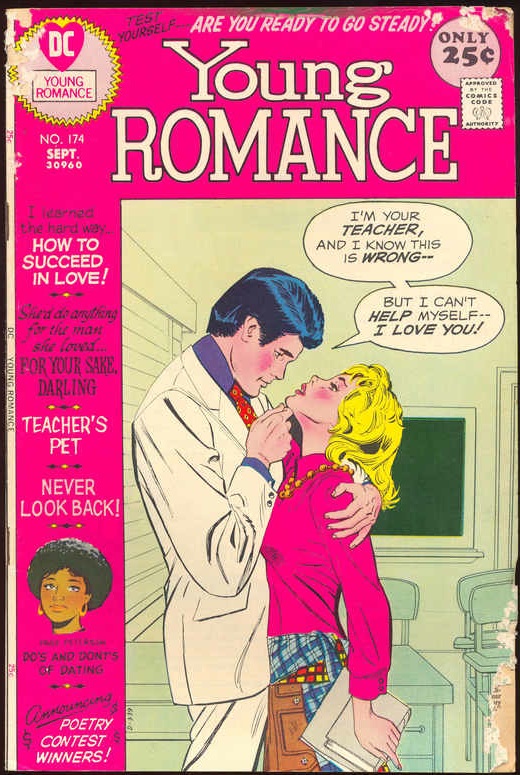
teacher-student datingProfsBlog asks the question regarding law professors and law students, but the question doesn’t change by narrowing the definition. The question is really, and only, “Is it ethical for teachers to have romantic relationships with students?” The answer is, has been, and forever shall be, “No.”

The answer to an ethics question sometimes becomes obvious when it is apparent that every argument on one side is either a logical fallacy, an unethical rationalization, or the application of an invalid ethics principle. Such is the case here, and thus I somewhat question the motives of the author of the post, Kelly Anders. Wishful thinking, perhaps? Asking the question creates the illusion that there is a real controversy. In this case, there isn’t.

I addressed this question a long time ago, in an early post here barely seen at the time but among the most frequently visited since. I wrote:

[P]rofessors [are] obligated to maintain a position of authority, objectivity and judgment as mentors and teachers of the whole student body, and [have] a duty to their schools not to allow their trustworthiness to be undermined by having intimate relationships among the same group that they [are] supposed to be supervising and advising. Dating a student is a professional breach of trust, and one that adversely effects the integrity of the entire educational institution…. The appearance created when a supervisor/manager/leader indulges in intimate relations with someone over whom they have authority, status and power—and every professor has authority over every student, in class or out— undermines the institution and the profession, by sending the false message that such relationships are standard, approved, and implicitly desirable in the culture where they occur…A professor has a potential teacher-student relationship with all students at a university, not just those in his or her classes.

Dating a student who happens not to be in one of those classes is what lawyers call “a distinction without a difference.” Many students and professors will reasonably assume that the pairing arose out of the student-teacher relationship, and in some ways it almost certainly did. A teacher always has superior power over any student by virtue of his or her position of authority, and it is an abuse of that power to use it to entice students into dates or bed…

[It] is naive to ignore the extended conflicts such relationships create. Might the professor’s best friends on the faculty be more generous when grading their friend’s significant other if he or she is one of their students? Will the professor consciously or subconsciously be easier on the friends of his student lover if they are in his class? The fact that the question can be asked shows that the situation should not occur where it can be asked.

Students, all students, must be off-limits as romantic partners for professors and administrators in universities, regardless of what rules are in place.Professors who date students risk their jobs because a student body is not their sexual smorgasbord, and it is a breach of trust and duty to treat it like one.

I wouldn’t change a word, except that typo I just noticed, and just fixed in the original. Nor is anything I wrote then revolutionary or new. These are the realities of authority, professionalism, leadership and power. It’s just that sometimes people really, really wish they were not. Continue reading


WHAT?? Dr. Oz Is A Quack? I’m Shocked!

quack-doctor-788714

I regard Oprah Winfrey’s conduct in the 2006 James Frey scandal signature significance regarding her priorities and character. When it was revealed that Frey’s “memoir,” “A Million Little Pieces,” which Oprah had promoted in her show’s book club, was a near-total fabrication, her immediate response consisted of, in essence, “Who cares,  if people like it?” Then, when the public response to her response was overwhelmingly negative, Oprah turned on a dime and ambushed Frey on the air, condemning him as an unscrupulous fraud. That’s our Oprah.

Oprah has profited by promoting several fakes, frauds and dubious authorities, such as the syndicated Oprah spin-off “Dr. Phil,” featuring a non-doctor who masquerades as a psychologist despite losing his license to practice decades ago. The most successful of all Oprah’s protegés is “Dr. Oz,” or  “America’s Doctor”  Mehmet Oz, now a popular syndicated talk-show host who dispenses medical advice with the aura of a real degree and a convincing air of authority.  When I say popular, I mean it. “The Dr. Oz Show” attracts 2.9 million viewers per day, and ranks in the top five talk shows in the U.S. “I haven’t seen a doctor in eight years,” the New Yorker quoted one fan telling Dr. Oz. “I’m scared. You’re the only one I trust.”

For some reason medical experts have waited over a decade to actually check out the snake oil Dr. Oz has been selling to credulous viewers softened up by Oprah’s House of Truthiness. They were finally roused from their torpor in recent months, after Dr. Oz  appeared before Congress in June and Sen. Claire McCaskill (D-Mo.) knocked him around the chamber, saying that he gave people false hope and that his segments were a “recipe for disaster.” Then, in November, a study he promoted as proving the efficacy of coffee bean weight-loss pills was retracted as junk science.

The British Medical Journal this week published a study analyzing the recommendations handed out on “Dr. Oz” as well as on another popular daytime medical show, “The Doctors.” The study selected forty “Dr. Oz” episodes from last year, and examined 479 separate medical recommendations, comparing them to available medical research. The study found that just 46 % of his recommendations were validated by data, while research contradicted 15%. For 39% of Oz’s advice, there was insufficient research and data to substantiate or debunk his claims. (“The Doctors” fared a little better, but not much.) Continue reading

“It’s Unethical To Be A Weenie,” Part III: Hypersensitive Law Students

[Part I is here; Part II is here]

“Today’s lecture is on WHAT???????”

This belongs in an emerging sub-category: future legal weenies. We have already seen black law students insisting that they be able to defer exams because the Eric Garner death has them too preoccupied to concentrate, and other law students protest an “insensitive” exam question involving the Ferguson riots. This trend does not bode well for the ability of citizens to receive competent representation in years to come. The latest entry was revealed by Harvard law professor Jeannie Suk, who registers her observations  in the New Yorker.  Suk says rape law is becoming impossible to teach and may be dropped from criminal law courses because many students can’t handle the stress of the subject matter. Criminal law professors at several schools confirmed that they are no longer teach rape law because they fear student complaints.  Suk writes, “Many students and teachers appear to be absorbing a cultural signal that real and challenging discussion of sexual misconduct is too risky to undertake—and that the risk is of a traumatic injury analogous to sexual assault itself.” Continue reading

Now THIS Is An Unethical Lawyer!

"Not there, you idiot! Remember, my cousin said to find those drugs he planted UNDER the car!"

“Not there, you idiot! Remember, my cousin said to find those drugs he planted UNDER the car!”

To give you further faith that our justice system is in good hands, this guy was formerly a judge, too. In fact, it was his forced resignation from the bench that inspired him…well, let me begin at the beginning.

Georgia’s Judicial Qualifications Commission investigated Bryant Cochran, then the chief judge of Murray County’s Magistrate Court, after a woman said Cochran had made inappropriate sexual advances toward her when she came to his chambers to seek some warrants. She alleged that Cochran told her he needed a mistress and wanted her to come to his office wearing a dress and no underwear.

Smoooooth.

The results of the inquiry led to Cochran’s  resignation from the bench in August of 2012. To get his revenge, Cochran persuaded one of his tenants to plant a box containing meth under the car of his accuser. Cochran then called police with a tip that she was carrying drugs. Police stopped her car and used a drug-sniffing dog to  turn up the illegal substance, but the dog’s sniffing came to naught. A police officer who just happened to be Cochran’s cousin—hmmmmmm—  informed his colleagues that the drugs were in a magnetic container attached under the vehicle. Continue reading

Unethical (and Cynical) Donation Of The Year: The St. Louis Rams’ Forgiveness Bribe To The Backstoppers

"Agreed, then: you can call us racist murderers, as long as you keep the donations coming...."

“Agreed, then: you can call us racist murderers, as long as you keep the donations coming….”

Let us be undiplomaticly clear about what the five St. Louis Rams players did when they came onto the field at the start of a Monday Night Football games with their hands in the air like the fictional, idealized, sanitized, imaginary and politically useful version of Michael Brown—you know: the angelic young college-bound African-American male who did nothing whatsoever to cause the circumstances of his own death.

The players were saying, on national television, with millions of people watching, that Officer Darren Wilson executed Mike Brown in cold blood; that the St. Louis police do such things, want to do such things, and will do such things, because they routinely target young black men for harm; and that police generally, around the nation, are virulent racists. That’s what the gesture meant, and that is what it was devised to convey. Continue reading

Here’s A First: Kansas Suspends A Lawyer For Facebook Bullying

It's unethical for a lawyer to play a sad violin over Facebook??? Why yes, it is!

It’s unethical for a lawyer to play a sad violin over Facebook???  Why yes, it is!

Eric Michael Gamble was representing a biological father opposed to the adoption of his daughter, which had been approved by the 18-year-old mother.

After Gamble deposed the young woman, he messaged her on Facebook in a shamelessly manipulative fashion, saying…

‘I wish to offer you some reasons why you should stand up and fight for your daughter. As you know, I am the attorney for [the biological father]. We held your deposition in my office. I wanted to give you the chance to make things right. This may be your last opportunity to be a mom for [the baby]. As I told you after your deposition in my office, it is not too late. You still have a wonderful opportunity to have a real relationship with your daughter if you so choose. I have attached a document for you to consider signing and bringing to court or to my office. It is a revocation of your consent to adopt. If you sign this document there is a very good chance that you will be able to call [the baby] your own and [the baby] will call you her mom. I can’t begin to explain how beautiful and wonderful parenthood is. I have a little girl myself and she is my world just like you are your dad’s world. [The baby] deserves to know her parents. She deserves to know that you love her and care for her as well. Do not let this opportunity pass you by because you will live with this decision the rest of your life and [the baby] will know someday what happened. [The adoptive parents] do not legally have to ever let you see her again after court (although they are probably trying to convince you otherwise with the idea of an ‘open adoption’). The reason why you don’t know about the trial was because they don’t want you there because that doesn’t help [the adoptive parents] case. This is your time to get rid of the guilt and standup and do what is right and what [the baby] deserves. She deserves to have her parents love and care for her. She deserves to know her grandparents and extended family. If she’s adopted, she won’t have that chance. [The biological father] wants to be her dad and to love her. She deserves that. I urge you to print, sign, and notarize this document and bring it to my office before court. Trial is June 27, 2013, at 9:00 a.m. at the Johnson County Courthouse, Division 15. I hope to see you and your father there.’

What’s wrong with this? The legal ethics rules protect unrepresented parties in a matter from exactly this sort of pressure. Rule 4.3, in Kansas and elsewhere, prohibits a lawyer from giving advice to adversaries of his or her client, which statements like “This is your time to get rid of the guilt and standup and do what is right and what [the baby] deserves” clearly are. The rules also require lawyers to treat all participants in the justice system with fairness and respect. That message constitutes neither. Rule 4.4 says that “In representing a client, a lawyer shall not use means that have no substantial purpose other than to embarrass, delay, or burden a third person.” Gamble has a defense, of course: his substantial purpose was to have the adoption dropped like his client wanted, but since he wasn’t supposed to be talking to her anyway (other than to advise her to get a lawyer), that wasn’t going to fly. Rule 8.4, meanwhile, says that a lawyer must not “engage in conduct that is prejudicial to the administration of justice.”

After he lost the case, Gamble reported himself for the Rule 4.3 violation. This is usually a good tactic to encourage lenient treatment, but in this case, it didn’t work. In suspending Gamble for six months, the Kansas Supreme Court seemed to invoke all three of the violated rules, as it wrote,

“…As the hearing panel noted, respondent “attempted to manipulate the biological mother and, as a result, interfered with justice.” Respondent’s conduct “amounted to emotional blackmail” of an unrepresented 18-year-old who was dealing with a process that was already “’emotionally exhausting.'” His “electronic message was designed to embarrass, burden, and create guilt in the mind of the biological mother.” These “bullying tactics directly reflect on [respondent’s] fitness to practice law as an attorney.” Consequently, we hold that the respondent should be suspended for a period of 6 months. A minority of the court would impose a longer period of suspension. We unanimously order a reinstatement hearing under Rule 219.”

And the social media claims another victim.

Addendum: I was remiss, in posting this, not noting that the underlying issue in the lawsuit is a far more serious and complex ethical and legal one than the topic of this post: the matter of unwed mothers putting their new borns up for adoption without the father’s consent or participation. That has been a battle royale on Ethics Alarms twice, and you can review it here.

_________________________

Pointer: ABA Journal

Facts: Legal Profession Blog

Comment of the Day on “Comment of the Day on ‘The Perils Of Over-Regulating The Police: A Case Study'”

Robocop

Stephen Mark Pilling contributes the second consecutive Comment of the Day providing perspective on the issue of police militarization, in response to the first. Here is his Comment of the Day to the post (by dragin_dragon, which you should read first if you haven’t yet), Comment of the Day on “The Perils Of Over-Regulating The Police: A Case Study”

When critics speak of the “militarization” of the police, not all are looking at it from the same viewpoint. Some are, of course, sociopathic or are conspiracy theorists. Some have swallowed the loudly flaunted concept that policemen are evil racists, corrupt ward healers in uniform or just about anything heinous, as they represent law as an absolute, not a relative.

There is a rational based distrust, however. Many of us grew up in a time where the police still walked a beat or patrolled his neighborhood in a squad car, armed with nothing more than a revolver. We’re also the product of an old tradition of law enforcement that stems from the British mold. Unlike the continental European system of paramilitary gendarmes, we adapted a system of localized lawmen, run by an elected county sheriff. The metropolitan police department is still a relatively new phenomenon, started in late 19th Century London.

To many citizens, police who are unaccountable to a directly elected chief and who sport automatic weapons strike a sour note. But recently, people have been seeing them acquiring armored vehicles, military assault training and a tendency to wearing black uniforms. They’ve also noted an increased likelihood of these tactics and weapons being utilized and the increased incidence of “no knock entries”. Likewise, citizens have been imaging police making arrogant idiots out of themselves and caused other cops to become ever more touchy about cell phones, whether they’re right or wrong.

These and other factors have been serving to create a gap between the citizens and the police. That’s never a good thing, of course, because that trust is vital in a free society. Citizen distrust only deepens when they perceive policemen in whom this sense of civil mastery is full blown. As a former military cop, as a private citizen and as a friend or relative of a lot of civilian cops, I’ve seen all this from different angles. I’ve also seen the divide deepen in recent days.

One small note. The funding of police units on all levels directly from federal sources coincides with the worry by many that state and local police units may be more or less within the pocket of federal departments. The actual militarization of once innocuous federal police units and the memory of Obama’s projected National Civilian Defense Force has resulted in fear that this is an intentional part of a program to create an instrument of oppression. For myself, I highly doubt that any street cops would lend themselves to some “martial law” based takeover of the homeland of America. What I’m not sure of, though, is how many in higher authority have not conceived of the notion and would execute it if they could.

Again; it’s vital that the bonds of trust be strengthened between the police departments and those law abiding citizens whom they “serve and protect”. They must never- ever- be heard to make disparaging remarks about “civilians”, as that only deepens the gulf. In the Army Military Police Corps, the official motto is “Of the troops and for the troops”. It’s a good motto. It should also carry over to every local police or sheriff’s department in America. “Of the citizens and for the citizens”. Policemen who embrace that attitude will seldom go wrong. Both they and the communities they serve will benefit.

Continue reading

KABOOM!* Our Hyper-Sensitive Future Lawyers

headexplode

Well, friends, for the second time this month my brains are on the ceiling, walls and floor again, and I’ve had to gate the dog so that…well, you know.

Columbia Law School announced that it is permitting students who are so devastated by recent non-indictments in the Michael Brown and Eric Garner matters to postpone taking their final exams. Isn’t that nice?

By “nice, “I mean stupid, irresponsible and embarrassing. You can read the Dean’s nauseatingly delicate statement here: I don’t want it polluting the blog, so I’m not going to quote it. Besides, if I look at it again, who knows what else might be on my walls. Continue reading

The Wall Street Journal’s Uncultured Culture Critic

Joanne Kaufman was here...

Joanne Kaufman was here…

In a jaw-dropping essay for her employer, The Wall Street Journal, alleged culture critic Joanne Kaufman proudly and candidly disabuses readers of any misconceptions they might have had regarding her qualifications for her job. She is not merely unqualified, but willfully, shamelessly, spectacularly unqualified. In a smug screed in which she admits to habitually walking out on Broadway shows at intermission, Kaufman reveals herself as lazy, arrogant, disrespectful of artists, and most crippling of all, to be afflicted by the attention span of the average Twitter addict.

“Don’t ask me what happened during the second acts of “Matilda,” “Kinky Boots,” “Pippin” and, reaching back a few seasons, “Boeing-Boeing” and “Billy Elliott, ”  Kaufman boasts.  “Really, I have no idea. But I am nothing if not cosmopolitan in my tastes, or distastes—French farces, English musicals set in gritty industrial cities, and American entertainments involving Charlemagne ’s Frankish kin.”

You can read her entire piece here; if the Journal doesn’t fire her, it is run by fools. “I’m of the “brevity is the soul of wit” school and of the belief that only a few bites are required to determine that you just don’t like a particular dish,” she happily admits. “My ideal night in the theater runs 90 minutes without an intermission (it is best not to put temptation in my path), which means that Shakespeare and I don’t tend to see a lot of each other.” This is the culture writer, remember. Yet she is admitting to membership in the lazy, sound-bite, bumper-sticker, multi-processing, distracted, ADD-addled public that has caused writers, playwrights, producers, book publishers, film-makers and song-writers to dumb down, redact, trivialize and simplify entertainment in an accelerating death cycle: plots don’t make sense, explosions start early, subtlety is forbidden, and no issue, thought or topic that can’t be fully explored in the time it takes to do a load of laundry is going can find its way on stage or screen. The Journal’s culture writer doesn’t have the time or interest to sit through King Lear, Hamlet, The Ice Man Cometh, or Death of a Salesman,  or to view all of “Seven Samurai,” “A Man for All Seasons” or “Gettysburg”—hey, a movie about one of those short Civil War battles for Joanne, please: she’s got a 15 minute segment of “Robot Chicken” to catch. Continue reading

The Perils Of Over-Regulating The Police: A Case Study

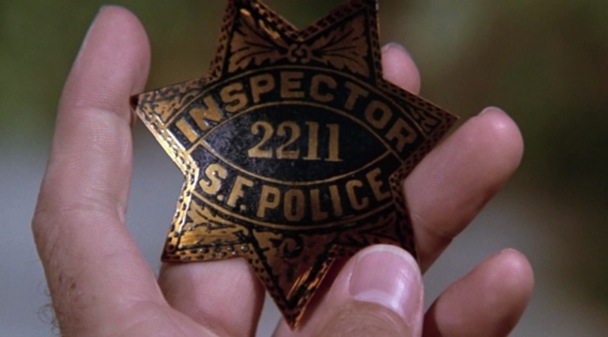
This is Dirt Harry's badge. Seconds later, he throws it into a river. Lots of other police will be doing the same.

This is Harry “Dirty Harry” Callahan’s badge. Seconds later, he throws it into a river. Lots of other police officers will soon be doing the same.

Yesterday, for the third time in my life, I was the first one on the scene after a fellow human being’s death. This time, it was a very close friend and, though it has little to do with this post, a wonderful man. I had headed out to his home because I was worried: an unusually reliable and conscientious individual, he had missed several appointments the last few days and hadn’t been answering e-mails and phone calls. When I was told about this, I immediately suspected the worst, and sadly, I was right.

His car was outside his house, and though it was mid-day and he was supposed to be somewhere else, I could see that the TV was on. In front of his door, getting soaked in the rain,  was a package: it had been delivered there on December 2. I got no response to my bangs on the door. It was time to call 911.

The police responded quickly. I’m not going to name the department, which has an excellent reputation here, and I do not fault the officers, who were diligent and polite, and who set about investigating the scene professionally and quickly. Nonetheless, after a full 90 minutes, after which they could not discern any more than I had before they came, they would not enter the house.

They told me that they could not risk being sued, and that there were elaborate policies and procedures that had to be checked off first. The officers had to track down their supervisor (it was a Saturday), and, they said, more than one official would have to sign off, to protect the department

“He could be drunk; he could be shacked up; he could just want to be alone,” they told me. “The law says his privacy can’t be breached, even by us.”

“But he’s not any of those things,” I said. “He doesn’t do any of those things, and if he were OK, there wouldn’t be a four-day-old package outside.”

“Maybe he took a trip on a whim.”

“He would have called and cancelled those commitments,” I said. “Look, you and I both know that he could be inside, on the brink of death, with every second bringing him closer. The only alternative is that he’s died already. If you won’t do it, let me break in, chase me, and you’ll find him legally as you pursue me. How’s that?”

The police weren’t sold. Finally, after a full 90 minutes, they requisitioned a ladder from a neighbor and were able to see into a second floor window. My friend was visible on the floor, and then they moved quickly, breaking down the door. They were too late by days. They might have been too late by minutes though. All those procedures and policies that forced the police to avoid taking action that in this case, under these circumstances, were prudent and that might have saved a life imperiled.

The lesson is only this: if we cannot trust police to make decisions like this, we obviously are not going to trust them to decide when to fire their weapons. Laws, rules and procedures are rigid, and have to be examined slowly; real life operates in the shadows of uncertainty, among the loopholes, gray areas and ambiguities, and it moves fast. The protests and demands in the wake of the recent police controversies will undoubtedly result in more regulations, policies and laws, but there is good reason to believe that they will also make us less safe rather than more safe, and make it difficult to find reasonable, dedicated, ethical men and women willing to serve as police, a job which, we seem to be deciding, should be subjected to strict liability whether the officer acts too quickly, or not quickly enough—judged, of course, after the results are in. Continue reading