A Rare Ethics Hero-Ethics Dunce: Maine Attorney General Janet Mills

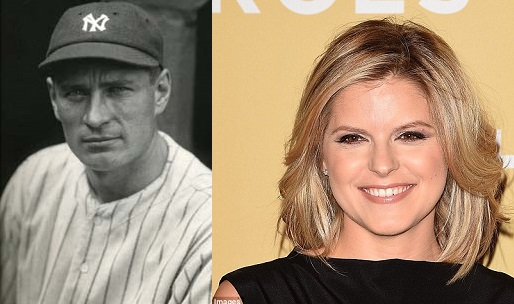
I looked everywhere to find a picture of a combination Hero-Dunce. This was the best I could locate: the Maine Atty. Gen.

I looked everywhere to find a picture of a combination Hero-Dunce. This was the best I could locate: the Maine Atty. Gen.

If one’s only point of reference were Eric Holder, one might get the impression that the job of an attorney general is to use the influence and power of the office to pursue the executive’s political and policy objectives. That is not what an attorney general is supposed to do, however, because the top lawyer of a city, a state or the U.S. is pledged to represent all the people, not just those who patronize a particular party, and the top lawyer’s client is not the executive, but the entire government entity. If that entity becomes corrupt, then the client becomes the public that is being betrayed.

Maine’s Attorney General Janet Mills illustrated how the job should be done and can be, if the lawyer holding it is ethical and not merely a serving as a political yes-man. Governor Paul LePage, a Republican, wanted to appeal the federal government’s  denial of his request to remove about 6,000 low-income young adults, 19- and 20-year olds,  from Maine’s Medicaid program. Normally the Attorney General would handle the litigation, but Mills refused, insisting that it was  a case that could not be won, and would waste state resources. Excellent. Continue reading

Vote For The Curmies: The Worst In Unethical Education, 2014

Rick Jones2

Every year, blogger Rick Jones (above) announces his “Curmies” (he is the Curmudeon, after all) nominations for “the person or persons who most embarrass the profession of educator.”

I encourage Ethics Alarms readers to vote over at Rick’s blog. Here are his worthy nominees, with Rick’s commentary:

1. James Miller, President B. Kaye Miller, and their co-conspirators at Bergen Community College, who suspended and demanded a psychiatric evaluation of art professor Francis Schmidt for tweeting a photo of his seven-year-old daughter wearing a t-short reading “I will take what is mine with fire and blood” even after it was proven that the line is a well-known pop culture reference to the Game of Thrones. They did finally back off several months later, but it was too little, too late. In mitigation: if you’re both an idiot and completely unengaged in popular culture, that line might actually make you think about recent school shootings. In aggravation: the shirt is obviously inoffensive, the process was obviously flawed, and the school’s defense of their actions is the perfect balance of irrationality and pomposity.

2. A cadre of incompetents at Harley Avenue Primary School in Elwood, NY, who cancelled the school’s traditional kindergarten show because of concern with making their charges college-ready. In mitigation: I can think of none. In aggravation: these people have no comprehension of child development, of what goes into making a show, of real college-readiness, or indeed of anything other than their own hubris, from what I can tell.

3. Secretary of Education Arne Duncan is likely the worst cabinet member of the 21st century, but he outdid even his own high standards of incompetence and arrogance with the proclamation that even students with disabilities will be expected to attain basic standards of reading and math: “We know that when students with disabilities are held to high expectations and have access to a robust curriculum, they excel.” Actually, no, Arne, we know no such thing, and if you think we do, maybe you should get off the hard stuff. In mitigation: I got nothing. In aggravation: Duncan’s plan has no upside, will cost pots of money, and ignores differences between students’ innate ability and preparation while pretending to privilege individuality.

4. Wasatch (UT) High School officials, for puritanically altering female students’ yearbook photos without as much as giving the girls the opportunity to fix their alleged transgressions. In mitigation: there was indeed a sign warning students of the need to obey the school’s dress code. In aggravation: the policy was enforced inconsistently and apparently whimsically. More significantly, the level of sexism involved is positively stunning: boys had their pictures taken with shirts gaping open, tattoos, copious amounts of visible boxer shorts… and a cutline “Studs doin’ what studs do best.” I couldn’t make this up.

5. There were plenty of cases of schools’ and universities’ over-reacting to the Ebola pseudo-crisis. We’re going to give the specific nomination to Cline Elementary in Friendswood, TX, not because their craven stupidity was any worse than that exhibited by several other schools, but because of the distance the teacher in question was from an actual outbreak while traveling in Africa relative to the distance to the nearest confirmed case to the district itself: roughly 11 to 1. In mitigation: there was lots of false information circulating, and parents (especially) were nervous. In aggravation: you’re supposed to be a school. Educate. When people are being paranoid idiots, it is your responsibility to keep your collective heads and do the right thing.

6. The administration of Rhame Avenue School in East Rockaway, NY, for taking teacher Vuola Coyle out of her classroom because her students’ test scores were too good. Yes, too good. It costs the school because students supposedly learn too much in 4th grade and therefore don’t show enough improvement as 5th graders. In mitigation: we haven’t really heard the school’s side of this story. In aggravation: even if everything else is false, the school’s addiction to testing, and to practice testing, is demonstrable.

7.The University of North Carolina for allowing a corrupt system of allowing athletes (especially) to enroll in “paper courses” for the sole purpose of keeping them eligible or off suspension to continue for nearly two decades. In mitigation: the real offenses are in the past, as are the worst of the offenders. But if the release of an investigator’s report marks a new event in the minds of SACS accreditors, it can for Curmie, too. In aggravation: it is impossible to believe that a lot of people currently in powerful positions at UNC didn’t know exactly what was going on and did nothing. And if “everyone does it,” it is the portent of very bad things to come, indeed.

8.Assistant Principal Paula Johnson and the rest of the administration of Bayside Middle School in Virginia for suspending 6th grader Adrionna Harris, who took a razor away from a classmate who was cutting himself, immediately throwing it away. But she dealt with the problem instead of calling a teacher. In mitigation: Adrionna was technically in violation of a rule that actually makes sense if not applied irrationally. In aggravation: the administrators wouldn’t have known about the incident if Adrionna hadn’t told them, so she was punished for being honest as well as being heroic.

In part because Rick was very busy this year, his nominations do not include as many subjects of Ethics Alarms posts as usual: only #2, #7 and #8 of Rick’s nominees were discussed here. On the other hand, Rick left un-nominated some truly awful examples of unethical teachers, administrators and institutions that flipped my bippy, such as, these, currently being assessed as I prepare my Best and Worst of Ethics 2014 list. They are a miserable list too, and include… Continue reading

The Absolute Worst Of The Terrible Arguments For Putting Barry Bonds In The Hall Of Fame

815-Baseball-Hall-of-Fame-CEvery year at this time, I issue commentary on the “steroid-users in the Major League Baseball Hall of Fame” controversy. I’m not going to disappoint you this year.

Today the Hall will announce who the baseball writers deemed worthy, and, as usual, the acknowledged steroid cheats with Hall of Fame statistics will be resoundingly rejected. I don’t feel like revisiting this subject in depth again right now: I have done so before, many times. However, yesterday I nearly drove off the road listing to MLB radio commentators Casey Stern and Jim Bowden, supposedly baseball experts, give their reasons for voting for the entire range of steroid cheats, from Barry Bonds and Mark McGwire to Roger Clemens and the despicable Alex Rodriquez.

Baseball’s Hall of Fame, alone among the sports Halls,  includes ethics in its criteria for entry: a player must exhibit sportsmanship, integrity and have been a credit to the game. The average sportswriter who votes for candidates is about as conversant in ethics as he is in Aramaic, leading to an endless debate involving every rationalization on the list and  analogies so terrible that they melt the brain.For example, I constantly hear and read that the evidence that Barry Bonds used steroids is “circumstantial” so it is unfair to tar him as a steroid user. Such commentators don’t know what circumstantial evidence is. Criminals can be justly convicted beyond a reasonable doubt by circumstantial evidence, which is also known as indirect evidence. Direct evidence, if believed, proves the existence of a particular fact.  Circumstantial evidence proves facts other than the particular fact  to be proved, but reason and experience indicates that the indirect evidence is so closely associated with the fact to be proved that the fact to be proved may be fairly inferred by existence of the circumstantial evidence. There is direct evidence that Bonds was a steroid-user, but the circumstantial evidence, as the well-researched book “Game of Shadows” showed, is so voluminous that it alone is decisive. Literally no one thinks Bonds is innocent of using steroids. [You can read my analysis of the case against Bonds here, here, and here.]

Stern and Bowden, however, claim that it is unfair to refuse the honor of Hall of Fame membership to suspected steroid users because it is inevitable that some players who used steroids and were never caught or suspected will make it into the Hall, if there aren’t such undetected cheat in the Hall already. Continue reading

The NYPD Turns Its Back On De Blasio: What’s Going On Here?

NYPD backs

The rift between New York Mayor de Blasio and his city’s police department  is more than an internal spat. It has the potential to divide and harm the city and citizens, not to mention crashing the Mayor’s already self-jeopardized political career early in his term. Both sides if this dispute committed hostile acts that the other considers grievously disrespectful. Neither combatant appears ready to apologize.

De Blasio crossed what many of his department’s officers consider an uncrossable line when he suggested, in the immediate wake of the grand jury’s decision not to indict in the Eric Garner case, that his own bi-racial son was at risk of harm should he be apprehended by the NYPD. As I have written before, this was not, as the spinners would have it, just a case of a mayor being candid about genuine problem in community relations. This was a tacit endorsement of the “hands up” protests and their contention that Garner, Mike Brown and others were the victims of police racism, that police are killing, likely to kill, want to kill, black kids. It doesn’t matter that de Blasio may not have intended that implication: under the circumstances and in the context of events, this is what police officers interpreted his remarks to mean. He was siding against them. He was suggesting that the grand jury was wrong not to indict. He was suggesting not that some NYPD officers were racially biased, but that black children like his son “may not be [Translation: “are not“] safe from the very people they want to have faith in as their protectors.”

The police have responded with multiple demonstrations of anger and contempt for their boss. Most recently, there were boos and jeers when De Blasio spoke at a police graduation ceremony this week. Over a hundred officers symbolically turned their backs when the mayor spoke at the funeral of Officer Rafael Ramos, who was assassinated by a man who suggested that he was seeking vengeance for the deaths of Garner and Brown. That had followed the theme of an airplane-towed banner over the city that read,“Our backs have turned to you,”which in turn was inspired by the spontaneous gesture by officers present when de Blasio visited the hospital where the bodies of Officer Ramos and his partner lay.

The New York Times, which has been guilty of bolstering the “hands up” lie by carelessly linking the deaths of Brown and Garner as well as Trayvon Martin, none of which can be fairly blamed on racism based on available evidence, has come down squarely against the police, writing in an editorial: Continue reading

A Lawyer Argues “Do No Harm” Should Be Added To The Legal Ethics Rules, Thus Proving Herself To Be A Hopelessly Unethical Lawyer

This is Alexa. She'll let you know if your client is good or bad, and whether you should help him. Just ask.

This is Alexa. She’ll let you know if your client is good or bad, and whether you should help him. Just ask.

Lawyer Alexa Van Brunt contributed a jaw-dropping op-ed to the Washington Post over the holidays. It was titled “The ‘torture’ memos prove America’s lawyers don’t know how to be ethical,” and argued that the legal profession needs the equivalent of the medical profession’s “First do no harm” ethical standard.

It was irresponsible for the Post to print such a piece, because it made its readers, most of whom are thoroughly confused about legal ethics already, even more confused. So far, I have yet to find any lawyer who regards Van Brunt’s theory as anything other than laughable, tragic, shocking, or proof that ideology rots the brain. She cannot possibly understand legal ethics or even what the duties of the legal profession are and compose such an embarrassing piece.

Alexa Van Brunt is, we are told, an attorney at the Roderick and Solange MacArthur Justice Center, a Clinical Assistant Professor at Northwestern University Law School and Center, and a Public Voices Fellow with The OpEd Project. This explains a lot. She is a public interest lawyer on a mission, and thus represents only causes that she thinks are good, right and important. Apparently she missed the part of law school where you learn that one of a lawyer’s jobs is to assist non-lawyer clients as they try to accomplish their goals, which they believe are good, right, and important. These often involve engaging in controversies with others, and zero-sum results. Someone is going to suffer “harm.”

In medicine, what “do no harm” means is frequently clear: make the patient better, not worse. There are usually not competing patients, where a limited amount of health must be allotted among suffering human beings. Thus a doctor will not ethically take a healthy heart from a living patient to give to another. In law, however, “Do no harm” would render many disputes beyond legal assistance. Is a defense lawyer who refuses to let a guilty client be convicted by insufficient evidence, jury bias and wrongful interpretation of the law doing harm by freeing a criminal, or is it harm to allow prosecutions to violate due process? Is a real estate lawyer who assists as a company purchases virgin land for the building of a factory doing harm to the environment, or is the lawyer for the environmental group that tries to block it doing harm to the economy?

Van Brunt’s primary focus is the torture issue, but even there, what is “harm” is muddy. Those who supported the use of torture believed that precluding it would place the U.S. population at risk. Alexa defines “harm” as violating international law and the Constitution, but the Constitution, some scholars believe, does not prohibit torture as the CIA practiced it, and in war, doing harm is necessary to win. Who decides whether a litigant who wants to sue for police brutality is going to do harm to public safety, or whether defending a police officer accused of murder will encourage police executions of unarmed men? Who decides, when it comes to  finding that a lawyer violated this new, sensitive ethics rule, what constitutes “harm”?

Why Alexa, of course! She and all those other good people who know with absolute certainty what is right and just in every case—they know what harm is. Just ask them. Meanwhile, client confidentiality is out, because sometimes a lawyer keeping his client’s secrets may cause harm to others. Providing legal advice to banks, defense contractors, auto manufacturers, gun-makers, processed food manufacturers, McDonalds, pharmaceuticals, the Defense Department, the CIA, pro-life organizations (abortion providers don’t harm anyone, of course), the NRA, the Republican Party, this all causes harm…by Alexa’s standards, and she knows best. We don’t need judges or juries, just let the consciences of lawyer and their associations decide which clients are virtuous enough to be worthy of legal representation.

The op-ed is not just absurd, but ignorant and alarming. How can anyone this warped and lacking in understanding of the law and the ethical duties of the profession be teaching at a law school, where she can assist in the minting of new lawyers as ignorant, arrogant and unethical as she is?

Talk about doing harm.


Ethics Reminder To The Episcopal Diocese of Maryland And Bishop Cook: “Hit, Run, Realize You’re Screwed And Come Back 20 Minutes Later To Take Responsibility” Is Still “Hit And Run”

bicycle-hit-and-run

Yesterday, Heather Cook, the No. 2 official in the Episcopal Diocese of Maryland, struck and killed cyclist Thomas Palermo with her vehicle. He later died; she did not stop and drove on, leaving the scene and her victim  badly injured by the side of the road. Another motorist stopped and called 911, and cyclists who set out to find the fleeing car reported seeing a Subaru with a smashed windshield. twenty minutes after the fatal accident Cook returned while investigators were still on the scene.

In an email to the clergy of the Episcopal Diocese of Maryland, the Right Rev. Eugene Taylor Sutton announced that Cook, the first woman to be ordained a bishop in the Maryland diocese had been involved in a fatal accident, and said,

“Several news agencies have reported this as a ‘hit and run.’ Bishop Cook did leave the scene initially, but returned after about 20 minutes to take responsibility for her actions.”

Oh. Well, leaving a man to die on the road is all right, then. Continue reading

Is It Ethical For Professors To Date Students?

teacher-student datingProfsBlog asks the question regarding law professors and law students, but the question doesn’t change by narrowing the definition. The question is really, and only, “Is it ethical for teachers to have romantic relationships with students?” The answer is, has been, and forever shall be, “No.”

The answer to an ethics question sometimes becomes obvious when it is apparent that every argument on one side is either a logical fallacy, an unethical rationalization, or the application of an invalid ethics principle. Such is the case here, and thus I somewhat question the motives of the author of the post, Kelly Anders. Wishful thinking, perhaps? Asking the question creates the illusion that there is a real controversy. In this case, there isn’t.

I addressed this question a long time ago, in an early post here barely seen at the time but among the most frequently visited since. I wrote:

[P]rofessors [are] obligated to maintain a position of authority, objectivity and judgment as mentors and teachers of the whole student body, and [have] a duty to their schools not to allow their trustworthiness to be undermined by having intimate relationships among the same group that they [are] supposed to be supervising and advising. Dating a student is a professional breach of trust, and one that adversely effects the integrity of the entire educational institution…. The appearance created when a supervisor/manager/leader indulges in intimate relations with someone over whom they have authority, status and power—and every professor has authority over every student, in class or out— undermines the institution and the profession, by sending the false message that such relationships are standard, approved, and implicitly desirable in the culture where they occur…A professor has a potential teacher-student relationship with all students at a university, not just those in his or her classes.

Dating a student who happens not to be in one of those classes is what lawyers call “a distinction without a difference.” Many students and professors will reasonably assume that the pairing arose out of the student-teacher relationship, and in some ways it almost certainly did. A teacher always has superior power over any student by virtue of his or her position of authority, and it is an abuse of that power to use it to entice students into dates or bed…

[It] is naive to ignore the extended conflicts such relationships create. Might the professor’s best friends on the faculty be more generous when grading their friend’s significant other if he or she is one of their students? Will the professor consciously or subconsciously be easier on the friends of his student lover if they are in his class? The fact that the question can be asked shows that the situation should not occur where it can be asked.

Students, all students, must be off-limits as romantic partners for professors and administrators in universities, regardless of what rules are in place.Professors who date students risk their jobs because a student body is not their sexual smorgasbord, and it is a breach of trust and duty to treat it like one.

I wouldn’t change a word, except that typo I just noticed, and just fixed in the original. Nor is anything I wrote then revolutionary or new. These are the realities of authority, professionalism, leadership and power. It’s just that sometimes people really, really wish they were not. Continue reading

WHAT?? Dr. Oz Is A Quack? I’m Shocked!

quack-doctor-788714

I regard Oprah Winfrey’s conduct in the 2006 James Frey scandal signature significance regarding her priorities and character. When it was revealed that Frey’s “memoir,” “A Million Little Pieces,” which Oprah had promoted in her show’s book club, was a near-total fabrication, her immediate response consisted of, in essence, “Who cares,  if people like it?” Then, when the public response to her response was overwhelmingly negative, Oprah turned on a dime and ambushed Frey on the air, condemning him as an unscrupulous fraud. That’s our Oprah.

Oprah has profited by promoting several fakes, frauds and dubious authorities, such as the syndicated Oprah spin-off “Dr. Phil,” featuring a non-doctor who masquerades as a psychologist despite losing his license to practice decades ago. The most successful of all Oprah’s protegés is “Dr. Oz,” or  “America’s Doctor”  Mehmet Oz, now a popular syndicated talk-show host who dispenses medical advice with the aura of a real degree and a convincing air of authority.  When I say popular, I mean it. “The Dr. Oz Show” attracts 2.9 million viewers per day, and ranks in the top five talk shows in the U.S. “I haven’t seen a doctor in eight years,” the New Yorker quoted one fan telling Dr. Oz. “I’m scared. You’re the only one I trust.”

For some reason medical experts have waited over a decade to actually check out the snake oil Dr. Oz has been selling to credulous viewers softened up by Oprah’s House of Truthiness. They were finally roused from their torpor in recent months, after Dr. Oz  appeared before Congress in June and Sen. Claire McCaskill (D-Mo.) knocked him around the chamber, saying that he gave people false hope and that his segments were a “recipe for disaster.” Then, in November, a study he promoted as proving the efficacy of coffee bean weight-loss pills was retracted as junk science.

The British Medical Journal this week published a study analyzing the recommendations handed out on “Dr. Oz” as well as on another popular daytime medical show, “The Doctors.” The study selected forty “Dr. Oz” episodes from last year, and examined 479 separate medical recommendations, comparing them to available medical research. The study found that just 46 % of his recommendations were validated by data, while research contradicted 15%. For 39% of Oz’s advice, there was insufficient research and data to substantiate or debunk his claims. (“The Doctors” fared a little better, but not much.) Continue reading

“It’s Unethical To Be A Weenie,” Part III: Hypersensitive Law Students

[Part I is here; Part II is here]

“Today’s lecture is on WHAT???????”

This belongs in an emerging sub-category: future legal weenies. We have already seen black law students insisting that they be able to defer exams because the Eric Garner death has them too preoccupied to concentrate, and other law students protest an “insensitive” exam question involving the Ferguson riots. This trend does not bode well for the ability of citizens to receive competent representation in years to come. The latest entry was revealed by Harvard law professor Jeannie Suk, who registers her observations  in the New Yorker.  Suk says rape law is becoming impossible to teach and may be dropped from criminal law courses because many students can’t handle the stress of the subject matter. Criminal law professors at several schools confirmed that they are no longer teach rape law because they fear student complaints.  Suk writes, “Many students and teachers appear to be absorbing a cultural signal that real and challenging discussion of sexual misconduct is too risky to undertake—and that the risk is of a traumatic injury analogous to sexual assault itself.” Continue reading

Now THIS Is An Unethical Lawyer!

"Not there, you idiot! Remember, my cousin said to find those drugs he planted UNDER the car!"

“Not there, you idiot! Remember, my cousin said to find those drugs he planted UNDER the car!”

To give you further faith that our justice system is in good hands, this guy was formerly a judge, too. In fact, it was his forced resignation from the bench that inspired him…well, let me begin at the beginning.

Georgia’s Judicial Qualifications Commission investigated Bryant Cochran, then the chief judge of Murray County’s Magistrate Court, after a woman said Cochran had made inappropriate sexual advances toward her when she came to his chambers to seek some warrants. She alleged that Cochran told her he needed a mistress and wanted her to come to his office wearing a dress and no underwear.

Smoooooth.

The results of the inquiry led to Cochran’s  resignation from the bench in August of 2012. To get his revenge, Cochran persuaded one of his tenants to plant a box containing meth under the car of his accuser. Cochran then called police with a tip that she was carrying drugs. Police stopped her car and used a drug-sniffing dog to  turn up the illegal substance, but the dog’s sniffing came to naught. A police officer who just happened to be Cochran’s cousin—hmmmmmm—  informed his colleagues that the drugs were in a magnetic container attached under the vehicle. Continue reading