Unethical Tweet Of The Month: Andrew Barovick

"What? Can't you take a joke?"

“What? Can’t you take a joke?”

Lawyer Andrew Barovick  resigned his leadership position with the New York City Bar Association after sending the following tweet about Chemung County Sheriff Christopher Moss, a Republican who had just lost the election and who happened to be black

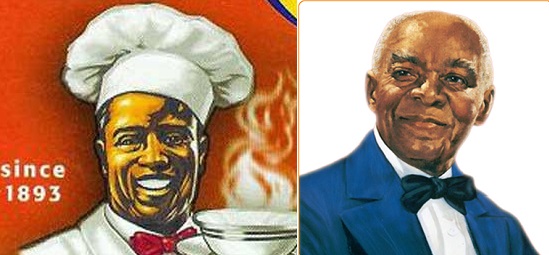
 “In light of election loss, [Sheriff Moss is] mulling offers to be new spokes model for either Cream of Wheat or Uncle Ben’s rice.”

Oh, nice. Continue reading

Stop Labeling The Sixth Circuit’s Approval Of Gay Marriage Bans As “Right Wing”

prop-8People who don’t (or can’t) read court decisions—and in this very large group I include most pundits and journalists—are prone to dismiss careful thought out and reasoned judicial arguments that took careful research and consideration as the product of political bias rather than what they (usually) are: sincere, honest, intelligent dissections of issues that are far more complex than advocates for opposing sides care to admit.

The Sixth Circuit just triggered an almost certain U.S. Supreme Court review of state same-sex marriage bans by upholding such bans in several states. Immediately, pro-gay marriage advocates and pundits attacked the decision as “right wing,” as if the court reached the decision from a starting point hostile to gays and homosexuality generally. The implication of this interpretation is that judges do not follow the law, legal principles and standards of jurisprudence and construction, but merely decide what result they wish to reach based on ideological and partisan biases, and then write essays of advocacy disguised as objective analysis.

The presumption is both ignorant, unfair, and convenient. It is ignorant because it assumes that the judicial profession and those in that profession ignore the primary ethical requirements of being a judge, standards that have stood unchanged and unchallenged for centuries and that every jurist swears to uphold. The first two Canons of the ABA Model Judicial Code state those standards clearly: Continue reading

Let’s Play “Pick The Most Unethical Lawsuit!”

Bad suits

Hello, hello, hello, Game Show fans! My, what a great crowd we have today. I’m your host, Wink Marshall, and today our contestants are going to compete for Most Unethical Law Suit. As always, you, our home audience, will decide who get the prize, a lifetime supply of extremely expensive boloney, courtesy of our sponsor, Oscar Meyer. Are you ready? Then, let’s meet our contestants! First, heeeere’s…

Andrew Rector!

You remember Andrew, right? In June, I wrote…

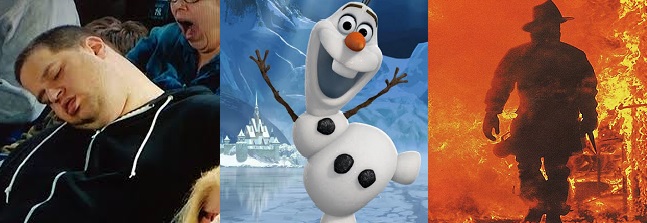
ESPN cameras caught Andrew Rector sleeping in his seat in the fourth inning of  the April 13 Boston Red Sox-New York Yankees game. In the time-honored tradition of TV play-by-play when something funny, weird or, most especially, sexy is spied in the stands, ESPN commentators Dan Shulman and John Kruk  began making fun of him. The clip ended up on YouTube, naturally, and thus on various sports websites, followed by the various idiotic, cruel, gratuitously mean-spirited insults, usually composed by brave anonymous commenters. …Let me say for the record that picking fans out of the crowd at sporting events and making fun of them, whatever they are doing, is generally a rotten thing to do. I know: it’s public, you know you might be on camera, and the fine print on the ticket stub puts you on notice. Unless, however, the conduct involved is actually newsworthy or despicable (as in instances where an adult has snatched a baseball from a child), the Golden Rule applies. …Unfortunately, Rector, whose name was unknown and whose sleeping form would have been quickly forgotten, decided that his humiliation was so great that he needed to sue…for $10, 000,000. Rector filed the suit against ESPN, Shulman, Kruk, the New York Yankees and Major League Baseball…and asks for damages for defamation and intentional infliction of emotional distress, citing malicious and false statements said about him,including that Rector is “a fatty cow” that represents a “symbol of failure.” …None of the defendants actually said any of these things (“fatty cow”?). Rector’s suit is apparently making the creative legal argument that ESPN’s mild mockery seeded the vicious mockery elsewhere on the web.

Welcome back to Ethics Alarms, Andrew, old friend!  Try to sta awake, now! Has the Streisand Effect kicked in yet? We’re doing what we can to help!

Now let’s meet someone completely new to Ethics Alarms, Contestant #2, Continue reading

“The Firm” Ethics: Mitch Should Have Known What He Was Getting Into

I was just watching “The Firm” again after many years—my old friend and the terrific actor, the late Bart Whiteman, played “Dutch”—to get the ick of “Cabin Fever 3” out of my head. (It was part of last night’s Halloween triple feature at my house.)

Pay attention, Tom...

Pay attention, Tom…

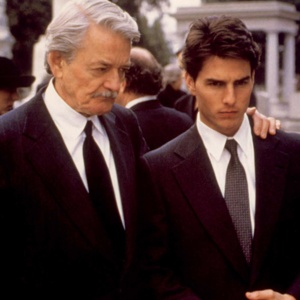
In an early scene in the film, Harvard Law student Mitch McDeere (Tom Cruise) is being courted by big law firms offering perks and cash. Then a small Memphis firm he never heard of —later, he learns that it is run by the Mob— blows him away with an offer he can’t refuse. The firms partners tell him that they wanted him so much, they bribed the clerk at Harvard’s placement office to learn what salaries the other firms had offered Mitch, then matched it plus 20% more. Tom is impressed, and flattered, and greedy, and takes the offer, even though the firm had openly revealed itself as unethical and proud of it.

He should have seen this as signature significance of a dangerously unethical culture in a profession with high ethical obligations, and walked out the door. A young lawyer with well-maintained ethics alarms would have. Who knows? Maybe this was a test the corrupt firm used to weed out ethical associates.

I always thought Mitch was just unlucky, but in the film, at least, he ended up in a bad firm because an ethics alarm wasn’t working.


Cowardice, Censorship And Betrayal At Maiden (N.C.) High

Almost Maine

Here is a strong candidate for teacher/blogger Rick Jones’ annual Curmie Awards on his blog Curmudgeon Central. He recognizes the most despicable conduct by teachers and school administrators, and while this year’s award may go to some fourth grade teacher who sets autistic kids on fire, I know he will share my disgust at this story.

The theater club at Maiden High School in North Carolina was in production of John Cariani’s newly-popular stage dramedy “Almost, Maine,” a series of vignettes about bittersweet love and romance. A brief scene touches on a budding same-sex relationship, and this so worried school administrators that before green-lighting the production, Principal Rob Bliss and Catawba County Schools Superintendent Dan Brigman decreed that every student wishing to audition or assist with the production must turn in signed parental permission letters. Only one student was prevented from auditioning through this screening process, and production commenced. The club to reserved the rights, rented the scripts, cast the parts and began rehearsals.  The local churches learned that that the show contained (Ewww!) gay people, and the school abruptly reversed course, cancelling the production. Principle Bliss issued this weasel-worthy statement:

“In regards to the request for students to perform the play “Almost Maine,” careful review and consideration was given to the contents of this play. The play contained sexually-explicit overtones and multiple sexual innuendos that are not aligned with our mission and educational objectives. As principal of Maiden High School, I have an obligation to ensure that all material, including drama performances is appropriate and educationally sound for students of all ages.”

He did not mention that the production had already been approved, and that he and the school caved to community censorship by right-wing bullies, intolerant religious jerks, or local jerks who didn’t have the resources to go to New York City and picket “The Death of Klinghoffer.” He had one, and exactly one, response available to him once complaints began rolling in from anti-gay, anti-same sex marriage citizens of fair Maiden. It would be this... Continue reading

Ebola in Dallas: No Excuses For the CDC

doctor_stooges_2

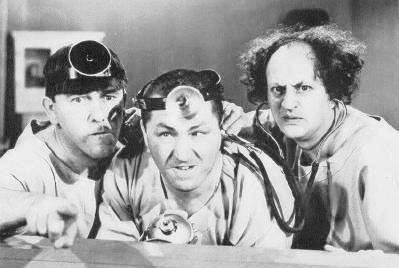
The statement by the nurses union in Dallas describing the Three Stooges level breaches in safety protocols surrounding the treatment of Thomas Duncan, the nation’s first Ebola fatality is shocking, but it should be no surprise, ironically. By now, Americans should be used to being told that our benevolent overseers in the government have matters well in hand, our best interests at heart, and the expertise and resources to do the job governments are supposed to do.  They are also used to discovering, especially lately, that the expensive systems and professionals we have been instructed to trust are in truth lazily administered, incompetently run, staffed with too many sluggards just waiting for a paid retirement, and most of all, well aware that failure carries little or no accountability.  In the recent past it has been the Secret Service, the Veterans Administration, the State Department, Homeland Security, the IRS, HHS and our military that have shown deficits in management, oversight, planning, professionalism and common sense undermining our trust. Now it is the Center for Disease Control. Continue reading

Three Republican Candidates: Gaffes, Disqualifications, Or Something Else?

shooting-yourself-in-the-footI felt badly about piling up three posts recently on unethical female Democrats running for office, and was inspired by the Washington Post’s Greg Sargent to do some analysis of Republican candidates who, at least according to Sargent, deserve equivalent criticism to what has been leveled at Alison Lundergan Grimes for refusing to say whether she voted for President Obama. [She did it again last night in her debate with Sen. McConnell.]

Sometimes finding Republican candidates who deserve an Ethics Alarms slap is hard, unless they say something bat wacky like, say, Richard Mourdock. If a Democrat is flagged by The Daily Beast or the Post, I can be pretty sure there was something said or done that was objectively troubling, because the mainstream media will bury anything from a Democrat that is vaguely defensible. A Republican, however, might be accused of certified insanity for a statement that offends progressive cant. Fox and many of the right wing websites, meanwhile, will ignore any Republican whose pronouncements don’t rise to “I am the Lizard Queen!” level of derangement, and will find fault with Democratic candidates on dubious grounds. Here are the GOP candidates for today’s ethics audit: Joni Ernst (U.S. Senate in Iowa); Tom Cotton (U.S. Senate in Arkansas); and Greg Abbott  (Texas Governor race): Continue reading

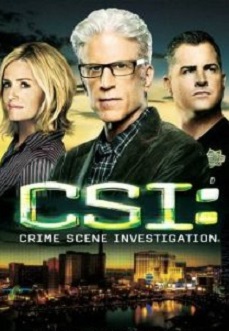
“CSI” Ethics: Now THAT Was An Unethical Fictional Lawyer…

CSIWow. That was one unethical lawyer on CBS’s “CSI” last night, and I mean even before we found out that he had stolen a vile of an Ebola-like virus and used it to murder a doctor, almost setting off a viral epidemic in Las Vegas. (Gee, I wonder where the writers got the idea for that story? See, we don’t have to argue about politicians causing panic over Ebola: the entertainment media is way, way ahead of them.) Among the lawyer’s ethical transgressions:

1. He set out to use his law degree to gain access, through employment, to a company he blamed for allowing a deadly virus to wipe out his family in South America. Needless to say, this is a blatant conflict of interest, indeed, the worst one for a lawyer I have ever heard of in fact or fiction. He wanted to represent a corporate client so he could destroy it.  This is a clear breach of Model Rule 1.7:

(b), a lawyer shall not represent a client if the representation involves a concurrent conflict of interest. A concurrent conflict of interest exists if:

(2) there is a significant risk that the representation of one or more clients will be materially limited by… a personal interest of the lawyer.

Now, that conflict could be waived if the client were fully informed of the fact that its lawyer wanted to destroy it, and the client didn’t mind. That seems unlikely to me.

2. When it looked like his murder was going to set off a deadly epidemic, the lawyer decided to let CSI know that his client the biotech firm had lied about none of its supply of the virus being missing. He knew it was missing, because he had stolen it. The failure of a lawyer to remedy a client’s lie to police about a crime isn’t unethical in a criminal defense setting, but it is unethical if the lawyer would be aiding in another crime by doing so, which was the case here. Moreover, he is involved in the crime, unknown to his client. This would be a disqualifying conflict even if the one described above didn’t exist.

3, He also has an obligation under the ethics rules (Model Rule 1.4) to inform his client about matters relevant to the representation that the client needs to know, like “By the way, about that missing vial of deadly hemorrhagic virus you don’t want to tell the police about? I took it.”

4. THEN, he surreptitiously taped an employee and representative of the company who thought he was also representing her (if he wasn’t, he has an ethical obligation to make that clear—it’s called a “corporate Miranda warning.”) While it is legal in Nevada to secretly tape a conversation you are participating in, it is virtually never ethical for  a lawyer to do this with a client (That’s misrepresentation, violating Rule 8.4 in Nevada) , who is assured that her communications with her lawyer will be privileged, and held in strictest confidence under the attorney-client relationship.

5. Now, if the reason for the lawyer making the recording and handing it over to Ted Danson had been what CSI first assumed it was—that he was trying to save lives in imminent danger and deemed the revelation of a client confidence the only way to prevent it—he would have some support in the ethics rules, for there is an exception to the duty of confidentiality that can justify that.*  That wasn’t his motive, however, at least not all of it. He was also trying to make sure that the company—his client, which he was trying to destroy in revenge for his family’s deaths—was blamed for the virus that he had released. He had no justification for violating Rule 1.6, which says that a lawyer must keep client confidences.

6. Also, since he was representing both the employee he secretly taped and the company itself, he would have been obligated to report what she told him—evidence of a crime implicating the company–to his corporate client before reporting it to authorities, so the corporate client could report the lost vial itself, or at least have that option. If the attorney was going to exercise the “death or serious bodily injury” exception, he needed to tell the client that, too.

Yes, this was a very unethical lawyer.

Then there was that killing part…

* There was no reason to make the recording at all. This was a lame plot manipulation by “CSI.” Danson and his team used the biological residue on the recorder to prove that the same person who made the recording also stole the vial. But the lawyer could have just told the police about what his client admitted regarding the missing vial. No recording was necessary.
Ethics Observations On Wendy Davis’s Controversial “Wheelchair Ad” Attacking Greg Abbott

1. The campaign of Texas Democratic gubernatorial candidate Wendy Davis has issued an attack ad directly referencing gubernatorial rival Greg Abbott’s partial paralysis, and includes the image of an empty wheelchair. Davis could claim—and will, if she hasn’t already–that  the implication that his use of a wheelchair argues against his qualifications to be governor is inadvertent or imagined, except that her supporters were caught in a Project Veritas video mocking Abbott for his disability, and Davis has made gaffes relating to his handicap before, as when she said that he hadn’t “walked a day in her shoes.”

2. She is a member of a party with supporters in the media ready to pounce on any Republican who makes a similarly provocative reference to an opposing candidate’s race, religion, ethnicity, gender or “abled status.” The double standard is certainly a campaign boon to Democrats, but they have to take advantage of it a bit more subtly than this.

3. What is primarily wrong with the ad, however, isn’t the wheelchair, or the use of tactics that would called an appeal to bigotry if they were used by Republicans. It is that the arguments the ad seem to be making are stupid, unfair and wrong, and ones that Davis, who is a lawyer, must know are stupid and wrong, or she is stupid and wrong. Continue reading

The Harvard Law Student’s Formula For An Ethical Life

Yes, I hate my job, and yes, my clients are the scum of the Earth, and yes, my life sucks. But think of all the kids I can help get de-wormed!

Yes, I hate my job, and yes, my clients are the scum of the Earth, and yes, my life sucks. But think of all the kids I can help get de-wormed!

When I heard about the Harvard Law Record’s essay by law student Bill Barlow titled “Want To Save The World? Do Biglaw,” I mistakenly  assumed that he had made a persuasive, or at least coherent, utilitarian argument. After all, some fairly distinguished blogs took notice, and set about rebutting him. I was shocked when I actually read the piece. From what I can tell, Barlow understands nothing he was writing about—not the profession of law, not charity, not careers, not values, not law firms, not ethics, not money, not life. Why is someone who thinks like this in law school? What are law schools accepting people capable of writing this? Why is Harvard allowing someone this naive and shallow to display a Harvard degree?

This is literally all there is of substance to the article:

“So there you have it—be a corporate lawyer, donate 25% of your post tax income to charity, and save 150 lives a year, or de-worm 25,000 kids.  Alternatively, go into Public Interest, Government, or Academia, and feel warm and fuzzy about yourself.  Sadly, when people at this school talk about public service, they mean the latter, rather than the former.  If only people applied the same amount of cognitive skill used in just one LSAT logic game to the most critical question of what to do with their law degree, hundreds of lives could be saved.”

Ugh. Where to begin? Continue reading