Superhero Ethics: The Duty To Rescue

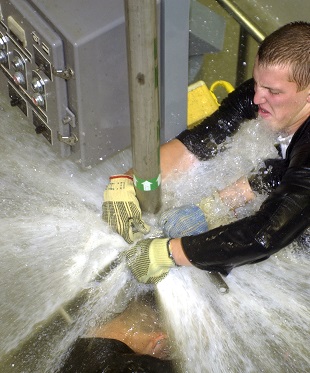
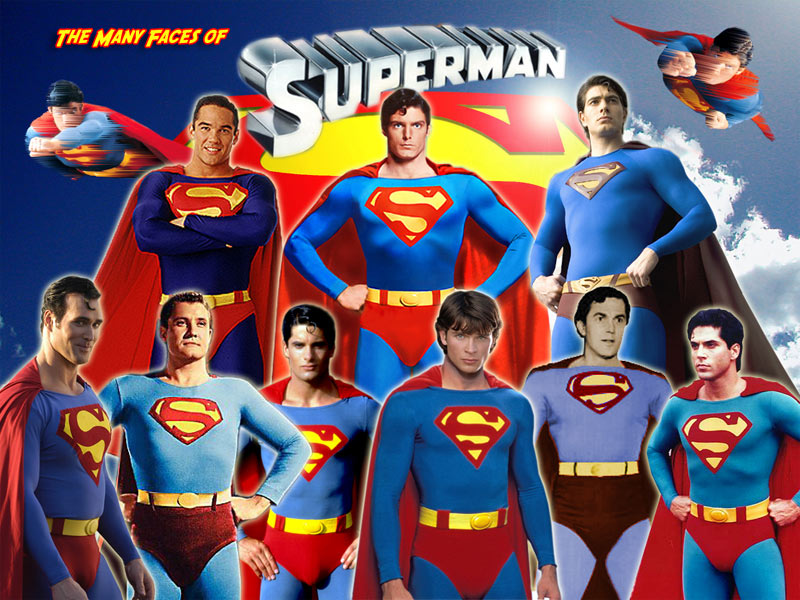
Which is the cold, calculating, utilitarian face?

Which is the cold, calculating, utilitarian face?

In the new Superman film, Supie fails to rescue an important character in distress after the character requests that he allow him to perish.

Lawyer and superhero obsessive James Daily, co-author of “The Law and Superheroes” and the Law and the Multiverse blog, has taken to his keyboard to examine whether the transplanted Kryptonian had a legal duty to rescue the victim anyway.

His conclusion, and the law’s, is no. Daily writes,

“People are sometimes surprised to learn that, by default, there is no obligation under American law to help or rescue other people…Even “Good Samaritan” laws do not create an obligation to act as a Good Samaritan, but instead only encourage such acts of kindness by shielding some would-be rescuers from legal liability if they accidentally end up hurting rather than helping the victim. This “American rule” (not to be confused with the American rule for attorneys’ fees) applies even when a life could be saved with the most minimal of effort. As a result it has been called “morally repugnant” and “revolting to any moral sense,” but it is nonetheless the law in most states….” Continue reading →

Ethics Dunce: Fox News, Serving Nobody And Disgracing Itself

The combatants on Sean Hannity’s Fox News show were flaming right-wing madman Bill Cunningham, a god-awful radio talk-show host who must have photos of Sean in flagrante delicto with Nancy Pelosi or something, and Fox house Obama defender Tamara Holder, who is none too sharp herself.  The topic is thoroughly obscured by the invective and petty bickering. It began as a discussion over whether Attorney General Holder committed perjury before Congress regarding his involvement in the James Rosen warrant (he didn’t, barely).

This video clip is self-indicting, but before you watch it, allow me make a couple of points:

  • This kind of uncivil, unprofessional, shouting, insulting, ranting gutter fight provides no information and no illumination. It is an insult to the audience.
  • If, because of misconduct by guests, such an atrocity breaks out on the air, a responsible network should pull the plug on it, and apologize to viewers.
  • A responsible host and moderator should never, ever permit a segment to deteriorate to the degree.
  • Sean Hannity did, and ought to be held accountable. He failed his duty to viewers and to the network.
  • Hannity was on notice that talk show host Bill Cunningham is an offensive, irresponsible blow-hard. This right-wing racist—anyone who habitually calls President Obama by his middle name is by definition a racist, as well as a jackass—is a serial offender that Hannity has on his show frequently. The man isn’t fair, civil, persuasive, pleasant to listen to, funny, wise or smart.
  • Tamara Holder should have walked off the set, if Hannity wasn’t going to be professional and tell Cunningham to be civil or leave. Instead, she eventually responded in kind—understandable, but wrong.
  • Fox should ban Cunningham from TV. Everyone should ban him, for that matter. The message has to be sent that this kind of conduct isn’t “good television,” it is an abuse of public speech.

Now, the clip:

The Ethics Irony of the Justice Department’s First Amendment Chill

040308-N-0000P-002The AP’s president and chief executive Gary Pruitt told the National Press Club this week that the US government’s secret seizure of Associated Press phone records has had a “chilling effect” on news gathering by the agency and other news organizations “Some longtime trusted sources have become nervous and anxious about talking with us,” he said in his speech. .”In some cases, government employees we once checked in with regularly will no longer speak to us by phone. Others are reluctant to meet in person.” He added that this  chilling effect on newsgathering is not just limited to the Associated Press.

My reaction? Bad…and also good. The unprecedented incursions on the news media by the AP operation and the search warrant executed on Fox reporter James Rosen are, I think, pretty obviously, government action that has the effect, and maybe the intent, of intimidating and muzzling the press, and in the case of Rosen, “criminalizing the act of journalism.” This is all ominous for the country, democracy, freedom and the public, and seriously so.

The fact that these efforts have also discouraged leakers and others who breach laws, regulations, promises and professional ethics to satisfy their personal agendas, however, is nothing to mourn. I have long termed the process whereby an untrustworthy employee illegally or unethically leaks information to the press, which then publishes it with impunity, as information laundering. I don’t think such sources ought to have their identity protected—this is an accommodation for reporters that has nothing to do with ethics at all, just pragmatics. Sources should be on the record, not anonymous, and when they reveal information they had promised not to, they should be willing to accept responsibility, accountability, and penalties. Continue reading →

CNN, Making Us Trivial and Ignorant

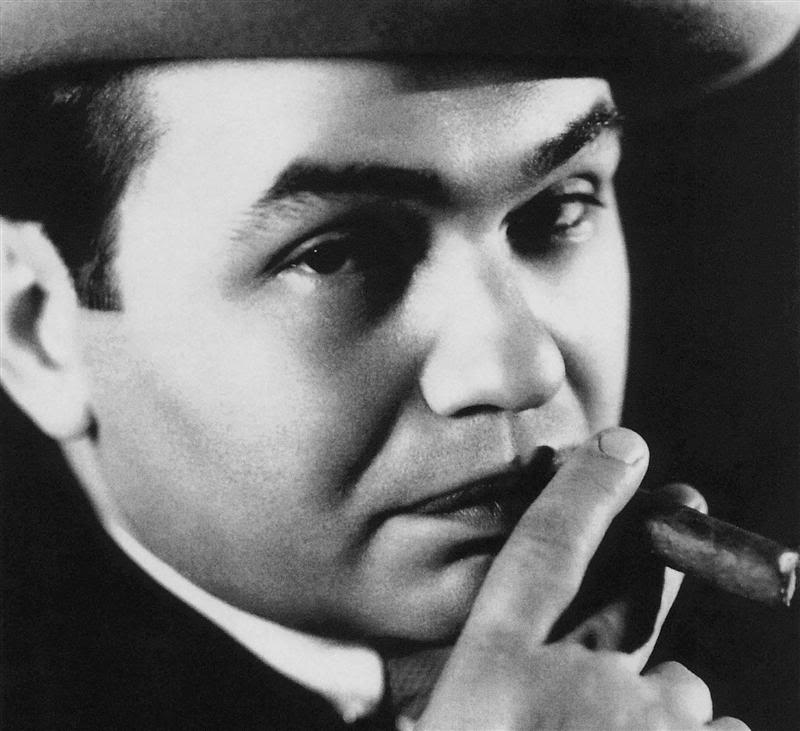
You got shortchanged, Edward G.!

You got shortchanged, Edward G.!

I suppose I should give “New Day,” CNN’s revamped morning news show hosted by Chris Cuomo and Kate Bolduan a honeymoon before I start complaining about it, considering how I negligently blamed them for the conduct of their colleagues before their show as even on the air. Nonetheless, if CNN has decided to trade Soledad O’Brien’s biased coverage of real news for this pair’s avoiding it, I’d (I cannot believe I am writing this ) rather have Soledad back.

You may have noticed that there is a lot going on in this country and around the world. The conflict in Syria is at a critical point, and the U.S. may be preparing to play a greater role. Iran has a new president, Iraq is descending into violence, and the Middle East could still blow up at any moment.There are so many scandals to investigate emanating from D.C (and, uh, Cincinnati…) that the news media isn’t even bothering to keep us abreast on half of them. The stock market took a dive yesterday; illegal immigration is being fought over on Capitol Hill, where there was a big Tea Party rally against the I.R.S. yesterday.

Trust in the government is at low tide, which is more important than the usual polling nonsense, and President Obama’s poll numbers are beginning to look like Bush’s, but according to CNN’s Gloria Borger (WHY do I keep watching CNN?), it’s for a surprising reason. I watched with my jaw falling open as I heard Borger tell her CNN panel a couple of days ago that apparently citizens who had been thus far willing to “give the President the benefit of the doubt” were now—imagine this now!—beginning to associate him with the government they don’t like. That’s right—five years into his Presidency, and Obama is finally beginning to be held accountable for the government he heads and is supposed to be leading. Normally—sanely, reasonably—this calling to account would typically happen during an election, but hey, better late than never. (I believe I could hear Mitt Romney banging his head against the wall now, if the sound of my own head wasn’t so loud.)

Borger elaborated on her theory in her CNN column:

“Now, I know this president doesn’t like some parts of his job. He doesn’t much like schmoozing members of Congress, despite his recent share-a-meal plan with assorted Capitol Hill types. He doesn’t like the LBJ-style strong-arming, either. He doesn’t much like the messy lawmaking process in which personal relationships can often mean the difference between getting what you want and getting nothing at all. And he doesn’t ever like to be pushed. Ever. No-drama Obama, remember? But he does like speeches. He likes writing them, redrafting them, pondering them. He likes giving them, too — because he’s good at it.”

Gloria left out plenty of other things the President doesn’t like doing—managing, oversight, appointing non-cronies, firing incompetents, being straight with the public, making decisions, his job-–but she cut though it all to identify what he needs to do to address all the chaos around him: give a speech. And Borger is a big President Obama booster. She wasn’t trying to be cynical or funny.

BANG…BANG…BANG….

All of this is prelude to my objection to what the new kids on the CNN block decided was the top news of the day, worthy of more than ten minutes of exclusive coverage, remote oversees updates, two special live reports, a studio interview, and even a phone interview with Larry King himself. And what was this riveting news story that Americans just had to know about while they were having their coffee and chewing their Pop Tarts into pistols?

James Gandolfini died. Continue reading →
The Deadliest Rationalization Of All?

woodys excuse

All rationalizations can be deadly and have been. History and human nature teach us, however, that “Woody’s Excuse,” #22 on the Ethics Alarms Rationalization list, can hold its own with any of them when it comes to tallying up pain, ruined lives, and death. This is “The heart wants what the heart wants,” the comedian, actor and acclaimed director’s personal pass for his seducing and marrying a girl who was, in essence, his adopted daughter.

Today the Washington Post carries the grim final act of a story so terrible that it crosses into the realm of black humor. A veteran Labor Department lawyer, married, with an impeccable record, was found dead in his cell after being arrested and charged with violently attacking a co-worker with whom he had become infatuated. The story is full of weird U-turns of phrase; for example, the judge called the lawyer, charged last week with first-degree burglary while armed and third-degree sexual assault relating to the June 5 attack, a “wonderful person in most respects”—-that is, “most respects” beside the implications of his breaking into a woman’s home, punching her in the face (or spraying her with mace,) then trying to incapacitate  her with a stun gun, handcuffing her hands behind her back and knocking her to the floor. The victim was so badly injured that a plate had to be surgically implanted in her face.

Other than that, Judge, you’re right: he was a hell of a guy. Continue reading →

Emmy Ethics: Honoring Elmo, Or Honoring A Child Molester?

kevin-clash1

I am assuming, based on the fact that this story was featured on the conservative muckraking website Brietbart, that some people think it is inappropriate to award three Daytime Emmys for children’s programming to Kevin Clash, the Muppets puppeteer whose career as fuzzy red monster Elmo on Sesame Street ended with a series of child molestation accusations.

If I am right, these people are dead wrong. Clash is an artist, and a talented one. Whether or not the allegations of his having illicit contact with under-aged boys are true, and none have been tested in court, his skill in manipulating and voicing the cutest and most vulnerable of the Muppets is beyond debate. The Emmy has never been nor claimed to be a character award. An Emmy recognizes excellence in television, in this case children’s programming, and it doesn’t make a smidgeon of difference if an artist is a child molester, a bank robber, a cannibal, a Nazi or a Billy Ray Cyrus fan—if he or she delivered the best artistic product, the honor is deserved.

___________________________________

Spark, Facts and Graphic: Breitbart

Inspector Generals, Intimidation, Integrity and The IRS Scandal

IG J. Russell George. NOW I get it!

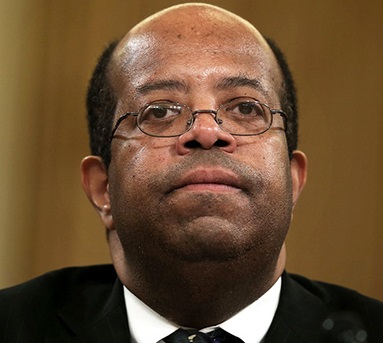
Treasury Dept. IG  J. Russell George. NOW I get it!

I certainly feel ignorant and foolish about this. Silly me: I always thought that inspector generals, those charged with flagging and investigating incompetence, corruption and wrongdoing in our government, were independent and objective, and beyond political influence from above. Why did I think that? I thought that because without such independence, what we may be getting in these supposedly honest and thorough IG reports is not the whole truth and nothing but the truth, but rather what the particular IG thinks he or she can get away with and still keep the job. Was I the only one who didn’t know this?

Thus the popular shrugging talking point by Obama Administration defenders on the partisan payroll (Jay Carney, White House staff, enabling members of Congress, Axelplouffe, etc.) and off of it (the news media) that the IRS inspector general J. Russell George “investigated” and found no political influence in the decision to target and impede conservative organizations is even more dishonest that I originally thought. That oft-repeated statement was always misleading spin, because George, by his own admission, only performed an audit, which is supposed to be the prelude to a full investigation. Now, however, a former IG has explained that inspector generals who displease the Obama high command risk losing their jobs. (Presumably this has always been a peril of the IG job, so I am not suggesting that this unacceptable state of affairs is unique to this administration.)

In his testimony before Congress, George said that he never was able to determine who, if anyone, directed the ideologically-based scrutiny, because no one would tell him. Former IG Gerald Walpin writes, Continue reading →

Ethics Quiz: Grade The Misbehaving Celebrities!

Our subjects:

Oh, Bill...you're such a scream!

Oh, Bill…you’re such a scream!

Bill Maher, bad boy comic, political satirist and host of HBO’s “Real Time”

Maher’s fans

Ron Futrelle, former sportscaster and Las Vegas media personality

Sarah Palin, former governor, VP candidate, Fox commentator and conservative icon

All clashed over a joke made by Maher during a stand-up gig, and your challenge is to decide who gets the lowest ethics grade. Here’s what happened: Futrelle was in the audience for Maher’s show in  Las Vegas. Maher made a joke about Palin’s son, Trig, who has Down Syndrome. According to Futrelle, the joke  upset him, as well as the fact that the audience appeared to enjoy Maher’s using Palin’s innocent and mentally challenged child as a comedy topic, and laughed heartily. Futrelle began heckling Maher, eventually prompting an annoyed audience member to remind him that he was not the attraction, and suggest that he shut his gob. Futrelle persisted, and when confronted by security, left.

Through Futrelle’s blog’s account of his experience, Brietbart and the miracle of social media, Mama Grizzly Palin learned that her young son had been (again) converted into joke-fodder, and tweeted her reaction to Maher:

“Hey bully, on behalf of all kids whom you hatefully mock in order to make yourself feel big, I hope one flattens your lily white wimpy a#*.”

Our grading scale:

A  Exemplary ethical conduct.

B  Ethical and appropriate conduct that could have been better executed.

C  Acceptable conduct according to reasonable social norms

D Unethical conduct

F  Despicable conduct

Your Ethics Alarms Ethics Quiz is, therefore, to accept this challenge:

Give Maher, Maher’s audience, Futrelle and Palin their ethics grades. Continue reading →

Ethics Heroes: Criminal Defense Lawyers Katie Kizer And Amanda Graham

It's hard to picture Perry in a skirt.

It’s hard to picture Perry in a skirt.

Setting out to change a culture is a daunting challenge, and most of us, given the opportunity to succeed without attempting such a risky task, opt for an easier path. Yet whether it is Jackie Robinson, Danica Patrick, Rosa Parks or Jason Collins, cultures need courageous reformers to keep evolving into more ethical horizons, and fortunately, the heroes eventually come along.

One culture that has been remarkably resistant to change is the practice of law, and the criminal defense bar in particular. Criminal defense is still  overwhelmingly a man’s realm, and a self-perpetuating one. The classic image of the defender of innocent (and guilty) accused criminals has been masculine for centuries, and as a result, few defendants needing a champion are likely to entrust their freedom and perhaps their lives to a defense attorney who looks like one of Clarence Darrow’s young mistresses, Perry Mason’s comely secretary Della Street, or Ann Rutledge. They want Clarence, Perry, or Abe: why take a chance?  Obstructed by such entrenched stereotypes and the need to pay off massive student loans, capable female law grads reasonably choose other legal fields, like family law, where female stereotypes work to their advantage, and avoid criminal law entirely. Consequently, no high-profile criminal trial lawyers with two x chromosomes break through the public’s consciousness, and the bias, the stereotype, and the cycle continues. Continue reading →

Ethics and “Casey At The Bat”

casey-at-the-bat-1888-granger

Today is the 125th anniversary of the publication of “Casey at the Bat,” arguably the most popular and famous of American poems, the creation of humorist Ernest L. Thayer in 1888.

The poem carries many  lessons relevant to ethics and life within its tale of the hometown hero who fails spectacularly just when heroics are most needed and anticipated, such as…

  • Don’t promise what you cannot be sure of delivering.
  • Good faith failure isn’t unethical, a sin or a crime, but it still carries with it the need for someone to accept responsibility for it.
  • The focus of disaster is always on the last individual who might have prevented it, but that is neither fair nor logical. The Mudville Nine lost the game, not Casey.
  • Expecting miracles, last-minute rescues, heroic intervention and infallible rescuers is foolish and irresponsible.
  • Respect your adversaries, for your own sake as well as theirs.
  • “Pride goeth before a fall.”

Today, however, I am struck by how neatly the poem reminds us that in baseball there is no spin, no rock to hide under and no Fifth Amendment to claim. When a player fails, or makes a mistake, or misbehaves, it is usually all out on the field, watched in person by thousands, seen on TV by millions, and recorded forever. There is usually no way to deny or hide responsibility, and indeed part of the professionalism of baseball is accepting that, facing the media and the public, and saying, “That was on me. I failed. I’ll do better next time.”

Most of the time, that’s all the crowd asks after failure. Honesty and accountability.

As long as Casey doesn’t keep striking out, that is.

Here’s the poem, recited by the now-forgotten Bob Hope sidekick Jerry Colonna, he of the rolling eyes:

________________________________________

Spark: Craig Calcaterra

Graphic: Fine Art America