Proposing “The Bachmann-Plouffe Rule”

My new rule could stop this from happening to me in the very near future, and perhaps you as well!

I am ready to bestow my ever-lasting loyalty and admiration, not to mention a lifetime Ethics Hero award and maybe even a monthly stipend upon the first broadcast journalist who pledges to employ henceforward what I will call “The Bachmann-Plouffe Rule.”  ABC’s George Stephanopoulos emphatically did NOT employ the rule this morning in his back-to-back interviews of White House advisor David Plouffe and Republican Rep. Michele Bachmann, inspiring me 1) to name the rule and 2) throw my newspaper at the TV screen. Twice.

I don’t have the transcript, but I can fairly describe the exchanges. Plouffe was routinely mouthing Obama re-election talking points, when Stephanopoulos pressed him on the issue of gay marriage, specifically regarding the fact that the Democrats are talking about having a national campaign platform plank that explicitly endorses it, while the President has notably declined to give a clear endorsement of same-sex marriage. George asked why Obama doesn’t just declare that he supports it, and, if he does not do so, whether his ambivalence will place him at odds with his party’s position.

Plouffe didn’t answer the question. Continue reading

Ethics Dunces: 29 Wisconsin Judges

Yes the gavel's fuzzy, but then so is the judgment of the person on the other end of it.

There is something seriously wrong with the ethical culture of the judiciary in Wisconsin. I suppose this was already obvious, as it is definitely a bad sign when two members of the state Supreme Court accused each other of physical attacks. Nonetheless, the news that 29 of Wisconsin’s sitting judges placed their names on the recall petition for Gov. Scott Walker would seem to settle any remaining doubts.

Is doing this a strict, slam-dunk, violation of the Wisconsin Code of Judicial conduct? No, probably not. It is in a gray area of the Code. Judicial ethics codes prohibit judges from becoming involved in political contests, but a recall petition a judge signs as a private individual (Personally and professionally, I don’t think it is possible for a judge to sign a petition as “a private individual”) don’t fit neatly into the definition of political activity. Other states, such as New York and New Mexico, have allowed judges to sign nominating petitions for candidates on the theory that it is the equivalent of voting, the right to which judges do not give up by ascending the bench.

Still, the judicial codes don’t exactly give a ringing endorsement to this kind of activity, and I would say the better interpretation is that the ethical rules preclude it. The ABA’s Model Judicial Code, for example, says… Continue reading

Comment of the Day: Time To Retire Editorial Cartoons—With Gratitude

Cartoonist and frequent combatant on Ethics Alarms Barry Deutsch did not disappoint—I was counting on a strong reply from him—in commenting on my post about political cartoonists. And I think he has me convinced. I think what I should have suggested, rather than advocating sending newspaper political cartoonists to the trash bin of history (soon to be followed by newspapers themselves), is that editors exercise some discretion over when an editorial cartoon, even by a respected cartoonist, just doesn’t meet editorial standards.

Here is Barry’s persuasive and educational Comment of the Day on the post Time To Retire Editorial Cartoons—With Gratitude:

“Oh, how could I possibly resist this thread?

“1) At his best, Tom Toles is a wonderful cartoonist, elegant and with an incredibly distinctive style. But he hasn’t been at his best for years. The particular cartoon you’re talking about — which can be seen here, if anyone’s curious — is an embarrassment.

“The problem with that Toles cartoon isn’t that it takes a side, or that it paints with a broad brush; many good cartoons do both those things. The problem is, it’s painfully stupid.

“2) There are good political cartoonists doing interesting work, but they’re mostly not found in mainstream newspapers.

“3) Even the best political cartoonists tend to produce more mediocre than great cartoons.

“4) It’s a very, very rare reader who can recognize the artistic merit of a political cartoon that they strongly disagree with politically.

“5) The economic base has fallen out from under political cartooning; every year, fewer and fewer newspapers support a staff cartoonist, and those that remain are seeing their incomes and outlets shrinking. And no one’s yet found a business model for political cartooning to thrive on the web.

“As a result, the most talented new cartoonists usually aren’t going into political cartooning, because they want to be able to eat and pay rent.

“6) Some of the most interesting political cartoonists have gone so far away from traditional political cartooning that no one even recognizes what they’re doing as political cartooning. See, for instance, Joe Sacco, who does journalism in comics form; his second book on Palestine, “Footnotes In Gaza,” is one of the best books about life in Gaza anyone’s done, in prose or comics.

Greg Smith’s Urgent Ethics Alarm

“Today is my last day at Goldman Sachs. After almost 12 years at the firm — first as a summer intern while at Stanford, then in New York for 10 years, and now in London — I believe I have worked here long enough to understand the trajectory of its culture, its people and its identity. And I can honestly say that the environment now is as toxic and destructive as I have ever seen it”

This, says Greg Smith, is how the leadership of Goldman Sachs sees its clients.

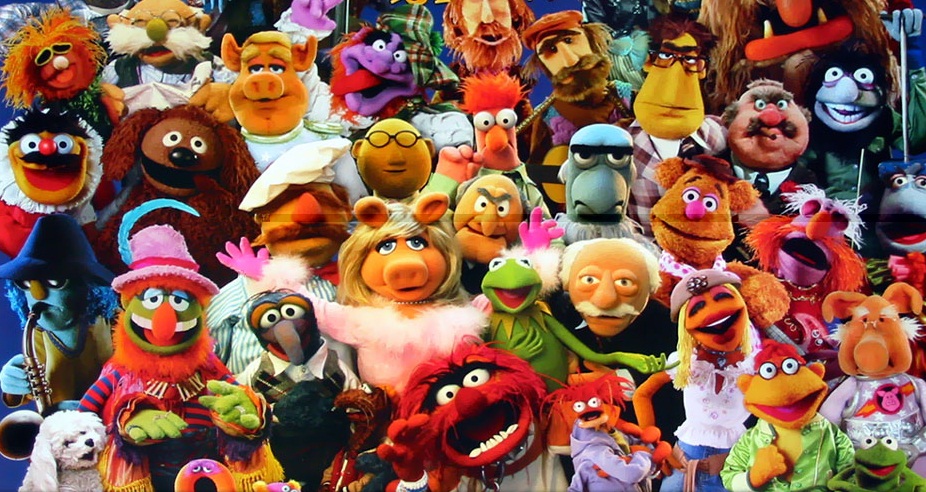
With that, Goldman Sach’s executive Greg Smith began his remarkable op-ed in the New York Times, sending his former employers into crisis mode, panicking investors, and setting the financial, political and journalistic worlds buzzing. Obviously, it was an exposé about ethics as much as anything else.  Smith described a corporation-wide breach of trust with clients, a culture in which leadership openly derided those the company pledged to serve as “muppets,” and apparently, sheep to be sheared:

“It makes me ill how callously people talk about ripping their clients off… I don’t know of any illegal behavior, but will people push the envelope and pitch lucrative and complicated products to clients even if they are not the simplest investments or the ones most directly aligned with the client’s goals? Absolutely. Every day, in fact.”

Smith cites a breakdown in leadership, resulting in a corruption of values: Continue reading

The Process Can Be Ugly, And Sure Was This Time, But This Is How Cultural Ethics Standards Change

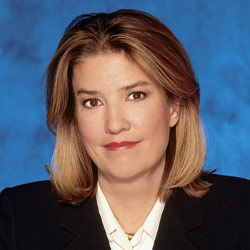
Greta was the tipping point.

The Rush Limbaugh-Sandra Fluke Ethics Train Wreck is over at last, but unlike with many such debacles, something positive occurred. I believe that an emphatic cultural standard was established that calling a woman—any woman, famous or not, liberal or conservative—a derogatory term designed purely to denigrate her by denigrating her gender will not be considered acceptable in political, quasi-political or arguably-political commentary henceforward. If such rhetoric occurs in a comic or entertainment context, no politician or elected official can appear to endorse the individual who utters the offensive words.

I’m not arguing right now whether this is a good or a bad development, but merely that it happened, and that it is a real change. For this to happen, a conservative radio talk show host had to use the terms “slut’ and “prostitute” to make the botched satirical point that a feminist law student activist who argued that free contraceptives were a woman’s right was the equivalent of women who wanted to be “paid for sex.” If pundits and bloggers had merely declared this statement uncivil and cruel, nothing more would have happened, and the incident would have been quickly forgotten. But sensing political points to be scored in an election year, and with the added incentive of being handed what was seen as powerful ammunition to attempt a frontal attack against a detested partisan critic, Democrats,  progressives, feminists, activists, Obama strategists and left-biased journalists decided to cast the Limbaugh’s poor judgment in extreme terms. Continue reading

Ethics Hero Emeritus: Rushworth Kidder (1944-2012)

Not everyone named Rush is an uncivil blow-hard. This Rush, Rushworth Kidder, was a dedicated ethicist, teacher, author and philanthropist who was one of the pioneers in the field of professional ethics. His trademark phrase was “moral courage,” but it was more than a motto: Rush thought about it, taught it, and lived it.

He founded his Institute for Global Ethics in 1990, just as the idea was beginning to take hold that organizational ethics was something that needed to be formalized and made part of the culture in companies and professional communities, and unlike many who were to enter the field as it grew, Kidder never sold out. He wasn’t in the field of ethics to make a buck. He believed. Continue reading

“The Good Wife” Ethics Addendum: Why Misrepresenting the Legal Profession’s Standards Does Real Harm

Sure, it was a comedy, but how many people believe that Jim Carrey's compulsively lying lawyer was not that far from the truth?

A comment from reader Penn on my post about “The Good Wife’s” recent misrepresentation of legal ethics standards got me thinking, and what it got me thinking was that I was too easy on the show.

Penn asked why I waste my time watching programs that raise my blood pressure, and there are two answers. The first is what I wrote back: it’s not a bad show; in the past it has been a very good one, even from the legal ethics perspective. I have used several scenarios from episodes in seminars.

The second answer, which I didn’t mention in my response to Penn, is the more important one, however. Good show or not, millions of Americans get their information about the legal profession from the portrayal of lawyers and law on TV and in movies. From these fictional sources, they think they know that most lawyers are liars, that they allow their clients to lie, that they put witnesses on the stand who they know will lie under oath. The public thinks that lawyers abuse the law, don’t earn their fees, don’t give a damn about their clients (unless they are sleeping with them), switch sides routinely and confuse juries to release serial killers on more victims. Continue reading

“The Good Wife,” Flunking Legal Ethics 101

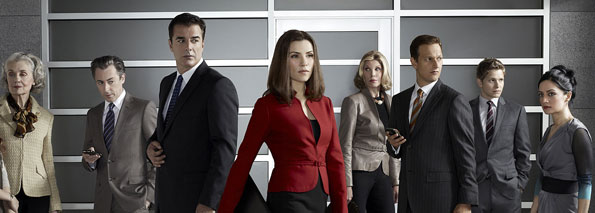
CBS’s “The Good Wife” remains ensconced in my Hall of Fame for TV lawyer dramas, but last night the series committed the kind of “what the hell?” blatant legal ethics gaffe that causes many lawyers to avoid such shows.

The situation is one that may be dramatic but hardly unusual: the client who lies on the witness stand. Unlike a lot of the ethical conundrums that are concocted in the fevered brains of TV scriptwriters (“Your client leaves a human head in your office—what do you do?”—“The Practice”), this is one that is thoroughly explored in law school and one which every competent litigator has to be prepared to face, because 1) it happens and 2) the legal ethics rules about how a lawyer is supposed to handle it have bounced all over the place, like William Shatner. Continue reading

A Secret Service Betrayal

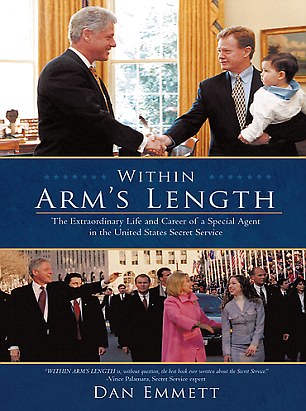
A despicable former Secret Service agent named Dan Emmett has self-published “Within Arm’s Length,” a tell-all  book about his work protecting the Clintons.  I’m not going to repeat any of his stories, and nobody should read his book either. This kind of thing is another fever on the way to the complete death of trust and professionalism.

Emmett’s job was to guard the First Family, and as part of his job he saw them all in private and unguarded moments. The Clintons had to trust that his sole objective was to ensure their safety, not to gather juicy material for a book, and they should not have had to worry about whether every stray remark or imagined slight would later find its way to the internet. “Within Arm’s Length” is nothing less than betrayal, and in my view, it falls just short of treason, and perhaps not short at all. Undermining the relationship between the Secret Service and the President of the United States, which this book does, threatens the safety of future Presidents. For agents to do their jobs, they must be trusted to the extent that nothing is withheld from them out of fear that they will disclose it. Emmett proves that such unquestionable trust is unwarranted, and in this sad era where betrayal is rewarded or shrugged off as predictable, probably impossible. Continue reading

Actor Ethics: Welcome to Colombia!

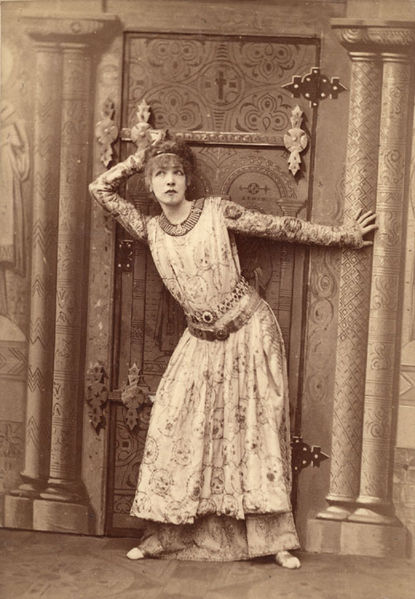
Yes, Sarah Bernhardt was probably unethical too. Actors!

I just blacklisted an actor, at least as far as my theater company is concerned, and I feel badly about it, because I don’t like banishing artists even when they deserve it. This individual did deserve it, however.

I held auditions a couple of months ago for a very difficult and complex production requiring special talents and a large cast. The turn-out was excellent, and the quality of talent was superb, with the actors obviously excited about the project. Since the script needs to be tailored to individual performers, the fear of an actor dropping out after being cast was especially strong (the maxim in the theater community is “cast early, cast often…”), so I took the unusual step of asking every auditioner who had a good chance of being cast to be honest about their commitment to the show. “If you want to be considered for this project,” I said, “I need to have your assurance that you are serious about it and will not tell me, after we have decided to cast you, that you have changed your mind. The show is like a big jigsaw puzzle, and casting you will affect whether we cast other actors, not just in your role but in roles that interact with yours. And I definitely do not want to cast someone who is going to turn around in a week or a month and say, ‘Sorry, I got a better offer.’ This is a commitment, and if we are committing to you, I need to know that you are committing to us.”

When the offers went out, a few actors nonetheless refused. One had just learned that she needed to seek more lucrative employment because her husband had been laid off; another had union problems. Over the next several months, there was another major loss, as an actress whom I had cast even before auditions—right before the delivery of her first child—told me that parenthood was more involving in reality than she had predicted when she committed to jumping into a major role so soon. I had thought this might happen, and, frankly, now felt that she was making the right decision.  I told her: “As a director, I was happy to let you be irresponsible for the benefit of my show, but as a parent, I’m glad your priorities are straight.”

The other day, however, one of the actors who had gladly accepted a role sent our producer a terse e-mail saying:

“Unfortunately, I can no longer do the show.  Thank you so much for all your help with everything; I’m very sorry for the inconvenience.” Continue reading