The Unfair and Dishonest Regulation…of Interior Decorators?

Deadly in the hands of an amateur

I stumbled on this as my wife and I investigated the possibility of her setting up a business as an interior design consultant. 22 States and the District of  Columbia require a license to be an interior decorator, which technically means, as Reason so pointedly puts it, that moving a throw pillow could theoretically get you jailed or fined.

How can this be? All professional licensing creates a bar to membership, making such licenses targets of Libertarians and other critics. But at least most professions requiring a license have a plausible argument for the certification based on health and the protection of the public welfare. Lawyers, doctors, dentists, builders, electricians…that makes sense. Real estate brokers, teachers, personal trainers…er, okay, I guess so. But interior decorators? Isn’t this just an example of nakedly restricting competition, and using the sordid process of buying state legislators to do it? What other justification could there be? Continue reading
Ethics Quote of the Week: Washington Post Columnist Michael Gerson

“In determining who is a “major” candidate for president, let’s begin here. Those who support the legalization of heroin while mocking addicts are marginal. It is difficult to be a first-tier candidate while holding second-rate values.”

—-Washington Post columnist and former Bush advisor Michael Gerson, pronouncing presidential candidate Rep. Ron Paul’s Libertarian endorsement of drug legalization ethically unacceptable.

Gerson’s deconstruction of the all-too-common and increasingly ominous calls for legalizing addictive drugs nicely captures the trio of ethical flaws of the advocacy: it denies the crucial and legitimate government role defining responsible conduct for society, it embraces the myth that recreational drug use “does no harm,” and it is arrogant and selfish, condemning the poor and reckless to problems that their fragile resources cope with, in order to bestow a dubious “freedom” that the drug advocates do not need. Continue reading

What Do you Call A Newspaper That Defends Outrageous Journalistic Practices? How About “Di Tzeitung”?

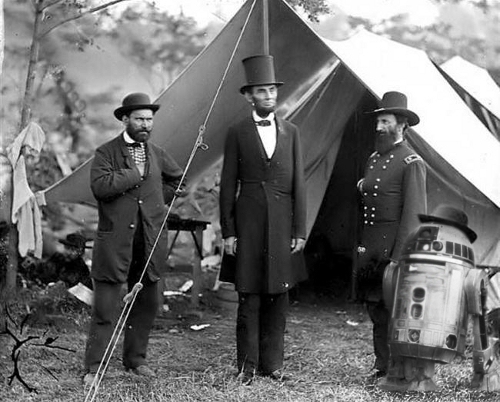
If Di Tzeitung had covered the Civil War

If I could pronounce it, the Brooklyn-based Hasidic newspaper Di Tzeitung would be useful shorthand  for “shamelessly using rationalizations to defend indefensible conduct.”

Last week, the newspaper ran the now-familiar photo of President Obama, Secretary of State Hillary Clinton, and others in the White House Situation Room, except that in Di Tzeitung’s version, Clinton  and the only other woman present, Director for Counter-terrorism Audrey Tomason, had magically vanished. Di Tzeitung had airbrushed them out, Politburo-style.

Of course, publishing the photo of a historic news event and altering it to convey misleading or false information (in this case, “Hillary wasn’t there”) is a substantial and wide-ranging violation of core journalism ethics, a breach of the reader’s trust, unfair, dishonest, misleading, incompetent and disrespectful. The altered photo was alternately condemned and mocked all over the media and blogosphere. Yet Di Tzeitung is largely unapologetic, and made it clear that it would do the same thing again if the opportunity arose. In a prepared statement, the editors explained why they did nothing “wrong”…well, almost nothing…challenging the Olympic record for rationalization by a news organization along the way: Continue reading

The Jaundiced Eye of Noam Chomsky

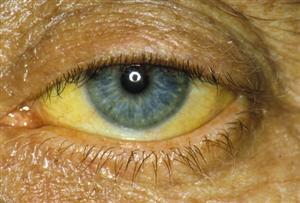
I’ve been enduring, teeth gritted, the America-hating propaganda of Noam Chomsky since my college days. He is a brilliant linguistics professor who has credibility as a social critic only because his world view—briefly put, that the United States is evil, and anything that indicates otherwise is the result of a conspiracy–has been so supportive of and nurturing to the extreme Left. It is hard to quantify how much harm he has done to this nation or how many potentially productive minds, foreign and domestic, that he has warped with his bile, but I am sure it is substantial on both counts.

We are fortunate, I guess, to have his assessment of Osama Bin Laden’s death, recently published and available for reading here. The piece is res ipsa loquitur that the man is so consumed with unreasoning hatred for his country that he cannot process the truth or think straight, but I know that plenty of Chomsky followers will be cheering. Thus I am grateful that Christopher Hitchens has authored an admirable take-down of the professor, here.

Legal Ethics Train Wreck on “The Good Wife”

Oh, Alicia, Alicia...what have they done to you?

The CBS legal drama “The Good Wife” continues to show the seamy side of big firm legal practice, with heroine Alicia Florrick’s firm, Lockhart, Gardner and Bond, its adversaries, and even Good Alicia herself violating legal ethics rules with abandon, and at an accelerating rate, based on recent episodes. There is nothing wrong with this as entertainment, as long as the Rules themselves are not being misrepresented (they aren’t), the misconduct isn’t being presented as ethical (it isn’t, though it is sometimes hard to tell), and viewers don’t get the idea that this is how most law firms behave. Unfortunately, like most legal shows, “The Good Wife” fails in this important realm. I work with many large law firms, and they are all very aware on the ethical lines, bold or fuzzy, that they must not cross, and take their obligations seriously.

The most recent episode of “The Good Wife,” entitled “Getting Off” included a full-fledged ethics train wreck sparked by the firm’s habitually unethical adversary, the fecund Patti Nyholm. In the middle of representing the defendant hospital in a lawsuit brought by a Lockhart, Gardner and Bond, Nyholm is fired by her firm and removed from the case. With a twinkle in her eye, she approaches none other than the Lockhart firm to represent her in a multi-million dollar lawsuit against her former firm for discrimination and wrongful termination, on the theory that it fired her because she was pregnant. Continue reading

Ethics Hero Emeritus: Marlene Dietrich (1901-1992)

The great Marlene Dietrich, Ethics Hero

It was on this date in 1992 that the magnificent Marlene Dietrich died, in her sleep, in her Paris apartment at age of 91. She had hidden her face from the world since she had stopped performing over a decade before, saying that the public should remember her as she had been. Sadly, Dietrich is one of those former icons of Hollywood whom the public is slowly failing to remember anything about at all; most are more familiar with Madeleine Kahn’s send-up of her in the Western spoof “Blazing Saddles” than they are with Marlene herself. That is wrong, for she deserves better. Not only was Marlene Dietrich a unique performer and important cultural figure, she was also an Ethics Hero.

She was a rising German stage and screen actress when director Josef von Sternberg cast her as Lola-Lola, the beautiful, cynical leading character in “Der blaue Engel,” (The Blue Angel), Germany’s first talking film. The movie made Dietrich a star. Von Sternberg took her with him when Hollywood beckoned and signed her with Paramount Pictures. There Dietrich built her image and legend by perfecting her femme fatale film persona in a series of classic films directed by her mentor: “Morocco” (1930), “Dishonored” (1931), “Shanghai Express” (1932), “Blonde Venus” (1932), “The Scarlet Empress” (1934), and “The Devil Is a Woman” (1935).

Meanwhile, she had already begun fighting Hitler’s regime. Continue reading

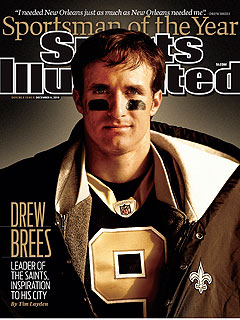
Ethics Hero: New Orleans Saints QB Drew Brees

Drew Brees is one professional athlete—yes, there are others—who sees the riches he acquires in his high-paid trade as a star NFL quarterback as tools to achieve good ends. He has established an impressive foundation to assist children in New Orleans, and now he is using his wealth to keep his team together and get them ready for the coming season.

As NFL training camps remain in limbo while the courts decide the legality of the owners’ lock-out, Brees’s Saints are training anyway, because he is picking up the bill, paying Tulane staff to help out during practices and flying in his personal trainer to oversee the team’s conditioning program, even arranging for the Tulane Institute of Sports Medicine to provide insurance for players who need it. Brees has also arranged for lodging for some of the younger players on the team.

Quarterbacks are always team leaders in name and reputation, but Drew Brees is exhibiting exemplary leadership and character by acknowledging his special resources and using them for the benefit of his colleagues during a crisis. Wealth and influence can accomplish wonderful things if the individual who is wealthy and influential has the ethical character to make it so. Drew Brees is such an individual, and a magnificent example of leadership as well.

____________________________

Note: Ethics Bob posted on Drees right about the same time I did. You can read his comments here.

Now THAT’s Hypocrisy: The Prosecutor and the Teenager

As part of Ethics Alarms’ continuing effort to clear up the rampant confusion among the American public and media regarding what constitutes hypocrisy, I offer this illustrative tale.

Former Rock Island County, Illinois State’s Attorney Jeff Terronez has already pleaded guilty to providing alcohol to a minor.  As part of his plea deal, which allowed him to avoid more serious charges, he resigned his position as State’s Attorney, forfeited his pension and agreed to never seek public office again. Now it appears that the circumstances of his misconduct may result in a mistrial in the case in which  Terronez first encountered his 15-year-old victim.

You see, the young woman to whom Terronez provided alcohol was the victim and complaining witness in a previous case Terronez prosecuted, in which high school teacher Jason Van Houtte was accused of inappropriate contact with a 15 years old female student. Terronez saw to it that Van Houtte was convicted and sentenced to ten years in prison. Meanwhile, he met with Van Houtte’s comely prey and plied her with liquor socially…at least.

That’s right: the prosecutor began an “inappropriate relationship” with the under-aged complaining witness in a case he was simultaneously prosecuting involving a teacher’s “inappropriate relationship” with the same girl!

Now that’s hypocrisy.

Comment of the Day: “The Ethicists, Backing Judge Walker and Gay Marriage, At An Unacceptable Price”

The motion to vacate Judge Walker’s ruling on Proposition 8 has been filed, you can read it here. Since the original post, I have detected some cracks in the formerly near-united front of legal ethicists and journalists deriding Walker’s critics. Some of them are finally, grudgingly, admitting that the Judge might not have handled his potential conflict so well after all, and that the motion is not a frivolous, anti-gay outrage as they originally labelled it.  The most rickety of the rationalizations put forth on Walker’s behalf, advanced by some his most respected defenders, is that he had no obligation to reveal his own sexual orientation by disclosing his domestic arrangement because of its intimate and private nature. Yet the judge voluntarily disclosed it after his decision was in the books, raising a rebuttable presumption that his original silence was to avoid suggestions of conflict, not out of a desire for privacy.

First time commenter Jada adds her Comment of the Day to the discussion: Continue reading

Ethics Heroes: World Journalists

Chris Hondros (left) and colleagues

I know Ethics Alarms is critical of the media and journalists for breaches of objectivity and fair reporting. Nevertheless, there are few professions more inherently heroic than journalism, especially when it requires on-the-scene reportage under dangerous conditions. This was demonstrated, once again, by the recent death of Chris Hondros, a distinguished photo-journalist who was killed last week in Libya.

May 3 is World Journalist Day, and an excellent time to honor the tough and dedicated professionals who bring us important and hard-to acquire news, often risking their lives in the process. To that end, there is no better on-line destination than the website of New York-based non-profit Committee to Protect Journalists, dedicated to making it possible for journalists to do their jobs without fear of reprisals.  There you can learn about the perils faced by media personnel all over the globe, and read about the journalists killed since January 2010 while trying to let us know what is going on in the world.