A Particularly Dangerous Ethics Dunce Display: State’s Attorney Marilyn Mosby’s Unethical Statement Regarding Charges In The Death Of Freddie Gray

State’s Attorney Marilyn Mosby announced today that the six Baltimore police officers involved in the arrest and subsequent death of Freddie Gray  have been charged with criminal charges  second-degree murder, manslaughter, second-degree assault, vehicular manslaughter , and misconduct in office. I have no comment on that: I haven’t seen the evidence. I will assume the charges are justified base on what evidence there is.

Nonetheless, Mosby’s announcement and related statements from  the steps of Baltimore’s War Memorial Building were unethical, and indeed  constituted a professional ethics breach:

  • Mosby said she told Gray’s family that “no one is above the law and I would pursue justice upon their behalf.” Unethical. Her client isn’t the family. Her client is the state. If the evidence appears too weak to get a conviction based on any new revelations, her duty to her client, which only requires justice, not justice for any party, would be to drop the case. Telling the family that she is working “on their behalf” is either a lie, or, if true, unethical. She is not their lawyer or the victim’s lawyer.
  • “I heard your call for ‘no justice, no peace,'” she said. “Your peace is sincerely needed as I work to deliver justice on behalf of this young man.”

Ugh. Again the “on behalf of” misstatement. Worse, though, is “I heard your call for ‘no justice, no peace.” What are we to take from this statement, other than the disgraceful admission that the indictment is in response to mob violence and threats of more? She may not say that. By saying it, she has undermined the rule of law. Prosecutors must not”hear” demands that a citizen be prosecuted, or not prosecuted. They are ethically obligated to ignore them, and do what the evidence dictates.

The demonstrators obviously got her meaning. Desmond Taylor, 29, shouted to the crowd,  “This day means that your actions bring consequences in Baltimore City.”

Imagine what else riots and arson might bring! Continue reading

Death Throes Of The Death Penalty: Dumb Expert, Dumb Advocates, Dumb Debate

“Next!”

As I recently concluded, the death penalty is beyond saving, not because it can’t be defended ethically and morally, but because the issues are tangled beyond repair.

The controversy over the legality of the so-called drug cocktails that somehow became our execution method of choice is a perfect example. The battles over capital punishment trapped policy-makers into this kinder, gentler, ridiculously complicated method of execution that has suffered snafus ranging from unavailable drugs to ugly extended deaths. The problem is the floating definition of “cruel and unusual punishment,” prohibited by the Constitution, but almost entirely subjective. Many judges think killing a killer is itself cruel by definition, and the more reluctant Western Europe becomes to execute the worst of the worst, the easier it is to make the argument that the death penalty is also unusual.

I don’t get it. I never have. India once executed condemned criminals by having the subject place his head on a stump under the raised foot of  trained elephant, which on a command would smash the head like a grape. Quick, painless–messy!—but virtually fool-proof. A pile-driver would be an acceptable equivalent.  Ah, but ick! In this stupid, stupid, intellectually dishonest debate, ick always equals “cruel and unusual,” because to opponents of the death penalty, killing people, even horrible, dangerous people, is inherently icky.

(Oddly, ripping unborn babies out of the womb is not, but I digress.)

I’ve admitted it, and I will again. (This lost Ethics Alarms Luke G., one of its best commenters the last time.*) It is obviously wrong to intentionally prolong an execution or deliberately cause pain, but if the occasional execution is botched and the condemned suffers, that should be cause for great rending of garments, nor should it be used to discredit capital punishment. As I wrote here about Clayton Lockett’s execution in Oklahoma

“There was no question of Lockett’s guilt, and his crime was inhuman. Such wanton cruelty and disregard for innocent life warrants society’s most emphatic rebuke, and the most emphatic rebuke is death. It is essential that any healthy society make it clear to all that some crimes forfeit the continued right to not just liberty, but also life. Anyone who weeps because this sadistic murderer experienced a few extra minutes of agony in the process of being sent to his just rewards has seriously misaligned values. No method of execution will work every time, and to make perfection the standard is a dishonest way to rig the debate. If the death penalty is justified, and it is, then we should expect and accept the rare “botch.” Meanwhile, if the concern really is efficiency, reliability, speed of death and minimal pain, there are literally dozens, maybe hundreds of methods of swift execution that would accomplish this. They just won’t pass the standards of death penalty opponents, because no method will.”

Today the Supreme Court heard oral arguments on the question of whether Oklahoma’s use of the common surgical sedative midazolam did not reliably make prisoners unconscious during lethal injections, thus violating the Eighth Amendment’s protection against “cruel and unusual punishment.” It’s a ridiculous case, which arises out of the botched April 2014 execution of Lockett that sparked the post I just quoted. It is a ridiculous case because the method of execution isn’t worth arguing over. Elephant. Head. Problem solved. Why is Oklahoma fighting about which cocktail to use? This is the anti-capital punishment team’s game, and sooner or later, the result is preordained.  Continue reading

Acting Ethics: Why We Don’t Want Actors Being Too Picky About Their Roles

FergusonX

In the strange ethics category of “Conduct That Isn’t Exactly Wrong But That Will Have Nothing But Bad Consequences To Society If There Is A  Lot Of It” (CTIEWBTWHNBBCTSITIALOI for short) is actors rejecting roles because they have philosophical or political disagreements with the script.

We’ve had two high profile examples of this occur lately. All we can do is hope that it’s a coincidence. The first was when about a dozen Native American actors, including an adviser on Native American culture, left the set of Adam Sandler’s first original movie with Netflix, “The Ridiculous Six,”a western send-up of “The Magnificent Seven,” claiming some of the film’s content was offensive.

Really? An Adam Sandler movie offensive?

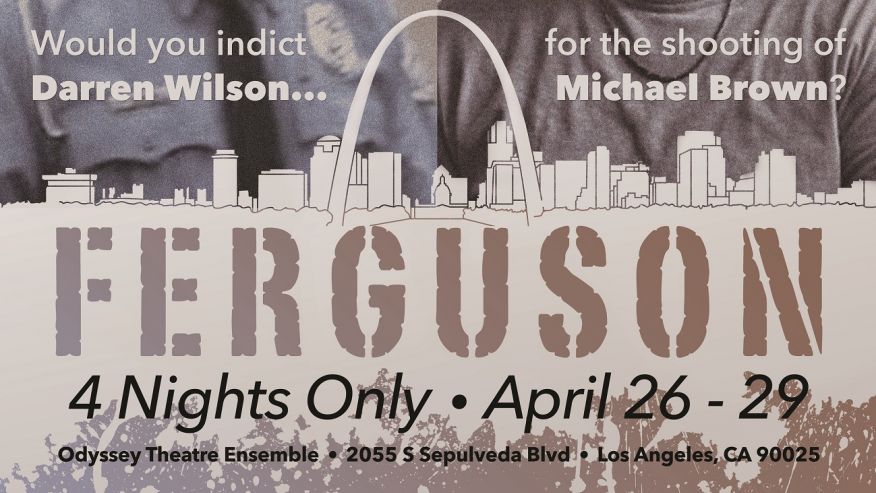
The second and more troubling was in LA,  where five actors quit the cast of the new play “Ferguson,” which consists entirely of dramatizations of the Michael Brown murder grand jury testimony, because the actors apparently felt that it did not appropriately support the “Hands Up! Don’t Shoot!” narrative.

That’s really stupid, but I’m not getting into that again.

We don’t see many examples of professional actors doing this for several reasons. One is that they can’t afford to. Acting, except for the top fraction of a per cent, is anything but lucrative; it’s a subsistence level job, redeemable because it is, or can be, art, and tolerable as long as the actor doesn’t have a family to support, or has a trust fund.

The main reason this is unusual, however, is that an actor isn’t responsible for the content of the play, movie or TV show he or she acts in, but only the skill with he or she helps present that content to an audience. Actors—and technical artists like costume and light designers—are the conduits through which a writer’s work of performance art gets to live. They don’t have to like a show, agree with it or understand it, which is a good thing, since many excellent actors don’t have the  education, experience or intellect to understand complex and profound works. As one realistic actor friend once told me, “If we were that smart, we’d be smart enough to be in another profession.” Continue reading

Comment of the Day: “Ethics Dunces: Ten Prominent Doctors, Surgeons and Med School Professors Who Want Columbia To Kick Dr. Oz Off Its Faculty”

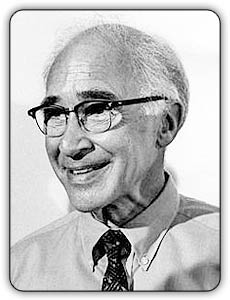
The late Prof. George Wald, the best teacher I ever had. In biology, not political science. George did not acknowledge the distinction.

The late Prof. George Wald, the best teacher I ever had. In biology, not political science. George did not acknowledge the distinction.

Commenter Alexander Cheezem, who has quite a bit of expertise (also passion) on such matters, weighed in on the current controversy over the “quackery” of daytime TV star “Dr. Oz.” This time I’ll hold my comments until the end; here is Alex’s excellent Comment of the Day on the post, Ethics Dunces: Ten Prominent Doctors, Surgeons and Med School Professors Who Want Columbia To Kick “Dr. Oz” Off Its Faculty:

I’m going to have to both agree and disagree with you here. First off, I applaud Columbia University’s response and agree that the principle of academic freedom is applicable here… to a point.

Secondly, however, I’m going to have to disagree with you regarding the parallels. Linus Pauling was an embarrassment to medicine, not chemistry. Wald was overly passionate about politics, not biology. Nagel’s views on biology are an embarrassment, not his views on what he’s supposed to be actually teaching. Chomsky’s forays into political science may be an embarrassment (personally, I regard them as something of a mixed bag), but that’s not what he was the professor of, is it?

Kass, McKinnon, Harper, and Singer are closer parallels, of course, but there’s still one rather huge difference: Dr. Oz is a doctor… and runs his show as one. It is, as the comedian John Oliver put it, the Dr. Oz Show, not “Check This Shit Out With Some Guy Named Mehmet”. This is quite relevant for a number of reasons, not the least of which is that offering medical advice is within the scope of what doctors do. Offering that advice while invoking his medical license as a relevant qualification, simply put, can be considered part of the actual practice of medicine. Continue reading

Ethics Dunce: Alexandra Robbins, The Mocking Nurse

Mockery

If you set out to defend ethically indefensible conduct in print, you better be able to do a better a job of it than this.

Alexandra Robbins, in an op-ed causing quite a bit of controversy in the Washington, D.C. area, attempted to not only justify the despicable conduct of medical professionals deriding and ridiculing their unconscious patients, but to sanctify it, arguing, lamely, that doctors and nurses are mocking the unwitting and vulnerable human beings who have placed their lives in their hands in order to “rejuvenate [the medical personnel] and bond them to their teams, while helping to produce high-quality work. In other words, the benefits to the staff — and to the patients they heal — outweigh occasional wounded feelings.”

Right.

Robbins’ protests of virtue amount to a desperate raid on the Ethics Alarms Rationalization List, which, as always, operates as virtual Rotting Ethics Detector, or RED. If you find yourself thinking these corrupting self-delusions, you’re on the verge of unethical conduct; if you find yourself saying them, you’ve applied for membership in the Dark Side, and if you are so rationalization-polluted that you proclaim them in print, like Robbins, you shouldn’t be trusted to mail the water bill, much less to cavort in the operating room.

Rationalizations aren’t the only ethical problem with her loathsome essay. The entire thing is a Jumbo, denying the blatantly undeniable. “Oh, no!” readers are told. “We aren’t being disrespectful to patients when we mock their weight, sex organs, or the maladies that placed them in pain, peril and in our care!” Robbins expects us to believe that insults constitute “non-destructive coping measures” that help nurses and doctors “provide the best possible care, even if those methods might seem unprofessional outside of the health-care setting.”

They seem unprofessional because they are unprofessional. Continue reading

Inevitable, Unethical, Technological Incompetence By Our Governments

Hey, what could go wrong?

Hey, what could go wrong?

The legal profession is in the midst of an ethics crisis not of its own making. New technologies, including social media, have created opportunities for vastly improved legal services, to such an extent that the American Bar Association has decreed that an ethical, competent lawyer, must use them. It has also made it clear that using them carelessly to the detriment of clients is unethical as well. It all sounds reasonable, except for this: few lawyers are equipped by education, training or nature to be adept at technology. Worse, technology is now changing so fast that few lawyers can keep up with it.

Thus they make mistakes. Costly mistakes, disastrous mistakes, stupid mistakes, and there is no learning curve, because by the time lawyers understand and master a new technology, it is no longer new, and it has taken on a different form that requires them to start all over again. The ABA and other bar associations have acknowledged this through inaction. After numerous instances where their ethical guidelines regarding the use of technology were obsolete or wrong from the moment they were issued, these bodies have resorted to general edicts only, essentially saying, “You must master available legal practice technology, and you must not screw it up. Don’t ask us how, we’re as confused as you are.”

Gee, thanks.

Unfortunately, it is not just the legal profession that is in peril from technological overload, unrealistic expectations and the speed of innovation. Our various levels of governments are, if anything, in even worse peril from the same phenomenon.

One week ago, the Virginia State Board of Elections frantically voted to  decertify use of the AVS WinVote touch-screen Direct Recording Electronic voting machine, meaning that the machines, which were used by dozens of cities and towns in Virginia, are effectively banned. Virginia is holding primaries  just two months from now, so this has thrown those local governments into a panic. The decision was unavoidable, however, after a shocking a report that demonstrated that the machines could be hacked, and elections rigged, by a 12-year-old…that is, anyone with more technological expertise than local government officials.

Continue reading

Ethics Dunces: Ten Prominent Doctors, Surgeons and Med School Professors Who Want Columbia To Kick “Dr. Oz” Off Its Faculty

Dr Oz

Perhaps they tried this because Columbia has been having a bad ethics year so far… that could be it, I guess.

For the record, here are are the ten prominent individuals in the field of medicine who called on Columbia University to kick Dr. Mehmet Oz, better known to Oprah fans and junk TV addicts as “Dr.Oz,” off its medical school’s faculty:

Henry I. Miller, M.D.
Robert Wesson Fellow in Scientific Philosophy
& Public Policy
Hoover Institution
Stanford University
Stanford, CA

Scott W. Atlas, M.D.
David and Joan Traitel Senior Fellow
Hoover Institution
Stanford University
Stanford, CA

Jack Fisher, M.D.
Professor of Surgery (emeritus)
University of California, San Diego
La Jolla, CA

Shelley Fleet, M.D.
Anesthesiologist
Longwood, FL

Gordon N. Gill, M.D.
Dean (emeritus) of Translational Medicine
University of California, San Diego
La Jolla, CA

Michael H. Mellon, M.D.
Pediatric Allergist
San Diego, CA

Gilbert Ross, M.D.
President (Acting) and Executive Director
American Council on Science and Health
New York, NY

Samuel Schneider, M.D.
Psychiatrist
Princeton, NJ

Glenn Swogger Jr. M.D.
Director of the Will Menninger Center for Applied Behavioral Sciences (retired)The Menninger Foundation
Topeka, KS

Joel E. Tepper, M.D.
Hector MacLean Distinguished Professor of Cancer Research
Dept of Radiation Oncology
University of North Carolina School of Medicine
Chapel Hill, NC

And here is their letter. They are troubled because “Dr. Oz” has embraced dubious products and health promotion techniques on his TV show. Indeed he has. On TV, Dr. Oz is a quack. He uses his medical credentials to, as the letter says, show “disdain for science and for evidence-based medicine” and to display  “baseless and relentless opposition to the genetic engineering of food crops.”  And no one can deny that  “he has manifested an egregious lack of integrity by promoting quack treatments and cures in the interest of personal financial gain.”

None of which is justification for taking him off the faculty, where his teaching duties are unrelated to his lucrative TV persona, and are the direct result of his recognized expertise in cardiothoracic surgery.

Could it be that all of these doctors—including Professors Tepper and Fisher, and Dean Gill— have never encountered the sacred educational principle of  academic freedom? Continue reading

Wait…WHAT? Where Does A Law School Get Off Ordering Students Not To Talk About George Clooney’s Wife?

Of course, Columbia could order Amal from not dressing like this, but that would be outrageous.

Of course, Columbia could order Amal from not dressing like this, but that would be outrageous.

Every day, I am more amazed that I got through my formal education without being suspended, expelled or arrested.

From the New York Times:

At 10:30 a.m. on Monday, Amal Clooney walked into Classroom 103 in William and June Warren Hall at Columbia Law School. The human rights lawyer and wife of the actor George Clooney …was by herself, far from the tangle of paparazzi who gather outside the Carlyle hotel, where the couple are staying while Mr. Clooney is in town making “Money Monster,” a film directed by Jodie Foster and co-starring Julia Roberts. Ms. Clooney, 37, greeted a man preparing slides for the class in human rights for which she is a guest lecturer this spring. As she spoke, passers-by peeked at her through the sliver of glass in the door. If anyone had thoughts to share about Ms. Clooney, they weren’t talking.

“We are under strict orders not to discuss her or anything about her class,” said a student who declined to give her name. A representative from the law school politely asked a reporter to leave.

What? WHAT? Columbia University can’t “order” students not to talk about a professor! How did they get the idea that they could, or that it was appropriate to try? Of course, Columbia of late has shown less than a sterling respect for the values of academic freedom and the Bill of Rights. Still, this is pure abuse of power.

WHAT? What kind of jello-spined, ignorant, submissive worm are they admitting to Columbia who would accept such outrageous “strict orders”? [ Well, we do have some strong indications…] I couldn’t care less about Ms. Clooney, but if my law school said that to me, I’d hold a press conference.

WHAT? Why  does this woman, who voluntarily thrust herself into the limelight, warrant special privileges that justify restricting a law school’s students right to talk about anything they want to?

University classes have been taught for more than a century by men and women with far more impressive accomplishments and greater fame than Amal Clooney. Shouldn’t Columbia be combating celebrity culture rather than catering to it?

Any students who meekly accept such restrictions on their speech and autonomy are too craven to be trusted to practice law, and no institution that would demand such restrictions should be trusted to teach them.

________________________

Pointer: Above the Law

Facts: New York Times

Comment of the Day: “Rationalization #30 (“It’s a bad law/stupid rule”) Chronicles: Vijay Chokalingam’s Affirmative Action Fraud”

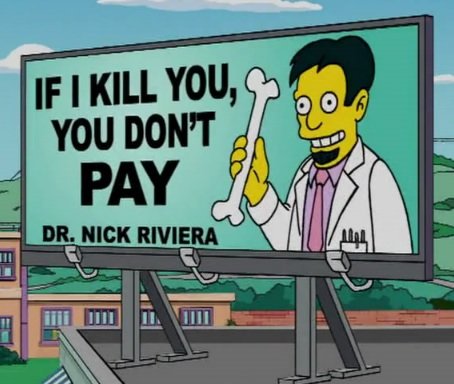
On the bright side, Dr. Nick improves the diversity of the medical profession...

On the bright side, Dr. Nick improves the diversity of the medical profession…

Joed68 comes through with his second Comment of the Day, this one in reaction to the post here on Mindy Kaling’s brother and his proud confession that he gamed an affirmative action program to gain admission to medical school years ago.

Allowing skin color to enable a less deserving applicant to vault over a more deserving one in college is one thing—still ethically dubious, but defensible in the abstract—and letting low-lights into elite training for professions with life and death responsibilities is another. The only explanations I can mount for those who indignantly defend affirmative action in the latter (such as CNN’s Jeff Young, quoted in the post) is that they are in thrall of the ends justifies the means mentality currently infecting much of Progressive World, or they don’t know how difficult it is to become a doctor. The first malady is beyond remedy; joed68’s submission addresses the second.

Here is his Comment of the Day on the post “Rationalization #30 (“It’s a bad law/stupid rule”) Chronicles: Vijay Chokalingam’s Affirmative Action Fraud”:

Continue reading

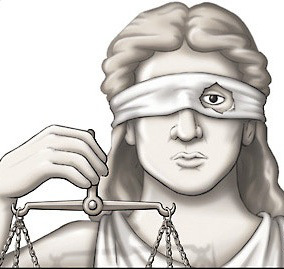
The Legal Profession’s Failure Of Professionalism Regarding Gay Marriage

blind_justice

Charles Green helpfully sent me the link to today’s New York Times piece documenting how…

“the imbalance in legal firepower in the same-sex marriage cases resulted from a conviction among many lawyers that opposition to such unions is bigotry akin to racism. But there were economic calculations, too. Law firms that defend traditional marriage may lose clients and find themselves at a disadvantage in hiring new lawyers.”

“Am I right that something’s quite amiss here?” he asks. Indeed he is, and I’ve touched on it before.

There are several factors at work here, but the result is deplorable, and indictment of the corrupt values of the legal profession. One of the factors is bias, and it is a bias that the lawyers themselves are either unaware of,  or are unwilling to avoid its effects as their professional codes of ethics require.

The majority of high-powered lawyers hail from urban centers where liberal culture flourishes among the wealthy, the powerful and the influential. These are cosmopolitan lawyers, sophisticated and urbane, who have gay colleagues, gay friends and gay children. They are less likely to be religious, and more likely to have contempt for those who are. Combine with them the legal academics who drive consensus on legal ethics matters—like most academics, they have marinated in the extreme leftist attitudes of U.S. academia—and it becomes clear why, as Michael W. McConnell, a former federal appeals court judge who teaches law at Stanford, tells the Times, “The level of sheer desire to crush dissent is pretty unprecedented.”

I noticed this in 2011, when the legal ethicists I follow, know and debate with decreed virtually en masse that a judge who was not only gay himself but in a long term domestic relationship with his partner had no ethical obligation to recuse himself before he issued the decision on the constitutionality of California’s anti-same sex marriage Proposition 8. Nor did they feel he was ethically obligated to disclose his situation before ruling. I wrote: Continue reading