I’m watching “It’s A Wonderful Life,” Frank Capra’s ultimate ethics movie. Don’t forget to review its ethics dilemmas, conflicts and conundrums with the handy
I’m watching “It’s A Wonderful Life,” Frank Capra’s ultimate ethics movie. Don’t forget to review its ethics dilemmas, conflicts and conundrums with the handy
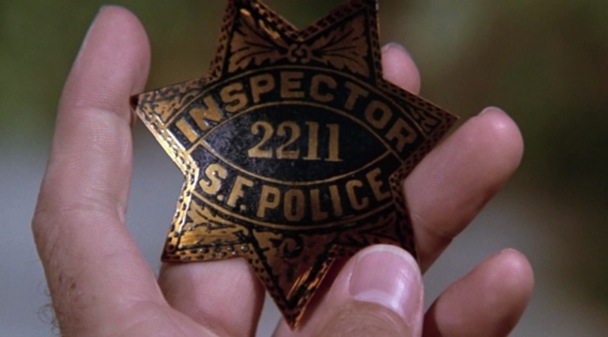
This is Harry “Dirty Harry” Callahan’s badge. Seconds later, he throws it into a river. Lots of other police officers will soon be doing the same.
Yesterday, for the third time in my life, I was the first one on the scene after a fellow human being’s death. This time, it was a very close friend and, though it has little to do with this post, a wonderful man. I had headed out to his home because I was worried: an unusually reliable and conscientious individual, he had missed several appointments the last few days and hadn’t been answering e-mails and phone calls. When I was told about this, I immediately suspected the worst, and sadly, I was right.
His car was outside his house, and though it was mid-day and he was supposed to be somewhere else, I could see that the TV was on. In front of his door, getting soaked in the rain, was a package: it had been delivered there on December 2. I got no response to my bangs on the door. It was time to call 911.
The police responded quickly. I’m not going to name the department, which has an excellent reputation here, and I do not fault the officers, who were diligent and polite, and who set about investigating the scene professionally and quickly. Nonetheless, after a full 90 minutes, after which they could not discern any more than I had before they came, they would not enter the house.
They told me that they could not risk being sued, and that there were elaborate policies and procedures that had to be checked off first. The officers had to track down their supervisor (it was a Saturday), and, they said, more than one official would have to sign off, to protect the department
“He could be drunk; he could be shacked up; he could just want to be alone,” they told me. “The law says his privacy can’t be breached, even by us.”
“But he’s not any of those things,” I said. “He doesn’t do any of those things, and if he were OK, there wouldn’t be a four-day-old package outside.”
“Maybe he took a trip on a whim.”
“He would have called and cancelled those commitments,” I said. “Look, you and I both know that he could be inside, on the brink of death, with every second bringing him closer. The only alternative is that he’s died already. If you won’t do it, let me break in, chase me, and you’ll find him legally as you pursue me. How’s that?”
The police weren’t sold. Finally, after a full 90 minutes, they requisitioned a ladder from a neighbor and were able to see into a second floor window. My friend was visible on the floor, and then they moved quickly, breaking down the door. They were too late by days. They might have been too late by minutes though. All those procedures and policies that forced the police to avoid taking action that in this case, under these circumstances, were prudent and that might have saved a life imperiled.
The lesson is only this: if we cannot trust police to make decisions like this, we obviously are not going to trust them to decide when to fire their weapons. Laws, rules and procedures are rigid, and have to be examined slowly; real life operates in the shadows of uncertainty, among the loopholes, gray areas and ambiguities, and it moves fast. The protests and demands in the wake of the recent police controversies will undoubtedly result in more regulations, policies and laws, but there is good reason to believe that they will also make us less safe rather than more safe, and make it difficult to find reasonable, dedicated, ethical men and women willing to serve as police, a job which, we seem to be deciding, should be subjected to strict liability whether the officer acts too quickly, or not quickly enough—judged, of course, after the results are in. Continue reading

This is a belated salute to an excellent post by the 2014 Ethics Alarms Blogger of the Year, Mark Draughn. I saw the same Salon post he so neatly and ethically eviscerated, and was too busy and too nauseated to flag it here as the piece of progressive fascism that it is. Fortunately. Mark did his duty, and well.
Andrew Burstein is a leftist professors of history at Louisiana State University, and gave Salon a slovenly-written and thought-out essay about what a new U.S. Constitution should look like. He doesn’t approach the topic seriously, but rather engages, as Mark perceptively puts it, in a long ““If I ruled the world” screed that asserts the need for a U.S. Constitution that includes policy micromanagement provisions like teaching foreign languages in first or second grade, eliminating SAT scores, adding counselors and school psychologists to school systems, and closing tax loopholes. His objective is to make progressive policies unalterable by edict. Either Burstein doesn’t know what a Constitution is supposed to do, or he doesn’t care: do NOT send your child to LSU. Continue reading
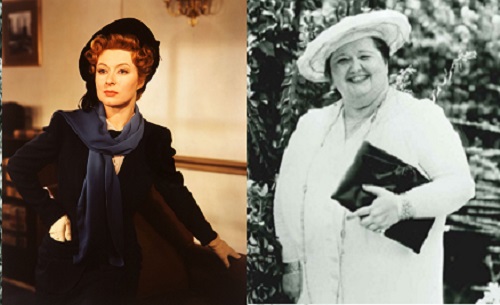
I am ashamed to admit that I never heard of Edna Gladney before I chanced upon a late night Turner Movie Classics showing of the 1941 biopic “Blossoms in the Dust,” which earned the great Greer Garson one of her many Academy Award nominations for her portrayal of Gladney (that’s Greer as Edna on the left). I was unaware of Gladney’s amazing life, legacy and contributions to society because 1) I’m not from Texas; 2) it is hard to learn about great people that society forgets about, and 3) feminists aren’t doing their job, perhaps because a strong and indomitable woman whose life was devoted to saving unwanted children rather than preventing their existence doesn’t interest them as much as it should.
Yet Gladney is exactly the kind of woman whose life should inspire young girls today, and young men too, for that matter. Still, I recently asked 18 randomly chosen friends and acquaintances who Edna Gladney was, and not one of them knew.
And most of them didn’t know who Greer Garson was, either.
Sigh. Continue reading
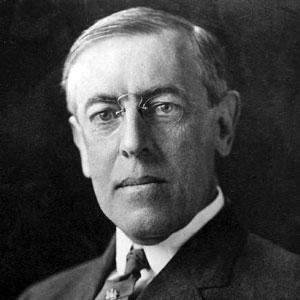
Obama’s role model?
Some thoughts as I read the comment below from Ethics Alarms stalwart Steve-O-in-NJ:
Here is Steve’s Comment of the Day on the post, Leon Panetta’s Memoirs, and Reconsidering Ethics Alarms’ Absolute Condemnation Of Such Books:
Continue reading
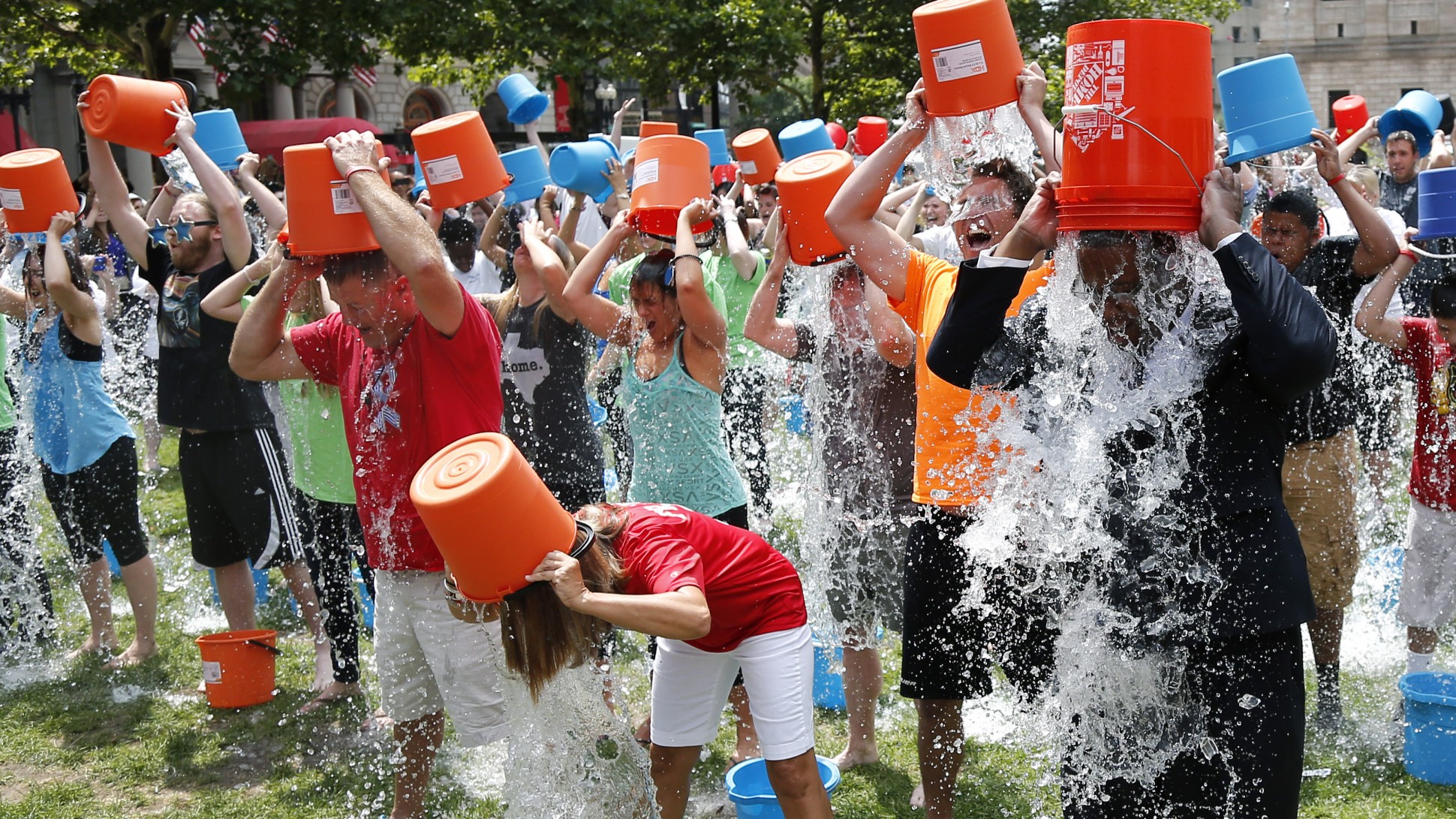
The “Ice Bucket Challenge” is a silly, brilliant fund-raising device that has simultaneously increased public awareness of Amyotrophic lateral sclerosis (ALS), better known as Lou Gehrig’s disease, brought over 14 million more dollars of donated funds into the ALS Association than last year for research, and provided some priceless YouTube fare, ranging from celebrity drenchings to this…
Entertainment! Celebrities! Medical research! Charity! Public Education! How could there be anything unethical about such a phenomenon? Well, ethics often throw cold water on all manner of activities human beings crave, so it should not be too great a surprise that the “Ice Bucket Challenge” has generated quite a few ethics-based objections. Let’s examine the potential, alleged and actual ethical flaws of the current fad, and rate them on an Ethics Foul Scale from zero (No ethical concerns at all) to ten ( Very Unethical).
Anything can be dangerous if you are not sufficiently careful, and the Ice Bucket Challenge had its consequentialist moment when four firefighters were injured, one very seriously, trying to help the marching band at Campbellsville University get dumped with ice water this week. Two firefighters were in the bucket of their truck’s ladder preparing to douse the students using a firehose when a surge of electricity jumped from nearby power lines and electrucuted them and two colleagues. This was just a freak accident, however. Unlike the so-called Facebook Fire Challenge, the ALS fundraisng stunt shouldn’t be perilous to anyone, as long as practitioners don’t get too grandiose or creative.
Ethics Foul Score:
 Ethics Alarms